
If your AC is freezing over, turn it off immediately to prevent damage and let the ice melt completely. Check and replace dirty filters, and make certain vents aren’t blocked to improve airflow. Refrigerant leaks are a common cause, so avoid trying to fix them yourself—call a professional. Regular maintenance can prevent future freezes. Keep going to learn more about what causes AC freezing and how to fix it effectively.
Key Takeaways
- Turn off the AC immediately to prevent damage and allow the ice to melt completely.
- Check and replace or clean dirty air filters to improve airflow and prevent freezing.
- Inspect vents and ensure fans and thermostats are functioning correctly.
- Avoid running the unit while frozen; wait until all ice has melted before restarting.
- Contact a professional HVAC technician for refrigerant leaks or system issues if freezing recurs.

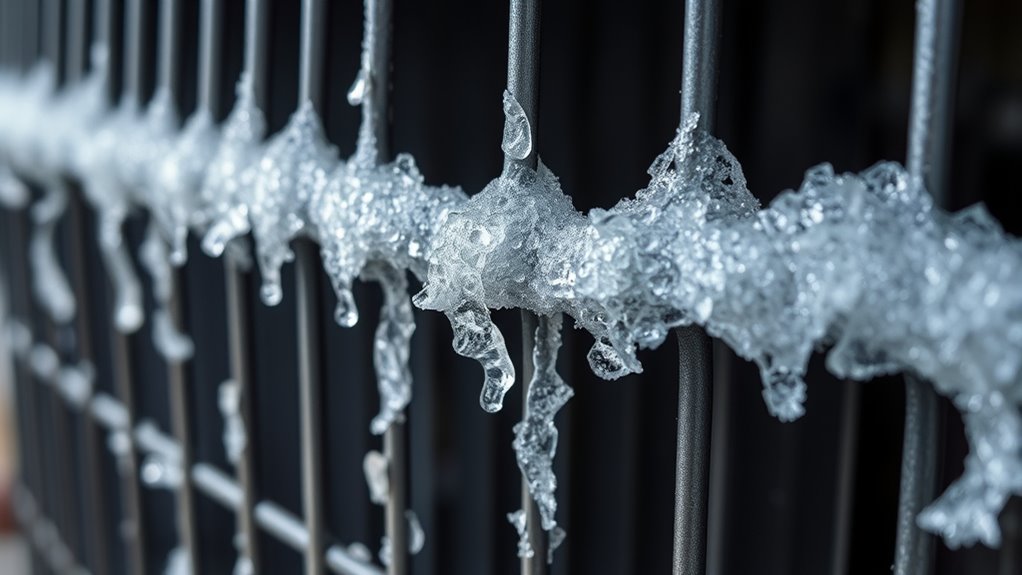
When your air conditioner starts freezing up, it can quickly disrupt your comfort and leave you puzzled about the cause. A frozen AC isn’t just a minor hiccup; it signals that something’s off with your system. One common culprit is refrigerant leaks. When your refrigerant levels drop due to leaks, the AC can’t properly absorb heat from your home. This causes the evaporator coil to become too cold, leading to ice formation. Without enough refrigerant, the system struggles to maintain normal temperatures, and ice begins to form on the coil. Additionally, dirty air filters can contribute to freezing issues. When filters are clogged with dust, dirt, and debris, they restrict airflow over the evaporator coil. Reduced airflow means the coil doesn’t get enough warm air to keep it from freezing. As a result, the moisture on the coil freezes, creating a thick layer of ice that hampers the AC’s ability to cool effectively.
If you notice your unit freezing, the first step is to turn it off and let the ice melt completely. Running the AC while it’s frozen can cause further damage to the compressor and other components. Once the ice has thawed, inspect the air filters. If they’re dirty or clogged, replace or clean them immediately. Regularly changing filters is one of the simplest ways to prevent freezing issues and ensure your system runs efficiently. Next, check for refrigerant leaks. While this might require a professional, be aware that hissing sounds, oil stains around the refrigerant lines, or a noticeable decrease in cooling performance can indicate a leak. If you suspect refrigerant issues, contact an HVAC technician promptly. They can perform a leak detection test and recharge your system with the correct amount of refrigerant.
A thorough system inspection by a professional can also identify other potential causes, such as malfunctioning fans or thermostat issues, which might be contributing to the freezing problem. Beyond refrigerant leaks and dirty filters, other causes can include inadequate airflow due to blocked vents, malfunctioning fans, or thermostat problems. But starting with the basics—checking filters and refrigerant levels—often solves the issue. Remember, attempting to fix refrigerant leaks or handling refrigerant yourself isn’t safe; leave that to licensed professionals. Regular maintenance, like annual inspections and replacing filters every 1-3 months, can help prevent your AC from freezing up in the first place. Being proactive ensures your system stays in top shape, keeps your home cool, and avoids costly repairs down the line. When your AC starts freezing over, quick action and proper maintenance are your best defenses to restore comfort and keep your system running smoothly.

HAVANSIDY 4Pack Replacement Filters for Whynter Portable Air Conditioners Compatible with ARC-14S, ARC-14SH, ARC-141BG and ARC-143MX, Activated Carbon Filters for Portable Air Conditioner
Compatibility: Activated carbon filter compatible with Whynter portable air conditioners, including ARC-CF-14S, ARC-14S, ARC-14SH, ARC-141BG and ARC-143MX.
As an affiliate, we earn on qualifying purchases.
As an affiliate, we earn on qualifying purchases.
Frequently Asked Questions
Can a Frozen AC Cause Long-Term Damage?
A frozen AC can cause long-term damage, especially if left untreated. When your unit freezes, refrigerant leaks or thermostat issues might be to blame, leading to inefficient cooling. Over time, these problems can strain components like the compressor, risking costly repairs or replacements. To prevent this, address issues promptly, check for refrigerant leaks, and verify your thermostat functions correctly, helping your AC run smoothly and last longer.
How Often Should I Check My AC for Ice?
You should check your AC for ice at least once a month, especially during peak usage. Studies show that regular maintenance can extend your unit’s lifespan by up to 30%. For DIY solutions, inspect the evaporator coil and ensure proper airflow. Use simple maintenance tips like cleaning filters and removing debris. Catching ice early prevents long-term damage, saving you money and keeping your home cool and comfortable.
Is It Safe to Operate My AC While Frozen?
It’s not safe to operate your AC while it’s frozen because airflow obstruction or a refrigerant leak can worsen damage. Running the unit can cause further ice buildup, strain the system, and lead to costly repairs. Before turning it back on, you should turn off the AC, check for airflow obstructions like dirty filters or blocked vents, and contact a professional if you suspect a refrigerant leak.
What Are Common Signs of AC Freezing?
You’ll notice your AC is freezing if you see thick ice buildup on the evaporator coil or hear unusual noises. A frozen unit often results from clogged air filters or low refrigerant levels. To prevent this, regularly maintain your air filter and check refrigerant levels. If you spot ice, turn off the system and call a professional, as operating while frozen can cause further damage.
Should I Call a Professional if My AC Freezes?
If your AC is frozen solid, you should definitely call a professional right away. DIY fixes might seem tempting, but attempting to thaw it or fix refrigerant leaks without expertise can cause more damage. Professionals have the tools and knowledge to diagnose issues accurately, preventing costly repairs later. Don’t risk worsening the problem—reach out to a licensed technician who can get your cooling system back to peak performance safely.

Vansky Air Conditioner Leak Detector: Professional Car Tool 68 LED Automotive AC UV Dye Leak Detection Kit with Protective Glasses
Professional AC Leak Detection: Designed specifically for detecting automotive air conditioner leak, Vansky AC leak detector flashlight incorporates…
As an affiliate, we earn on qualifying purchases.
As an affiliate, we earn on qualifying purchases.
Conclusion
When your AC starts to freeze up, think of it as a warning sign shimmering like a snowflake in summer’s heat. Take action quickly, like a skilled chef removing a spoiled ingredient, to thaw out the icy trouble and restore your cool comfort. Remember, your AC is like a loyal friend—treat it well, and it’ll keep your home a invigorating oasis all year round. Don’t let ice steal your summer vibe!

Wea&Hea 2 Pack Magnetic Air Vent Deflector, 9"-15.5" Adjustable Vent Cover with Optimized Ferrite Magnets for Ceiling/Floor/Wall Registers – Clear Heat/AC Deflector for Under Furniture & Home Comfort
SIMPLE TRANSPARENT DESIGN: Almost invisible design to blend into your home
As an affiliate, we earn on qualifying purchases.
As an affiliate, we earn on qualifying purchases.

Leak Saver Foam Blaster AC Coil Cleaner Foam Spray | HVAC Coil Cleaner for AC Unit | Professional Deep-Penetrating Formula for Evaporator (No Rinse) & Condenser (Light Rinse) – 3 Pack
HIGH-PRESSURE FOAMING SPRAY PENETRATES DEEP- Unlike wide-spray HVAC coil cleaners that foam on contact, Foam Blaster uses a…
As an affiliate, we earn on qualifying purchases.
As an affiliate, we earn on qualifying purchases.