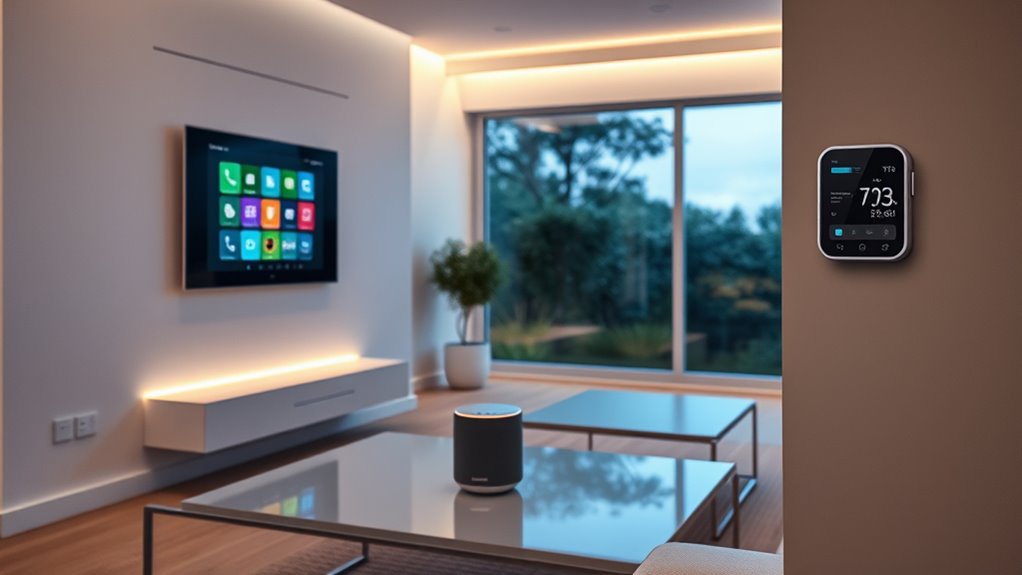

Home automation systems have become essential for creating a connected, convenient, and efficient household. The best options vary widely—from comprehensive control panels like the Amazon Echo Hub to energy monitors like Emporia Vue 3. The main tradeoffs involve balancing features, ease of use, compatibility, and price. For example, more advanced hubs offer extensive integrations but may come with a steeper learning curve and higher costs. Continue reading for a detailed breakdown of the top systems and what makes each one unique.

Get everyday essentials delivered free — and shop member deals
- Fast, free delivery on millions of items
- Access to Prime Big Deal Days deals on October 6–7
- Prime Video, Amazon Music and more included
Key Takeaways
- The most versatile amazon.com/dp/B0CXVKSG19?tag=californiagazette-20&ascsubtag=dc-770722″ target=”_blank” rel=”nofollow sponsored noopener”>home automation hubs combine support for Z-Wave, Zigbee, and Matter protocols, ensuring future-proof compatibility.
- Energy monitoring capabilities like Emporia Vue 3 are increasingly important for cost savings and sustainability-minded homeowners.
- Control panels with built-in voice assistants, such as Amazon Echo Show 15, offer both smart home management and multimedia functions in one device.
- Open-source solutions like Home Assistant provide extensive customization but require technical know-how, making them better suited for DIY enthusiasts.
- Compatibility with major voice assistants and ecosystems remains a decisive factor for seamless integration and ease of use.
| Amazon Echo Hub (newest model), 8″ Smart Home Control Panel with Alexa+ |  | Best Overall Smart Home Control Panel | Display Size: 8 inches | Compatibility: Alexa, Ring, Zigbee, Matter, Sidewalk, Thread | Connectivity: WiFi, Bluetooth | VIEW ON AMAZON | See Our Full Breakdown |
| Aeotec Smart Home Hub – Works as a SmartThings Hub with Z-Wave, Zigbee, Matter Gateway, Compatible with Alexa and Google Assistant |  | Best Protocol Compatibility for Advanced Smart Homes | Weight: 1.1 pounds | Connectivity Technology: Ethernet, Wi-Fi, Z-Wave, ZigBee, Matter | Control Method: App, Voice | VIEW ON AMAZON | See Our Full Breakdown |
| Emporia Vue 3 Home Energy Monitor – Real-Time Electricity Usage and Power Consumption Meter |  | Best for Energy Monitoring and Cost Savings | Certification: UL Listed | Supported Systems: Single phase, 3-phase, 4-wire | Sensor Type: Clamp-on sensors | VIEW ON AMAZON | See Our Full Breakdown |
| Philips Hue Bridge – Smart Lighting Hub with Matter, Zigbee, and Out-of-Home Control |  | Best Lighting Control with Future-Proof Integration | Unit Count: 1 | Technology: Zigbee | Compatibility: Matter, SmartThings | VIEW ON AMAZON | See Our Full Breakdown |
| Open-Source Smart Home Automation: Control Your Home with Home Assistant and DIY Electronics |  | Best for DIY Enthusiasts and Customization | VIEW ON AMAZON | See Our Full Breakdown | |||
| SONOFF NSPanel Pro 120 Smart Control Panel |  | Best for Centralized Control with Visual Monitoring | Product Dimensions: 4.8 x 3 x 1.7 inches | Item Weight: 0.317 ounces | Display: 4.7-inch screen | VIEW ON AMAZON | See Our Full Breakdown |
| MOES Smart Home Control Panel with Alexa Built-in and Zigbee Hub |  | Best for Hands-Free Control and Wide Compatibility | Compatibility: Smart Life devices, switches, lights, sockets, cameras, locks | Display: 5-inch full touch screen | Voice Assistant: Alexa built-in | VIEW ON AMAZON | See Our Full Breakdown |
| Emporia Vue 3 Home Energy Monitor – Real-Time Electricity Usage and Power Consumption Meter |  | Best for Energy Monitoring and Cost Savings | Certification: UL Listed | Supported Systems: Single phase, 3-phase, Wye systems | Sensor Compatibility: Clamp-on sensors, additional 200A sensor | VIEW ON AMAZON | See Our Full Breakdown |
| Home Assistant Green Smart Home Hub with Advanced Automation |  | Best for Customizable, Extensive Automation | Processor: Quad-core | Storage: 32GB | RAM: 4GB | VIEW ON AMAZON | See Our Full Breakdown |
| Amazon Echo Show 15 (Newest Model) – 15.6″ Full HD Smart Display with Alexa and Fire TV |  | Best for Family Organization and Entertainment | Size: 16.1″ W x 10.1″ H x 1.4″ D | Display: 15.6″ Full HD (1920 x 1080) | Camera: 13 MP with shutter | VIEW ON AMAZON | See Our Full Breakdown |
| home automation system | Connectivity |
|---|---|
| Amazon Echo Hub | WiFi, Bluetooth |
| Aeotec Smart Home Hub | — |
| Emporia Vue 3 Home Energy Moni | 2.4 GHz Wi-Fi |
| Philips Hue Bridge | Wi-Fi, Ethernet |
| Open-Source Smart Home Automat | — |
| SONOFF NSPanel Pro 120 Smart C | Zigbee |
| MOES Smart Home Control Panel | Wired and wireless, TYPE-C |
| Emporia Vue 3 Home Energy Moni | 2.4 GHz Wi-Fi |
| Home Assistant Green Smart Hom | USB expandability with Z-Wave, Zigbee, Thread |
| Amazon Echo Show 15 | — |
More Details on Our Top Picks
Amazon Echo Hub (newest model), 8″ Smart Home Control Panel with Alexa+
The Amazon Echo Hub stands out as the most versatile control panel for those seeking a centralized smart home interface. Its 8-inch customizable dashboard simplifies managing compatible devices, and its support for a broad range of protocols like Zigbee, Matter, and Sidewalk makes it highly adaptable. Compared with the Philips Hue Bridge, which excels at lighting control, the Echo Hub offers broader device integration and a more comprehensive control experience, though it requires additional accessories for wall mounting and has some features dependent on subscriptions. Privacy features, including mic off and multiple controls, boost its appeal for security-conscious users. The eco-friendly materials and thoughtful design enhance sustainability without sacrificing functionality. However, its reliance on separate mounts and optional power-over-ethernet may add complexity or cost.
Pros:- Customizable dashboard for quick device access
- Supports a wide range of smart home devices and protocols
- Built-in privacy controls and eco-friendly materials
Cons:- Requires separate purchase for wall mounts or stands
- Some features depend on compatible Ring subscription
Best for: Homeowners seeking a user-friendly, all-in-one smart home control solution with broad device compatibility.
Not ideal for: Users wanting a dedicated lighting hub or minimal setup—this device is more feature-rich and slightly complex.
- Display Size:8 inches
- Compatibility:Alexa, Ring, Zigbee, Matter, Sidewalk, Thread
- Connectivity:WiFi, Bluetooth
- Privacy Features:Mic off button, multiple privacy controls
- Materials:27% recycled materials
- Packaging:97% recycled or responsibly sourced materials
Our verdict“This control panel is ideal for those who want an intuitive, all-encompassing smart home interface with privacy features.”
Aeotec Smart Home Hub – Works as a SmartThings Hub with Z-Wave, Zigbee, Matter Gateway, Compatible with Alexa and Google Assistant
The Aeotec Smart Home Hub makes a strong case for users who need extensive protocol support, including Z-Wave, Zigbee, and Matter, making it ideal for integrating diverse devices. Its compatibility with popular voice assistants like Alexa and Google Assistant offers flexible control options. Compared with the Amazon Echo Hub, which has a more user-friendly interface, the Aeotec hub caters to those comfortable with setup and customization, often requiring more initial configuration. Its Ethernet and Wi-Fi connectivity provide reliable communication, but its complex interface may challenge newcomers. This device is better suited for tech-savvy users who want to expand their existing smart ecosystem or incorporate specialized devices beyond basic compatibility. Note that regional limitations could restrict some features, especially outside North America.
Pros:- Supports multiple smart home protocols including Z-Wave, Zigbee, and Matter
- Compatible with Alexa and Google Assistant for voice control
- Easy setup via Wi-Fi or Ethernet with the SmartThings app
- Enables extensive device automation
Cons:- Limited to North America, may not work elsewhere
- Requires some technical setup and familiarity with smart home apps
Best for: Experienced smart home enthusiasts seeking advanced integration across multiple protocols and voice platforms.
Not ideal for: Beginners or those looking for a plug-and-play solution—initial setup can be complex and region-dependent.
- Weight:1.1 pounds
- Connectivity Technology:Ethernet, Wi-Fi, Z-Wave, ZigBee, Matter
- Control Method:App, Voice
- Controller Type:SmartThings Hub
- Frequency:908.42 MHz
- Color:White
Our verdict“This hub is perfect for users with existing smart ecosystems who want extensive protocol support and automation options.”
Emporia Vue 3 Home Energy Monitor – Real-Time Electricity Usage and Power Consumption Meter
The Emporia Vue 3 stands out for energy-conscious households aiming to track and reduce electricity bills. Its UL certification guarantees safety and reliability, and its clamp-on sensors provide real-time, detailed data on power consumption. This makes it more comprehensive than basic monitors, especially for homes with solar or net metering systems, allowing users to better understand where energy is used and optimize accordingly. Compared with the Amazon Echo Hub, which focuses on device control, the Vue 3 specializes in energy management, making it ideal for those who want to cut costs rather than automate routines. Its dependency on Wi-Fi and limited data retention are tradeoffs, but overall, it delivers actionable insights for smarter energy use.
Pros:- UL-certified for safety and reliability
- Real-time energy monitoring with accurate data
- Supports solar and net metering for comprehensive management
- Mobile app enables automation and cost tracking
Cons:- Requires Wi-Fi for full functionality
- Additional sensors needed for 3-phase systems
Best for: Homeowners wanting precise energy insights to reduce electricity costs and optimize solar setups.
Not ideal for: Casual users seeking simple smart home controls—this device is more specialized and requires some setup.
- Certification:UL Listed
- Supported Systems:Single phase, 3-phase, 4-wire
- Sensor Type:Clamp-on sensors
- Connectivity:2.4 GHz Wi-Fi
- Data Retention:7 days (1-minute), indefinite (1-hour)
- Warranty:1 year
Our verdict“This energy monitor is best suited for users focused on detailed consumption data and cost-saving strategies.”
Philips Hue Bridge – Smart Lighting Hub with Matter, Zigbee, and Out-of-Home Control
The Philips Hue Bridge offers reliable, remote control of Hue lighting systems, making it ideal for users who want to automate and manage their lighting from anywhere. Its Zigbee mesh network provides stable connectivity even if Wi-Fi drops, and its support for Matter ensures compatibility with a broad array of future smart home devices. Unlike the Amazon Echo Hub, which offers broader device control, the Hue Bridge specializes in lighting, supporting up to 50 lights and accessories. While it requires a setup process and doesn’t include lights, it provides a seamless, future-ready platform for lighting automation and remote access. Its focus on lighting makes it less suitable for users seeking multi-device control beyond lights.
Pros:- Enables remote control and automation of Hue lights from anywhere
- Supports Matter and SmartThings for wide device compatibility
- Reliable Zigbee mesh network ensures stable connection
- Future-proof with automatic updates
Cons:- Requires setup and connection to router
- Limited to 50 lights and accessories, no included lights
Best for: Homeowners looking to automate and remotely control their lighting systems with a reliable, future-proof hub.
Not ideal for: Those seeking a universal smart home hub capable of controlling a wide range of devices beyond lighting.
- Unit Count:1
- Technology:Zigbee
- Compatibility:Matter, SmartThings
- Control:Out-of-home, voice
- Number of Lights Supported:Up to 50
- Connectivity:Wi-Fi, Ethernet
Our verdict“This lighting hub is perfect for users focused on smart lighting automation with reliable remote access.”
Open-Source Smart Home Automation: Control Your Home with Home Assistant and DIY Electronics
This book caters to those who prefer building their own smart home systems rather than relying on commercial hubs like the Amazon Echo Hub or SmartThings Hub. It offers accessible guidance for beginners interested in DIY electronics and open-source platforms like Home Assistant. While it excels in providing extensive customization and automation options, it lacks detailed hardware component lists, which could challenge less technical users. Compared to plug-and-play options, this approach demands some technical aptitude and patience but rewards users with a tailored, deeply personalized smart home. It’s especially suited for hobbyists and tinkerers eager to craft a system aligned with their specific needs and preferences.
Pros:- Easy-to-follow for beginners
- Supports customization and automation
- Encourages learning and hands-on building
Cons:- Lacks detailed hardware component lists
- Requires some technical knowledge and setup effort
Best for: Tech-savvy beginners and DIY enthusiasts eager to create a personalized smart home ecosystem.
Not ideal for: Users seeking simple, ready-to-use solutions without hardware tinkering or advanced setup.
Our verdict“This guide is best for DIY-minded users who want to tailor their smart home system from scratch.”
SONOFF NSPanel Pro 120 Smart Control Panel
The SONOFF NSPanel Pro stands out for its large 4.7-inch display that consolidates control and monitoring into a single interface, making it ideal for users who want a visual hub for energy, security, and device management. Compared to the Amazon Echo Show 15, it offers more targeted smart home controls and camera viewing capabilities but lacks the extensive streaming features. Its reliance on Zigbee and compatibility with Alexa, Google Assistant, and Apple enhances seamless integration, yet the setup process can be complex for newcomers. The limited detailed specifications and absence of clear pricing information might pose hurdles for some buyers. This pick makes the most sense for those seeking a dedicated, customizable control panel for home automation with visual feedback.Pros:- Large, easy-to-read 4.7-inch display for control and alerts
- Supports multiple smart home integrations including security features
- Can function as a camera viewer and web browser for added versatility
Cons:- Limited detailed specs may affect customization or troubleshooting
- Setup complexity can be a barrier for less tech-savvy users
Best for: Homeowners who want a focused control panel with visual monitoring and security features.
Not ideal for: Casual users who prefer multifunctional smart displays with entertainment options, like the Echo Show 15.
- Product Dimensions:4.8 x 3 x 1.7 inches
- Item Weight:0.317 ounces
- Display:4.7-inch screen
- Connectivity:Zigbee
- Compatibility:Alexa, Google Assistant, Apple, Home Assistant
Our verdict“Ideal for users who want a dedicated, centralized smart home control panel with visual monitoring capabilities.”
MOES Smart Home Control Panel with Alexa Built-in and Zigbee Hub
The MOES Smart Home Control Panel excels for its 5-inch full touch screen combined with built-in Alexa voice control, making it convenient for users who want voice-activated automation without extra devices. Unlike the smaller Echo Hub or the more complex Home Assistant Green, this panel offers a straightforward way to control a broad range of compatible devices, including lights, locks, and cameras. Its integrated Zigbee hub eliminates the need for a separate gateway, streamlining setup, yet the relatively small screen size may be limiting for some users who prefer more visual feedback. Customer reviews highlight occasional connectivity hiccups, which could frustrate those seeking rock-solid reliability. This device makes the most sense for homeowners who want a versatile, voice-enabled control panel with broad device compatibility.Pros:- Wide compatibility with smart devices including lights, locks, and cameras
- Built-in Alexa voice assistant for hands-free control
- Integrated Zigbee hub simplifies setup without a separate gateway
Cons:- Small 5-inch touchscreen may limit detailed control or visibility
- Some users report connectivity issues affecting reliability
Best for: Homeowners wanting an easy-to-install, voice-controlled panel for broad device management.
Not ideal for: Tech enthusiasts seeking advanced automation or larger screens for detailed control, who might prefer Home Assistant Green.
- Compatibility:Smart Life devices, switches, lights, sockets, cameras, locks
- Display:5-inch full touch screen
- Voice Assistant:Alexa built-in
- Connectivity:Wired and wireless, TYPE-C
- Weight:13.1 ounces
Our verdict“Best suited for users who prioritize voice control and device compatibility in a simple, all-in-one panel.”
Emporia Vue 3 Home Energy Monitor – Real-Time Electricity Usage and Power Consumption Meter
The Emporia Vue 3 is an excellent choice for those focused on energy efficiency, providing real-time insights into electricity use and supporting solar or net metering. Its UL certification reassures safety and reliability, setting it apart from less regulated options. Compared with the other products, it emphasizes energy management over device control, making it perfect for homeowners eager to reduce utility bills. However, full functionality depends on Wi-Fi connectivity, and some system configurations require additional sensors for three-phase systems, adding complexity. Data retention of just 7 days for minute-by-minute data could limit historical analysis. This device is best for energy-conscious users who want detailed consumption data and automation potential.Pros:- UL-listed for safety and reliability
- Supports various electrical system configurations
- Real-time app-based energy monitoring helps identify savings opportunities
Cons:- Requires Wi-Fi for full functionality, which can limit use if connectivity drops
- Additional sensors needed for some three-phase systems
Best for: Homeowners interested in monitoring and reducing electricity costs through automation.
Not ideal for: Those seeking a comprehensive smart home control system or aesthetic control panels, as this is primarily a monitoring device.
- Certification:UL Listed
- Supported Systems:Single phase, 3-phase, Wye systems
- Sensor Compatibility:Clamp-on sensors, additional 200A sensor
- Connectivity:2.4 GHz Wi-Fi
- Data Retention:7 days for 1-minute data
Our verdict“Perfect for energy-aware homeowners aiming to track and optimize power consumption with automation support.”
Home Assistant Green Smart Home Hub with Advanced Automation
The Home Assistant Green hub is tailored for users who want a powerful, flexible platform to build complex automations, thanks to its quad-core processor and ample storage. Its fanless, compact design ensures silent operation in any home, and the support for Z-Wave, Zigbee, and Thread expands device compatibility far beyond basic hubs. Compared to the simpler MOES or Echo devices, it offers more advanced customization for experienced users, though its initial setup via Ethernet and limited connectivity options might challenge beginners. For those willing to invest time, it unlocks deep automation possibilities, but newcomers might find the complexity overwhelming. This makes sense for dedicated home automation enthusiasts seeking a robust, DIY-ready solution.Pros:- Easy to set up with pre-installed Home Assistant software
- Supports extensive automation with Z-Wave, Zigbee, and Thread
- Fanless, silent design with low power consumption
Cons:- Limited connectivity options without additional expansion
- Requires Ethernet for initial setup, which may be inconvenient
Best for: Tech-savvy homeowners and automation enthusiasts wanting advanced, customizable control.
Not ideal for: Beginners or users seeking plug-and-play solutions without extensive configuration or DIY setup.
- Processor:Quad-core
- Storage:32GB
- RAM:4GB
- Power Consumption:A few watts
- Connectivity:USB expandability with Z-Wave, Zigbee, Thread
Our verdict“Ideal for experienced users seeking a highly customizable, powerful home automation hub.”
Amazon Echo Show 15 (Newest Model) – 15.6″ Full HD Smart Display with Alexa and Fire TV
The Echo Show 15 offers a large, vibrant display perfect for family hubs, blending entertainment with smart home control in a single device. Its 15.6-inch Full HD screen makes it easy to view feeds, recipes, or schedules, while the built-in Fire TV expands streaming options. Its centered camera with auto-framing enhances video calls, making it a standout for family connectivity. However, its reliance on internet connections and subscriptions for full content could limit usability during outages or for free content. Privacy controls are extensive but may not satisfy all privacy-conscious users. Compared to dedicated control panels like the SONOFF or MOES, it prioritizes entertainment and family management, making it less suitable for focused automation control.Pros:- Large Full HD display with vibrant visuals
- Built-in Fire TV for streaming and entertainment
- Centered camera with auto-framing for quality video calls
Cons:- Requires internet and subscriptions for full content access
- Some features need setup via the Alexa app
Best for: Families seeking a versatile device for home organization, communication, and entertainment.
Not ideal for: Users who want a dedicated, minimalist control panel for automation without multimedia features.
- Size:16.1″ W x 10.1″ H x 1.4″ D
- Display:15.6″ Full HD (1920 x 1080)
- Camera:13 MP with shutter
- WiFi:WiFi 6E, tri-band
- Smart Home Hub:Zigbee, Matter, Thread
Our verdict“Best for families wanting a multifunctional device that combines smart home control with entertainment and communication.”

How We Picked
I evaluated each home automation system based on performance, ease of setup, compatibility with popular smart home protocols, build quality, and value for money. Ease of use was a critical factor, especially for newcomers, while versatility and future-proofing influenced the top rankings. Devices supporting multiple protocols like Z-Wave, Zigbee, and Matter earned higher scores because they offer broader integration options. Additionally, I considered user interface design, expandability, and customer feedback to ensure these picks represent well-rounded options for different types of buyers.Factors to Consider When Choosing Home Automation Systems
Choosing the right home automation system depends on several key factors. First, consider the compatibility with your existing smart devices and ecosystems, as this impacts ease of integration. Second, evaluate the system’s expandability—can it grow with your needs? Third, think about user-friendliness, especially if you’re new to smart home tech. Fourth, assess whether the system offers additional features like energy monitoring or multimedia support, which can enhance convenience. Lastly, factor in your budget and long-term value to avoid overspending on features you don’t need.Compatibility and Ecosystem Support
Ensuring your home automation system works seamlessly with your existing devices and voice assistants is key. Look for systems that support popular protocols like Z-Wave, Zigbee, and Matter, which improve compatibility across brands. Avoid systems that lock you into proprietary platforms unless you’re committed to that ecosystem. Compatibility impacts not only setup ease but also future upgrades and device additions.
Scalability and Expandability
Think about whether the system can grow with your needs. A good home automation hub should support adding new devices over time without requiring replacement. Consider whether it supports various device types, from lighting and thermostats to security and energy monitors. An expandable system offers better long-term value and flexibility, especially if you plan to upgrade or diversify your setup.
Ease of Use and Setup
For most users, especially beginners, intuitive interfaces and straightforward setup are crucial. Some systems come with guided apps, voice control, and clear instructions, reducing frustration. Be wary of overly complex DIY solutions that demand technical expertise unless you’re comfortable with programming or electronics. The goal is to find a balance between customization and simplicity to avoid overwhelming yourself.
Additional Features and Integrations
Beyond basic control, consider whether the system offers extra features like energy monitoring, multimedia control, or automation routines. These add convenience and can improve energy efficiency. Verify compatibility with voice assistants like Alexa, Google Assistant, or Apple HomeKit, which can streamline daily interactions. Overpaying for features you won’t use can be a mistake; prioritize what genuinely enhances your smart home experience.
Budget and Long-Term Value
Set a realistic budget considering both the initial cost and ongoing expenses, such as subscription services or device upgrades. Cheaper options may lack durability or compatibility with future devices, while premium systems often provide broader features and better support. Investing slightly more upfront can result in a more reliable, flexible system that saves money and hassle down the line. Think about your long-term goals for a truly smart, connected home.
Frequently Asked Questions
Can I mix different brands of smart home devices with one hub?
Yes, many modern hubs support multiple protocols like Z-Wave, Zigbee, and Matter, which allows you to connect devices from various brands. However, compatibility isn’t always guaranteed, so it’s wise to check each device’s specifications before purchase. A hub with broad protocol support reduces the risk of connectivity issues and gives you more flexibility in choosing devices. Keep in mind that some integrations may require additional setup or firmware updates.
Do I need professional installation for these systems?
Most consumer-friendly home automation systems are designed for DIY setup, often with guided apps and simple instructions. However, some advanced systems with complex integrations or wired components may benefit from professional installation to ensure reliability and safety. If you’re technically inclined, you can often set these systems up yourself, saving costs. For larger or more integrated setups, investing in professional help might be worthwhile to avoid frustration or mistakes.
Are energy monitors worth including in my home automation system?
Energy monitors like the Emporia Vue 3 provide real-time insights into your electricity usage, helping identify energy hogs and optimize consumption. They are particularly useful for cost-conscious homeowners or those aiming to reduce their carbon footprint. While they add upfront cost, the savings on utility bills and the ability to track energy trends can make them a valuable addition. However, ensure that the monitor is compatible with your existing system and that you’re motivated to act on the data it provides.
Is it better to choose a dedicated control panel or a voice assistant device?
The choice depends on your priorities. Dedicated control panels like the Amazon Echo Hub offer more tactile controls and often have larger screens for detailed management, making them ideal for centralized control. Voice assistant devices, such as the Echo Show 15, combine voice control with multimedia features, providing a more versatile experience. Combining both can offer the best of both worlds, but if you prefer simplicity and minimal devices, a dedicated panel might be more straightforward.
Should I prioritize systems with open-source software?
Open-source systems like Home Assistant provide extensive customization and community-driven support, appealing to tech-savvy users. They allow integration of a wide variety of devices and routines that might not be supported by commercial hubs. However, they often require more technical skill to set up and maintain, and troubleshooting can be more complex. If you’re comfortable with DIY electronics and want maximum flexibility, open-source solutions are worth considering; otherwise, a commercial system might be more reliable and user-friendly.
Conclusion
For most users, the Amazon Echo Hub offers a well-rounded, user-friendly experience making it ideal as the best overall choice. Budget-conscious buyers will find the Sonoff NSPanel Pro provides solid features at a lower price point. Those seeking more advanced automation with customization options should consider Home Assistant Green or open-source solutions, though these require more technical skill. Beginners aiming for simple yet effective setups will benefit from integrated devices like the Amazon Echo Show 15. Finally, homeowners focused on energy management will find the Emporia Vue 3 indispensable for tracking and reducing power consumption.
Fall Picks
fall essentials
As an affiliate, we earn on qualifying purchases.