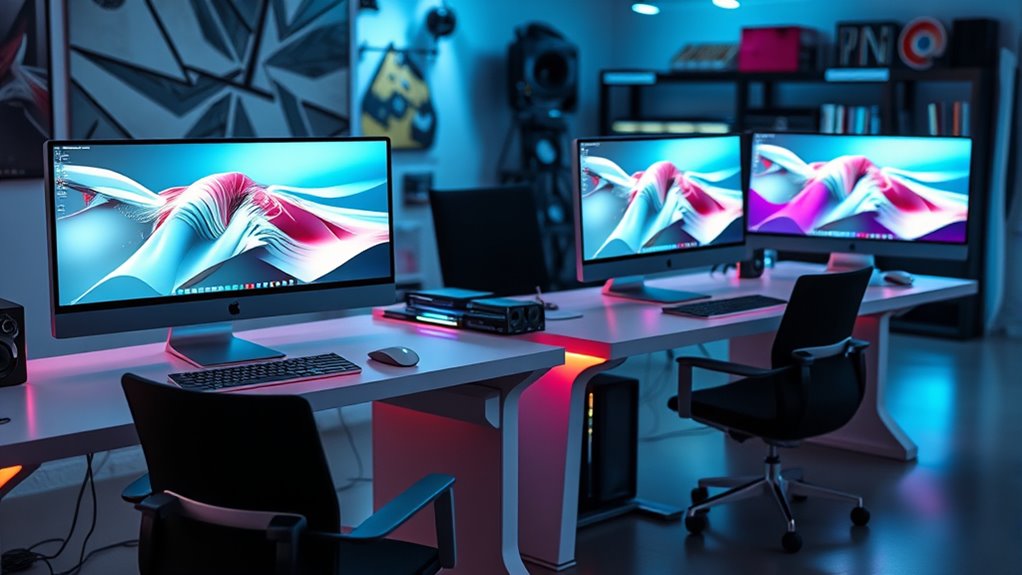

Choosing the right Mac Studio for 3D rendering in 2026 involves balancing raw performance, budget, and future-proofing. The Mac Studio M3 Ultra 32-Core CPU / 80-Core GPU stands out as the top overall choice, offering exceptional power for demanding projects. For those seeking a slightly lower-cost option without sacrificing too much performance, the Mac Studio M3 Ultra with 256GB RAM is a compelling alternative. Meanwhile, users who prefer portability might consider the MacBook Pro M5 Max, which delivers strong rendering capabilities in a mobile form factor. However, these options come with tradeoffs—higher-end models cost significantly more, and portability can mean less raw power compared to desktops. Keep reading for a detailed breakdown to find the best fit for your 3D rendering needs.

Get everyday essentials delivered free with Prime
- Fast, free delivery on millions of items
- Prime Video, Amazon Music and more included
- Member-only deals all year
Key Takeaways
- The Mac Studio M3 Ultra 32-Core CPU / 80-Core GPU is the best overall choice for intense 3D rendering tasks thanks to its unmatched processing power.
- Upgrading to larger SSDs or more RAM significantly improves workflow efficiency, especially for large projects, but also increases cost.
- While portable options like the MacBook Pro M5 Max can handle demanding rendering, they generally lag behind desktop models in raw performance.
- Price differences among these models reflect core hardware capabilities—more cores and RAM typically mean better performance but higher costs.
- Choosing between these options depends heavily on your workflow—whether you prioritize raw power, portability, or budget.
| Apple Mac Studio M3 Ultra 32-Core CPU / 80-Core GPU, 256GB RAM, 2TB SSD |  | Best Overall for Extreme 3D Rendering Power | Processor: M3 Ultra 32-Core CPU / 80-Core GPU | Memory: 256GB Unified Memory | Storage: 2TB SSD | VIEW ON AMAZON | See Our Full Breakdown |
| Apple Mac Studio M3 Ultra 32-Core CPU / 80-Core GPU, 256GB RAM, 4TB SSD | | Best for Heavy-Duty 3D and AI Workloads | Processor: M3 Ultra 32-Core CPU / 80-Core GPU | Memory: 256GB (configurable up to 512GB) | Storage: 4TB SSD (configurable up to 16TB) | VIEW ON AMAZON | See Our Full Breakdown |
| Apple Mac Studio M3 Ultra 32-Core CPU / 80-Core GPU, 256GB RAM, 1TB SSD | | Best for Balanced Power and Cost in 3D Work | Processor: M3 Ultra 32-Core CPU / 80-Core GPU | Memory: 256GB (up to 512GB) | Storage: 1TB SSD (up to 16TB) | VIEW ON AMAZON | See Our Full Breakdown |
| Apple 2026 MacBook Pro with M5 Max, 16.2-inch Liquid Retina XDR |  | Best Portable Power for 3D Rendering | Display: 16.2-inch Liquid Retina XDR | Processor: M5 Max 18-core CPU / 40-core GPU | Memory: 48GB Unified Memory | VIEW ON AMAZON | See Our Full Breakdown |
| Apple 2026 MacBook Pro with M5 Max, 14.2-inch Liquid Retina XDR |  | Best Compact Power for 3D Rendering | Display: 14.2-inch Liquid Retina XDR | Processor: M5 Max 18-core CPU / 32-core GPU | Memory: 36GB Unified Memory | VIEW ON AMAZON | See Our Full Breakdown |
| Apple 2026 Mac mini Desktop Computer with M5 Pro Chip |  | Best Compact Power for Versatile 3D Workflows | Processor: M5 Pro chip | Ports: Three Thunderbolt 5, HDMI, 2.5Gb Ethernet, two USB-C, headphone jack | Memory Bandwidth: 307GB/s | VIEW ON AMAZON | See Our Full Breakdown |
| Apple Mac Studio Desktop Computer with M5 Max Chip |  | Best High-End Powerhouse for Professional 3D Rendering | Processor: M5 Max chip | Memory: Up to 128GB | Storage: Up to 614GB/s bandwidth, up to 2x faster storage | VIEW ON AMAZON | See Our Full Breakdown |
| mac studio for 3d rendering | Processor | Memory | Storage | Connectivity |
|---|---|---|---|---|
| Apple Mac Studio M3 Ultra 32-C | M3 Ultra 32-Core CPU / 80-Core GPU | 256GB Unified Memory | 2TB SSD | Thunderbolt 5, USB 3, HDMI 2.1, 10Gb Ethernet |
| Apple Mac Studio M3 Ultra 32-C | M3 Ultra 32-Core CPU / 80-Core GPU | 256GB (configurable up to 512GB) | 4TB SSD (configurable up to 16TB) | Thunderbolt 5, USB 3, HDMI 2.1, 10Gb Ethernet |
| Apple Mac Studio M3 Ultra 32-C | M3 Ultra 32-Core CPU / 80-Core GPU | 256GB (up to 512GB) | 1TB SSD (up to 16TB) | Thunderbolt 5, USB 3, HDMI 2.1, 10Gb Ethernet |
| Apple 2026 MacBook Pro with M5 | M5 Max 18-core CPU / 40-core GPU | 48GB Unified Memory | 2TB SSD | Wi-Fi 7, Bluetooth 6 |
| Apple 2026 MacBook Pro with M5 | M5 Max 18-core CPU / 32-core GPU | 36GB Unified Memory | 2TB SSD | Wi-Fi 7, Bluetooth 6 |
| Apple 2026 Mac mini Desktop Co | M5 Pro chip | — | — | — |
| Apple Mac Studio Desktop Compu | M5 Max chip | Up to 128GB | Up to 614GB/s bandwidth, up to 2x faster storage | — |
More Details on Our Top Picks
Apple Mac Studio M3 Ultra 32-Core CPU / 80-Core GPU, 256GB RAM, 2TB SSD
This Mac Studio with the M3 Ultra chip stands out for its unparalleled processing and graphics capabilities, making it ideal for large-scale 3D rendering projects. Compared with the 4TB version, it offers slightly less storage but provides a more balanced mix of CPU, GPU, and memory for demanding workflows. Its support for multiple 8K displays and fast Thunderbolt 5 connectivity ensures that complex scenes and high-resolution assets are handled smoothly. The high price and size might deter users with limited space or budget, but for those needing maximum power, this model delivers.
Pros:- Exceptional processing and graphics performance for demanding workflows
- Supports up to 8K resolution with multiple displays
- Fast Thunderbolt 5 and extensive connectivity options
Cons:- High price may be prohibitive for some users
- Large size requires dedicated workspace
Best for: Professional 3D artists and studios needing top-tier performance and multi-display support
Not ideal for: Budget-conscious hobbyists or users with limited space, due to its high cost and large footprint
- Processor:M3 Ultra 32-Core CPU / 80-Core GPU
- Memory:256GB Unified Memory
- Storage:2TB SSD
- Display Support:Up to 8K resolution with multiple displays
- Connectivity:Thunderbolt 5, USB 3, HDMI 2.1, 10Gb Ethernet
Our verdict“This model is best suited for professionals who require maximum power and are prepared for its size and cost.”
Apple Mac Studio M3 Ultra 32-Core CPU / 80-Core GPU, 256GB RAM, 4TB SSD
This Mac Studio with the 4TB SSD outperforms the 2TB version in storage capacity and supports up to 8 high-resolution displays, making it ideal for data-heavy 3D rendering and AI applications. While it offers similar processing power to the 2TB model, the larger storage and configurability make it a more flexible choice for professionals working with massive assets. The added cost and size, however, could be a drawback for those with limited space or tighter budgets, and the upgradeability after purchase remains limited.
Pros:- Exceptional processing and graphics performance for demanding tasks
- Supports up to 8K resolution and 8 displays
- Large, configurable storage up to 16TB
Cons:- High price point may be prohibitive
- Limited upgrade options after purchase
- Large size may require dedicated workspace
Best for: Professionals handling large projects involving extensive datasets and multiple high-res displays
Not ideal for: Users on a tight budget or those needing a portable solution, due to its high price and fixed configuration
- Processor:M3 Ultra 32-Core CPU / 80-Core GPU
- Memory:256GB (configurable up to 512GB)
- Storage:4TB SSD (configurable up to 16TB)
- Display Support:Up to 8K with 8 displays
- Connectivity:Thunderbolt 5, USB 3, HDMI 2.1, 10Gb Ethernet
Our verdict“Ideal for high-end studios or professionals needing maximum storage and multi-display support, despite its premium cost.”
Apple Mac Studio M3 Ultra 32-Core CPU / 80-Core GPU, 256GB RAM, 1TB SSD
This Mac Studio balances high performance with a more affordable storage option at 1TB, making it suitable for professionals who need robust processing without the expense of larger SSDs. Its support for multiple 8K displays and extensive memory up to 512GB makes it well-suited for intensive 3D rendering and creative workflows. Compared to the 2TB and 4TB models, this strikes a middle ground, but its limited upgradeability and size still demand a dedicated workspace. It’s a smart choice for those who want power without the highest price tag.
Pros:- High processing and graphics capabilities
- Supports up to 8K resolution and multiple displays
- Fast SSD with capacity options up to 16TB
Cons:- Limited upgradeability after purchase
- Heavy and large, requiring dedicated workspace
Best for: Pro artists and designers seeking high-end performance with moderate storage needs
Not ideal for: Users needing massive storage or planning future upgrades, due to fixed configurations
- Processor:M3 Ultra 32-Core CPU / 80-Core GPU
- Memory:256GB (up to 512GB)
- Storage:1TB SSD (up to 16TB)
- Display Support:Up to 8K, 8 displays
- Connectivity:Thunderbolt 5, USB 3, HDMI 2.1, 10Gb Ethernet
Our verdict“A solid choice for professionals who prioritize processing power but want balanced storage and cost.”
Apple 2026 MacBook Pro with M5 Max, 16.2-inch Liquid Retina XDR
This MacBook Pro with the M5 Max chip offers impressive speed and AI capabilities in a portable form factor, making it suitable for on-the-go 3D rendering workflows. Its 16.2-inch Liquid Retina XDR display rivals desktop monitors in clarity, and 48GB of RAM combined with a 2TB SSD ensures smooth handling of complex assets. While it balances power and portability, the premium price and weight—over 4.7 pounds—may limit its practicality for frequent travel or extended portability needs. It excels for professionals who need mobility without sacrificing performance.
Pros:- Powerful M5 Max chip with AI acceleration
- High-quality Liquid Retina XDR display
- Large 48GB RAM and 2TB SSD for demanding tasks
Cons:- Premium price point
- Heavy for a 14-inch laptop
- Limited upgradeability after purchase
Best for: Mobile 3D artists and designers who need powerful specs in a portable package
Not ideal for: Desk-bound users seeking maximum upgradeability or large screen setups, due to size and cost
- Display:16.2-inch Liquid Retina XDR
- Processor:M5 Max 18-core CPU / 40-core GPU
- Memory:48GB Unified Memory
- Storage:2TB SSD
- Connectivity:Wi-Fi 7, Bluetooth 6
Our verdict“Best suited for professionals needing high performance on the move, despite its weight and cost.”
Apple 2026 MacBook Pro with M5 Max, 14.2-inch Liquid Retina XDR
This 14-inch MacBook Pro packs the M5 Max chip’s power into a portable and lighter form, ideal for professionals who need high-end specs on the go. Its 14.2-inch Liquid Retina XDR display offers excellent color accuracy and contrast, matching larger desktop displays for visual clarity. With 36GB of RAM and a 2TB SSD, it handles complex 3D projects smoothly. While it’s less expansive than the 16-inch model, its lighter weight and high performance make it a compelling choice for mobile creatives, though it still commands a premium price.
Pros:- Powerful M5 Max chip with AI capabilities
- High-quality 14.2-inch Liquid Retina XDR display
- Large 36GB RAM and 2TB SSD
Cons:- Premium price
- Heavy for a 14-inch laptop
- Limited upgrade options after purchase
Best for: Traveling 3D artists or those who need serious power in a manageable size
Not ideal for: Users requiring maximum upgradeability or the largest display, due to size and fixed configuration
- Display:14.2-inch Liquid Retina XDR
- Processor:M5 Max 18-core CPU / 32-core GPU
- Memory:36GB Unified Memory
- Storage:2TB SSD
- Connectivity:Wi-Fi 7, Bluetooth 6
Our verdict“Ideal for mobile professionals who need desktop-like performance in a portable package.”
Apple 2026 Mac mini Desktop Computer with M5 Pro Chip
The Mac mini with M5 Pro chip stands out for users who need a space-efficient yet capable machine. Compared to the Mac Studio with M5 Max, it offers solid performance suitable for demanding 3D rendering and AI tasks, but with a smaller footprint and fewer high-end features. Its multiple Thunderbolt 5 ports and support for three external displays make it a flexible choice for multi-monitor setups, though the limited information on pricing can complicate budgeting. This model is ideal for creative professionals who prioritize compactness and connectivity over raw power and upgradeability, which are more limited here.
Pros:- Compact and space-efficient design
- High-performance M5 Pro chip suited for AI and creative workflows
- Multiple connectivity options including Thunderbolt 5 and HDMI
- Supports up to three external displays
Cons:- Limited information on pricing and availability
- Potentially high cost for its feature set
- Less upgrade flexibility compared to larger desktops
Best for: Small studios or home offices needing a powerful yet space-saving 3D rendering setup with multiple displays.
Not ideal for: Large production studios or users who require maximum raw performance and upgrade options, as the mini’s capabilities are more modest compared to the Mac Studio with M5 Max.
- Processor:M5 Pro chip
- Ports:Three Thunderbolt 5, HDMI, 2.5Gb Ethernet, two USB-C, headphone jack
- Memory Bandwidth:307GB/s
- Storage Speed:Up to 2x faster
- Wireless:Wi-Fi 7, Bluetooth 6
- Display Support:Up to three external displays
Our verdict“This pick works best for compact setups where space is a concern but strong performance is still needed for 3D rendering tasks.”
Apple Mac Studio Desktop Computer with M5 Max Chip
The Mac Studio with M5 Max chip is designed for heavy-duty 3D rendering, AI, and creative workflows. It surpasses the Mac mini in raw power, offering up to 128GB of memory and blazing-fast storage bandwidth, making it ideal for large datasets and complex projects. Its extensive connectivity—including four Thunderbolt 5 ports, multiple USB options, HDMI, and SDXC—caters to professional environments needing maximum flexibility. While the high price might deter casual users, this machine’s performance and expandability make it a top choice for demanding creators. Compared to the Mac mini, it sacrifices some portability for professional-grade power and expandability.
Pros:- Exceptional processing power with M5 Max chip
- Up to 128GB of memory for large project handling
- Extensive ports including four Thunderbolt 5 and SDXC card slot
- Fast storage bandwidth supports large datasets
Cons:- High price point limits accessibility for some users
- Limited upgradeability due to integrated design
- Overpowered for simple or light 3D tasks
Best for: Professional 3D artists, VFX studios, or AI developers needing maximum performance and connectivity in a compact form factor.
Not ideal for: Hobbyists or casual users who won’t utilize the full power or need extensive upgrade options, as the premium price may not be justified for lighter workloads.
- Processor:M5 Max chip
- Memory:Up to 128GB
- Storage:Up to 614GB/s bandwidth, up to 2x faster storage
- Ports:Four Thunderbolt 5, two USB-C, two USB-A, HDMI, SDXC, headphone jack
- Wireless:Wi-Fi 7, Bluetooth 6
- Dimensions:7.76 x 7.76 x 3.74 inches
- Weight:5.94 pounds
Our verdict“This machine is tailored for professionals needing maximum power and connectivity in a compact desktop for intensive 3D rendering and AI workflows.”

How We Picked
Our selection process focused on performance benchmarks relevant to 3D rendering, including CPU and GPU power, RAM capacity, and storage options. We also considered build quality, future upgradability, and overall value for the investment. Since 3D rendering is highly demanding, models with the latest Apple silicon chips and maximum core counts naturally ranked higher. Portability was a secondary factor—desktops generally outperform laptops in raw rendering power, but we included some portable options for users who need mobility. The final lineup balances high-end performance with realistic price points, prioritizing options that will excel in rendering tasks over longevity and usability.
| mac studio for 3d rendering | Processor | Display Support | Connectivity |
|---|---|---|---|
| Apple Mac Studio M3 Ultra 32-C | M3 Ultra 32-Core CPU / 80-Core GPU | Up to 8K resolution with multiple displays | Thunderbolt 5, USB 3, HDMI 2.1, 10Gb Ethernet |
| Apple Mac Studio M3 Ultra 32-C | M3 Ultra 32-Core CPU / 80-Core GPU | Up to 8K with 8 displays | Thunderbolt 5, USB 3, HDMI 2.1, 10Gb Ethernet |
| Apple Mac Studio M3 Ultra 32-C | M3 Ultra 32-Core CPU / 80-Core GPU | Up to 8K, 8 displays | Thunderbolt 5, USB 3, HDMI 2.1, 10Gb Ethernet |
| Apple 2026 MacBook Pro with M5 | M5 Max 18-core CPU / 40-core GPU | — | Wi-Fi 7, Bluetooth 6 |
| Apple 2026 MacBook Pro with M5 | M5 Max 18-core CPU / 32-core GPU | — | Wi-Fi 7, Bluetooth 6 |
| Apple 2026 Mac mini Desktop Co | M5 Pro chip | Up to three external displays | — |
| Apple Mac Studio Desktop Compu | M5 Max chip | — | — |
Factors to Consider When Choosing Mac Studio For 3d Rendering
When selecting a Mac Studio for 3D rendering, it’s essential to evaluate several key factors that influence performance and workflow. Beyond raw specs, consider how much power you need for your typical projects, how much storage you’ll require, and whether portability or expandability matters to you. Understanding these elements helps avoid overspending on unnecessary features or choosing underpowered models that hinder productivity.Processing Power and GPU Performance
3D rendering is highly dependent on CPU and GPU capabilities. Prioritize models with multi-core processors and powerful GPUs, such as the M3 Ultra or M5 Max chips, which significantly cut down rendering times. Cheaper or lower-tier options may struggle with complex scenes or high-resolution textures, leading to longer wait times and potential workflow bottlenecks. Balance your project complexity with your budget to select a CPU and GPU combo that can handle your typical workloads without becoming obsolete quickly.
Memory and Storage
Ample RAM is critical for handling large models and multitasking during rendering. Aim for at least 32GB, with 64GB or more for intensive, professional-grade projects. Storage speed matters as well; SSDs with higher capacity (like 2TB or 4TB) facilitate faster data access and reduce project load times. Consider future needs—upgrading RAM or adding external storage later can extend your system’s lifespan, but initial capacity should match your current project demands to avoid bottlenecks.
Portability vs. Performance
While laptops like the MacBook Pro offer portability, they often lag behind desktops in raw rendering power. If your workflow demands frequent on-the-go work, a high-performance MacBook Pro may suffice, but for serious rendering, a desktop Mac Studio will deliver better results. Be mindful that sacrificing portability can mean higher costs and less flexibility, so evaluate your work environment and mobility needs carefully before choosing.
Budget and Future-Proofing
High-end models with maximum cores and RAM tend to be more expensive but offer greater longevity as rendering demands increase over time. Cheaper options might suffice for smaller projects but can become limiting quickly. Investing in a slightly more capable machine now can save money and hassle later, especially if you plan to upgrade your workflow or work on larger, more complex scenes in the future. Balance your current budget with anticipated project scope for the best long-term value.
Expandability and Upgradability
Some Mac models offer limited options for future upgrades, which can impact long-term usability. Desktop Macs like the Mac Studio typically allow for more internal expansion or external accessory upgrades. Laptops, however, are more fixed in their configuration. If you foresee needing more power down the line, consider models with higher initial specifications or external upgrade options, even if they come at a premium now. This foresight can prevent costly replacements sooner than expected.
Frequently Asked Questions
Can a MacBook Pro replace a Mac Studio for 3D rendering?
While the MacBook Pro with M5 Max chips offers impressive performance and portability, it generally can’t match the raw rendering power of a high-end Mac Studio equipped with M3 Ultra or M5 Max chips. For most demanding projects that require maximum CPU and GPU resources, a desktop Mac Studio remains the better choice. However, for lighter workloads or on-the-go work, a MacBook Pro can be a viable alternative, especially if mobility is a priority.
Is 256GB of RAM necessary for professional 3D rendering?
For most professional 3D rendering tasks, 256GB of RAM is more than sufficient and offers a significant performance advantage when working with large models or complex scenes. However, such high RAM capacities come with a steep price increase and are only necessary for very large-scale projects or specialized workflows. For typical professional use, 64GB or 128GB often strikes a good balance between performance and cost.
Should I prioritize SSD storage over RAM for 3D rendering?
Both SSD storage and RAM are important, but for 3D rendering, RAM tends to have a more direct impact on performance. Fast SSDs speed up data access and project load times, but without sufficient RAM, your system will still struggle to handle large files efficiently. Ideally, select a model with ample RAM first, then ensure it has fast, sizeable SSD storage to complement your workflow.
How future-proof are current Mac Studio models for 3D rendering?
Current Mac Studio models with the latest Apple silicon chips provide excellent performance that can handle most upcoming rendering workloads for several years. Their high core counts and advanced GPU options make them a strong investment. However, as 3D software and project sizes evolve, staying within models with maximum specifications ensures longer relevance. Future-proofing also depends on your workflow’s growth and whether you plan to upgrade components or external hardware regularly.
What is the biggest tradeoff when choosing a Mac Studio for 3D rendering?
The main tradeoff involves balancing cost against raw performance. High-end models with maximum cores and RAM deliver faster render times but come at a premium price. Conversely, opting for less powerful configurations saves money but may limit your ability to handle complex projects efficiently. Additionally, choosing portability over raw power can mean sacrificing performance, so aligning your hardware choice with your specific workflow needs is critical.
Conclusion
For users who need the fastest, most reliable performance and plan to handle complex, large-scale projects, the Mac Studio M3 Ultra 32-Core CPU / 80-Core GPU stands out as the best overall choice. Budget-conscious professionals or those with smaller projects will find the Mac Studio M3 Ultra with 256GB RAM offers excellent value. Creatives prioritizing mobility should consider the MacBook Pro M5 Max, although it doesn’t match desktop performance. Finally, those seeking future expandability or higher internal configurations should lean toward the Mac Studio desktop models, making this roundup a tailored guide for every type of 3D rendering professional in 2026.
As an affiliate, we earn on qualifying purchases.Halloween Picks
halloween