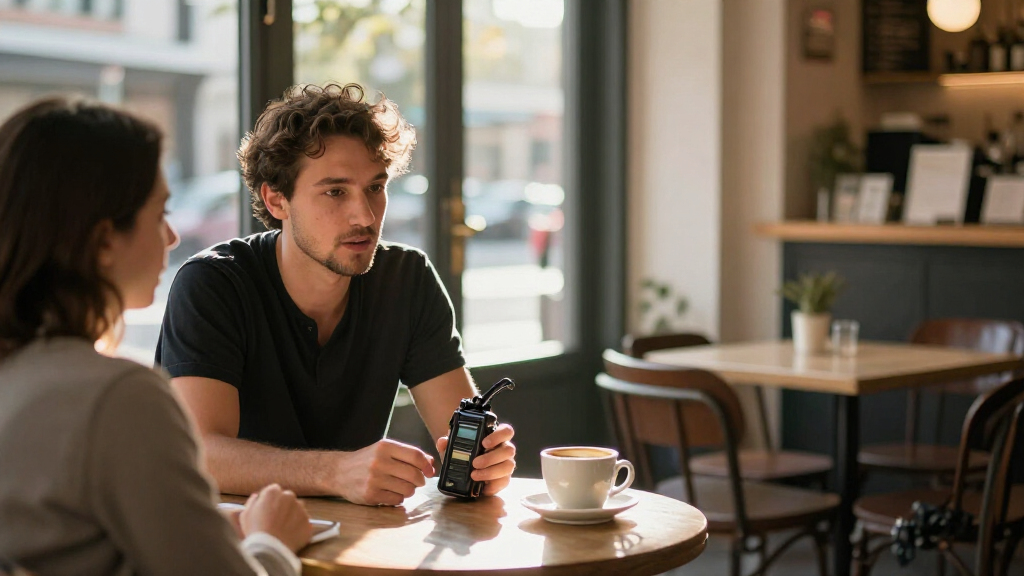

For most interviewers, I’d start with the EVISTR L359: its 128GB storage and AI transcription offer a practical mix of recording capacity and post-interview help. The Sony ICD-PX370 is a simpler alternative for buyers who value familiar controls and built-in USB, while the Plaud Note Pro suits people who want transcription and summaries at the center of their workflow. The main tradeoffs are recording control versus automated assistance, and generous storage versus simpler file management. I compare all 15 options by interview usability, playback and transfer, storage, and the extra work their features may require. Read on for the full breakdown and a recommendation matched to how you conduct interviews.

Get everyday essentials delivered free with Prime
- Fast, free delivery on millions of items
- Prime Video, Amazon Music and more included
- Member-only deals all year
Key Takeaways
The EVISTR L359 is the most balanced pick in this lineup: its 128GB storage and AI transcription pair capacity with a way to work through recordings after the interview.
AI tools change the workflow, not the need for a good recording. The iFLYTEK and Plaud Note Pro focus on transcription assistance, but buyers should still check how their files are accessed, reviewed, and exported.
Simple playback models remain useful for interviewers who edit manually. Sony’s built-in USB and the playback-focused Tonfarb, Sunlan, and EVIDA options keep attention on recording and listening rather than AI features.
Large storage is not the same as better interview audio. Models advertising 128GB, 136GB, or 160GB can hold more material, but microphone placement, recording settings, and clear file organization matter more to usable transcripts.
Controls and capacity define different kinds of value. The 2-inch screen and long-battery positioning of the Jaswill may suit users who manage longer sessions, while compact or lower-capacity options such as the HoTiyan and OM System WS-883 may appeal to lighter, simpler use.
| Cappsu Digital Voice Recorder with 32GB Built-in Memory |  | Best for Quick, Simple Interviews | Model: V02 | Storage: 32 GB built-in | Recording quality: Up to 1536 Kbps | VIEW LATEST PRICE | See Our Full Breakdown |
| EVISTR L359 Digital Voice Recorder with 128GB Storage and AI Transcription |  | Best for Transcription-Focused Interviews | Storage: 128 GB | Audio formats: MP3, WAV | Maximum recording quality: Up to 3072 kbps | VIEW LATEST PRICE | See Our Full Breakdown |
| Tonfarb Digital Voice Recorder with Playback, 136GB |  | Best for Long Recording Sessions | Total storage: 136 GB: 8 GB built-in and included 128 GB TF card | Recording formats: MP3, WAV | Maximum recording quality: Up to 1536 kbps PCM | VIEW LATEST PRICE | See Our Full Breakdown |
| EVIDA 128GB Digital Voice Recorder with Voice Activation and Playback |  | Best for On-Device File Management | Model: VR01 | Storage: 128 GB | Recording formats: MP3, WAV | VIEW LATEST PRICE | See Our Full Breakdown |
| Sunlan 16GB Digital Voice Recorder with Playback |  | Best for Lightweight, Basic Interviews | Storage: 16 GB | Recording format: WAV | Recording bitrate: 1536 kbps | VIEW LATEST PRICE | See Our Full Breakdown |
| Jaswill 64GB Digital Voice Recorder with Playback, 2‑inch Screen, Long Battery Life, MP3 Recording for Meetings, Lectures & Interviews |  | Best for Long Interview Days | Storage: 64 GB | Screen: 2-inch OLED | Recording formats: MP3, WAV | VIEW LATEST PRICE | See Our Full Breakdown |
| HoTiyan 8GB Digital Voice Recorder with Voice Activation |  | Best for Interview Beginners | Storage: 8 GB | Recording formats: MP3, WAV | Microphone: Built-in stereo | VIEW LATEST PRICE | See Our Full Breakdown |
| Tonfarb 64GB Digital Voice Recorder with Playback |  | Best for Hands-Off Recording | Storage: 64 GB | Recording formats: MP3, WAV | Microphone: Built-in stereo | VIEW LATEST PRICE | See Our Full Breakdown |
| EVISTR L357 64GB Digital Voice Recorder with Playback |  | Best for Adjustable Stereo Capture | Storage: 64 GB | Recording formats: WAV, MP3 | Microphone: Built-in stereo | VIEW LATEST PRICE | See Our Full Breakdown |
| Sony ICD-PX370 Mono Digital Voice Recorder with Built-In USB |  | Best for Simple, Dependable Interviews | Storage: 4 GB | Audio format: MP3 | Microphone mode: Mono | VIEW LATEST PRICE | See Our Full Breakdown |
| 16GB Digital Voice Recorder with Voice Activation |  | Best for Voice-Activated Interviews | Storage: 16 GB | Recording formats: MP3, WAV | Microphone: Built-in stereo | VIEW LATEST PRICE | See Our Full Breakdown |
| iFLYTEK Offline Voice Recorder with AI Transcription and Playback |  | Best for Offline Transcription | Storage: 8 GB | Transcription languages: English, Chinese, Japanese, Korean, Russian | Recording modes: Intelligent, conference, interview, speech | VIEW LATEST PRICE | See Our Full Breakdown |
| Plaud Note Pro AI Voice Recorder with Transcription and Summarization |  | Best Premium AI Workflow | Storage: 64 GB | Microphones: 4 MEMS + 1 VPU | Supported languages: 112 | VIEW LATEST PRICE | See Our Full Breakdown |
| NEXTSIGNAL 160GB Digital Voice Recorder with Playback |  | Best for High-Volume Recording | Storage: 160GB total: 32GB built in plus 128GB memory card | Continuous recording time: 68+ hours | Maximum recording time: Up to 11,500 hours | VIEW LATEST PRICE | See Our Full Breakdown |
| OM System WS-883 Digital Voice Recorder, 8GB, Black |  | Best for Straightforward Field Recording | Internal memory: 8 GB | Recording formats: Linear PCM, MP3 | Microphone: Built-in stereo | VIEW LATEST PRICE | See Our Full Breakdown |
| digital voice recorders for interview | Storage | Weight | Microphone | Recording formats |
|---|---|---|---|---|
| Cappsu Digital Voice Recorder | 32 GB built-in | 1.6 oz | Built-in; external microphone included | — |
| EVISTR L359 Digital Voice Reco | 128 GB | 2.24 oz (65 g) | Built-in, mono | — |
| Tonfarb Digital Voice Recorder | — | — | — | MP3, WAV |
| EVIDA 128GB Digital Voice Reco | 128 GB | 3.35 oz | Built-in, mono, with noise cancellation | MP3, WAV |
| Sunlan 16GB Digital Voice Reco | 16 GB | 35 g | Built-in, mono with noise cancellation | — |
| Jaswill 64GB Digital Voice Rec | 64 GB | 100 g | Mono with noise cancellation | MP3, WAV |
| HoTiyan 8GB Digital Voice Reco | 8 GB | — | Built-in stereo | MP3, WAV |
| Tonfarb 64GB Digital Voice Rec | 64 GB | — | Built-in stereo | MP3, WAV |
| EVISTR L357 64GB Digital Voice | 64 GB | 2.24 ounces | Built-in stereo | WAV, MP3 |
| Sony ICD-PX370 Mono Digital Vo | 4 GB | 136 g | — | — |
| 16GB Digital Voice Recorder wi | 16 GB | 1.6 ounces | Built-in stereo | MP3, WAV |
| iFLYTEK Offline Voice Recorder | 8 GB | 100 g | Built-in stereo, 6 microphones | — |
| Plaud Note Pro AI Voice Record | 64 GB | 30 g (1.06 oz) | — | — |
| NEXTSIGNAL 160GB Digital Voice | 160GB total: 32GB built in plus 128GB memory card | — | — | — |
| OM System WS-883 Digital Voice | — | 77 g | Built-in stereo | Linear PCM, MP3 |
More Details on Our Top Picks
Cappsu Digital Voice Recorder with 32GB Built-in Memory
The Cappsu is a straightforward choice for interviewers who want to start recording with little setup. Its one-click operation suits quick conversations, while the 1.6-ounce body is easy to carry between appointments. Voice activation can reduce silent stretches in files and help stretch the battery beyond its 20-hour continuous-recording figure. Compared with the EVISTR L359, it gives up large storage and app-based transcription, but avoids making an app part of the recording workflow. Its 32GB is fixed, with no card slot, and the built-in microphone may need help in noisy rooms; the included external microphone offers another option, though it adds setup. I’d choose it for uncomplicated, portable capture, not for automatic interview transcripts or the largest archive.
Pros:- One-click recording makes it quick to capture an unplanned conversation.
- Voice activation can limit empty recording time and extend battery use.
- Light 1.6-ounce design is easy to carry in a pocket.
- Includes an external microphone and 3.5mm earphone for flexible capture and playback.
Cons:- The 32GB internal storage cannot be expanded with a memory card.
- The built-in microphone may be less suitable for noisy interview settings without the included external microphone.
- Does not offer the AI transcription features available with the EVISTR L359.
Best for: Interviewers who want a lightweight recorder for occasional one-on-one conversations and prefer simple, one-button operation.
Not ideal for: Researchers recording long projects who need expandable storage, or interviewers who want built-in AI transcription and summaries.
- Model:V02
- Storage:32 GB built-in
- Recording quality:Up to 1536 Kbps
- Battery life:Up to 20 hours continuous; up to 50 hours voice-activated
- Weight:1.6 oz
- Dimensions:4.16 × 1.46 × 0.47 in
- Interface:USB Type-C
- Microphone:Built-in; external microphone included
Our verdict“Choose the Cappsu for portable, low-fuss interviews, but skip it if you need expandable capacity or app-based transcription.”
EVISTR L359 Digital Voice Recorder with 128GB Storage and AI Transcription
The L359 is the clearest fit here for interviewers who want recordings to become working notes quickly. Its AI DVR Link app supports transcription in 113 languages, summaries, and speaker identification, adding a post-interview workflow that the Cappsu and Sunlan do not offer. The 128GB storage also accommodates a substantial archive, and recording options include MP3 and WAV. Voice activation and noise reduction help with routine capture, while wired OTG transfer offers a direct route to a phone without Bluetooth. The tradeoff is that the AI tools depend on the app, so this is less appealing if you want a self-contained recorder. Its built-in microphone is mono, and the listed battery is nonstandard. I’d pick it over the EVIDA when transcription matters more than standalone simplicity.
Pros:- AI app supports transcription in 113 languages, summaries, and speaker identification.
- 128GB storage provides room for a large collection of interviews.
- Records in MP3 and WAV, giving buyers a choice of file format.
- Wired OTG transfer supports direct file movement to a compatible phone.
Cons:- AI functions require the AI DVR Link app.
- No Bluetooth transfer is provided.
- Uses a nonstandard included battery, which may limit replacement options.
Best for: Journalists, researchers, and multilingual interviewers who want transcripts, summaries, and speaker identification through a companion app.
Not ideal for: Buyers who want wireless file transfer, app-independent transcription, or a recorder with a conventional replaceable battery.
- Storage:128 GB
- Audio formats:MP3, WAV
- Maximum recording quality:Up to 3072 kbps
- Recording time per charge:Up to 33 hours
- Transcription languages:113
- Connectivity:USB Type-C; wired OTG
- Microphone:Built-in, mono
- Weight:2.24 oz (65 g)
Our verdict“Choose the L359 if interview transcripts and app-assisted review matter more than wireless transfer or a standalone workflow.”
Tonfarb Digital Voice Recorder with Playback, 136GB
For interviewers who care more about recording time and storage than automated transcripts, this Tonfarb pairs 136GB total capacity with an advertised battery life of up to 68 hours. That makes it a practical fit for extended fieldwork or frequent sessions where charging and file cleanup may be inconvenient. Unlike the EVISTR L359, it does not list AI transcription, but it does include a 128GB TF card alongside 8GB of internal memory, so capacity can be replaced or moved separately. MP3 and WAV recording, voice activation, and noise reduction cover useful basics; A-B repeat can help replay a segment. The 1.44-inch display adds a little on-device control, though the listed weight differs between product details. I’d favor it over the EVIDA for card-based capacity, while accepting less certainty about its published weight.
Pros:- Includes 8GB built-in storage and a 128GB TF card.
- Advertised battery life reaches up to 68 hours.
- Supports both MP3 and WAV recording.
- Voice activation, noise reduction, and A-B repeat support capture and review.
Cons:- Published weight is inconsistent: 97 g in the description and 100 g in product information.
- No AI transcription or speaker identification is listed.
- The included TF card adds a removable-media step compared with the Cappsu’s built-in storage.
Best for: Field researchers and frequent interviewers who need substantial recording capacity, long advertised battery life, and a removable memory card.
Not ideal for: Buyers who need verified lightweight carry, AI-generated transcripts, or a recorder with clearly consistent product specifications.
- Total storage:136 GB: 8 GB built-in and included 128 GB TF card
- Recording formats:MP3, WAV
- Maximum recording quality:Up to 1536 kbps PCM
- Battery capacity:1100 mAh
- Advertised battery life:Up to 68 hours
- Display:1.44-inch LCD
- Connectivity:USB-C
- Headphone jack:3.5 mm
Our verdict“Choose this Tonfarb for long sessions and removable high-capacity storage, not for transcription automation or fully consistent published specs.”
EVIDA 128GB Digital Voice Recorder with Voice Activation and Playback
The EVIDA suits interviewers who want large storage and practical controls in one recorder, without relying on a transcription app. Its 128GB capacity and up to 54 hours of continuous recording support a sizeable run of sessions, while six voice-activation sensitivity levels let users adjust how readily it starts capturing speech. Compared with the Tonfarb 136GB, the EVIDA has less total storage but avoids a separate TF card; compared with the EVISTR L359, it has no AI transcription or phone OTG workflow. Playback, password protection, MP3/WAV support, and USB file transfer make it useful for basic review and file handling. The notable interview limitation is its lack of a headphone jack, which restricts private monitoring and playback through wired earphones.
Pros:- 128GB storage accommodates a substantial interview archive.
- Six voice-activation sensitivity levels allow adjustment for different rooms.
- Supports both MP3 and WAV recording.
- Includes playback, password protection, and USB file transfer.
Cons:- No headphone jack for wired monitoring or private listening.
- The listed C battery is not accompanied by clear inclusion details.
- Does not provide AI transcription features like the EVISTR L359.
Best for: Interviewers who want high built-in capacity, adjustable voice activation, and basic playback and file transfer without a companion AI app.
Not ideal for: People who need wired headphone monitoring, phone-based OTG transfers, or automatic transcription and summaries.
- Model:VR01
- Storage:128 GB
- Recording formats:MP3, WAV
- Maximum recording bitrate:1536 kbps
- Continuous recording time:Up to 54 hours
- Microphone:Built-in, mono, with noise cancellation
- Voice activation:6 sensitivity levels
- Display:1.5 inches
- Weight:3.35 oz
Our verdict“Choose the EVIDA for high-capacity, app-free recording and adjustable voice activation, but skip it if headphone monitoring is part of your interview routine.”
Sunlan 16GB Digital Voice Recorder with Playback
The Sunlan keeps interview recording simple: a one-button control, built-in speaker, and compact 35-gram body make it approachable for students or occasional interviewers who want to record and replay without much setup. Its voice activation can trim silence, and USB transfer moves WAV files to a computer for storage or transcription. Compared with the Cappsu, it has half the listed storage and a shorter maximum recording time, but adds a built-in speaker for quick playback without earphones. The mono microphone and 16GB capacity make it less suited to noisy environments or ongoing research archives, and playback is limited to seven hours. I’d choose it over the EVIDA when portability and simple controls matter more than storage, while accepting fewer format choices and less capacity.
Pros:- One-button operation makes recording and playback straightforward.
- At 35 g, it is easy to carry to interviews and meetings.
- Voice activation can reduce silent stretches in recordings.
- Built-in speaker allows quick playback without connecting earphones.
Cons:- 16GB storage is less than the Cappsu’s 32GB and the high-capacity EVIDA.
- Mono built-in microphone may not suit noisy or multi-speaker interviews.
- Playback time is limited to up to seven hours.
Best for: Students and occasional interviewers who want a small recorder with simple controls and built-in speaker playback.
Not ideal for: Interviewers building a large audio archive, recording in noisy locations, or needing more than seven hours of playback between charges.
- Storage:16 GB
- Recording format:WAV
- Recording bitrate:1536 kbps
- Recording time:Up to 30 hours
- Playback time:Up to 7 hours
- Microphone:Built-in, mono with noise cancellation
- Speaker:Built-in
- Weight:35 g
- Headphone jack:3.5 mm
Our verdict“Choose the Sunlan for lightweight, simple interviews and quick speaker playback, but select a higher-capacity recorder for frequent or long-term work.”
Jaswill 64GB Digital Voice Recorder with Playback, 2‑inch Screen, Long Battery Life, MP3 Recording for Meetings, Lectures & Interviews
The Jaswill is a strong fit for interviewers who need to record several sessions without stopping to charge or clear space. Its 72-hour continuous MP3 recording claim and 64GB storage give it more runway than the 4GB Sony ICD-PX370, while the larger 2-inch OLED screen is easier to check at a glance than the EVISTR L357’s 1-inch display. The mono microphone with noise cancellation may suit a seated, single-speaker interview, but it lacks the spatial detail of a stereo setup such as the L357’s. Voice activation can help limit silent sections, and WAV support gives buyers another recording format. The main practical concern is its nonstandard battery, which may be harder to replace; its listed 6-bit encryption is also a limited security feature rather than a reason to treat sensitive recordings as fully protected.
Pros:- 64GB internal storage leaves more room for extended interview sessions than the Sony ICD-PX370’s 4GB.
- Up to 72 hours of continuous MP3 recording reduces charging interruptions on long recording schedules.
- The 2-inch OLED screen is relatively easy to read while checking recording status.
- Voice activation and noise cancellation can help manage silence and background sound.
Cons:- The mono microphone does not capture stereo separation for multiple speakers or room ambience.
- The included single battery is described as nonstandard, which may complicate replacement.
- The listed 6-bit encryption offers limited reassurance for highly sensitive interview files.
Best for: Interviewers recording multiple long, mostly one-on-one sessions who want generous onboard storage and an easy-to-read screen.
Not ideal for: Interviewers who need stereo separation, or frequent travelers who want a recorder with an easy-to-replace standard battery.
- Storage:64 GB
- Screen:2-inch OLED
- Recording formats:MP3, WAV
- Microphone:Mono with noise cancellation
- Continuous MP3 recording:Up to 72 hours
- Headphone jack:3.5 mm
- Weight:100 g
- Warranty:1 year
Our verdict“Choose the Jaswill for long, single-speaker interview days where storage and battery runtime matter more than stereo capture or easy battery replacement.”
HoTiyan 8GB Digital Voice Recorder with Voice Activation
The HoTiyan keeps the basics approachable for someone recording occasional interviews: it has a built-in stereo microphone, voice activation, and playback controls that include A-B repeat and variable speed. Those playback tools are useful when checking a quote or replaying a short passage, while password protection and timestamps add practical file-management options. Compared with the 64GB Tonfarb, its 8GB capacity means less room for a run of long interviews, so regular users will need to transfer files more often. Its stated recording time also varies by bitrate, making the headline figure less helpful for planning than the Sony ICD-PX370’s specified 57-hour battery life. The rechargeable battery is convenient, but its continuous recording limit is up to 20 hours, not the kind of multi-day endurance offered by the Jaswill.
Pros:- Built-in stereo microphone can capture more spatial detail than mono recorders such as the Sony ICD-PX370.
- Voice activation can reduce silent sections and help stretch limited storage.
- A-B repeat and variable-speed playback make it easier to revisit interview passages.
- Rechargeable battery supports up to 20 hours of continuous recording.
Cons:- 8GB storage is modest compared with the 64GB Jaswill and Tonfarb models.
- Recording-time claims vary with bitrate, so usable capacity is harder to estimate from the listed figures.
- The 1.1-inch screen is small for navigating files or checking settings.
Best for: New or occasional interview recordists who want stereo capture and simple tools for reviewing quotes without a steep feature set.
Not ideal for: Journalists recording long interviews every day who need large onboard storage or clearly specified extended battery endurance.
- Storage:8 GB
- Recording formats:MP3, WAV
- Microphone:Built-in stereo
- Continuous recording:Up to 20 hours
- Screen:1.1 inches
- Connections:Micro USB 2.0, 3.5 mm headphone jack
- Playback features:A-B repeat, variable speed
- Battery:Rechargeable 3.6 V, 300 mAh lithium-ion
Our verdict“Pick the HoTiyan for occasional interviews and easy quote review, but choose a higher-capacity recorder if you routinely record long sessions.”
Tonfarb 64GB Digital Voice Recorder with Playback
The Tonfarb suits interviewers who want plenty of storage and recording controls that can reduce hands-on management. Its one-click recording supports a quick start, while voice activation, scheduled recording, and file segmentation offer more automation than the simpler Sony ICD-PX370. A built-in stereo microphone and WAV support give it a flexible format for interviews, and A-B looping helps when checking a quote. The 64GB capacity is a clear step up from the HoTiyan’s 8GB, but the advertised 48-hour runtime applies to MP3 recording at just 32kbps, not necessarily higher-quality WAV sessions. Battery information is also inconsistent: the listing mentions both a 600 mAh battery and an included AAA battery. That uncertainty makes it harder to plan dependable recording coverage than with a model whose power details are clearer.
Pros:- 64GB storage provides substantially more room than the HoTiyan’s 8GB.
- One-click recording is suited to quick starts before an interview begins.
- Voice activation, scheduled recording, and file segmentation offer flexible recording management.
- Stereo microphone, WAV support, and A-B playback provide useful tools for capturing and reviewing interviews.
Cons:- Battery details conflict between a 600 mAh battery and an included AAA battery.
- The up-to-48-hour runtime is specified for MP3 at 32kbps, not all recording settings.
- The 1.44-inch screen is small for reviewing files and changing settings.
Best for: Interviewers who want a high-capacity recorder with scheduled and voice-activated recording for sessions they cannot constantly monitor.
Not ideal for: Buyers who need confirmed battery specifications or intend to record interviews in high-bitrate formats for long stretches.
- Storage:64 GB
- Recording formats:MP3, WAV
- Microphone:Built-in stereo
- Maximum PCM bitrate:1536 kbps
- Continuous recording:Up to 48 hours at 32 kbps MP3
- Screen:1.44 inches
- Connections:USB 2.0, 3.5 mm headphone jack
- Dimensions:0.47 x 1.45 x 4 inches
Our verdict“Choose the Tonfarb for automated recording and ample storage, but avoid relying on its longest runtime claim for high-quality, extended WAV interviews.”
EVISTR L357 64GB Digital Voice Recorder with Playback
The EVISTR L357 is the more adaptable choice for interviewers who need to adjust how the recorder responds to different voices and room conditions. Its stereo microphone, seven recording-gain levels, and seven voice-activation sensitivity levels provide more control than the Jaswill’s mono microphone. That flexibility can help when speaker distance or background sound changes, though it also means more settings to manage than on a straightforward one-click option like the Tonfarb. The USB-C connection is a practical advantage for file transfer, and 64GB storage supports longer recording schedules. Its listed 32-hour continuous recording is less than the Jaswill’s 72-hour claim, and battery-life figures vary across the product details. A 1-inch screen also makes checking settings and files less comfortable than using the larger Jaswill display.
Pros:- Stereo recording can preserve speaker separation and room detail better than the mono Jaswill.
- Seven gain and seven voice-activation sensitivity levels allow fine adjustment for interview conditions.
- USB-C simplifies file transfer to compatible computers compared with older Micro USB connections.
- 64GB storage and WAV/MP3 support suit extended recording and flexible file handling.
Cons:- The 1-inch screen is small for checking recording status and navigating files.
- Battery-life figures vary across the product details, making runtime planning less certain.
- Its listed 32-hour continuous recording is shorter than the Jaswill’s stated 72 hours.
Best for: Interviewers who want stereo recordings and hands-on control over gain and voice activation, especially when speaker distance may vary.
Not ideal for: People who prioritize a large display, the longest stated recording runtime, or a recorder with very few settings to manage.
- Storage:64 GB
- Recording formats:WAV, MP3
- Microphone:Built-in stereo
- Recording gain:7 levels
- Voice activation sensitivity:7 levels
- Continuous recording:Up to 32 hours
- Connectivity:USB Type-C; 3.5 mm headphone jack
- Weight:2.24 ounces
Our verdict“Choose the EVISTR L357 when adjustable stereo capture and USB-C matter more than a large screen or the longest listed runtime.”
Sony ICD-PX370 Mono Digital Voice Recorder with Built-In USB
The Sony ICD-PX370 takes a simpler approach than the feature-heavy Tonfarb and EVISTR L357: it records MP3, uses auto voice recording to reduce background noise, and connects directly to a PC through its built-in USB plug. That cable-free transfer is convenient for interviewers who regularly move files to a computer, and two AA batteries are easier to source than the Jaswill’s nonstandard battery. Sony lists up to 57 hours of battery life, but its 4GB storage is the smallest here, so frequent interviewers will need to offload recordings often. Its mono recording is also less suited to capturing two speakers with spatial separation than the stereo HoTiyan or EVISTR L357. The 2.5mm headphone jack may require an adapter for common 3.5mm headphones, adding a small but real monitoring inconvenience.
Pros:- Built-in USB allows direct PC file transfer without carrying a separate cable.
- Up to 57 hours of battery life supports extended recording schedules.
- Auto voice recording is designed to reduce background noise around speech.
- Two AA batteries are easier to source and replace than the Jaswill’s nonstandard single battery.
Cons:- 4GB storage is limited beside the 64GB Jaswill, Tonfarb, and EVISTR L357.
- Mono recording does not provide the stereo separation available on the HoTiyan and EVISTR L357.
- The 2.5mm headphone jack may need an adapter for standard 3.5mm headphones.
Best for: Interviewers who value straightforward MP3 recording, easy computer transfer, and replaceable AA batteries over large storage or stereo capture.
Not ideal for: Researchers recording many long interviews between file transfers, or buyers who need stereo audio and a standard headphone connection.
- Storage:4 GB
- Audio format:MP3
- Microphone mode:Mono
- Battery life:Up to 57 hours
- Power source:2 AA batteries
- Headphone jack:2.5 mm
- Interface:Built-in USB
- Weight:136 g
Our verdict“Pick the Sony for simple MP3 interviews and easy file transfer, provided you can work around limited storage and mono recording.”
16GB Digital Voice Recorder with Voice Activation
For interviews with natural pauses, voice activation can reduce stretches of empty audio and make better use of this recorder’s 16GB storage. Its built-in stereo microphone records in MP3 or WAV, giving buyers a choice between smaller files and a higher-quality format. Compared with the OM System WS-883, this model adds voice activation and playback tools such as A-B repeat and variable speed, while the OM System offers Linear PCM and a stated 68-hour battery life. Here, the advertised recording time is up to 20 hours, but playback with earphones is listed at only up to 8 hours. The Micro USB transfer also feels less convenient than a recorder with built-in USB. I’d choose it for solo interviews or sit-down conversations where automatic pausing is useful, not for buyers who want the simplest file-transfer setup.
Pros:- Voice activation can reduce recording of quiet gaps.
- Records in both MP3 and WAV.
- Up to 20 hours of continuous recording is listed.
- A-B repeat and variable-speed playback help with reviewing interview passages.
Cons:- Playback time with earphones is listed at up to 8 hours, well below the recording-time figure.
- Computer file transfers require a Micro USB cable.
- The built-in microphone may be less adaptable than a separate interview microphone.
Best for: Interviewers recording one-on-one conversations who want voice activation to limit silent sections and flexible playback for reviewing quotes.
Not ideal for: Reporters who need extended playback between charges or want to transfer files without carrying a Micro USB cable.
- Storage:16 GB
- Recording formats:MP3, WAV
- Microphone:Built-in stereo
- Continuous recording time:Up to 20 hours
- Playback time:Up to 8 hours with earphones
- Screen:1.1 inches
- Connectivity:Micro USB
- Weight:1.6 ounces
Our verdict“Choose this recorder for interviews where voice-activated recording and playback controls matter more than long playback or cable-free transfers.”
iFLYTEK Offline Voice Recorder with AI Transcription and Playback
The iFLYTEK stands apart for interviewers who want speech-to-text on the recorder rather than a workflow built around manual transcription. It supports offline transcription in five languages and offers interview-specific recording mode, bookmarks, and timeline playback—useful for locating a quote without replaying an entire conversation. Its six-microphone noise reduction aims to help in less controlled rooms, though background noise and accents can still affect transcription accuracy, and the microphone must remain uncovered. Compared with the Plaud Note Pro, iFLYTEK lists fewer transcription languages but emphasizes offline transcription and exports to PDF, Word, or TXT. Its 8GB storage is also modest beside the Plaud’s 64GB. The listed battery details are inconsistent: the specs name an AA battery while also stating up to 190 hours, so I would verify the power setup before relying on that figure for fieldwork.
Pros:- Offline transcription supports English, Chinese, Japanese, Korean, and Russian.
- Interview mode, bookmarks, and timeline playback support quote review.
- Six-microphone noise reduction is designed for varied recording environments.
- Exports transcripts as PDF, Word, or TXT.
Cons:- Transcription accuracy can suffer with background noise or accents.
- The microphone must not be covered during recording.
- Battery information is unclear, with an AA battery listed alongside a 190-hour battery-life claim.
Best for: Multilingual interviewers who need offline transcription, searchable bookmarks, and document exports without depending on a cloud-first recording workflow.
Not ideal for: People recording long, high-stakes interviews who need clearly specified battery performance or larger onboard storage.
- Storage:8 GB
- Transcription languages:English, Chinese, Japanese, Korean, Russian
- Recording modes:Intelligent, conference, interview, speech
- Microphone:Built-in stereo, 6 microphones
- Screen:3 inches
- Battery information:1 AA battery listed; up to 190 hours listed
- Export formats:PDF, Word, TXT
- Weight:100 g
Our verdict“Pick the iFLYTEK if offline transcription and document export are more useful to your interview workflow than large storage or a clearly documented battery setup.”
Plaud Note Pro AI Voice Recorder with Transcription and Summarization
For interviewers who need recordings turned into usable notes quickly, the Plaud Note Pro pairs automatic transcription in 112 languages with summaries and speaker labels. Its five-microphone array and AI beamforming are designed to focus capture in meetings and calls, while the credit-card-sized body and magnetic phone attachment make it easy to carry between interviews. Compared with the iFLYTEK Offline Voice Recorder, Plaud offers far broader language support and a slimmer form, but iFLYTEK specifically lists offline transcription; Plaud’s advanced AI usage limits may require a paid subscription. The 64GB storage and 30-hour battery life support frequent use, yet there is no headphone jack for direct monitoring. Its privacy certifications may matter to professionals handling sensitive conversations, but buyers should check how their chosen app and subscription workflow handles recordings before adopting it for confidential interviews.
Pros:- Transcribes in 112 languages and can generate summaries and speaker labels.
- Four MEMS microphones and one VPU microphone support AI beamforming.
- 64GB storage and a listed 30-hour battery life suit frequent recording.
- Slim 30 g design includes a magnetic phone attachment.
Cons:- Higher AI usage limits require a paid subscription.
- No headphone jack for direct audio monitoring.
- The app-based AI workflow may not suit buyers seeking offline transcription.
Best for: Consultants, journalists, and research teams who need multilingual transcripts, speaker labels, and summaries across a mobile interview workflow.
Not ideal for: Interviewers who require direct headphone monitoring, want to avoid subscription limits, or need a clearly offline transcription workflow.
- Storage:64 GB
- Microphones:4 MEMS + 1 VPU
- Supported languages:112
- Battery life:30 hours
- Display:0.95-inch AMOLED
- Connectivity:Bluetooth 5
- Weight:30 g (1.06 oz)
- Dimensions:2.13 × 3.37 × 0.12 inches
Our verdict“Choose the Plaud Note Pro if you value fast multilingual transcripts and summaries enough to accept subscription limits and app-based processing.”
NEXTSIGNAL 160GB Digital Voice Recorder with Playback
The NEXTSIGNAL is the capacity pick for interviewers who keep extensive archives on the recorder: its 160GB total storage combines 32GB built in with a 128GB memory card. That gives it a much larger stated capacity than the OM System WS-883 and its 8GB internal memory, though the NEXTSIGNAL’s headline figure depends on the included card. One-touch recording, dual stereo microphones, and normal, meeting, outdoor, and long-distance modes make it adaptable to different interview settings. For reviewing material, bookmarks, A-B repeat, and variable-speed playback are practical advantages over a simpler recorder. The tradeoff is that its feature-rich playback and voice-control setup may take more learning than a basic model, and the supplied data does not clarify how the listed 68-plus-hour recording time relates to settings or battery conditions. Its 1.44-inch screen is functional, not especially large for navigating long archives.
Pros:- 160GB total capacity includes 32GB built in and a 128GB memory card.
- Dual built-in stereo microphones and multiple recording modes suit varied settings.
- One-touch recording can help capture the start of an interview promptly.
- Bookmarks, A-B repeat, and variable-speed playback aid review.
Cons:- The full 160GB capacity depends on a memory card rather than built-in storage alone.
- The listed 68-plus-hour continuous recording figure lacks detail about settings and conditions.
- The 1.44-inch screen may feel cramped when navigating a large archive.
Best for: Researchers and journalists who record many interviews and want substantial onboard-plus-card storage with playback tools for finding key passages.
Not ideal for: Buyers who want a simple, minimal recorder or need unambiguous battery and recording-time expectations before field use.
- Storage:160GB total: 32GB built in plus 128GB memory card
- Continuous recording time:68+ hours
- Maximum recording time:Up to 11,500 hours
- Recording bitrate:1536 Kbps
- Audio formats:WAV, MP3
- Microphones:Built-in dual stereo microphones
- Battery capacity:1100 mAh
- Screen:1.44 inches
- Headphone jack:3.5 mm
Our verdict“Choose the NEXTSIGNAL for large interview archives and in-device review tools, provided you are comfortable relying partly on a memory card.”
OM System WS-883 Digital Voice Recorder, 8GB, Black
The WS-883 is the straightforward choice for interviewers who want a recognizable recording setup without AI transcription features or unusually large storage. Its built-in stereo microphones capture interviews in Linear PCM or MP3, letting buyers favor uncompressed audio or smaller, easier-to-store files. The listed 68-hour battery life and included AAA batteries also make it simpler to prepare for a day of recording than a rechargeable model whose playback time is much shorter than its recording figure, such as the 16GB Digital Voice Recorder with Voice Activation. On the other hand, the WS-883 has only 8GB of internal memory and no stated voice activation, bookmarks, or interview transcription. Its 2,080-hour maximum recording claim will depend on recording settings, so it should not be read as a high-quality PCM capacity estimate. I’d favor it for basic sit-down interviews where dependable format choice and battery replacement matter more than automation.
Pros:- Records in Linear PCM and MP3.
- Built-in stereo microphones suit seated conversations.
- Two AAA batteries are included, with 68 hours of battery life listed.
- USB 2.0 and a 3.5 mm headphone jack support file transfer and listening.
Cons:- 8GB internal memory is limited beside the NEXTSIGNAL’s 160GB total capacity.
- Requires AAA batteries rather than a rechargeable internal battery.
- No transcription, voice activation, or bookmarking features are listed.
Best for: Students, local reporters, and oral-history interviewers who want stereo recording, Linear PCM and MP3 options, and replaceable batteries.
Not ideal for: Professionals managing large interview archives who need high capacity, automatic transcription, or built-in tools for marking quotes.
- Internal memory:8 GB
- Recording formats:Linear PCM, MP3
- Microphone:Built-in stereo
- Maximum recording time:2,080 hours
- Battery life:68 hours
- Batteries:2 AAA batteries included
- USB interface:USB 2.0
- Headphone jack:3.5 mm
- Weight:77 g
Our verdict“Pick the WS-883 for uncomplicated stereo interviews and replaceable batteries, but choose a higher-capacity or transcription-focused recorder for a larger workflow.”
How We Picked
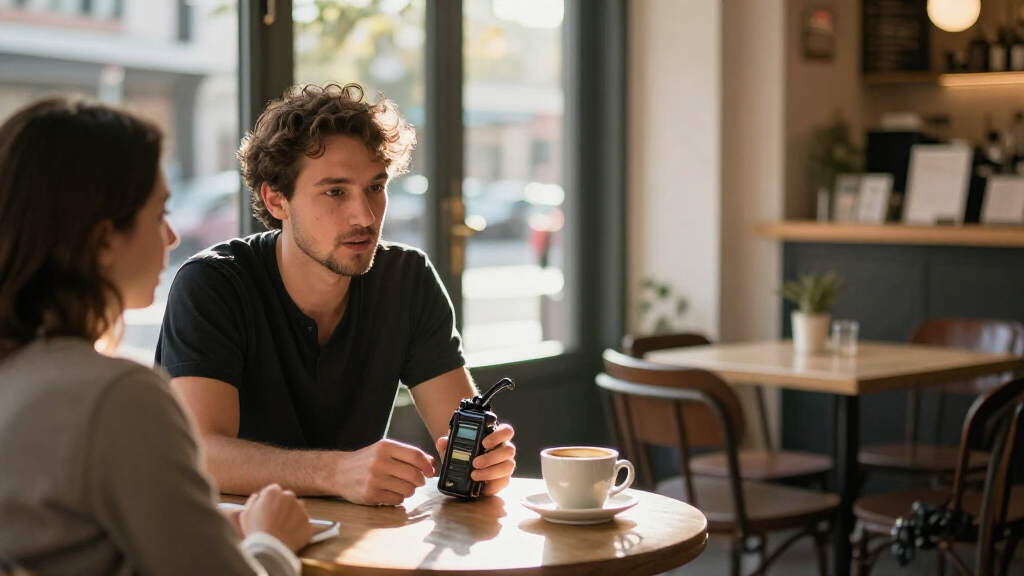
I ranked these recorders for the practical demands of interviews: capturing spoken answers, keeping long sessions manageable, reviewing files, and moving recordings into a transcription or editing workflow. I looked at stated storage, playback and connection features, voice activation, screen and control information, and whether transcription or summarization is part of the product’s pitch. I gave more weight to features that can make a real interview easier to run and review than to capacity figures alone.
The ranking favors flexible tools that balance recording with post-session handling. The EVISTR L359 leads for combining large stated storage with AI transcription; simpler models rank well when their controls or file transfer suit buyers who prefer manual work. AI features do not automatically place a model above a recorder with a clearer fit for straightforward interviews: subscription or export details, supported workflows, and how much human transcript checking is needed can affect the value. Where product names or listed specifications give limited detail, I avoid assuming performance that is not stated.
| digital voice recorders for interview | Recording formats |
|---|---|
| Cappsu Digital Voice Recorder | — |
| EVISTR L359 Digital Voice Reco | — |
| Tonfarb Digital Voice Recorder | MP3, WAV |
| EVIDA 128GB Digital Voice Reco | MP3, WAV |
| Sunlan 16GB Digital Voice Reco | — |
| Jaswill 64GB Digital Voice Rec | MP3, WAV |
| HoTiyan 8GB Digital Voice Reco | MP3, WAV |
| Tonfarb 64GB Digital Voice Rec | MP3, WAV |
| EVISTR L357 64GB Digital Voice | WAV, MP3 |
| Sony ICD-PX370 Mono Digital Vo | — |
| 16GB Digital Voice Recorder wi | MP3, WAV |
| iFLYTEK Offline Voice Recorder | — |
| Plaud Note Pro AI Voice Record | — |
| NEXTSIGNAL 160GB Digital Voice | — |
| OM System WS-883 Digital Voice | Linear PCM, MP3 |
Factors to Consider When Choosing Digital Voice Recorders For Interviews
Choosing a recorder for interviews is less about collecting the longest feature list and more about avoiding preventable problems during a conversation and afterward. I’d match the device to the interview setting, how you plan to handle files, and whether transcription support saves enough time to justify extra workflow steps.
Match the Recorder to the Interview Setting
Start by thinking about where the conversation will happen: a quiet office, a busy public space, or a remote setting with multiple speakers. A basic recorder may be perfectly workable when it can sit close to one speaker in a quiet room, while less controlled environments call for careful microphone placement and a test recording. Buyers often expect a larger storage number to solve noisy-room problems, but storage does not improve clarity. If you record several people, check whether the device can be positioned centrally and whether its controls let you start recording without distracting from the conversation. For remote interviews, confirm that the recorder can capture the audio source you actually plan to use rather than assuming every model connects to a phone or computer. I’d choose for the hardest setting you face regularly, not the easiest one.
Treat Transcription as a Workflow Choice
AI transcription can shorten the first pass through an interview, but it does not remove the need to check names, technical terms, accents, and overlapping speech. Before choosing a recorder with AI features, find out how recordings reach the transcription service, whether an account or ongoing plan is required, and how transcripts can be exported. These details can matter more over time than a headline promise of automated summaries. A manual workflow may suit sensitive interviews or users who already have preferred transcription software. Avoid assuming that transcription included in a product name means every feature works offline or without extra setup. Pay for automation when it fits a repeatable process and saves meaningful review time, rather than for a feature you may rarely use.
Choose Storage for Session Length and File Habits
Storage needs depend on recording quality, session length, and how often you transfer or delete files. A high-capacity model can be reassuring for fieldwork or back-to-back interviews, but it also makes naming and organizing recordings more important. If you leave files on the device, plan a regular backup routine so a lost or damaged recorder does not take the only copy with it. Check whether memory is built in, removable, or expandable instead of treating all capacity claims as interchangeable. Buyers who transfer files after each session may have little use for the largest advertised capacity. I’d estimate your longest recording stretch and leave room for unexpected follow-up conversations.
Prioritize Playback and File Transfer Before Extra Features
Interview work does not end when recording stops: you may need to replay a quote, share a file, or hand audio to an editor. Playback controls, a useful screen, and a straightforward transfer method can save time during that process. Built-in USB, as listed for the Sony ICD-PX370, offers a different convenience from a recorder whose appeal centers on transcription, while screen size and menu clarity matter when reviewing files away from a computer. Check supported file formats and how recordings are named or sorted if you expect to manage many interviews. A common mistake is to focus on recording capacity and overlook whether you can retrieve the right file quickly. Choose the least complicated transfer method that fits the devices and software you already use.
Decide Whether Voice Activation Helps or Hurts
Voice activation can reduce long stretches of silence in a recording, which may make playback and file handling more efficient. It can also miss quiet speech, pauses, or a speaker who begins softly, depending on the setting and environment. That risk is particularly relevant when an interview answer starts with a quiet preface or a thoughtful pause. If a recorder offers the feature, learn whether its sensitivity can be adjusted and test it with the voices and room conditions you expect. For an important interview, continuous recording is often the safer choice unless you have verified activation behavior. The saved space is rarely worth a missing opening sentence.
Balance Simplicity, Controls, and Long-Term Use
A recorder with a large screen or many settings can make file management easier, but added menus may slow down someone who only needs a reliable start button and clear playback. Beginners should favor controls they can operate without looking away from an interview, while frequent users may appreciate the ability to manage long sessions and recordings on the device. Also check battery arrangements and charging expectations so the recorder fits your travel and work routine. Avoid buying based on feature count alone; every extra function is useful only if it supports a task you actually do. For a one-recorder setup, choose flexibility and predictable operation over a narrow feature that sounds impressive but adds setup work. A short practice session before an important conversation is a better safeguard than learning menus in the room.
Frequently Asked Questions
Is an AI transcription recorder worth choosing over a basic playback recorder?
It can be worthwhile if you conduct interviews regularly and want a faster route from audio to a draft transcript or summary. AI does not remove the need to listen back, especially for names, specialist language, and unclear speech. Check how recordings are uploaded or processed, what export options are available, and whether ongoing service costs apply. If you already use transcription software, a straightforward playback recorder may fit your workflow with fewer extra steps. Choose AI for a process benefit you will use, not simply because the feature is listed.
How much storage do I need for interview recordings?
There is no single capacity that suits every interviewer because file size varies with recording settings and session length. Buyers recording multiple long sessions without transferring files should favor more room, while those who archive recordings after each interview may not need the largest capacity. Check whether the stated memory is built in or expandable, and leave space for unplanned follow-ups. Set up a consistent naming and backup routine so capacity does not become a substitute for file management. A recorder with ample memory cannot protect the only copy of an interview if the device is lost.
Should I use voice activation for an important interview?
Use it only after testing it with the expected speakers and room. Voice activation may cut silent sections, but it can also miss quiet openings, pauses, or speech from someone farther from the recorder. For a high-stakes conversation, continuous recording is the safer default if storage permits. If you rely on activation, check whether sensitivity can be adjusted and listen to a test file before the interview. Keep the recorder close enough to capture every speaker clearly rather than expecting a setting to compensate for placement.
Is a large screen or built-in USB more useful for interviews?
They solve different problems. A larger screen can make it easier to identify files or manage settings on the recorder, while built-in USB can simplify getting recordings onto a compatible computer. If you usually review and organize files at a desk, transfer convenience may matter more than on-device browsing. If you work away from a computer, visible controls and file information may be more helpful. Think through the steps you take after each interview, then prioritize the feature that removes the most friction from that routine.
Can a digital voice recorder replace my phone for interviews?
A dedicated recorder can be a better fit when you want a device focused on recording, playback, and keeping interview files separate from everyday phone use. A phone may be convenient, but notifications, storage pressure, and app settings can interrupt a session or complicate file handling. The right choice depends on your recording environment, how you plan to transfer audio, and whether you need transcription tools. For an important interview, either device should be tested in the actual setup before the conversation. If you choose a recorder, confirm how its files move into your editing or transcription workflow.
Conclusion
For most interviewers, I recommend the EVISTR L359 as the best overall because its large stated storage and AI transcription balance recording capacity with post-session work. The best value depends on your workflow: choose the Sony ICD-PX370 if built-in USB and straightforward recording suit you better than AI features, or compare the playback-focused options if you want a simpler device. For a best premium, AI-centered choice, the Plaud Note Pro is the standout for buyers who want transcription and summarization as part of the process; check service and export requirements before committing. The best beginner option is a playback model with controls you can learn quickly, such as the Sunlan 16GB, rather than a feature-heavy device you will not use fully. For longer sessions or on-device management, the Jaswill’s 2-inch screen and long-battery positioning may fit; for compact, simpler use, consider the OM System WS-883. Whichever you choose, prioritize a test recording, dependable file transfer, and a backup plan over storage figures alone.
Halloween Picks

JOYIN 5-Foot Halloween Animatronic Drinking Skeleton

12-Foot Inflatable Pumpkin Halloween Archway with LED Lights

ELAMAS 11ft Animatronic Flying Witch Halloween Decoration
As an affiliate, we earn on qualifying purchases.