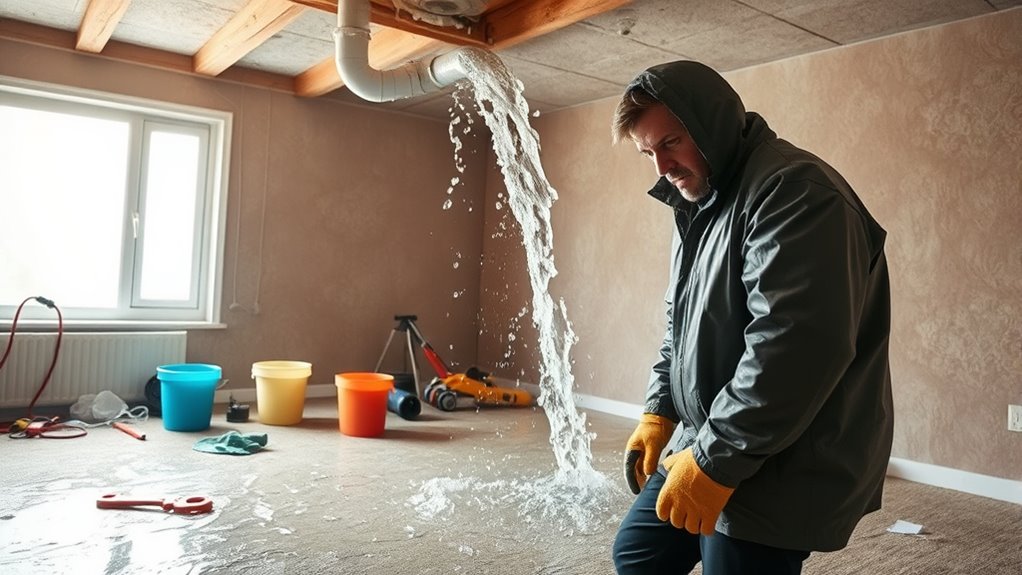
If you experience a pipe burst, act immediately by shutting off the main water supply at the shutoff valve to prevent further flooding. Remove valuables and use towels or mops to soak up water. Turn off electricity if water reaches outlets or electrical devices. Document the damage with photos and contact emergency plumbing services right away. Staying calm and quick will minimize damage, and more essential steps to manage the situation follow if you continue to explore.
Key Takeaways
- Immediately shut off the main water supply to stop the flow.
- Identify and access the main shutoff valve quickly.
- Clear the area of valuables and protect belongings from water damage.
- Use towels, mops, or pumps to remove standing water if safe.
- Contact emergency plumbing professionals without delay to repair the burst pipe.
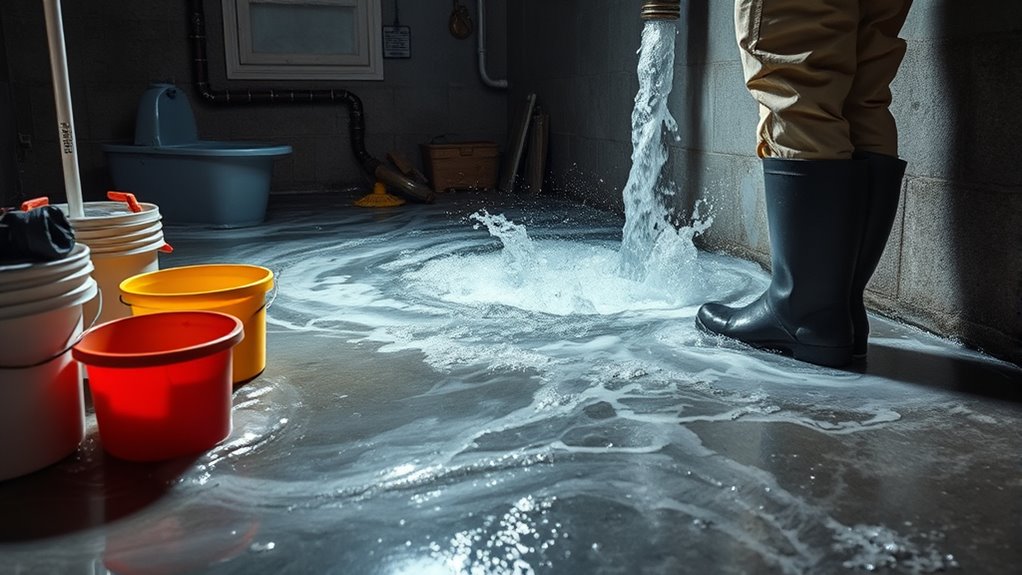
Have you ever experienced a sudden pipe burst in your home? It’s an alarming situation that demands immediate action. When water starts flooding your space, your first priority is to minimize damage and guarantee safety. Knowing what to do right away can make all the difference. Plumbing repairs are essential, but acting swiftly can prevent further destruction and costly repairs later. Emergency preparedness plays a crucial role here; having a plan beforehand helps you respond confidently and efficiently.
A sudden pipe burst demands quick action to prevent damage and ensure safety.
The very first step is to shut off the main water supply. Locate your main shutoff valve, which is usually near the water meter or where the water line enters your home. Turning it off stops the flow of water and prevents additional flooding. If you’re unsure where it is, take the time now to find and familiarize yourself with its location. Once the water is off, you can focus on controlling the immediate mess. Use towels, mops, or pumps to remove standing water and protect your belongings from water damage. If the leak is significant, consider calling emergency plumbing repairs specialists who can address the problem quickly and effectively. Remember, delaying repairs can lead to mold growth, structural damage, or electrical hazards, so don’t hesitate to seek professional help.
While waiting for emergency plumbing repairs, keep safety in mind. Be cautious of electrical outlets or appliances near water, and avoid stepping into flooded areas if there’s a risk of electrical shock. If water is reaching electrical outlets or appliances, turn off the power at the circuit breaker before entering the area. Keep children and pets away from the affected zone to prevent accidents. Document the damage with photos for insurance claims later, and start removing valuable or sentimental items from the flooded space if it’s safe to do so. Understanding the thermal behavior of your plumbing system can also help you identify potential weak points before a crisis occurs. Additionally, knowing the typical pressure points in your plumbing can help you anticipate and prevent future issues.
Preparedness also involves having basic tools and supplies on hand. Keep a wrench, buckets, towels, and a flashlight nearby for emergencies. Having an emergency kit ready ensures you can act fast without scrambling for supplies. Regularly maintaining your plumbing system, checking for leaks, and knowing how to shut off the water can save you from chaos when a pipe bursts unexpectedly. Educate everyone in your household about emergency procedures so everyone knows what to do during such a crisis. Engaging in preventive maintenance can significantly reduce the likelihood of such emergencies occurring unexpectedly.
In the end, responding quickly to a pipe burst saves your home and reduces repair costs. Proper emergency preparedness, combined with immediate plumbing repairs, can prevent minor mishaps from turning into major disasters. Stay calm, act decisively, and know that professional help is just a phone call away.
Frequently Asked Questions
How Can I Prevent Pipe Bursts During Winter?
To prevent pipe bursts during winter, you should insulate your pipes with foam or heat tape, especially in unheated areas. Regular pipe maintenance helps spot vulnerabilities early. Keep your home warm enough to prevent freezing, and let faucets drip slightly during severe cold snaps. Insulation tips like sealing leaks and opening cabinet doors expose pipes to warmer air. These steps protect your plumbing and avoid costly repairs.
When Should I Call a Professional Plumber Urgently?
You should call a professional plumber urgently if you notice signs like persistent leaks, low water pressure, or unexplained water stains. Don’t wait—schedule a plumbing inspection and leak detection to identify hidden issues early. If you see water pooling or hear strange noises, these are red flags. Acting promptly guarantees minor problems don’t turn into major emergencies, saving you money and preventing further damage.
What Safety Precautions Should I Take During a Pipe Burst?
Did you know that water damage from pipe bursts can cause thousands of dollars in repairs? To stay safe, immediately shut off the main water valve and turn off shut-off valves for individual appliances. Protect yourself by avoiding contact with electrical wiring and water. Use pipe insulation to prevent future issues. Always wear gloves and boots to minimize injury risk, and keep a safe distance from leaking pipes to avoid accidents.
How Long Does It Typically Take to Repair a Burst Pipe?
Typically, pipe repair can take anywhere from a few hours to several days, depending on the damage assessment and the extent of the burst. You should expect the repair process to involve shutting off water, inspecting the damage, and replacing or patching the pipe. The time frame depends on the severity of the damage and how quickly the repair team can access and fix the affected pipe.
Are There Insurance Policies That Cover Pipe Burst Damages?
Yes, there are insurance policies that cover pipe burst damages. You should review your homeowner’s insurance policy to check for coverage details and policy benefits related to water damage. Many policies include protection against pipe bursts, but coverage varies. Contact your insurer promptly to file a claim and understand your options. Ensuring your policy covers these damages can save you from significant out-of-pocket expenses during emergencies.
Conclusion
So, next time your pipe bursts, remember that your quick action can save the day—yet, ironically, it’s the last thing you’d want in a perfect, dry home. While you scramble to shut off the water and clean up, you might wish for a pipe that just… doesn’t burst. But hey, at least you’ve learned what to do—because nothing says “prepared” like turning chaos into a quick fix. Stay dry out there!