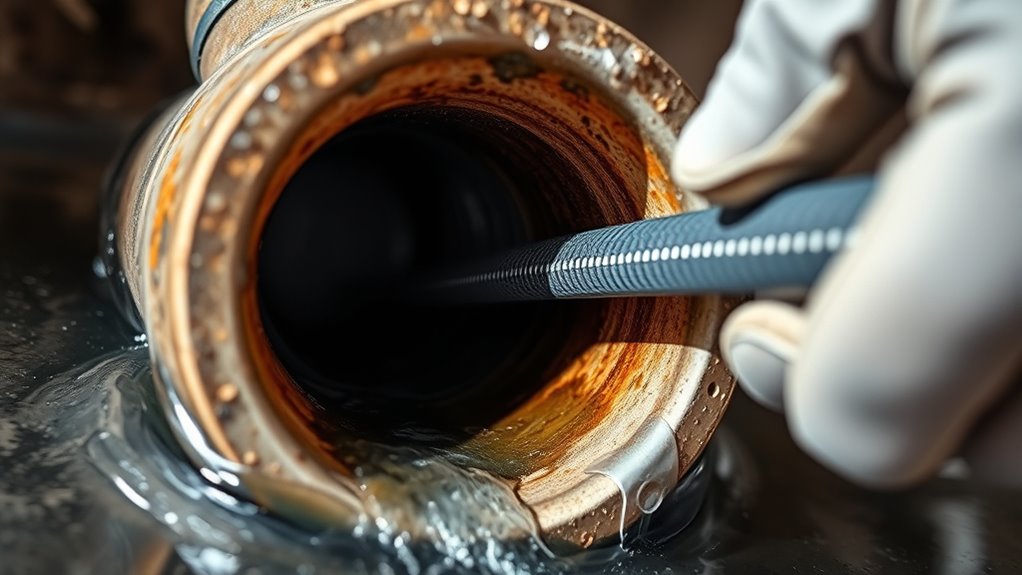
If your sewer line is blocked, you might notice unpleasant odors, slow drains, or water backing up in your home. Gurgling sounds from your pipes and visible sewage smells are also signs you shouldn’t ignore. Using a sewer camera inspection can pinpoint the problem, whether it’s tree roots, cracks, or buildup. Trenchless repair methods can fix the issue efficiently without extensive digging. Keep exploring to learn how to identify and resolve sewer blockages before they cause serious damage.

Get everyday essentials delivered free with Prime
- Fast, free delivery on millions of items
- Prime Video, Amazon Music and more included
- Member-only deals all year
Key Takeaways
- Recognize signs like foul odors, slow drains, and water backups that indicate a sewer blockage.
- Use a sewer camera inspection to accurately identify blockages, cracks, or tree root intrusions without digging.
- Detect visual clues such as gurgling sounds or visible sewage odors that suggest plumbing issues.
- Consider trenchless repair methods to fix pipe problems efficiently with minimal property disruption.
- Regular maintenance and inspections help prevent future blockages and extend your sewer system’s lifespan.

Blocked sewer lines can cause major headaches if you don’t catch the signs early. When your sewer system isn’t functioning properly, it can lead to unpleasant odors, slow drains, and even water backups in your home. Recognizing these warning signals promptly is essential to prevent costly repairs and extensive damage. One of the most effective ways to diagnose sewer line problems is through a sewer camera inspection. This technology involves inserting a small, waterproof camera into your pipes, allowing you and your plumber to see inside the line in real-time. It’s a non-invasive method that provides clear visuals of blockages, cracks, or other issues without the need for destructive digging.
If you notice your sinks, toilets, or tubs draining slowly or not at all, it’s a strong indicator of a blockage somewhere in your sewer line. Persistent gurgling sounds from your drains or sewage odors around your property are additional signs that something’s wrong. These signs shouldn’t be ignored, as untreated blockages can lead to backups that flood your home with waste, creating unsanitary conditions. At this stage, a sewer camera inspection becomes invaluable. By pinpointing the exact location and nature of the problem, your plumber can determine the best course of action to resolve it efficiently. Additionally, understanding the importance of contrast ratio can help in visualizing the severity of the blockage, as higher contrast ratios yield deeper blacks and brighter whites in imaging, aiding in accurate diagnosis. Using high-quality equipment during inspection ensures better detection of issues like pipe material deterioration, which can significantly impact repair approaches. Proper analysis of the visuals can also reveal corrosion or deterioration, helping to plan appropriate repairs or replacements.
When it comes to fixing sewer line issues, trenchless repair is often the preferred solution. Unlike traditional methods that require digging up large sections of your yard or driveway, trenchless repair minimizes disruption. It involves inserting specialized equipment to repair or replace damaged pipe sections from within, saving you time and money. Once the problem is identified through a sewer camera inspection, trenchless repair can be performed to restore your sewer line without tearing up your landscape. This method is particularly effective for dealing with tree root intrusions, cracks, or collapsed pipes. Knowing how trenchless repair works can help you decide on the most efficient and least invasive repair options for your situation. Additionally, staying informed about pipe materials and durability can help homeowners understand the longevity and maintenance needs of their sewer systems. Proper maintenance and early detection are key to preventing future blockages and ensuring the longevity of your sewer infrastructure.
As an affiliate, we earn on qualifying purchases.
Frequently Asked Questions
How Long Does It Typically Take to Clear a Blocked Sewer Line?
It usually takes a plumber about 1 to 3 hours to clear a blocked sewer line, depending on the severity of the clog. During this process, they’ll perform a sewer line inspection to identify the issue and recommend proper plumbing system maintenance. Quick action helps prevent further damage, so don’t delay calling a professional if you notice signs of a blockage. Proper maintenance guarantees your sewer system stays clear longer.
Can Tree Roots Permanently Damage My Sewer Pipes?
Tree roots can be like relentless invaders, and yes, they can cause permanent pipe damage if left unchecked. When roots infiltrate your sewer pipes, they seize the opportunity to grow, cracking and breaking pipes over time. This damage can be long-lasting, requiring costly repairs. To protect your pipes, consider regular inspections and root barriers, because once roots take hold, they’re difficult to completely eradicate.
Are There Preventative Measures to Avoid Sewer Line Blockages?
Yes, you can prevent sewer line blockages by maintaining your pipes regularly. Schedule routine pipe maintenance and drain cleaning to remove buildup before it causes problems. Avoid flushing non-degradable items, grease, or large debris down the drain. Installing strainers can catch debris, reducing the risk of clogs. Regular inspections also help catch potential issues early, keeping your sewer line clear and functioning smoothly.
What Are the Risks of DIY Sewer Unclogging Methods?
DIY sewer unclogging methods pose significant hazards, including potential pipe damage and personal injury. Using improper tools or techniques can worsen the blockage or crack your pipes, leading to costly repairs. Additionally, handling sewer waste without proper safety gear exposes you to harmful bacteria and chemicals. It’s safer to call a professional, as they have the expertise and equipment to resolve the issue effectively without risking further damage or health hazards.
When Should I Call a Professional for Sewer Line Issues?
You should call a professional when you notice persistent sewer odors or signs of pipe corrosion, indicating a serious issue. If your efforts to clear a clog fail or water backs up frequently, it’s time to seek expert help. Professionals can diagnose hidden problems, prevent damage, and guarantee your sewer system functions properly. Don’t delay if you suspect a sewer line problem, as ignoring these signs can lead to costly repairs.
As an affiliate, we earn on qualifying purchases.
Conclusion
If you notice persistent backups or gurgling sounds, don’t ignore them—your sewer line might be blocked. For example, imagine flushing your toilet and seeing water rise instead of drain away; acting quickly can prevent costly repairs. Regular maintenance and prompt attention to signs can save you money and hassle. So, stay vigilant, address issues early, and keep your sewer system flowing smoothly to avoid bigger problems down the line.
sewer line blockage detection equipment
As an affiliate, we earn on qualifying purchases.
As an affiliate, we earn on qualifying purchases.
pipe inspection camera waterproof
As an affiliate, we earn on qualifying purchases.
As an affiliate, we earn on qualifying purchases.
Fall Picks
fall essentials
As an affiliate, we earn on qualifying purchases.