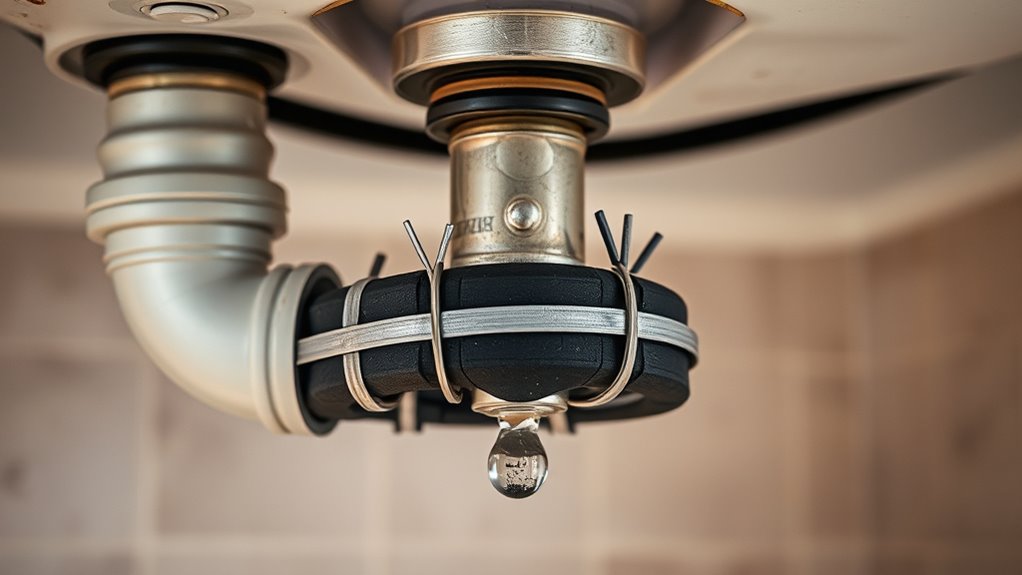

When you spot a leaking pipe, turn off the main water supply immediately to prevent further damage. For a quick fix, try wrapping the leak with waterproof tape or apply a rubber patch secured with hose clamps to control water flow temporarily. Keep the area dry and debris-free until a professional arrives. Want to learn more about effective temporary repairs and how to prevent future leaks? Keep going for essential tips to manage your plumbing issues effectively.

Get everyday essentials delivered free with Prime
- Fast, free delivery on millions of items
- Prime Video, Amazon Music and more included
- Member-only deals all year
Key Takeaways
- Turn off the main water supply immediately to prevent further water damage.
- Use waterproof materials like rubber patches or duct tape to temporarily seal the leak.
- Secure the patch with hose clamps or heavy-duty tape for a tighter seal.
- Remove water and debris around the leak to prevent worsening damage or mold growth.
- Insulate exposed pipes after fixing to prevent future leaks and temperature-related issues.
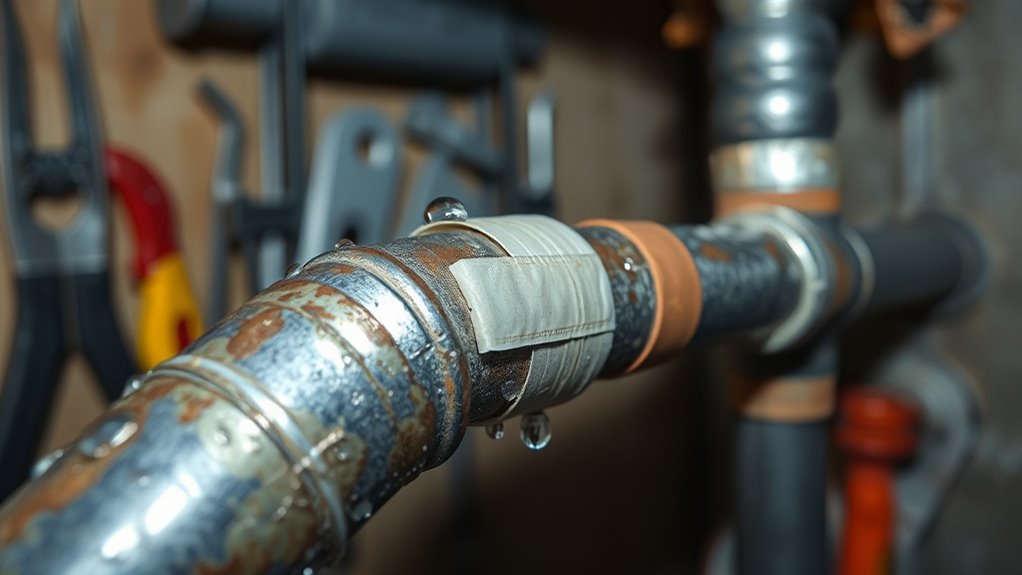
Have you ever noticed a sudden spike in your water bill or seen puddles forming around your pipes? These signs often point to a leak, and while calling a plumber is the best course of action, there are quick temporary fixes you can try to minimize damage until help arrives. One of the first things to think about is the role of pipe insulation. If your pipes are exposed or poorly insulated, they’re more vulnerable to temperature fluctuations, which can cause expansion and contraction, leading to leaks. Wrapping problematic pipes with foam pipe insulation can help stabilize their temperature, reducing stress on the joints and preventing further leaks. Not only does this insulate the pipes, but it also acts as a barrier against moisture, helping to keep the surrounding area dry.
Next, you should check the water pressure in your home. High water pressure can exacerbate leaks by forcing water through small cracks or weak spots in your pipes. If you notice that your water pressure gauge reads above the recommended level—usually around 60 psi—you might want to turn down the pressure using your home’s pressure-reducing valve. Lowering the pressure temporarily can reduce the flow of water through the damaged section, minimizing the leak’s severity and preventing additional damage. Be cautious not to turn it down too much, as insufficient pressure can impair your household’s water supply. Additionally, understanding plumbing system maintenance can help you identify issues early and prevent leaks from forming in the first place. Regular inspections can also help you catch problems before they become emergencies.
Check your water pressure; keep it around 60 psi to prevent leaks and damage.
If you find a visible leak or crack, turn off the main water supply immediately. This simple step halts the water flow, preventing further water wastage and potential water damage. Once the water is off, you can attempt a quick fix using materials like rubber patches or even a temporary clamp. For small leaks, wrapping a piece of rubber or a similar waterproof material around the pipe and securing it tightly with hose clamps or duct tape can create a temporary seal. While these fixes aren’t permanent, they buy you precious time to arrange for professional repair. Using temporary leak fixes can be very effective in controlling minor leaks until professional help arrives. Enhancing your knowledge about leak detection methods can also help you act promptly in future situations.
It’s also helpful to clean the area around the leak, removing any debris or water that could interfere with your temporary patch. Keep in mind, though, that these are only stopgap measures. Once your plumber arrives, they can properly assess the damage, replace any broken sections, and ensure your plumbing system is back to top condition. Until then, managing water pressure, insulating exposed pipes, and applying temporary patches can make a significant difference in preventing further issues and protecting your home. Being proactive with pipe maintenance can also reduce the likelihood of leaks developing unexpectedly.
As an affiliate, we earn on qualifying purchases.
Frequently Asked Questions
How Can I Prevent Pipes From Leaking in the First Place?
You can prevent pipes from leaking by installing pipe insulation to protect against temperature extremes and reduce stress on the pipes. Additionally, schedule regular inspections to spot early signs of wear, corrosion, or leaks. Keep your home’s temperature consistent, especially during cold months, and fix minor issues promptly. These proactive steps help maintain your plumbing’s integrity and prevent leaks before they start, saving you time and money later on.
What Tools Are Essential for Temporary Pipe Repairs?
You’ll need a few essential plumbing tools and repair supplies to tackle a temporary pipe fix. Grab a pipe wrench for gripping, adjustable pliers for tightening, and a hacksaw if you need to cut pipe sections. Don’t forget waterproof tape, pipe clamps, and a rubber patch to seal leaks quickly. With these tools in hand, you can manage the leak before professional help arrives, preventing further damage and water waste.
How Long Can a Temporary Fix Hold Before Needing Professional Repair?
A temporary fix can last anywhere from a few hours to several days, depending on the leak severity and your pipe reinforcement efforts. Regular leak detection helps you monitor the situation closely, guaranteeing the repair holds. To maximize durability, keep the area dry and avoid pressure fluctuations. Remember, a temporary fix isn’t permanent; schedule professional repair promptly to prevent further damage and ensure your plumbing system’s integrity.
Are There Specific Types of Tape or Sealants Best for Leaks?
Surprisingly, not all tapes and sealants are created equal. For leaks, you should use pipe repair tape designed specifically for plumbing, which sticks well and withstands water pressure. Leak sealing sealants also work, but make certain they’re rated for wet surfaces and high pressure. Avoid generic tapes; they won’t hold up long. Trust the right products—your temporary fix might just last longer than you expect!
What Safety Precautions Should I Take During Emergency Repairs?
You should wear personal protective equipment like gloves and safety goggles to prevent injuries during emergency repairs. Turn off the water supply first, then check electrical safety by avoiding water contact with outlets or switches. Keep the area dry and clear of debris, and work carefully to prevent slips or further damage. Prioritize your safety at all times, and if uncertain, wait for professional help instead of risking injury.
As an affiliate, we earn on qualifying purchases.
Conclusion
So, next time your pipe decides to throw a tantrum, remember, a little duct tape or a quick clamp can save your floor from drowning temporarily. Who knew that a roll of tape and some quick thinking could turn you into an emergency plumber’s hero? Just don’t forget, this isn’t a permanent fix—unless you enjoy swimming in your living room. Call the pros before your house becomes a soggy, tape-wrapped aquarium!
As an affiliate, we earn on qualifying purchases.
As an affiliate, we earn on qualifying purchases.
Halloween Picks
halloween
As an affiliate, we earn on qualifying purchases.