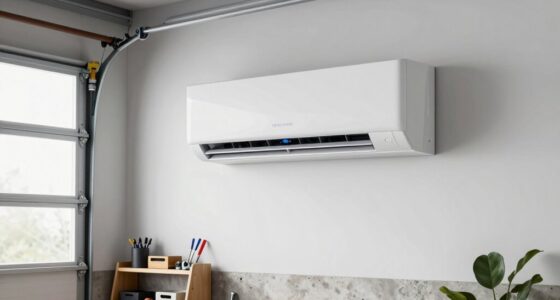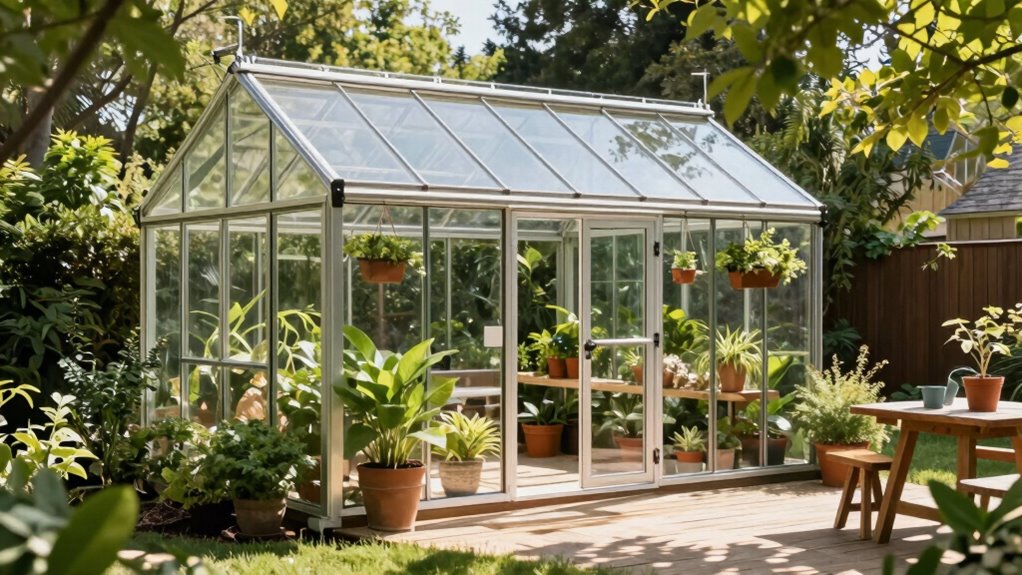

Before setting up your backyard greenhouse, consider selecting plants suited to your climate and greenhouse capabilities to make management easier. Guarantee proper climate control by monitoring temperature and humidity, using heating, cooling, or shading as needed. Good insulation and quality glazing help retain heat, while ventilation prevents mold and pests. Automating watering and climate adjustments can save time and improve results. If you want to learn more tips for a successful setup, keep exploring what’s essential for your greenhouse journey.

Get everyday essentials delivered free with Prime
- Fast, free delivery on millions of items
- Prime Video, Amazon Music and more included
- Member-only deals all year
Key Takeaways
- Select plants suited to your climate and greenhouse conditions to ensure successful growth.
- Plan for proper climate control including heating, cooling, ventilation, and humidity management.
- Choose appropriate glazing materials like glass or polycarbonate for insulation and light transmission.
- Incorporate automation systems for watering and climate adjustments to reduce manual maintenance.
- Ensure adequate space, ventilation, and shading options to prevent overheating and promote healthy airflow.
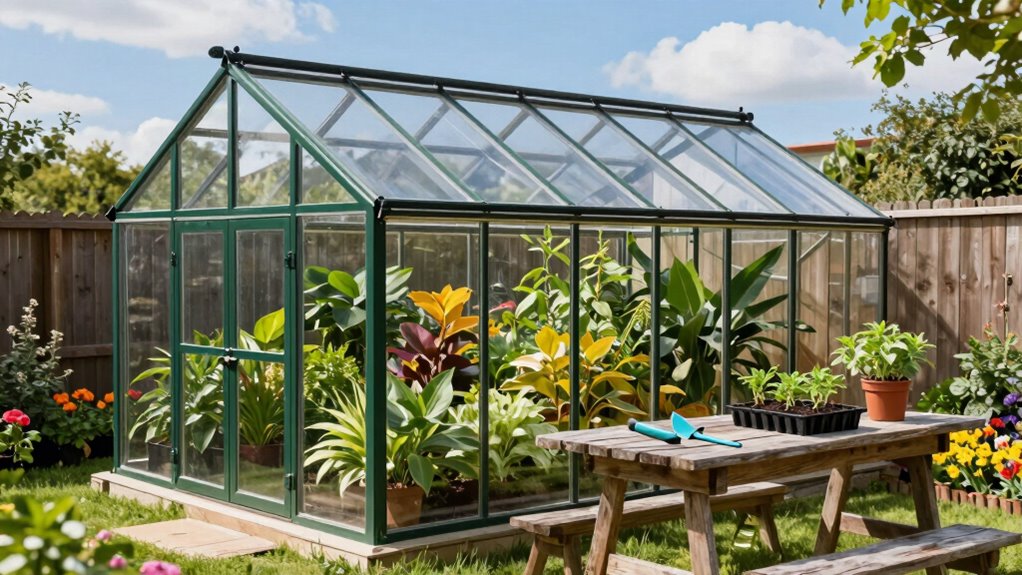
Ever wondered how to extend your gardening season or cultivate plants year-round? Setting up a backyard greenhouse can be a game-changer, but before diving in, it’s essential to understand some key factors. The first thing you should consider is plant selection. Not all plants thrive under the same conditions, so choosing the right varieties is vital. Think about what you want to grow—whether vegetables, herbs, or exotic flowers—and research their specific needs. Some plants require steady warmth and humidity, while others need cooler temperatures or less humidity. Picking plants suited to your climate and your greenhouse’s capabilities simplifies management and boosts your success rate.
Choosing the right plants is key for a successful, year-round greenhouse garden.
Climate control is the next critical aspect. Your greenhouse’s environment is the backbone of healthy plant growth, especially if you’re aiming for year-round cultivation. Depending on your location, you might need to invest in heating systems, cooling fans, or shade cloths. Effective climate control allows you to maintain consistent temperatures and humidity levels, which are essential for plants to thrive outside their natural season. You’ll want to monitor conditions regularly with thermometers and hygrometers, adjusting as needed to prevent temperature swings or excessive moisture. Proper ventilation is also key—good airflow reduces the risk of mold and pests, creating a healthier space for your plants. Incorporating climate control systems can further streamline maintaining optimal conditions. Additionally, understanding climate control can help you troubleshoot issues more effectively and ensure your greenhouse remains a stable environment. Being knowledgeable about climate management also enables you to adapt your setup as your gardening needs evolve.
Additionally, think about insulation and glazing materials. Clear polycarbonate panels or glass can trap heat better, helping you retain warmth during colder months. For warmer seasons, shading options can prevent overheating. Installing automated systems for watering and climate adjustments can save time and guarantee your plants get what they need without constant manual intervention.
backyard greenhouse heating system
As an affiliate, we earn on qualifying purchases.
As an affiliate, we earn on qualifying purchases.
Frequently Asked Questions
How Do I Choose the Best Location for My Greenhouse?
Choose a location with ample sunlight exposure, ideally receiving at least 6 hours of direct sunlight daily, to guarantee healthy plant growth. Also, pick a spot sheltered from strong winds to prevent damage and maintain a stable temperature inside. Avoid areas near large trees or structures that cast shadows or block sunlight. By considering sunlight and wind protection, you’ll create a thriving environment for your greenhouse plants.
What Is the Ideal Size for a Beginner’s Backyard Greenhouse?
A beginner’s backyard greenhouse should be like a cozy nest—around 6 to 8 feet wide and 8 to 12 feet long. This size offers enough space for diverse plant selection without overwhelming you. It allows for easy pest control and management. Keep the height manageable for ventilation and light. Starting small helps you learn the ins and outs of greenhouse gardening, building confidence as you expand later.
How Much Does a Backyard Greenhouse Typically Cost?
A backyard greenhouse typically costs between $1,000 and $5,000, depending on size and features. You’ll want to budget for plant propagation tools and pest control supplies to keep your plants healthy. Remember, investing in good insulation and ventilation will help manage pests and promote healthy growth. Planning ahead guarantees you get the right greenhouse that fits your needs without overspending, making your gardening efforts more successful.
What Permits or Regulations Are Required for Building a Greenhouse?
Are you aware of the permits needed for your greenhouse? You’ll likely need to check local zoning restrictions and building codes, which vary by area. Do you need a permit for structures over a certain size or with specific materials? Contact your city or county planning department to confirm requirements. Failing to secure necessary permissions could lead to fines or having to dismantle your greenhouse, so it’s best to verify early.
How Do I Maintain Proper Humidity Levels Inside the Greenhouse?
To maintain proper humidity levels, you should use effective ventilation strategies like exhaust fans and vents to prevent excess moisture. Incorporate humidity control systems such as misting devices or humidifiers to add moisture when needed. Regularly monitor humidity levels with a hygrometer, and adjust your ventilation and humidity systems accordingly. Keeping airflow consistent helps prevent mold and guarantees healthy plant growth inside your greenhouse.
automated greenhouse watering system
As an affiliate, we earn on qualifying purchases.
As an affiliate, we earn on qualifying purchases.
Conclusion
Setting up a backyard greenhouse is like planting a seed for future growth—careful planning now will yield lush, thriving plants later. Remember to take into account your space, sunlight, and budget to create a cozy environment for your green thumb dreams. With a bit of effort and patience, your greenhouse can become a lush oasis, flourishing like a well-tended garden of possibilities. So, roll up your sleeves and watch your gardening dreams blossom into reality.
As an affiliate, we earn on qualifying purchases.
As an affiliate, we earn on qualifying purchases.
Fall Picks
fall essentials
As an affiliate, we earn on qualifying purchases.