If your wall outlet feels hot or sparks, turn off the power at the circuit breaker immediately to prevent fire or shock risks. Don’t insert or remove plugs until the power is off, and carefully inspect the outlet for visible damage or scorching. Use a voltage tester to confirm no current flows. If the problem persists or you notice damage, it’s best to call a professional electrician. Continue to explore for more safety tips and solutions.
Key Takeaways
- Turn off power at the circuit breaker immediately to prevent fire or shock risks.
- Do not insert or remove plugs until the outlet is confirmed safe and power is off.
- Visually inspect the outlet for scorch marks, melting, or burnt smell; replace if damaged.
- Use a voltage tester to verify no current is flowing before touching the outlet.
- Contact a licensed electrician promptly for thorough diagnosis and safe repair.
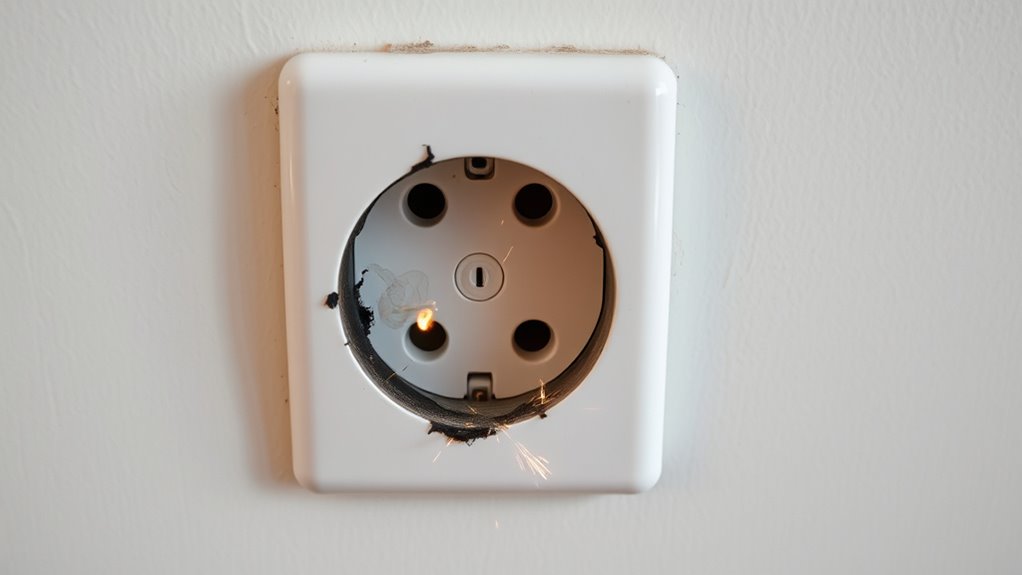
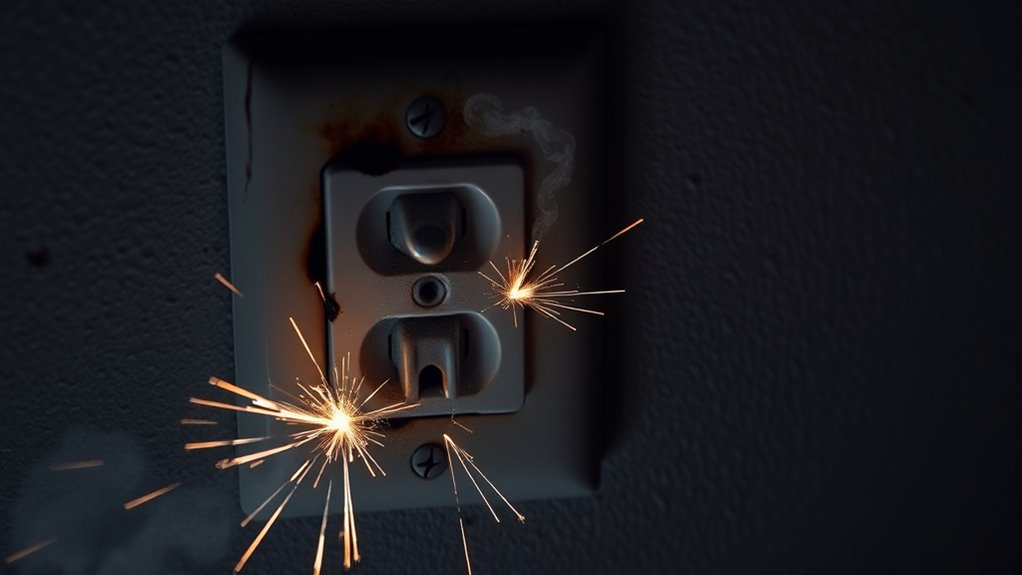
If you notice a spark or a hot sensation when plugging into a wall outlet, it’s a clear sign that something’s wrong and needs your immediate attention. Ignoring this warning can lead to serious electrical safety hazards, including fires or electrical shocks. Sparks or heat are often signals of underlying issues such as loose connections, damaged wiring, or faulty outlets that require prompt outlet troubleshooting. The first step is to turn off the power to that outlet at your circuit breaker to prevent any further risk. Do not attempt to insert or remove plugs until the power is off, as doing so could expose you to electrical shock. Once the power is cut, carefully inspect the outlet for visible signs of damage, such as scorch marks, burn smells, or melted components. These visual cues can help you determine whether the outlet needs replacement or if there’s a deeper wiring problem.
When troubleshooting, it’s essential to understand that not all issues are obvious. Sometimes, the cause of sparks or heat can be a loose or faulty connection behind the outlet, which might require removing the outlet cover to access. Before doing this, ensure the circuit breaker remains off. Use a voltage tester to confirm there’s no current flowing before proceeding. If you’re comfortable working with electrical components, gently remove the outlet and check the wiring connections. Tighten any loose wires, but avoid over-tightening, which could damage the terminals. If you notice frayed or damaged wires, it’s best to replace the outlet entirely. In many cases, a faulty or worn outlet can be the culprit for sparking or heating issues, especially if it’s old or has been heavily used. Regular electrical maintenance and inspections can help identify potential problems before they become hazardous, safeguarding your home. Proper outlet inspection techniques can also help prevent future problems and extend the lifespan of your electrical system. Additionally, understanding the signs of electrical failure can help you recognize warning indicators early and prevent accidents.
Furthermore, considering the age and usage of your outlets can be crucial for your safety, as older outlets are more prone to problems. If you’re unsure about what you’re doing, or if the problem persists after troubleshooting, it’s wise to call a licensed electrician. Electrical safety should always come first, and professional help ensures the problem is correctly diagnosed and fixed without risking further damage or injury. Remember, outlets are a crucial part of your home’s electrical system, and proper maintenance can prevent dangerous situations. Regular inspection and prompt repairs contribute to a safer environment for you and your family. Ultimately, addressing sparks and heat promptly through proper outlet troubleshooting underscores your commitment to electrical safety and helps prevent potentially catastrophic problems down the line.
Frequently Asked Questions
Can a Hot Outlet Cause a Fire?
Yes, a hot outlet can cause a fire. Electrical safety is essential, so you should never ignore signs of overheating or sparking. Regular outlet maintenance helps prevent hazards, including fires. If you notice an outlet feels hot or sparks, turn off the power immediately and call a professional electrician. Addressing these issues promptly reduces fire risks and keeps your home safe. Always prioritize electrical safety and proper outlet maintenance.
How Often Should I Inspect Outlets for Damage?
You should inspect your outlets at least once a year for outlet safety. Regular electrical inspection helps catch signs of damage, such as discoloration, frayed wires, or sparks. If you notice any issues, stop using the outlet immediately and call a licensed electrician. Routine checks guarantee your home’s electrical system remains safe, preventing potential fire hazards and ensuring all outlets function properly. Prioritize electrical safety to protect your home and loved ones.
Is It Safe to Use a Spark-Producing Outlet Temporarily?
No, it’s not safe to use a spark-producing outlet even temporarily. Sparks indicate a serious electrical issue that could cause a fire or shock. Instead, you should turn off the power at the circuit breaker and avoid plugging anything in until a professional inspects the outlet. For temporary solutions, use an alternative outlet or a power strip with a grounded plug. Always follow safety precautions to protect yourself and your home.
What Are the Signs of Underlying Wiring Issues?
You’ll notice signs of wiring faults like frequent breaker trips, flickering lights, or outlets that feel warm or emit a burning smell. You might also see scorch marks or sparks. These issues indicate electrical hazards and faulty wiring. If you observe any of these signs, turn off the power immediately and call a qualified electrician. Addressing wiring faults promptly helps prevent electrical hazards and potential fires.
Should I Call an Electrician Immediately?
You should call an electrician immediately if your outlet feels hot or sparks, as it’s a sign of potential electrical safety hazards. Prompt action helps prevent more serious issues and guarantees your home’s safety. Being prepared for electrical emergencies means knowing when to seek professional help. Don’t delay—trust a licensed electrician to inspect and fix the problem, keeping you and your loved ones safe from electrical dangers.
Conclusion
If your wall outlet sparks or feels hot, don’t ignore it—turn off the power immediately and call a professional. Electrical fires cause over 45,000 home fires annually, so acting quickly can prevent disaster. Remember, never try to fix wiring yourself unless you’re qualified. Ensuring your outlets are safe protects your home and loved ones. Stay vigilant about electrical issues, and always prioritize safety to avoid costly damage or injuries.