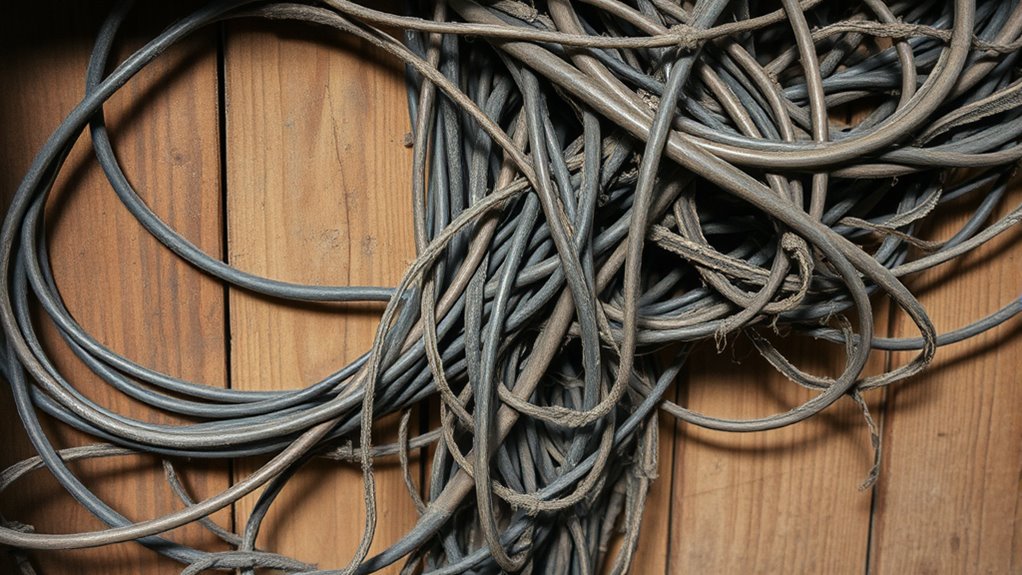

To identify outdated wiring, look for signs like ceramic knobs and tubes indicating knob and tube systems, or visible aluminum wiring in outlets and panels. Check for deterioration, frayed or discolored wires, and a lack of grounding conductors. If your home was built before the 1960s or 1970s, it likely has old wiring that needs inspection. Ignoring these signs can be dangerous, so understanding how to spot and address these issues can help keep your home safe—more details await.

Get everyday essentials delivered free with Prime
- Fast, free delivery on millions of items
- Prime Video, Amazon Music and more included
- Member-only deals all year
Key Takeaways
- Look for ceramic knobs and tubes to identify knob and tube wiring, common in homes built before the 1960s.
- Check for visible aluminum wiring in outlets, switches, or panels, indicating older wiring systems.
- Notice signs of deterioration like frayed, discolored, or oxidized wiring, which increase fire and shock risks.
- Have a licensed electrician perform a professional inspection to assess wiring safety and identify outdated systems.
- Consider upgrading outdated wiring to modern, grounded systems to improve safety and prevent potential hazards.
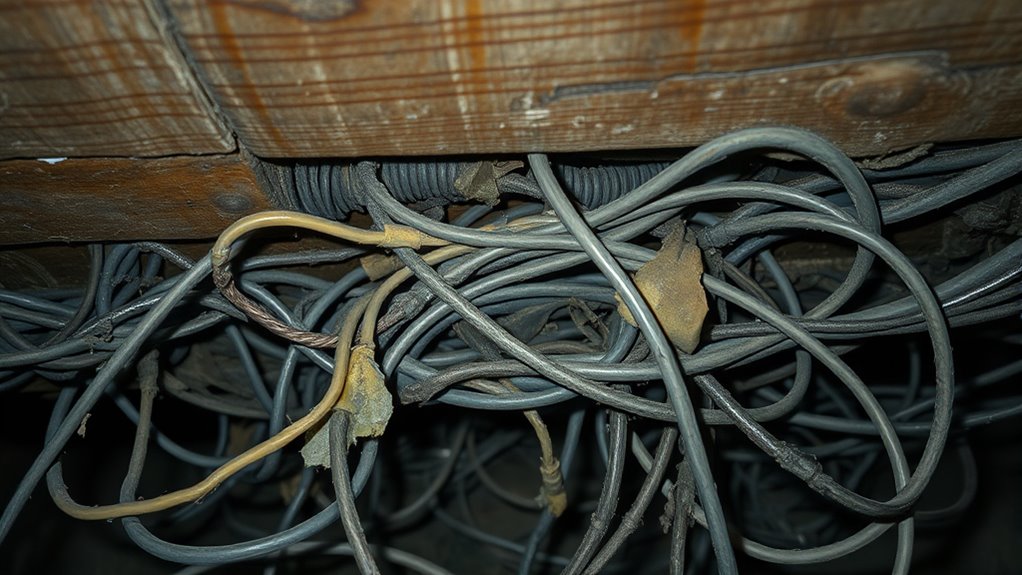
Have you ever wondered if your home’s electrical wiring is up to date? If you’re living in an older house, it’s a valid concern. Many homes built before the 1960s still have wiring systems that are outdated and potentially dangerous. Two common types of older wiring you might encounter are knob and tube wiring and aluminum wiring. Recognizing these can help you determine whether your electrical system needs an upgrade or inspection.
Knob and tube wiring was popular from the late 1800s through the early 1900s. It consists of individual copper conductors run through ceramic knobs and tubes, which insulate and secure the wiring. While it was considered an innovative solution at the time, knob and tube wiring has several issues today. Over the years, insulation materials and building codes have changed, making this type of wiring less safe. It’s prone to deterioration, especially if it’s been exposed to rodents, moisture, or physical damage. Plus, because it doesn’t include grounding conductors, it doesn’t meet modern safety standards and can pose shock or fire hazards if it’s still active.
Aluminum wiring, common from the 1960s to the 1970s, was introduced as a cheaper alternative to copper. While aluminum wiring isn’t inherently dangerous, it requires proper handling and connections. Over time, aluminum can oxidize and become brittle, leading to loose connections that generate heat. These heat spots can cause electrical fires if not properly maintained or replaced. Many homes with aluminum wiring also have outdated outlets and switches that aren’t rated for aluminum’s properties, increasing the risk of arcing and electrical failure.
If you see evidence of knob and tube wiring or aluminum wiring in your home, it’s essential to approach the situation carefully. Don’t attempt to inspect or modify the wiring yourself unless you’re qualified; these systems can be hazardous. Instead, hire a licensed electrician to conduct a thorough inspection. They can identify the type of wiring you have and assess its condition. If your wiring is outdated, upgrading it is the safest option. Modern wiring systems use safer materials, grounding, and circuits designed to handle today’s power demands. Upgrading not only reduces fire risks but also enhances your home’s electrical capacity, preventing overloads and improving safety.
Additionally, understanding the importance of modern wiring standards can help homeowners appreciate why upgrades are necessary for safety and efficiency. Recognizing the signs of outdated wiring early can prevent costly repairs and dangerous situations down the line, especially in older homes with legacy wiring systems. Regular inspections and staying informed about electrical safety are key to maintaining a safe and reliable electrical system in your home. Properly updating your electrical wiring can also help you avoid fire hazards associated with older systems. Being aware of wiring deterioration signs can help you take timely action to protect your property and loved ones.
As an affiliate, we earn on qualifying purchases.
Frequently Asked Questions
How Often Should I Have My Wiring Inspected?
You should schedule an electrical wiring inspection every 3 to 5 years to guarantee safety. Regular wiring maintenance helps catch potential issues early, preventing costly repairs and hazards. If you notice flickering lights, frequent breaker trips, or burning smells, get an inspection sooner. Staying proactive with inspection frequency keeps your wiring in top shape, reduces safety risks, and prolongs the lifespan of your electrical system.
What Are the Signs of Hidden Electrical Hazards?
Did you know that hidden electrical hazards cause over 50,000 house fires annually? You might notice frequent electrical shocks when touching appliances, flickering lights, or burning smells. Overloaded outlets or warm switches are warning signs. Ignoring these signs increases fire hazards and electrical shocks risk. Stay vigilant and have a professional inspect your wiring regularly to prevent unseen dangers lurking behind walls.
Can Outdated Wiring Increase My Home Insurance Premiums?
Yes, outdated wiring can increase your home insurance premiums because insurers see it as a higher risk. During risk assessment, they consider potential hazards like faulty wiring that could cause fires or damage. If your home has old or deteriorated wiring, expect higher premiums, or they might even refuse coverage. Upgrading your wiring can lower your premiums and improve safety, making your home less risky in the eyes of insurers.
Is Rewiring a DIY or Professional Job?
Rewiring isn’t a DIY job; you should hire a licensed professional. DIY safety is risky because electrical work can be dangerous if you’re not experienced, and improper rewiring can cause fires or shocks. Licensed electricians have the training and certification needed to do the job correctly and safely. Always prioritize safety and guarantee your rewiring project complies with local codes by hiring a professional with proper licensing.
How Long Does It Typically Take to Replace All Old Wiring?
Replacing all old wiring typically takes from a few days to a week, depending on your home’s size and wiring complexity. The wiring lifespan varies, but if your wiring is outdated, a full replacement is often needed for safety. You’ll want to coordinate with a professional electrician to ensure the replacement timeline aligns with your home’s electrical needs and code requirements, providing a safe, long-lasting electrical system.
As an affiliate, we earn on qualifying purchases.
Conclusion
Addressing old wiring can seem intimidating, but with careful attention, you can gently guide your home back to safer, more reliable energy. Think of it as a subtle refresh—updating those hidden connections to prevent future surprises. By taking small, deliberate steps now, you help preserve your home’s charm while ensuring it remains a haven for years to come. A thoughtful upgrade, after all, is just a quiet act of love for your space’s ongoing story.
As an affiliate, we earn on qualifying purchases.
home electrical wiring inspection tools
As an affiliate, we earn on qualifying purchases.
As an affiliate, we earn on qualifying purchases.
Halloween Picks
halloween
As an affiliate, we earn on qualifying purchases.