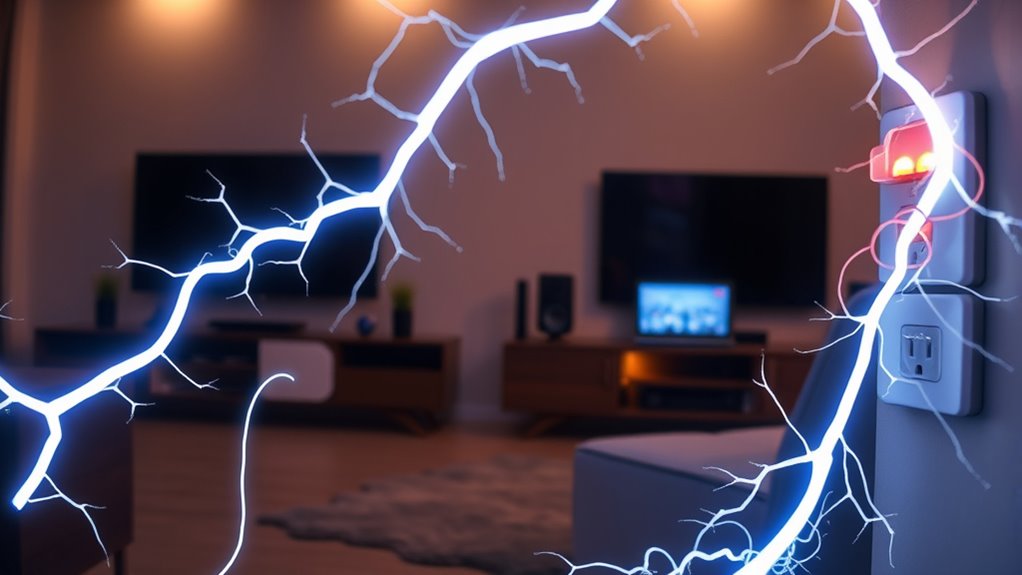
Power surges at home can damage your devices and appliances, often caused by lightning, faulty wiring, or grounding issues. To protect your electronics, use surge protectors for critical devices and consider installing a whole-house surge protection system. Make sure your home’s grounding system is up to code and regularly inspected for problems. Upgrading your electrical panel can also improve safety. Keep exploring for more tips to shield your home from power surges effectively.

Get everyday essentials delivered free with Prime
- Fast, free delivery on millions of items
- Prime Video, Amazon Music and more included
- Member-only deals all year
Key Takeaways
- Install whole-house surge protectors to shield all devices from voltage spikes.
- Use individual surge protectors on sensitive electronics like projectors and computers.
- Ensure your home’s electrical system is properly grounded and inspected regularly.
- Upgrade outdated electrical panels to improve surge handling and overall safety.
- Avoid overloading circuits and unplug devices during thunderstorms to prevent surges.
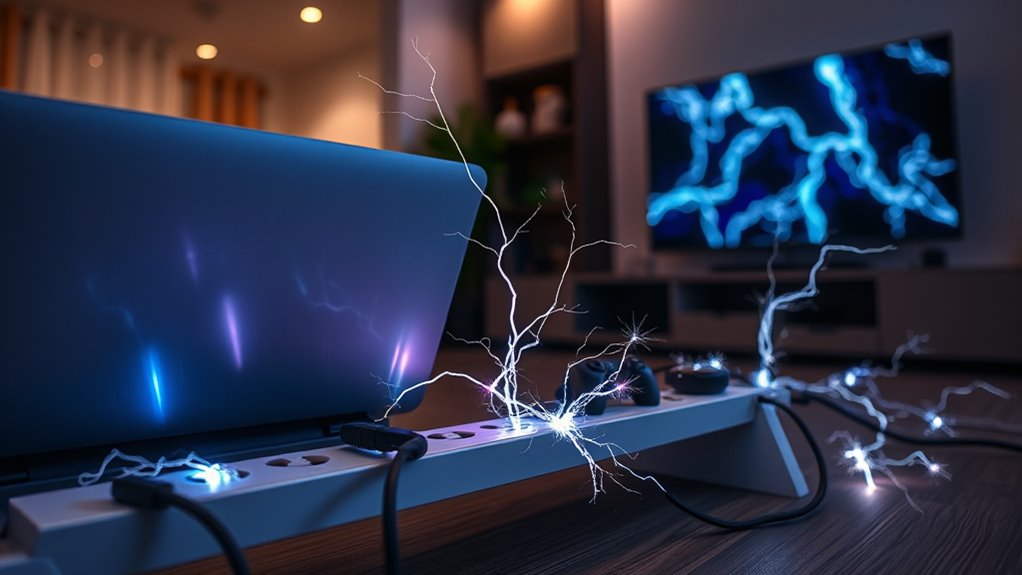
Power surges can strike your home unexpectedly, causing sudden spikes in electrical current that can damage appliances and electronics. These surges can come from various sources, like lightning strikes, faulty wiring, or issues with your utility company. One common cause you might overlook is grounding issues. Proper grounding provides a safe path for excess electricity to dissipate into the earth, protecting your devices from damaging surges. If your home’s grounding system isn’t up to code or has been compromised, you’re more vulnerable to power surges that can fry sensitive electronics or shorten the lifespan of appliances. Addressing grounding issues should be a top priority if you notice frequent surges or electrical problems. An experienced electrician can inspect your system and ensure your grounding is solid, preventing many surge-related problems. Regular maintenance and inspection of your electrical system can help identify potential issues before they lead to costly damage.
Another vital step to shield your home from damaging power surges is upgrading your electrical panel. Older panels may not have the capacity or safety features necessary to handle modern electrical loads and surges. Upgrading the panel can improve your home’s overall electrical stability, reducing the risk of damage during a surge event. Modern panels often come with better surge protection capabilities and more robust grounding systems, which can help divert excess current safely away from your appliances. When considering electrical panel upgrades, it’s essential to work with a licensed electrician who can evaluate your current setup and recommend the best options for surge protection and safety. Additionally, understanding the importance of projector technology and proper electrical safety measures can help protect valuable electronics like home theater projectors from damage due to power fluctuations. Being aware of power fluctuation causes can further inform your protective strategies and ensure your electronics stay safe during unexpected surges. Using surge protectors with whole-house surge protection can provide an extra layer of defense for critical devices. Furthermore, installing electric vehicle charging stations improperly can also contribute to electrical issues if not correctly managed, so consulting professionals for high-power installations is advisable. Additionally, adding ground fault circuit interrupters can further reduce risks associated with electrical surges and faults.
As an affiliate, we earn on qualifying purchases.
Frequently Asked Questions
Can Power Surges Damage My Smart Home Devices?
Yes, power surges can damage your smart home devices. Since these devices vary in device compatibility, some are more vulnerable than others. To prevent damage, use different surge protection types like surge protectors or whole-home surge protectors. These protectors absorb excess voltage, ensuring your smart devices stay safe. Regularly check your surge protection devices and replace them when needed to keep your smart home secure.
How Do I Tell if My Surge Protector Is Working Properly?
Did you know that nearly 60% of power surges go unnoticed? To verify your surge protector is working properly, perform regular surge protector testing by plugging in a device and checking if it powers on correctly. Look for indicator lights that show protection status. If you notice any issues, replace it promptly to maintain device safety. Regular testing keeps your electronics protected and prolongs their lifespan.
Are There Specific Surge Protectors for Outdoor Appliances?
Yes, there are outdoor surge protectors designed specifically for outdoor appliances. Look for weather-resistant surge devices that can withstand rain, wind, and other elements. These outdoor surge protectors typically have durable, sealed enclosures to safeguard internal components from moisture and debris. Installing a weather-resistant surge device ensures your outdoor equipment stays protected from power surges, giving you peace of mind even during storms or electrical fluctuations.
What Are the Signs of Frequent Power Surges?
You might notice signs of surges like flickering lights, frequent blown fuses, or malfunctioning electronic devices. Surge symptoms also include unexplained restarts or damage to sensitive equipment. If these signs happen often, it’s a clear indication of frequent power surges. Keep an eye out for these symptoms, and consider installing surge protectors to guard your devices and prevent potential damage from future surges.
How Can I Reduce the Risk of Surges During Storms?
You might think storm preparedness alone is enough, but grounding techniques are essential for reducing surge risks during storms. To do this, guarantee your home’s grounding system is properly maintained and surge protectors are in place. Unplug sensitive electronics before storms hit, and install whole-house surge protectors for added safety. These steps help safeguard your devices when power surges happen, giving you peace of mind during severe weather.
As an affiliate, we earn on qualifying purchases.
Conclusion
Don’t let power surges damage your devices or cause costly repairs. While some might think surge protectors are enough, it’s wise to also unplug devices during storms and avoid overloading outlets. Protecting your electronics is easier than you think, and it’s worth the small effort for peace of mind. So, take these simple steps today—you’ll thank yourself later when your devices stay safe and functional, no matter what.
As an affiliate, we earn on qualifying purchases.
As an affiliate, we earn on qualifying purchases.
Halloween Picks
halloween
As an affiliate, we earn on qualifying purchases.