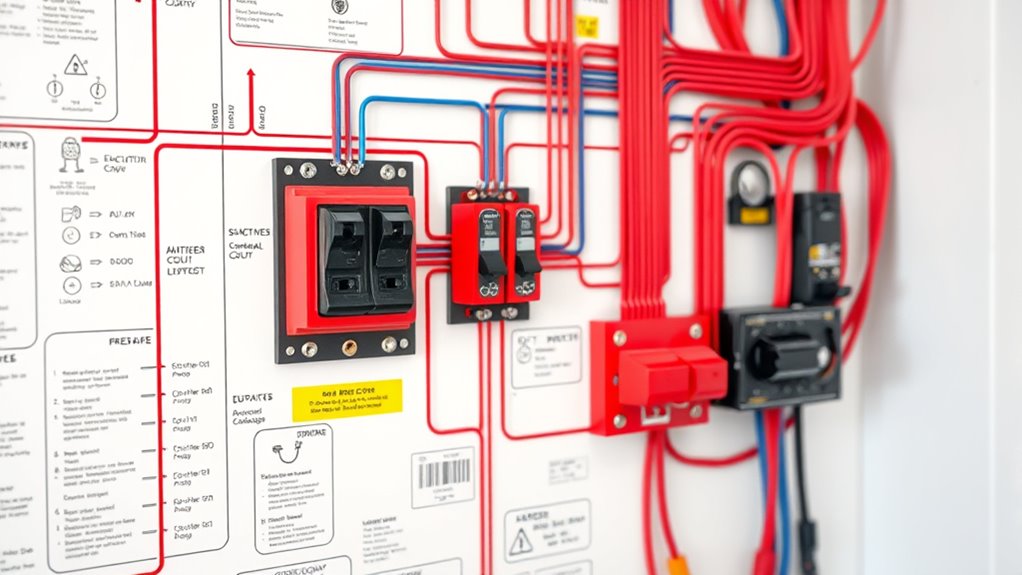

To make a circuit map, start by locating your breaker panel and opening it safely. Turn off each breaker one at a time to identify which areas or appliances they control, labeling each accordingly. Use a flashlight to trace wiring paths from the panel to outlets, switches, and appliances, sketching a diagram to show the layout. Proper documentation helps with future repairs and safety. Keep exploring for detailed steps to perfect your home’s electrical map.

Get everyday essentials delivered free — and shop member deals
- Fast, free delivery on millions of items
- Access to Prime Big Deal Days deals on October 6–7
- Prime Video, Amazon Music and more included
Key Takeaways
- Turn off the main breaker, then systematically turn on one circuit breaker at a time, testing outlets and switches to identify controlled areas.
- Label each breaker with the corresponding room or device during testing to create clear circuit identification.
- Inspect wiring paths from the breaker panel to outlets, switches, and junction boxes, using a flashlight for better visibility.
- Draw a diagram mapping each circuit’s route and function, noting the areas or appliances each controls for easy reference.
- Use your circuit map for quick troubleshooting, prevent overloads, and enhance safety during repairs or upgrades.
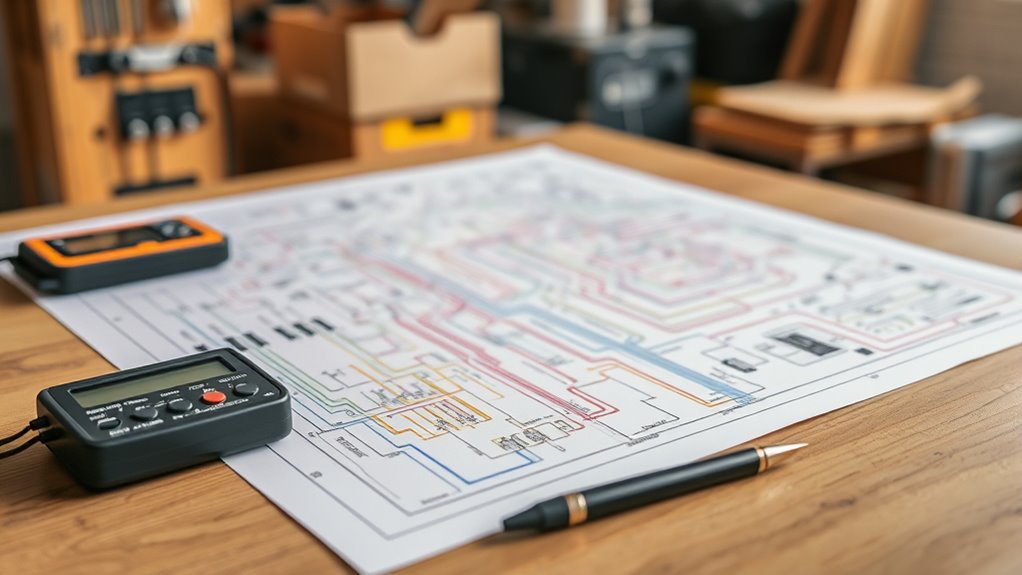
Have you ever wondered how to visualize the complex connections within a circuit? Creating a detailed circuit map of your home can make troubleshooting and safety checks much easier. Start by locating your breaker panel, which is the central hub where all your home’s circuits originate. Once you find it, open the panel door carefully and take note of the individual circuit breakers. These breakers are designed to protect each circuit and can be switched on or off to control power flow.
The next step is circuit identification. This involves figuring out which breaker controls each area or appliance in your home. Turn off one breaker at a time and then test the outlets, switches, or appliances in the corresponding area. Mark each breaker with a label indicating what it controls—living room outlets, kitchen appliances, bedroom lights, or garage circuits. Using a simple notepad or a circuit labeling system helps keep track of these connections. Proper circuit identification is vital because it prevents accidental shut-offs during repairs and guarantees you know exactly which breaker to switch off for maintenance or emergencies.
As you proceed, take note of how the wiring runs from the breaker panel to various parts of your home. Use a flashlight to look inside outlets, switch boxes, and junction points. Carefully trace the wiring path—this will help you understand how circuits are distributed and interconnected. If your home has multiple circuits, create a rough diagram showing the layout from the breaker panel to each outlet or fixture. This visual representation, or circuit map, can be enhanced with labels and notes, making future troubleshooting easier. Additionally, understanding the contrast ratio of your home’s electrical system can help you identify potential issues with uneven power distribution and improve overall safety.
You’ll want to document any circuit breakers that control multiple areas or appliances, as well as any circuits that seem overloaded. Be aware that some circuits may serve specific appliances or dedicated spaces, so understanding the circuit distribution can help you avoid overloads and prevent electrical hazards. If you’re unsure about wiring or circuit connections, consider consulting a professional electrician. A well-made circuit map isn’t just a tool for quick fixes—it’s a safety measure that helps you understand your home’s electrical system, prevent overloads, and plan upgrades or repairs responsibly.
As an affiliate, we earn on qualifying purchases.
Frequently Asked Questions
How Often Should I Update My Circuit Map?
You should update your circuit map at least every 3 to 5 years as part of your maintenance schedule or after any renovation planning. Regular updates guarantee you’re aware of current circuit loads and any modifications. If you notice flickering lights, tripped breakers, or plan electrical upgrades, update your map immediately. Staying current helps prevent overloads, enhances safety, and keeps your home’s electrical system well-documented for future repairs or renovations.
What Tools Are Best for Mapping Residential Circuits?
Did you know that proper circuit tracing can reduce electrical fires by up to 20%? For mapping residential circuits, use a circuit tracer to identify wires and a voltage tester for safety. Label circuits clearly with electrical labeling tools like markers or labels. A circuit tracer helps you follow wires accurately, while labeling guarantees quick identification in future repairs. Combining these tools makes your circuit mapping safe and effective.
Can I Create a Circuit Map Myself Without Professional Help?
Yes, you can do DIY mapping of your home’s electrical circuits, but you should prioritize safety precautions. Turn off the main power, use a circuit tester, and work carefully. Keep track of breaker labels and circuit connections as you go. If you’re unsure or uncomfortable, it’s best to consult a professional. Safety always comes first, so don’t risk electrical hazards by rushing through the process alone.
How Do I Identify Faulty Circuits Using the Map?
You can identify faulty circuits by inspecting your circuit map during troubleshooting. Start by turning off the power and testing each circuit to see if devices still have power, indicating faulty wiring or a broken connection. Use your map to pinpoint problem areas quickly, focusing on circuits with inconsistent or no power. This approach helps with circuit troubleshooting and faulty wiring detection, making repairs more efficient and safer.
Is There a Safety Risk in Mapping My Home’s Electrical System?
Mapping your home’s electrical system isn’t inherently risky if you follow proper electrical safety and circuit troubleshooting procedures. Always turn off power before working on circuits, use insulated tools, and wear protective gear. If you’re unsure or uncomfortable, consult a licensed electrician. Properly mapping helps identify issues safely and effectively, reducing potential hazards. Remember, prioritizing electrical safety minimizes risks during your circuit troubleshooting and mapping process.
electrical circuit tracer flashlight
As an affiliate, we earn on qualifying purchases.
As an affiliate, we earn on qualifying purchases.
Conclusion
Creating a circuit map might seem overwhelming, but it’s easier than you think. Picture walking through your home, connecting each outlet and switch to its breaker with confidence. Even if you worry about missing a spot, remember that a clear map helps you troubleshoot quickly and safely. Once finished, you’ll have a detailed blueprint—like a treasure map—that keeps your home safe and your electrical system under control. You’ve got this!
home electrical wiring diagram kit
As an affiliate, we earn on qualifying purchases.
As an affiliate, we earn on qualifying purchases.
circuit mapping tools for electricians
As an affiliate, we earn on qualifying purchases.
As an affiliate, we earn on qualifying purchases.
Fall Picks
fall essentials
As an affiliate, we earn on qualifying purchases.