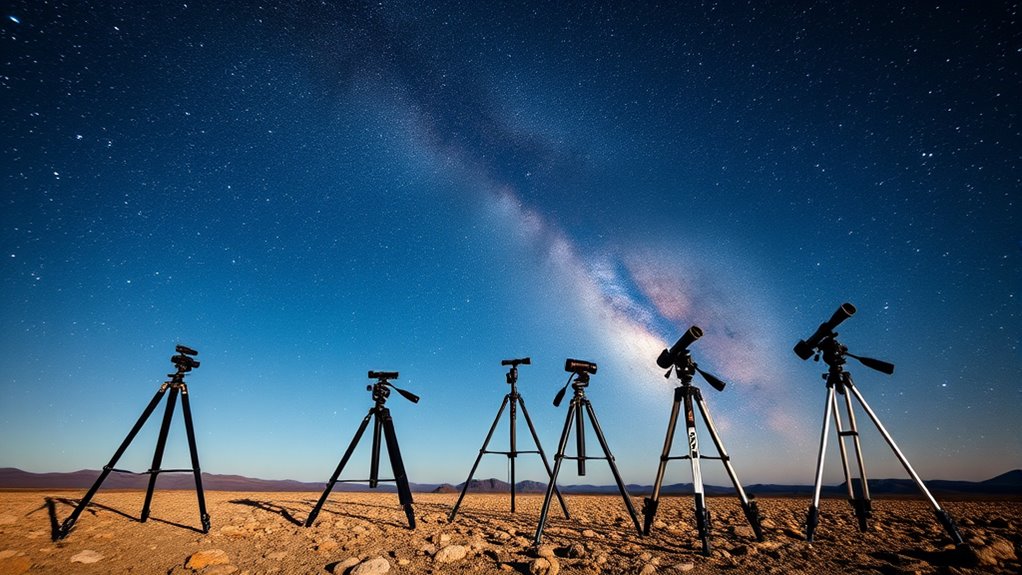

If you want to capture stunning night sky images in 2025, I recommend the iEXOS-100-2 PMC-Eight with its precise tracking and sturdy tripod, perfect for serious astrophotography. The Sky-Watcher AZ-GTI offers portability and WiFi control for quick setups. For stability and vibration dampening, the EQ6 Tripod from Sky-Watcher is excellent, especially with anchor supports. The iOptron Mini Pier adds extra elevation, and quality mount alignment features ensure sharp images. Keep watching to find out more about choosing the best gear to elevate your astrophotography skills.
Key Takeaways
- Top astrophotography mounts like the iEXOS-100-2 PMC-Eight and Sky-Watcher AZ-GTI offer precise, reliable tracking with easy setup.
- Materials such as steel and aluminum improve stability and vibration damping for sharper night sky images.
- Adjustable heights, quick-setup features, and modular components enhance ease of use and adaptability to different environments.
- Specialized pier extensions and stable tripods, like the iOptron Mini Pier and EQ6 Steel Tripod, provide enhanced support and vibration control.
- Accurate polar alignment and advanced tracking features ensure long-exposure astrophotography with minimal drift.

iEXOS-100-2 PMC-Eight Equatorial Tracker System Tripod and Mount for Astrophotography with WiFi and Bluetooth Compatible
Integrated Explore Scientific PMC-Eight system that transcends the industry standard single processor by utilizing eight CPUs that operate...
As an affiliate, we earn on qualifying purchases.
iEXOS-100-2 PMC-Eight Astrophotography Tracker System with Tripod and Mount
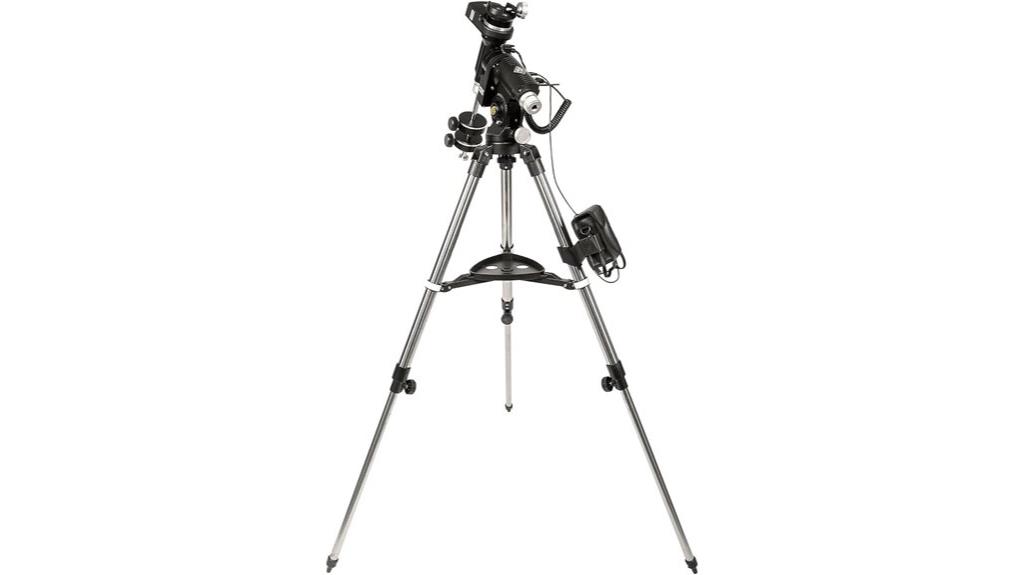
If you’re serious about astrophotography and need a reliable tracking system, the iEXOS-100-2 PMC-Eight system with its tripod and mount is an excellent choice. I’ve found its integrated PMC-Eight system, with eight independent CPUs, offers exceptional responsiveness, efficiency, and reliability. The quiet, precise stepper motor drives and clutched dual-axis worm gears ensure smooth operation and accurate positioning. It’s easy to align using the built-in polar alignment sight and quick altitude adjustments. Plus, controlling it through the ExploreStars app on my tablet makes setup and star navigation straightforward. This system truly enhances tracking precision, making it perfect for capturing stunning night sky images.
Best For: astrophotographers seeking a reliable, precise, and user-friendly tracking system for capturing stunning night sky images.
Pros:
- Integrated PMC-Eight system with eight independent CPUs for enhanced responsiveness and efficiency
- Smooth operation with quiet, precise stepper motor belt drives and clutched dual-axis worm gears
- Easy to align using the built-in polar alignment sight and intuitive ExploreStars app control
Cons:
- May require some familiarity with astrophotography equipment setup and app operation
- The system’s advanced features and app compatibility might have a learning curve for new users
- Potentially higher cost compared to simpler tracking solutions

iOptron Mini Pier Tripod Extension for CEM60, iEQ45, iEQ30, MiniTower, MiniTower II and MiniTower Pro Mount
ENHANCED STABILITY - Provides a solid foundation for your CEM60, iEQ45, or iEQ30 mount, minimizing vibrations for clearer...
As an affiliate, we earn on qualifying purchases.
iOptron Mini Pier Tripod Extension for CEM60 and MiniTower Mounts
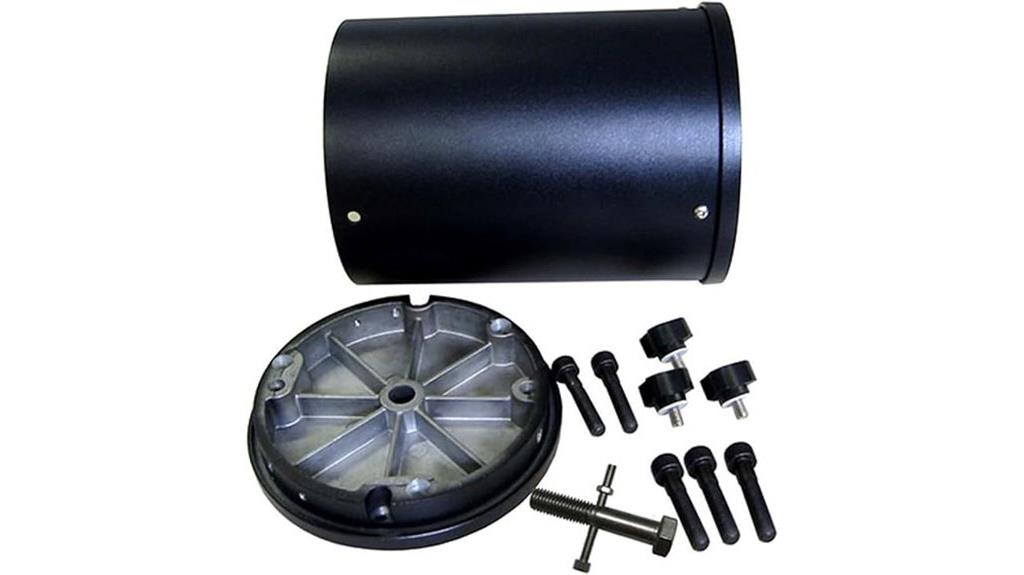
The iOptron Mini Pier Tripod Extension is an excellent choice for astrophotographers seeking enhanced stability and precise alignment with their CEM60 or MiniTower mounts. It features a 5.7-inch pier diameter and 6-inch flange plates, ensuring seamless compatibility with models like MiniTower II, MiniTower Pro, iEQ45, and iEQ30. Made from durable materials, it minimizes vibrations and provides a secure foundation. Elevating the setup by 8 inches, it improves viewing angles and prevents ground obstructions. Plus, the included alignment pegs and center stud enable accurate polar alignment, delivering sharper images and better tracking for astrophotography.
Best For: astrophotographers and astronomers seeking enhanced stability and precise polar alignment with their CEM60 or MiniTower mounts.
Pros:
- Provides increased stability and vibration reduction for clearer observations and sharper images.
- Elevates the telescope setup by 8 inches, improving viewing angles and avoiding ground obstructions.
- Includes alignment pegs and center stud for accurate polar alignment, enhancing tracking accuracy.
Cons:
- May add extra weight and bulk to the setup, affecting portability.
- Compatibility limited to specific mounts like CEM60, MiniTower series, iEQ45, and iEQ30.
- Installation may require additional tools or adjustments for perfect alignment.

EQ6 Tripod to Wave Steel by Sky-Watcher
Robust Construction 2-inch rolled steel legs ensure exceptional stability, reducing vibrations for clear views and smooth tracking
As an affiliate, we earn on qualifying purchases.
EQ6 Tripod to Wave Steel by Sky-Watcher
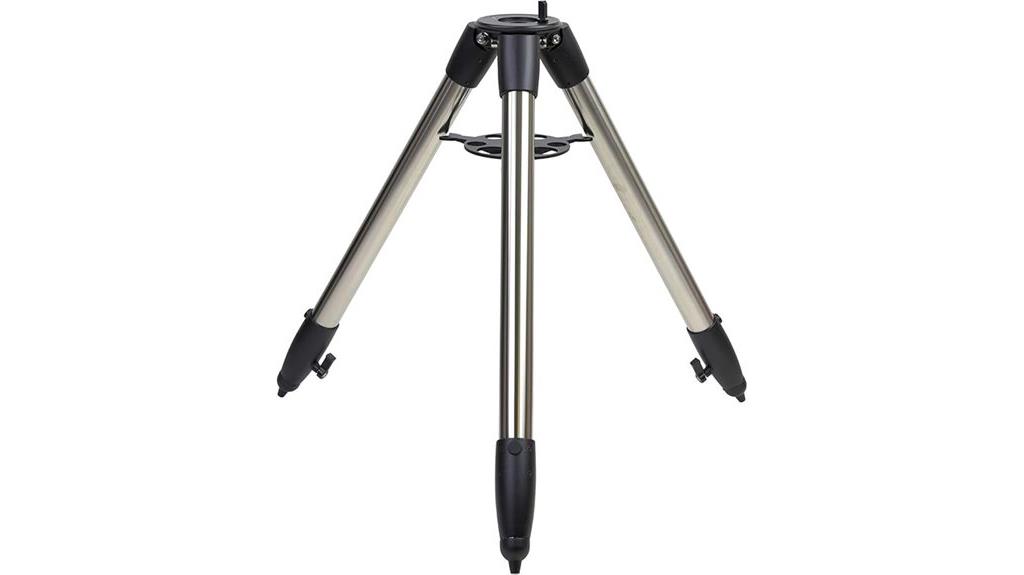
Looking for a stable, reliable tripod that can handle astrophotography gear with ease? The EQ6 Tripod to Wave Steel by Sky-Watcher is an excellent choice. Its robust 2-inch rolled steel legs provide exceptional stability, reducing vibrations for clear views and smooth tracking. Designed mainly for Sky-Watcher Wave mounts, it’s also compatible with NEQ6, EQ6, EQ6-R, and AZ-EQ6 mounts—just add the Wave Pier Adapter (S30916). Its sleek black trim offers a professional look, making it a solid foundation for your astrophotography setup. Whether for imaging or observing, this tripod ensures reliable performance across various configurations.
Best For: astrophotographers and amateur astronomers seeking a stable, professional-grade tripod compatible with various Sky-Watcher mounts.
Pros:
- Robust 2-inch rolled steel legs provide exceptional stability and vibration reduction
- Compatible with multiple mounts including NEQ6, EQ6, EQ6-R, and AZ-EQ6 when used with the Wave Pier Adapter
- Sleek black trim and professional design enhance the aesthetic appeal of your setup
Cons:
- Requires the additional Wave Pier Adapter (S30916) for mounting Wave mounts
- Primarily designed for Sky-Watcher Wave mounts, limiting direct compatibility with other brands
- Heavier and bulkier compared to lightweight tripods, which may reduce portability
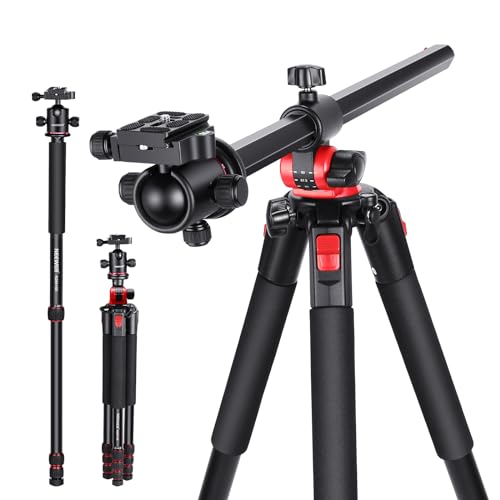
NEEWER 72 inch Camera Tripod Monopod with Center Column and Ball Head Aluminum, Arca Type QR Plate, Bag, Horizontal Tripod Overhead Camera Mount for DSLR Camera, Video Camcorder, Max Load: 33lb
Stable Tripod: Made of aluminium alloy, the tripod with maximum 1.1”/28mm tube diameter is stable enough to support...
As an affiliate, we earn on qualifying purchases.
NEEWER 72-Inch Camera Tripod Monopod with Ball Head
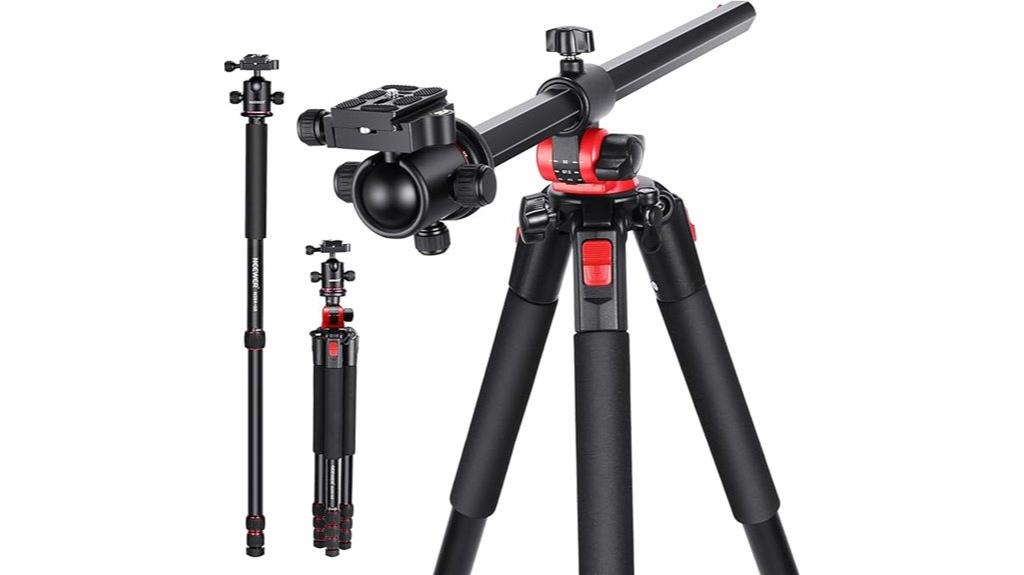
For astrophotographers seeking a versatile and sturdy support, the NEEWER 72-Inch Camera Tripod Monopod with Ball Head stands out thanks to its adjustable multi-angle center column and robust aluminum construction. It supports gear up to 33 pounds, with twist-lock legs that extend to 72 inches or fold down to 26 inches. The multi-angle center column offers vertical and horizontal adjustments, ideal for framing tricky shots. Its panoramic ball head with quick-release plate and bubble levels guarantees precise, secure camera positioning. Whether used as a tripod or monopod, it provides flexible, stable support for astrophotography and beyond, making it a valuable, adaptable tool.
Best For: astrophotographers and outdoor photographers seeking a versatile, sturdy support system capable of handling heavy gear with adjustable angles for creative shots.
Pros:
- Constructed from durable aluminum alloy supporting up to 33 lbs, ensuring stability for heavy camera equipment
- Multi-angle center column allows for precise vertical and horizontal adjustments, perfect for challenging compositions
- Convertible design offers both tripod and monopod functionality, increasing shooting flexibility
Cons:
- The height extension of 72 inches may be limiting for very tall users or specific shooting angles
- Heavier than lightweight tripods, potentially less portable for extended outdoor shoots
- Setup and adjustments might require some familiarity to fully utilize multi-angle features effectively
Sky-Watcher AZ-GTI Portable WiFi GoTo Alt-Az Mount

If portability is a top priority for your astrophotography setup, the Sky-Watcher AZ-GTI Portable WiFi GoTo Alt-Az Mount stands out as an excellent choice. Weighing just 8.6 pounds, it’s lightweight and easy to transport, with an adjustable aluminum tripod extending up to 53 inches. Supporting an 11-pound payload, it handles most telescopes and cameras smoothly thanks to rugged brass and aluminum gears. Its built-in WiFi lets you control it via the SynScan Pro app on your smartphone, while dual encoders maintain precise tracking even during manual adjustments. Compact, versatile, and powered by multiple options, it’s perfect for mobile astrophotography adventures.
Best For: portable astrophotographers and stargazing enthusiasts seeking a lightweight, versatile, and easy-to-control mount for celestial imaging and observation.
Pros:
- Lightweight at only 8.6 pounds, ideal for travel and mobile setups
- Built-in WiFi and app control via SynScan Pro for convenient operation
- Supports up to 11-pound payload, accommodating most telescopes and cameras
Cons:
- Limited to an 11-pound payload, may not support larger or heavier equipment
- Alt-Az design may not be ideal for long-exposure astrophotography requiring equatorial tracking
- Requires a smartphone or tablet for full control, which may not appeal to all users
Factors to Consider When Choosing Tripods and Pier Mounts for Astrophotography
When choosing tripods and pier mounts for astrophotography, I consider factors like stability and vibration control to guarantee sharp images. Compatibility with my equipment, along with adjustable height and ease of setup, also matter a lot. Plus, I look for durable materials that can withstand outdoor conditions over time.
Stability and Vibration Control
A stable tripod or pier mount is essential for capturing sharp astrophotography images, especially during long exposures. Vibrations can blur images, so minimizing movement is critical. Choosing materials like steel or aluminum alloys offers better rigidity and vibration damping than plastic or lightweight options, which helps maintain stability. Features like rubber feet or decoupling pads improve grip on uneven or soft ground, further reducing vibrations. Proper weight distribution and secure mounting hardware prevent shifting or wobbling as the mount tracks celestial objects. Elevating the setup and adding stabilization methods such as sandbags or counterweights can also cut residual vibrations. Prioritizing stability and vibration control ensures your images stay crisp, allowing you to capture the night sky with professional-quality clarity.
Compatibility With Equipment
Choosing the right tripod or pier mount starts with making certain it matches your specific equipment. First, check that the mounting hole patterns align with your telescope or camera, and verify that the weight capacity can support your gear without strain. It’s vital that the mount can handle the combined weight of your telescope, camera, and accessories. Additionally, confirm compatibility with your existing mounting accessories, such as adapter plates or alignment pegs. Compatibility also involves confirming that the mounting system allows for precise polar alignment and vibration reduction, which are essential for sharp astrophotography images. By matching your equipment’s specifications with the mount’s features, you’ll make certain a stable, secure platform tailored to your observational and imaging needs.
Height and Adjustability
Height and adjustability are crucial factors because they directly affect your viewing comfort and image stability. Being able to customize the height helps improve your viewing angles and reduces ground-level obstructions, making it easier to frame shots. Adjustable tripods and pier mounts let you extend or collapse the support, offering versatility for different setups and environments. Multi-angle center columns enable precise vertical and horizontal positioning, ensuring ideal alignment of your camera or telescope. Elevated mounts can minimize vibrations, resulting in sharper images and more accurate tracking. Flexibility in height adjustment also helps match your eye level and accommodate various telescope sizes and accessories. Overall, choosing gear with good adjustability enhances stability, comfort, and the quality of your astrophotography.
Ease of Setup
When selecting tripods or pier mounts for astrophotography, ease of setup can make a significant difference in how quickly and smoothly you get started. Quick-assembly features, like twist locks or quick-release plates, cut down setup time, letting you focus more on capturing the night sky. Clear instructions and intuitive controls help both beginners and pros get their equipment ready without frustration. Lightweight designs with fewer parts are easier to transport and set up in different locations. Modular or adjustable components simplify alignment and leveling, saving valuable time. Ultimately, compatibility with standard mounting adapters and tools ensures a seamless connection, reducing delays and making the whole setup process hassle-free. Prioritizing ease of setup helps you maximize your imaging sessions.
Material Durability
Durability is a critical factor when selecting tripods and pier mounts for astrophotography, as these tools must withstand various weather conditions and extended use. Materials like steel and aluminum are ideal because they combine high strength with a good weight-to-strength ratio, resisting bending and warping over time. A quality coating or finish is essential to prevent corrosion and rust, especially if you shoot in humid or salty environments. Heavier materials often offer better vibration damping, which translates to sharper, more stable images. Choosing durable materials directly impacts the stability and precision of your setup, ensuring consistent results night after night. Investing in robust construction means your equipment will last longer and perform reliably through the demanding conditions of astrophotography.
Portability and Weight
Choosing a tripod or pier mount for astrophotography often comes down to balancing portability with stability. Lighter options, typically weighing between 4 to 15 pounds, are much easier to carry and set up in the field, making them ideal for outdoor shoots. Portable tripods often feature collapsible or adjustable designs, allowing for compact storage and quick assembly, which saves time and effort. Using lightweight materials like aluminum alloys helps reduce weight without sacrificing too much stability or durability. However, heavier tripods do offer increased stability, which is *essential* for long exposures, but they can be cumbersome to move and adjust. If you frequently shoot in the field, prioritizing a lightweight, portable setup can *considerably* enhance your astrophotography experience.
Precision Alignment Features
Achieving precise alignment is essential for successful astrophotography, as even minor tracking errors can blur long-exposure images. I look for mounts with effective polar alignment features like alignment pegs and sight holes, which help minimize errors. Adjustable and clutched axes allow me to fine-tune the mount’s position, ensuring accurate tracking of celestial objects. Multi-point leveling and calibration tools are also vital—they help me get the tripod or pier perfectly aligned with the celestial pole quickly. High-quality mounts often include built-in encoders or software-assisted alignment procedures, boosting positional accuracy. Quick and easy polar alignment methods save time and improve the precision of my long-exposure shots, making these features indispensable for capturing sharp, detailed night sky images.
Frequently Asked Questions
How Do Tripod Stability and Vibration Damping Affect Astrophotography Quality?
Tripod stability and vibration damping are essential for sharp astrophotography images. When my tripod wobbles or vibrates, stars appear as streaks instead of points, ruining the shot. I make sure to use sturdy materials and dampening features to minimize movement. This keeps my camera steady during long exposures, ensuring I capture clear, detailed images of the night sky. Stability truly makes or breaks the quality of my astrophotography.
Can Lightweight Tripods Support Long Exposure Astrophotography Sessions Effectively?
Like a feather in the wind, lightweight tripods can support long exposure astrophotography if they’re well-designed with sturdy materials. I’ve found that with proper stability and vibration damping, they handle extended sessions effectively. However, I always make certain they’re on a solid surface and use additional weight if needed. For me, the key is balancing portability with stability to capture those breathtaking night sky shots.
Are Motorized Pier Mounts Preferable for Capturing Deep-Sky Objects?
Motorized pier mounts are definitely preferable for capturing deep-sky objects, especially if you’re aiming for long exposures. They provide precise tracking, reducing star trails and ensuring sharp images. I’ve found that manual mounts can struggle with the stability and accuracy needed for deep-sky astrophotography. Investing in a motorized pier mount might be more costly, but it’s worth it for the improved image quality and ease of capturing those distant celestial wonders.
How Does Weather Resistance Influence the Choice of Astrophotography Tripods?
Weather resistance is essential when choosing an astrophotography tripod because it protects my equipment from rain, humidity, and dust, ensuring my gear stays safe and functional. I look for tripods made of materials like carbon fiber or aluminum with sealed joints and weatherproof coatings. This way, I can shoot confidently in various conditions without worrying about damage, which ultimately improves my chances of capturing stunning, clear images of the night sky.
What Maintenance Is Required to Ensure Optimal Performance of Astrophotography Mounts?
To keep my astrophotography mounts performing at their best, I regularly clean them, especially after exposure to dust or moisture. I check for any loose screws or parts and lubricate moving joints sparingly to prevent rust and make certain of smooth operation. I also store my mounts in a cool, dry place and cover them when not in use. These simple steps help me maintain precision and reliability during those long night sessions.
Conclusion
As I gaze up at the starry sky, I realize that choosing the right tripod or pier mount is like finding a steady hand in the vast darkness. When your gear aligns perfectly, and the stars seem to dance just for you, it’s no coincidence—it’s the magic of having the right setup. So, trust your instincts, pick what feels right, and let your passion for astrophotography turn those night dreams into stunning reality.