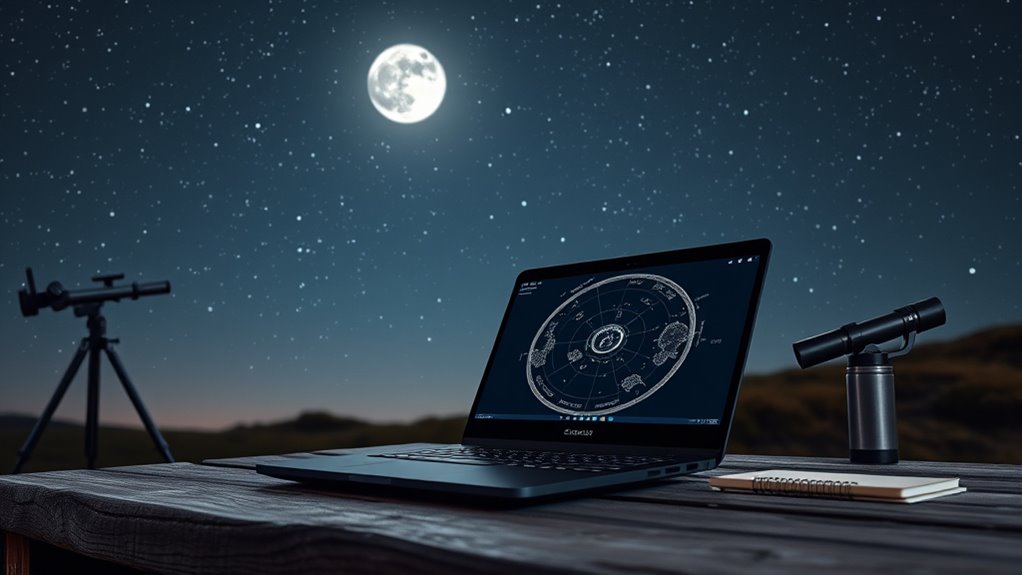

For astronomy enthusiasts, a laptop with high battery life can be a game-changer, enabling extended stargazing sessions without constantly searching for power outlets. The HP 17 inch Business Laptop 2026 Edition stands out as the best overall pick, thanks to its balanced performance and impressive battery capacity. The 18.5 inch Windows 11 Laptop offers a larger display for detailed star maps, while the HP 15.6″ FHD Touchscreen Laptop combines power with portability for fieldwork. However, these options often involve tradeoffs between battery longevity, screen size, and processing power. Keep reading for a full breakdown of the best choices and what each one offers for astronomy use.

Get everyday essentials delivered free with Prime
- Fast, free delivery on millions of items
- Prime Video, Amazon Music and more included
- Member-only deals all year
Key Takeaways
- Larger screen sizes tend to reduce portability but can enhance star mapping and detailed viewing.
- Battery capacity varies significantly, with 6000mAh to 7000mAh being common in high-battery models, directly impacting usability in the field.
- Powerful CPUs like AMD Ryzen 7 or Intel Ultra 7 do improve performance but may drain batteries faster without careful balancing.
- RAM and SSD size influence multitasking and data storage, which are crucial for astrophotography and software like Stellarium or Starry Night.
- Build quality and weight are often overlooked but can affect comfort during prolonged outdoor use, especially if you carry your laptop into remote locations.
| HP 17 inch Business Laptop Computer, 2026 Edition, AMD Ryzen 5, 16GB RAM, 512GB SSD, FHD Display, Windows 11 with Office 365 |  | Best Overall for Large Screen and Reliable Battery Life | Color: Silver | Hard Drive Size: 512 GB | Operating System: Windows 11 | VIEW ON AMAZON | See Our Full Breakdown |
| HP Laptop 2026 Student Business with Copilot AI + Office 365, 128GB UFS, Intel CPU |  | Best for Portability and All-Day Battery Life | Processor: Intel N150 | RAM: 4GB LPDDR5 | Storage: 128GB UFS | VIEW ON AMAZON | See Our Full Breakdown |
| 17.3 Inch Laptop with Windows 11, Intel Quad-core Processor, 6000mAh Battery |  | Best for High Performance and Extended Use | Display Size: 17.3 inches | Resolution: 1920 x 1080 | Processor: Intel N95 Quad-core | VIEW ON AMAZON | See Our Full Breakdown |
| 18.5 inch Windows 11 Laptop with 16GB RAM, 512GB SSD, and 7000mAh Battery |  | Best for Big Screen and Long Battery Life, Less Portability | Processor: AMD 4300U | Display: 18.5-inch IPS Full HD | Resolution: 1920×1080 | VIEW ON AMAZON | See Our Full Breakdown |
| GEEKOM GeekBook M16 Laptop |  | Best for Premium Performance and Exceptional Battery Life | Processor: Intel Core Ultra 9 185H | Graphics: Intel Arc | Display: 16-inch IPS, 16:10 | VIEW ON AMAZON | See Our Full Breakdown |
| HP 15.6″ FHD Touchscreen Laptop with AMD Ryzen 7 7730U, 32GB RAM, 1TB SSD |  | Best Overall for Versatile High-Battery-Range Use | Processor: AMD Ryzen 7 7730U | Display Size: 15.6 inches | Display Resolution: 1920 x 1080 | VIEW ON AMAZON | See Our Full Breakdown |
| HP 17.3″ FHD Copilot AI Laptop PC with AMD Ryzen 7 7730U, 16GB RAM, 512GB SSD |  | Best for Large Displays and Extended Battery Life | Display: 17.3-inch FHD 1920×1080 | Processor: AMD Ryzen 7 7730U | RAM: 16GB | VIEW ON AMAZON | See Our Full Breakdown |
| Acer Aspire FHD Touchscreen Laptop, Intel Core Ultra 7 258V, 32GB RAM, 1TB SSD |  | Best for Creative Professionals on the Go | Processor: Intel Core Ultra 7 258V | Display Size: 14.0 inches | Display Resolution: 1920 x 1200 | VIEW ON AMAZON | See Our Full Breakdown |
| HP OmniBook 3 17.3 inch Laptop PC, FHD Display, AMD Ryzen 3 30, 8 GB RAM, 512 GB SSD, AMD Radeon 610M Graphics, Windows 11 Home, Mica Silver, 17-dp0199nr |  | Best for Budget-Friendly Extended Use | Display: 17.3 inch FHD IPS | Processor: AMD Ryzen 3 30 | RAM: 8 GB LPDDR5 | VIEW ON AMAZON | See Our Full Breakdown |
| HP OmniBook 3 14-Inch Next Gen AI PC, 2K OLED Display, Snapdragon X1-26-100, 16GB RAM, 256GB SSD, Windows 11, Nouvelle Silver |  | Best for Ultra-Portable and AI-enhanced Experiences | Display: 14-inch 2K OLED | Processor: Snapdragon X1-26-100 | RAM: 16 GB LPDDR5x | VIEW ON AMAZON | See Our Full Breakdown |
| astronomy laptops with high battery life | Processor | RAM | Operating System | Storage |
|---|---|---|---|---|
| HP 17 inch Business Laptop Com | — | — | Windows 11 | — |
| HP Laptop 2026 Student Busines | Intel N150 | 4GB LPDDR5 | — | 128GB UFS |
| 17.3 Inch Laptop with Windows | Intel N95 Quad-core | 16GB DDR4 | Windows 11 | — |
| 18.5 inch Windows 11 Laptop wi | AMD 4300U | 16GB DDR4 | Windows 11 | — |
| GEEKOM GeekBook M16 Laptop | Intel Core Ultra 9 185H | — | — | 512GB PCIe Gen4 SSD |
| HP 15.6" FHD Touchscreen Lapto | AMD Ryzen 7 7730U | 32GB DDR4 | — | — |
| HP 17.3" FHD Copilot AI Laptop | AMD Ryzen 7 7730U | 16GB | Windows 11 Home | 512GB SSD |
| Acer Aspire FHD Touchscreen La | Intel Core Ultra 7 258V | 32GB LPDDR5X | — | 1TB PCIe NVMe SSD |
| HP OmniBook 3 17.3 inch Laptop | AMD Ryzen 3 30 | 8 GB LPDDR5 | Windows 11 Home | 512 GB PCIe NVMe M.2 SSD |
| HP OmniBook 3 14-Inch Next Gen | Snapdragon X1-26-100 | 16 GB LPDDR5x | Windows 11 | 256 GB PCIe Gen4 NVMe M.2 |
More Details on Our Top Picks
HP 17 inch Business Laptop Computer, 2026 Edition, AMD Ryzen 5, 16GB RAM, 512GB SSD, FHD Display, Windows 11 with Office 365
This HP 17.3-inch model stands out for its expansive display, ideal for astronomers who need to analyze detailed star maps or data sets on a large screen. Its AMD Ryzen 5 processor paired with 16GB RAM ensures smooth multitasking, even when running intensive programs. Compared with the GEEKOM GeekBook M16, this laptop offers a bigger display but sacrifices some portability, making it better suited for stationary setups or mobile observatories. The long battery life with fast charging helps sustain long observation sessions without frequent plugging in. However, its maximum resolution of 1920×1080 may limit visual sharpness compared to higher-res screens, and its size makes it less convenient for frequent travelers. This pick makes the most sense for astronomers who prioritize a large display and reliable battery over ultra-lightweight design.
Pros:- Large 17.3-inch FHD display for detailed visualization
- Powerful AMD Ryzen 5 CPU with 16GB RAM for multitasking
- Long battery life with fast charging capabilities
- Preloaded Windows 11 and Office 365 for productivity
Cons:- Limited to 1920×1080 resolution, which may not fully utilize the large screen
- Heavy and bulky, less portable for frequent travel
- Lacks dedicated graphics for high-end graphic tasks
Best for: Amateur astronomers or researchers who need a large, clear display for data analysis and are less concerned with portability.
Not ideal for: Travelers or field astronomers who require a lightweight, highly portable device for quick setup and teardown.
- Color:Silver
- Hard Drive Size:512 GB
- Operating System:Windows 11
- Display Size:17.3 inches
- Display Resolution:1920×1080
- Display Type:LED
- Maximum Resolution:1920×1080
- Graphics Description:Integrated
Our verdict“This laptop is best for those who need a large screen and long-lasting battery for stationary or semi-mobile astronomy work.”
HP Laptop 2026 Student Business with Copilot AI + Office 365, 128GB UFS, Intel CPU
This lightweight HP model offers up to 11 hours of video playback, making it highly suitable for field astronomers or students who need to carry their devices between locations. Its 14-inch anti-glare display balances size with usability, and the Intel N150 processor with 4GB RAM provides adequate performance for basic observation data management and light astronomy apps. Compared with the GEEKOM GeekBook M16, this laptop sacrifices some processing power and screen size for improved portability and extended battery life, which is ideal for quick setup in the field. The limited RAM and HD resolution might hinder multitasking or detailed visual work, but for casual use or note-taking during observations, it remains a solid choice. This pick makes the most sense for users prioritizing mobility and all-day battery endurance over raw power or high-resolution visuals.
Pros:- Lightweight and highly portable at just over 3 lbs
- Up to 11 hours of video playback battery life
- Includes Office 365 Personal subscription
- Anti-glare 14-inch display reduces eye strain
Cons:- Limited to 4GB RAM, restricting multitasking capabilities
- Lower resolution display may not suit detailed visual tasks
- Processor may struggle with demanding applications
Best for: Students, casual astronomers, or professionals who need a portable device with long battery life for quick observations or note-taking.
Not ideal for: Power users or those running demanding simulations or high-resolution imaging, due to limited RAM and display resolution.
- Processor:Intel N150
- RAM:4GB LPDDR5
- Storage:128GB UFS
- Display:14-inch HD
- Resolution:1366 x 768
- Battery Life:Up to 11 hours
Our verdict“This model suits users who need a lightweight, long-lasting device for casual astronomy activities and mobility.”
17.3 Inch Laptop with Windows 11, Intel Quad-core Processor, 6000mAh Battery
This 17.3-inch laptop combines a quad-core Intel N95 CPU with 16GB RAM and a 6000mAh battery, making it suitable for astronomers who need a balance of performance and endurance. Its vivid IPS display enhances visual clarity for star maps or detailed data analysis. Compared to the HP 17 inch Business Laptop, this model emphasizes longer battery life and slightly better performance, although it lacks some modern connectivity options. Its weight of around 2 kg makes it less portable for frequent travel, but it excels for stationary or semi-mobile setups where power and performance are critical. The basic front camera and absence of touch support are minor drawbacks for some users. Overall, this pick is ideal for those who want a powerful, reliable device that can sustain long observation sessions without frequent charging.
Pros:- Powerful quad-core Intel CPU with 16GB RAM for multitasking
- Large 17.3-inch Full HD IPS display for vivid visuals
- Long-lasting 6000mAh battery for extended use
- Reliable wired and wireless connectivity options
Cons:- Heavy at around 2 kg, less portable
- No touch screen support
- Basic front camera quality
Best for: Professional astronomers or serious hobbyists who need a powerful device with long-lasting battery life for extended observation sessions.
Not ideal for: Travelers or those requiring ultra-lightweight gear, due to its weight and limited portability.
- Display Size:17.3 inches
- Resolution:1920 x 1080
- Processor:Intel N95 Quad-core
- RAM:16GB DDR4
- Battery:6000mAh
- Operating System:Windows 11
Our verdict“Best suited for users who prioritize performance and battery longevity over portability for stationary or semi-mobile astronomy work.”
18.5 inch Windows 11 Laptop with 16GB RAM, 512GB SSD, and 7000mAh Battery
This 18.5-inch Windows 11 laptop offers a substantial visual workspace with its high-res IPS display, making it ideal for detailed star mapping and data analysis. Its AMD 4300U processor combined with 16GB RAM provides solid multitasking performance, and the large 7000mAh battery promises extended periods of use. Unlike smaller models, this device is designed for stationary use or semi-mobile scenarios where the large screen and battery endurance outweigh the need for ultra-lightweight design. The potential inconsistency in specs — mentioning both AMD and Intel processors — suggests some confusion, and its build material being primarily plastic may impact durability. Nonetheless, it offers a compelling mix of size, power, and battery life for dedicated astronomers.
Pros:- Large 18.5-inch high-resolution IPS display
- Long-lasting 7000mAh battery for all-day use
- Strong performance with AMD 4300U and 16GB RAM
- Reliable wired connectivity
Cons:- Potential specification inconsistencies (AMD vs. Intel)
- Build quality may be less durable due to plastic construction
- Lack of weight and portability data
Best for: Astronomy enthusiasts who prefer large screens and extended battery life, and don’t mind a heavier device.
Not ideal for: Frequent travelers or those needing a highly durable, compact setup for on-the-go observations.
- Processor:AMD 4300U
- Display:18.5-inch IPS Full HD
- Resolution:1920×1080
- RAM:16GB DDR4
- Battery:7000mAh
- Operating System:Windows 11
Our verdict“This laptop is ideal for those valuing a large display and long battery life, mainly for stationary or semi-mobile setups.”
GEEKOM GeekBook M16 Laptop
The GEEKOM GeekBook M16 combines a high-end Intel Core Ultra 9 processor with an upgraded Intel Arc graphics card, making it a top choice for demanding astronomical computations or multitasking. Its 16:10 aspect ratio and 16-inch IPS display provide a comfortable viewing experience, while the extraordinary 24-hour battery life sets it apart from other options. Unlike larger, less portable models such as the HP 17 inch Business Laptop, this device emphasizes portability without compromising power. The aerospace-grade aluminum build contributes to durability but also adds weight, making it less ideal for frequent carry-around. The extensive connectivity options and fast charging further support long, mobile observation or work sessions. It is best suited for professionals or enthusiasts who need a portable, high-performance laptop with exceptional longevity.
Pros:- Up to 24 hours of battery life for all-day use
- Powerful Intel Core Ultra 9 processor with upgraded graphics
- Premium aerospace-grade aluminum chassis
- Extensive connectivity including USB4 and HDMI 2.0
Cons:- High price point for most users
- Heavy and less portable for frequent travel
- Limited software or user interface details available
Best for: Professional astronomers or tech-savvy hobbyists requiring a portable device with maximum battery life and high-end specs.
Not ideal for: Budget-conscious users or those seeking ultra-lightweight devices, due to its weight and premium price tag.
- Processor:Intel Core Ultra 9 185H
- Graphics:Intel Arc
- Display:16-inch IPS, 16:10
- Battery:99.9Wh, up to 24 hours
- Charging:100W PD fast charger
- Memory:16GB LPDDR5
- Storage:512GB PCIe Gen4 SSD
Our verdict“This laptop is best suited for professionals who need high performance, extensive connectivity, and all-day battery life in a portable form factor.”
HP 15.6″ FHD Touchscreen Laptop with AMD Ryzen 7 7730U, 32GB RAM, 1TB SSD
This HP 15.6-inch touchscreen stands out for combining robust multitasking power with portability, thanks to its AMD Ryzen 7 processor and 32GB RAM, which surpass the 16GB offered by the HP 17.3″ model for demanding workloads. Its 10-hour battery life and fast charging make it a reliable choice for long sessions away from power sources. Compared to the Acer Aspire’s smaller 14-inch display, this model emphasizes a larger screen and a more familiar form factor, though its battery performance may vary with intensive use. Its lightweight design at just over 3.5 pounds enhances mobility without sacrificing performance, making it ideal for travelers or remote workers. The absence of a dedicated GPU limits high-end gaming or graphics-intensive tasks, but for astronomy enthusiasts who need long-lasting power and a responsive touchscreen, this is a compelling all-round option.
Pros:- Powerful AMD Ryzen 7 processor with 8 cores for multitasking
- Bright, responsive touchscreen with anti-glare coating
- Up to 10 hours of battery life with fast charging capability
Cons:- Limited to 32GB RAM in the base configuration, which may restrict future upgrades
- No dedicated graphics card, limiting high-end visual tasks
Best for: Busy professionals and students who need a balanced mix of power, portability, and all-day battery life.
Not ideal for: High-end gamers or creative professionals requiring dedicated graphics or ultra-high refresh rate displays.
- Processor:AMD Ryzen 7 7730U
- Display Size:15.6 inches
- Display Resolution:1920 x 1080
- RAM:32GB DDR4
- SSD Storage:1TB
- Battery Life:up to 10 hours 45 minutes
- Weight:3.52 lbs
Our verdict“This model suits users seeking a portable, high-performance laptop with excellent battery life for daily astronomy observations and work.”
HP 17.3″ FHD Copilot AI Laptop PC with AMD Ryzen 7 7730U, 16GB RAM, 512GB SSD
This 17.3-inch HP model prioritizes immersive viewing and long battery endurance, with up to 14 hours and 15 minutes of runtime, making it a strong choice over smaller screens like the Acer Aspire’s 14-inch display. Its AMD Ryzen 7 processor with AI capabilities boosts productivity, especially for multitasking and streaming, although the 16GB RAM may fall short for intensive multitasking compared to the 32GB configurations in other models. The sizable display is ideal for detailed star charts or multimedia, but its bulkier build means less portability than lighter options like the HP 15.6″. While it lacks dedicated high-end graphics, its extended battery life and large screen make it suitable for those who prefer a desktop-like experience in a portable package, especially during long observation sessions or extended travel.
Pros:- Exceptional battery life with over 14 hours of use
- Large 17.3-inch FHD display for detailed visuals
- AMD Ryzen 7 processor with AI enhancements
Cons:- Heavier and less portable than smaller laptops
- RAM may limit heavy multitasking compared to 32GB options
Best for: Astronomy hobbyists and remote workers who need a large display with all-day battery life for extended observation or media sessions.
Not ideal for: Gamers or creative professionals needing high-end graphics or ultra-lightweight portability.
- Display:17.3-inch FHD 1920×1080
- Processor:AMD Ryzen 7 7730U
- RAM:16GB
- Storage:512GB SSD
- Battery:Up to 14 hours 15 minutes
- Operating System:Windows 11 Home
Our verdict“This laptop fits users who prioritize a large screen and extended battery life for long-duration astronomy viewing or streaming sessions.”
Acer Aspire FHD Touchscreen Laptop, Intel Core Ultra 7 258V, 32GB RAM, 1TB SSD
Compared with the HP 15.6″ model, the Acer Aspire’s 14-inch touchscreen offers a more portable footprint while still packing a powerful Intel Core Ultra 7 258V processor and 32GB RAM, ideal for content creators and remote workers who value mobility. Its AI-powered features and high RAM capacity support multitasking and creative workflows, but the 60Hz refresh rate might feel sluggish for fast-paced activities like gaming or high-speed star tracking. The 1TB SSD ensures quick load times and ample storage, yet battery life details are not explicitly specified, which could be a concern for extended outdoor astronomy use. Its lightweight design coupled with stylus support makes it a good fit for field work, though users should be aware of potential limitations in graphics performance for intensive 3D rendering or high-end gaming.
Pros:- High RAM and fast SSD for seamless multitasking
- Lightweight and portable at just over 3 pounds
- Powerful AI-accelerated performance for creative tasks
Cons:- Limited to 60Hz refresh rate, less ideal for fast visuals
- Battery life details are not specified, which could affect outdoor use
Best for: Creative professionals and remote workers who need a portable, powerful device with AI features and good battery potential.
Not ideal for: Hard-core gamers or users needing dedicated high-end graphics for intensive visual tasks.
- Processor:Intel Core Ultra 7 258V
- Display Size:14.0 inches
- Display Resolution:1920 x 1200
- RAM:32GB LPDDR5X
- Storage:1TB PCIe NVMe SSD
- Weight:3.09 lbs
- Connectivity:WiFi 6, Bluetooth 5.3
Our verdict“This pick is well-suited for mobile creators and remote workers seeking a high-performance, portable device for astronomy and multimedia tasks.”
HP OmniBook 3 17.3 inch Laptop PC, FHD Display, AMD Ryzen 3 30, 8 GB RAM, 512 GB SSD, AMD Radeon 610M Graphics, Windows 11 Home, Mica Silver, 17-dp0199nr
This HP OmniBook 3 emphasizes affordability and long battery life, with up to 14 hours and 15 minutes of runtime, making it suitable for casual astronomy and everyday multitasking. Its large 17.3-inch display is ideal for detailed star maps and streaming, but the AMD Ryzen 3 30 processor and 8GB RAM limit its performance for demanding applications or heavy multitasking compared to higher-end models like the Ryzen 7 options. The integrated Radeon 610M graphics suffices for light visual tasks but isn’t suited for gaming or intensive rendering. The overall package offers a good balance of screen size and battery longevity at a lower price point, though users should be aware of its less powerful processor and limited RAM for intensive workloads.
Pros:- Large 17.3-inch display with vibrant visuals
- Impressive battery life with fast charging
- Eco-friendly build with recycled materials
Cons:- Less powerful processor and limited RAM for demanding tasks
- No dedicated high-end graphics card
Best for: Budget-conscious users needing a large display and long battery life for casual astronomy or media consumption.
Not ideal for: Power users and professionals requiring high performance for complex multitasking or content creation.
- Display:17.3 inch FHD IPS
- Processor:AMD Ryzen 3 30
- RAM:8 GB LPDDR5
- Storage:512 GB PCIe NVMe M.2 SSD
- Battery Life:Up to 14 hours 15 minutes
- Operating System:Windows 11 Home
Our verdict“This model suits budget-minded users who want a large display and excellent battery life for basic astronomy and media use.”
HP OmniBook 3 14-Inch Next Gen AI PC, 2K OLED Display, Snapdragon X1-26-100, 16GB RAM, 256GB SSD, Windows 11, Nouvelle Silver
This HP OmniBook 3 balances a stunning 2K OLED display with unprecedented battery life of over 41 hours, making it ideal for those needing ultra-portability paired with long-lasting power. Its Snapdragon X1-26-100 processor and 16GB RAM support efficient multitasking and multimedia, although the smaller 14-inch screen may not be preferable for detailed star charts or prolonged outdoor viewing. Compared to larger models like the HP 17.3″, this device sacrifices screen real estate for weight and battery longevity. Its integration of AI features offers a technological edge, but limited GPU performance means it may not handle graphics-intensive astronomy software well. This laptop is best for users prioritizing lightweight design and extraordinary battery life over screen size or raw graphics power.
Pros:- Exceptional 41+ hours of battery life for extended outdoor use
- High-resolution 2K OLED display with rich colors
- Lightweight at less than 3 pounds
Cons:- Small 14-inch display may limit detailed viewing
- Limited GPU performance for demanding visual tasks
Best for: Travelers and casual astronomers who need a lightweight device with incredible battery endurance and AI features.
Not ideal for: Users seeking large screens or high-end graphics for detailed star mapping or video editing.
- Display:14-inch 2K OLED
- Processor:Snapdragon X1-26-100
- RAM:16 GB LPDDR5x
- Storage:256 GB PCIe Gen4 NVMe M.2
- Battery Life:Up to 41 hours 45 minutes
- Operating System:Windows 11
Our verdict“This ultra-portable, AI-enhanced laptop is perfect for long excursions and casual astronomy, where battery life outweighs screen size.”

How We Picked
The laptops included in this roundup were evaluated based on their battery capacity, display quality, processing power, and overall build. Prioritizing devices with at least 6000mAh or equivalent battery ratings ensures they can support extended outdoor use without frequent recharging. We also considered display size and resolution, as detailed star maps and celestial images require sharp visuals. Additionally, we balanced performance specs like RAM and CPU to ensure the laptops can run astronomy software smoothly. Finally, portability and durability played a role, favoring models that are robust enough for fieldwork while maintaining a manageable weight for outdoor excursions. The ranking reflects a combination of these factors, emphasizing real-world usability for astronomy enthusiasts that need long-lasting power in the field.| astronomy laptops with high battery life | Operating System |
|---|---|
| HP 17 inch Business Laptop Com | Windows 11 |
| HP Laptop 2026 Student Busines | — |
| 17.3 Inch Laptop with Windows | Windows 11 |
| 18.5 inch Windows 11 Laptop wi | Windows 11 |
| GEEKOM GeekBook M16 Laptop | — |
| HP 15.6" FHD Touchscreen Lapto | — |
| HP 17.3" FHD Copilot AI Laptop | Windows 11 Home |
| Acer Aspire FHD Touchscreen La | — |
| HP OmniBook 3 17.3 inch Laptop | Windows 11 Home |
| HP OmniBook 3 14-Inch Next Gen | Windows 11 |
Factors to Consider When Choosing Astronomy Laptops With High Battery Life
Choosing an astronomy laptop with high battery life involves weighing multiple factors beyond just the battery capacity. While long-lasting power is essential, you should also consider display quality, processing capabilities, and portability to match your specific astronomy activities. A good balance ensures you can enjoy extended observation sessions without sacrificing image clarity or performance. Understanding these key considerations can help prevent common pitfalls, such as buying a device that cannot handle your software or is too bulky to carry comfortably into remote locations.Battery Capacity and Runtime
Battery capacity, often measured in milliampere-hours (mAh) or watt-hours, determines how long your laptop can run during outdoor observations. Larger batteries generally provide longer runtime but may add weight and bulk. When choosing, look for models with at least 6000mAh or higher, and check reviews for real-world battery life claims. Keep in mind that running demanding software or high screen brightness can reduce actual usage time, so consider a model that offers some headroom in its specs.
Display Size and Resolution
For astronomy work, a larger display can be beneficial for star maps and celestial imaging, but it also means a heavier device. A 15.6-inch or 17.3-inch screen strikes a good balance between visibility and portability. Resolution matters too—Full HD (1080p) is typically sufficient, but higher resolutions like 2K or 4K can offer sharper images for detailed star charts. Remember that a brighter, anti-glare screen enhances visibility during nighttime sessions, especially in low-light environments.
Processing Power and RAM
Running astronomy software such as Stellarium, Starry Night, or astrophotography editing tools requires a capable CPU and ample RAM. An AMD Ryzen 5 or Intel Ultra 7 series processor provides enough power for smooth operation, but higher-end CPUs like Ryzen 7 can handle multitasking and complex data sets more efficiently. A minimum of 8GB RAM is recommended, with 16GB or more preferred for intensive tasks. Balance these specs with battery life, as more powerful hardware can drain batteries faster if not managed carefully.
Portability and Durability
Remote astronomy trips often involve carrying your equipment into rugged environments. Look for lightweight yet durable laptops with sturdy chassis and good battery management. Features like spill-resistant keyboards and robust hinges can withstand outdoor conditions. Also, consider the weight—models over 4 pounds may become cumbersome during extended hikes or fieldwork. A portable device that balances weight, build quality, and battery life will serve you better in the long run.
Connectivity Options
Having multiple ports and reliable wireless connectivity can be vital when connecting to external devices like telescopes, cameras, or data transfer drives. USB-C, HDMI, and Thunderbolt ports are useful for versatile setups. Additionally, built-in Wi-Fi and Bluetooth ensure seamless data sharing and software updates in the field. Avoid models with limited connectivity options, as this can hinder your ability to expand or adapt your astronomy setup in remote locations.
Frequently Asked Questions
How long should my astronomy laptop’s battery last for a typical night of stargazing?
For a typical night of stargazing, you should look for a laptop with a battery life of at least 8 to 10 hours under real-world conditions. This ensures you won’t be forced to find power sources during most observation sessions. Keep in mind that actual runtime depends on screen brightness, software load, and background processes. Investing in a model with a larger battery capacity or power-saving features can help maximize your outdoor time, especially if you’re in remote locations without easy access to charging options.
Is a larger screen size always better for astronomy work?
While larger screens provide more space for detailed star maps and celestial images, they also tend to increase the weight and reduce portability. If you frequently move between locations or hike to dark sky sites, a 15.6-inch model may offer a better balance. Larger displays are advantageous if your primary use involves detailed image editing or extensive star charting at a fixed location. Consider your typical usage environment and preferences when selecting screen size to avoid sacrificing portability or comfort.
Can I get good battery life with a high-performance CPU?
High-performance CPUs like AMD Ryzen 7 or Intel Ultra 7 generally consume more power, which can shorten battery life. However, manufacturers often include power management features that mitigate this effect. To maximize longevity, look for laptops with efficient hardware and adjustable power settings. Additionally, choosing a model with a larger battery or energy-efficient display can help offset the increased power draw, ensuring you still get decent runtime during long observation sessions.
What features should I prioritize if I want to do astrophotography on my laptop?
For astrophotography, prioritize a laptop with a high-resolution display, robust processing power, and ample storage. A dedicated GPU can also improve rendering and editing of celestial images. Battery life is important, but so is connectivity—ensure the laptop has multiple ports for connecting cameras, external drives, and telescopes. Additionally, a lightweight, durable design helps you carry your gear easily to dark sky locations, making portability a key factor in your selection process.
Should I choose a laptop with a touchscreen for astronomy use?
A touchscreen can be convenient for quick interactions with star maps and software, especially in outdoor settings where precision input devices may be impractical. However, touchscreens often consume more power, reducing overall battery life. If you frequently use software with a stylus or prefer direct interaction, a touchscreen model can be beneficial. Otherwise, a traditional keyboard and trackpad setup might offer better battery longevity and durability in field conditions.
Conclusion
For general outdoor astronomy sessions and portable use, the HP 17 inch Business Laptop 2026 Edition makes an excellent overall choice, offering a good balance of power and battery life. Those on a budget should consider the 17.3 Inch Laptop with Windows 11, which provides decent performance without sacrificing too much runtime. If you need a premium experience with the best display and performance, the HP 15.6″ FHD Touchscreen Laptop with AMD Ryzen 7 is worth the investment. Beginners or casual stargazers will benefit from lightweight, easy-to-carry models, while serious astrophotographers should focus on higher-end specs and larger batteries for extended fieldwork.Fall Picks
fall essentials
As an affiliate, we earn on qualifying purchases.