
Based on expert reviews, the top cooled CMOS astro cameras for deep sky imaging in 2025 are the Astromania SGCMOS Series and the SVBONY SV605CC. Both feature high QE sensors, efficient cooling, fast data transfer, and user-friendly software, making them excellent choices for capturing faint objects with clarity. They excel in noise reduction, image detail, and compatibility with various setups. Keep exploring to discover the key features that make these models stand out in astrophotography today.
Key Takeaways
- High sensor QE (80%) and sensitivity enable capturing faint deep sky objects with reduced exposure times.
- Effective TEC cooling (around 30°C below ambient) minimizes thermal noise and dark current for clearer images.
- USB 3.0+ interfaces ensure fast data transfer of high-resolution images, streamlining workflow.
- Intuitive software with features like live preview and dark frame subtraction enhances imaging quality and ease of use.
- Compatibility with guiding ports, standard mounts, and ongoing firmware support makes these cameras versatile and reliable.

Astromania SGCMOS Series Telescope CMOS Camera - Great Camera for auto-Guiding and Multiple Types of Astrophotography - Multicolour Imaging
Carefully selected sensor with high sensitivity and fast frame rate and long time exposure; Aluminum CNC housing with...
As an affiliate, we earn on qualifying purchases.
Astromania SGCMOS Series Telescope CMOS Camera
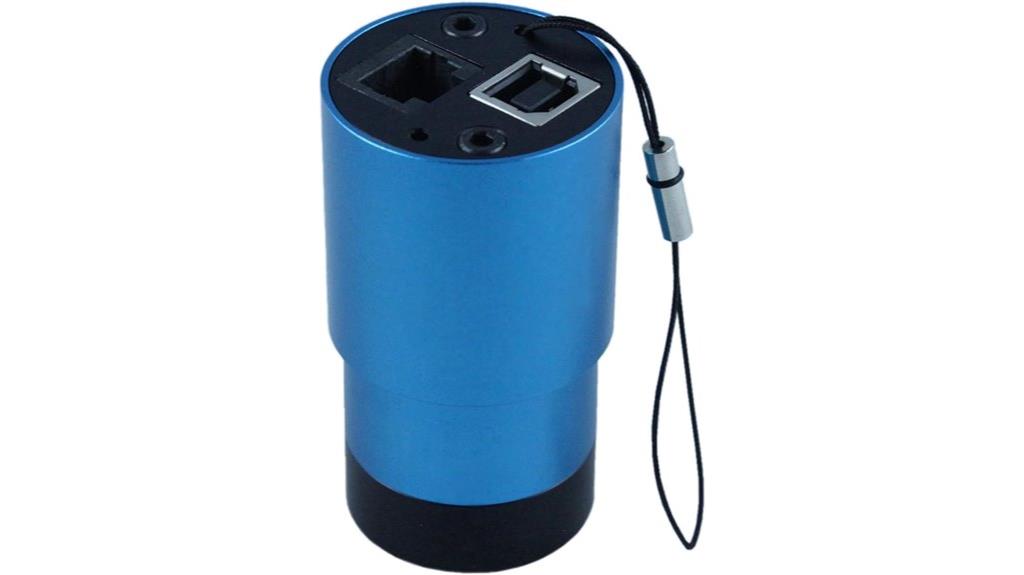
If you’re serious about astrophotography or auto-guiding, the Astromania SGCMOS Series Telescope CMOS Camera is an excellent choice. I appreciate its high-sensitivity sensor, fast frame rate, and long exposure capabilities, which make capturing deep-sky objects easier. The camera supports multicolour imaging, video preview, and raw data output, giving flexibility for different projects. Its built-in ST4 auto guider port simplifies guiding setup. The aluminum CNC housing ensures durability, and the standard 1.25-inch interface offers compatibility with various eyepieces and filters. Overall, this camera combines reliable hardware and versatile software support, making it ideal for both beginners and experienced astrophotographers.
Best For: amateur and professional astrophotographers seeking a versatile, durable camera with high sensitivity and easy auto-guiding capabilities.
Pros:
- High-sensitivity sensor with fast frame rate and long exposure support for capturing deep-sky objects
- Built-in ST4 auto guider port simplifies auto-guiding setup and improves tracking accuracy
- Compatible with standard industrial lenses, filters, and software for versatile astrophotography
Cons:
- May require additional accessories like lenses or filters for full functionality
- USB 2.0 connection might limit data transfer speeds compared to newer interfaces
- Aluminum CNC housing, while durable, could be heavier and less portable for field use
SVBONY SV605CC Cooled Astrophotography Camera, Double Layer Semiconductor Refrigeration, 9MP IMX533 USB3.0 CMOS Color Telescope Camera, for Deep Sky Astrophotography Panoramic Astronomy&Lucky Imaging
SV605CC deep sky camera is suitable for deep space photography enthusiasts; suitable for deep space photography; panoramic astronomy;...
As an affiliate, we earn on qualifying purchases.
SVBONY SV605CC Cooled Astrophotography Camera
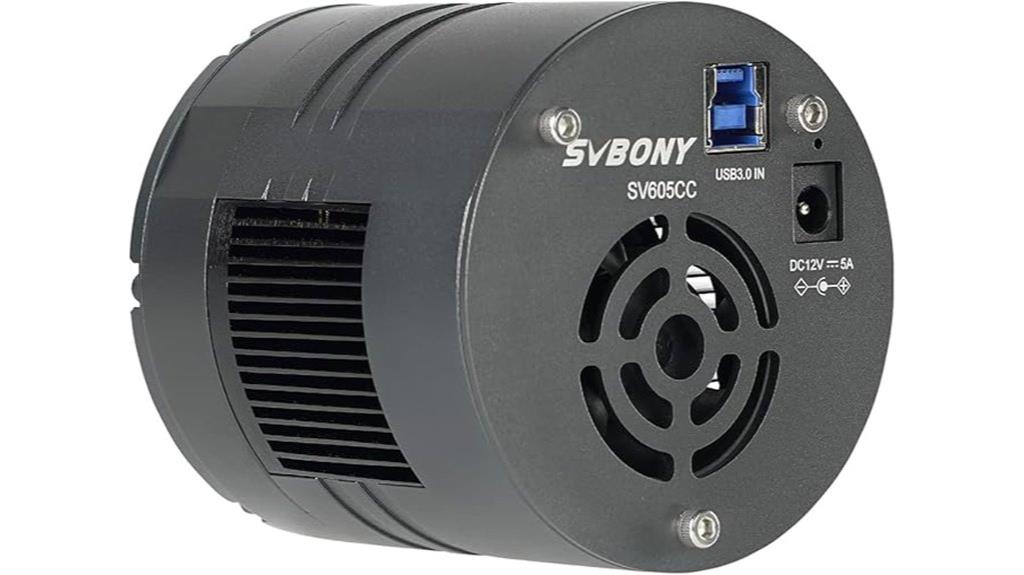
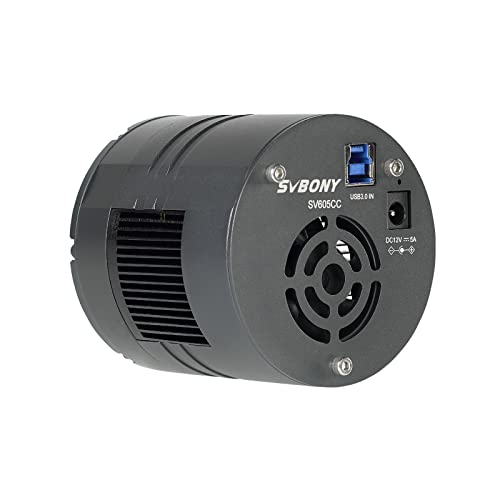
The SVBONY SV605CC stands out as an ideal choice for astrophotographers seeking high-quality deep sky images, thanks to its advanced IMX533 sensor that offers 80% quantum efficiency and a 9MP resolution. Its 1-inch CMOS chip captures fine details with 3.76μm pixels, making it perfect for fast-moving or small targets. The camera’s glow suppression technology reduces residual glow, enhancing image clarity. Equipped with double-layer TEC cooling, it can lower sensor temperatures by 30°C below ambient, minimizing thermal noise. Plus, its USB 3.0 interface ensures rapid data transfer, making it a versatile tool for deep sky, meteor, or lucky imaging.
Best For: astrophotographers and astronomy enthusiasts seeking high-resolution, low-noise deep sky imaging with fast target acquisition and reliable thermal regulation.
Pros:
- High quantum efficiency of 80% for improved imaging sensitivity
- Effective glow suppression technology for clearer images
- Double-layer TEC cooling system reduces sensor temperature by 30°C below ambient, minimizing thermal noise
Cons:
- Limited to 9MP resolution, which may be lower than some ultra-high-end cameras
- Requires a stable power supply and good cooling conditions for optimal performance
- USB 3.0 interface demands compatible hardware for fast data transfer
Factors to Consider When Choosing Cooled CMOS Astro Cameras for Deep Sky Imaging
When selecting a cooled CMOS astro camera for deep sky imaging, I focus on key factors like sensor sensitivity and quantum efficiency because they directly impact image quality. I also consider cooling efficiency and noise reduction to guarantee clear captures, along with resolution and pixel size for detail. Finally, compatibility, connectivity, and data transfer speed are essential to streamline my workflow and maximize performance.
Sensor Sensitivity & QE
Sensor sensitivity and quantum efficiency (QE) are crucial factors when selecting cooled CMOS astro cameras for deep sky imaging, as they directly impact the camera’s ability to detect faint celestial light. Higher sensitivity means the sensor can pick up dim signals more effectively, resulting in clearer, more detailed images. QE measures the percentage of incoming photons converted into electrons; a higher QE (like 80%) indicates better light capture. Cameras with high sensitivity and QE enable shorter exposures, reducing motion artifacts and increasing efficiency. Advanced cooled CMOS sensors often feature optimized low-noise performance and high QE, essential for capturing high-quality deep sky images. Focusing on these factors helps ensure your camera can reveal faint galaxies, nebulae, and star clusters with remarkable detail.
Cooling Efficiency & Noise
Effective cooling systems are essential in cooled CMOS astro cameras because they directly reduce thermal noise, which can obscure faint celestial details. When the sensor temperature drops by 30°C or more below ambient, thermal noise diminishes considerably, leading to cleaner, high-contrast images. Efficient cooling also minimizes dark current, a major noise source in long exposures. Thermoelectric cooling (TEC) technology offers stable, consistent temperature regulation, ensuring ideal imaging conditions. High cooling efficiency allows the camera to capture faint deep sky objects with a better signal-to-noise ratio, making it easier to detect subtle details. As I evaluate different models, I focus on how well they manage heat, the maximum achievable temperature differential, and overall stability, since these factors directly impact image quality and the success of my astrophotography sessions.
Resolution & Pixel Size
Choosing the right cooled CMOS astro camera depends heavily on resolution and pixel size, as these factors determine the level of detail you can capture in deep sky images. Higher resolution cameras can reveal finer structures in nebulae, galaxies, and star clusters, offering more detailed views. Smaller pixel sizes, like 3.76μm, enable higher spatial resolution, but often require longer exposures to achieve a good signal-to-noise ratio. Conversely, larger pixels improve sensitivity and reduce noise, which is helpful for capturing faint objects, but may decrease overall resolution. Finding the right balance between resolution and pixel size is key to optimizing image quality for your target objects and imaging conditions. Understanding these factors helps you select a camera that matches your astrophotography goals.
Data Transfer Speed
Have you ever experienced long wait times or data loss during deep sky imaging? If so, data transfer speed might be the vital factor. Faster transfer speeds, like USB 3.0 or higher, allow me to capture and process images more quickly, reducing downtime. When working with large files and high-resolution sensors, high-speed interfaces prevent bottlenecks, ensuring I don’t sacrifice image quality. Reliable, high-bandwidth connections also minimize data corruption, which is essential for detailed deep sky shots. Choosing the right interface, such as USB-C or USB 3.0, directly impacts how efficiently I can transfer data during long exposures. It’s equally important to verify compatibility with my computer’s hardware and software to optimize transfer speeds and maintain a smooth imaging session.
Compatibility & Connectivity
When selecting a cooled CMOS astro camera for deep sky imaging, verifying its compatibility with your existing setup is essential. Make sure it supports USB 3.0 or higher for fast data transfer during long exposures. Check that it’s compatible with your computer’s operating system and astrophotography software, including support for drivers like ASCOM or WDM. Confirm the presence of standard connections such as ST4 auto-guiding ports for seamless guiding integration. Also, verify that the camera’s hardware interfaces, like C-mount or 1.25-inch nosepieces, match your optical accessories and mounts. Additionally, consider whether the camera’s firmware and drivers receive regular updates, ensuring ongoing compatibility with evolving software and preventing potential issues during extended imaging sessions.
Software & Ease of Use
Selecting a cooled CMOS astro camera that’s easy to operate can make a big difference in your astrophotography experience. User-friendly software interfaces simplify capturing, processing, and analyzing images, saving you time and frustration. Compatibility with popular drivers like ASCOM, WDM, and proprietary options ensures seamless integration with your existing setup. Built-in features such as dark frame subtraction, live preview, and automated focusing help both beginners and experts optimize their results effortlessly. Intuitive controls for adjusting exposure, gain, and cooling settings allow you to fine-tune image quality without needing advanced technical skills. Additionally, extensive software support, including dedicated applications and tutorials, reduces the learning curve. Overall, good software and ease of use are crucial for making deep sky imaging enjoyable and productive.
Frequently Asked Questions
How Do Cooled CMOS Astro Cameras Compare to CCD Models for Deep Sky Imaging?
Cooled CMOS astro cameras generally outperform CCD models in deep sky imaging today. They offer faster readouts, lower noise, and better sensitivity, especially at high speeds, making them ideal for capturing faint objects. Plus, they’re more affordable and easier to use. I find that their advanced technology allows me to get sharper images with less post-processing, making my astrophotography sessions much more productive and enjoyable.
What Is the Typical Lifespan of Cooled CMOS Sensors in Astrophotography?
The typical lifespan of cooled CMOS sensors in astrophotography is around 5 to 10 years, depending on usage and care. I’ve found that with proper maintenance, like avoiding extreme temperatures and keeping the sensor clean, these sensors can last quite a while. While some degradation might occur over time, many users report excellent performance well beyond their initial years, making them a reliable choice for long-term astrophotography.
Are There Specific Software Requirements for Operating These Cooled CMOS Cameras?
Did you know that most cooled CMOS astro cameras require specific software to operate smoothly? I’ve found that compatible imaging software like SharpCap, Sequence Generator Pro, or Astro Photography Tool is essential for capturing and processing images effectively. These programs often need to support the camera’s drivers and features, ensuring seamless control over cooling, exposure, and focus. Without the right software, you might struggle to get the best out of your camera.
How Does Ambient Temperature Affect Cooled CMOS Camera Performance?
Ambient temperature directly impacts cooled CMOS camera performance by affecting thermal noise levels. When it’s warmer, the camera’s cooling system works harder to reduce noise, which can strain its efficiency and potentially introduce artifacts. Cooler surroundings help maintain ideal sensor temperatures more easily, resulting in clearer images with less noise. So, I always aim to operate my camera in a controlled, cooler environment whenever possible for the best imaging results.
Can Cooled CMOS Astro Cameras Be Used for Planetary Imaging as Well?
Yes, cooled CMOS astro cameras are great for planetary imaging too. I use mine to capture detailed images of planets because they deliver high sensitivity and fast frame rates. The cooling reduces noise, which is especially helpful when imaging bright objects like planets. Whether you’re aiming for deep sky or planetary details, these cameras are versatile and deliver sharp, high-quality images across the board.
Conclusion
If you’re serious about deep sky imaging, choosing the right cooled CMOS camera is like finding the perfect lens for a masterpiece—crucial and transformative. Both the Astromania SGCMOS and SVBONY SV605CC stand out with their impressive sensitivity and cooling efficiency. Remember, your camera’s performance is the engine behind stunning images. Invest wisely, and you’ll be capturing celestial wonders as vividly as a poet paints stars with words.