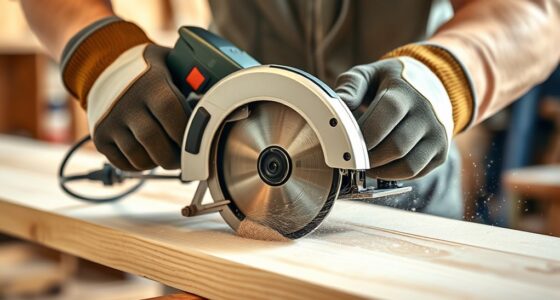
To cut curves and intricate shapes easily with a jigsaw, choose blades with finer teeth suited for detailed work. Mark your lines clearly and guide the saw steadily without forcing it, letting the blade do the work. Keep the workpiece stable and take shallow passes to prevent splintering. Always prioritize safety, wear protective gear, and maintain control throughout. Continue exploring these tips to master precision cuts and achieve professional results effortlessly.
Key Takeaways
- Use blades with finer teeth designed for detailed curves and shapes.
- Mark your cut lines clearly and guide the jigsaw steadily along them.
- Secure the workpiece with clamps to prevent shifting during the cut.
- Make shallow, controlled passes to follow curves smoothly and reduce splintering.
- Wear safety gear and maintain steady pressure for precise, safe shaping of curves.
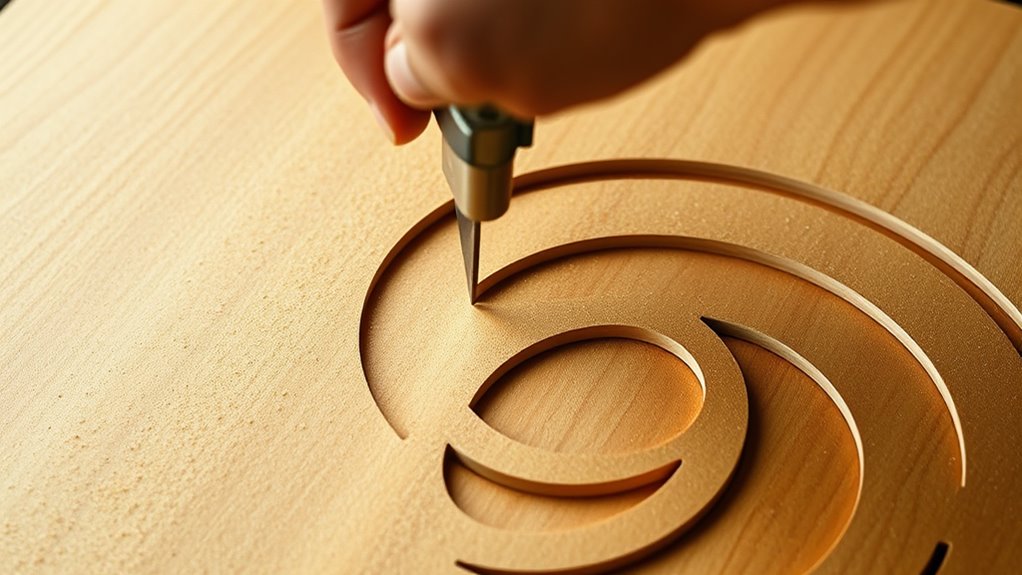
Have you ever felt overwhelmed by a complex problem or project? When it comes to using a jigsaw, the challenge often lies in making smooth, precise cuts, especially when dealing with curves and intricate shapes. The key to mastering this tool is understanding blade selection and safety precautions. Choosing the right blade can make all the difference in your cutting accuracy and safety. There are various blades designed for different materials and cuts, so it’s essential to pick the one best suited for your task. For curves and detailed shapes, blades with finer teeth work better because they produce cleaner cuts and reduce the risk of splintering. A high-quality blade with the right tooth count allows you to maneuver more easily and control the cut, giving you sharper, more precise results. Before starting, always inspect your blade to guarantee it’s sharp and properly installed. A dull or loose blade can cause the jigsaw to jump or bind, increasing the risk of accidents. Remember to wear safety gear, like goggles and a dust mask, to protect your eyes and lungs from debris. Holding the material firmly and guiding the jigsaw steadily helps you stay in control, especially when charting complex curves. Always keep your hands clear of the blade path, and don’t force the tool through stubborn spots. Let the blade do the work at a steady, comfortable pace, and avoid rushing, which can lead to slips or uneven cuts. When working on intricate shapes, it’s helpful to mark your cut lines clearly and use a slow, deliberate cutting motion. You might find it useful to make shallow passes initially, gradually deepening the cut without forcing the blade. This technique minimizes the risk of splintering and keeps you in control. Additionally, securing your workpiece with clamps prevents shifting and ensures precise cuts. Maintaining a clean workspace free of obstructions helps you focus and reduces accidents. Keep your hands and fingers well away from the blade, and always turn off and unplug the jigsaw when changing blades or making adjustments. Following these safety precautions not only protects you but also guarantees your cuts come out as intended. Using the right precious metal investments can also help you feel more confident and secure in your projects, similar to choosing the best tools for your craft. With practice, you’ll develop a steady hand and a better eye for selecting the right blades, making your curves and shapes smoother and more professional-looking. Remember, patience and preparation are your best allies in mastering the jigsaw. By paying attention to blade selection and prioritizing safety, you’ll find yourself confidently tackling even the most challenging projects with ease and precision.
Frequently Asked Questions
Can I Cut Metal With a Jigsaw?
Yes, you can cut metal with a jigsaw, but you need the right blade for metal cutting. Make certain to choose a blade compatible with metal, such as a bi-metal or carbide-tipped blade, to guarantee clean, precise cuts. Always wear safety gear, and work slowly to avoid blade damage. Using the proper blade and technique makes metal cutting with a jigsaw safe and effective.
What Safety Gear Is Recommended for Jigsaw Use?
When using a jigsaw, you should always wear protective glasses to shield your eyes from debris and dust. Hearing protection is also essential, especially during prolonged use, to prevent hearing damage. Make sure to wear sturdy gloves for additional safety, and keep your workspace well-ventilated. Using the right safety gear helps you work confidently, reduces injury risk, and guarantees a safer, more efficient cutting experience.
How Do I Choose the Right Blade for Different Materials?
They say, “A chain is only as strong as its weakest link,” so choosing the right blade is vital. To select the best blade types, consider the material you’re cutting, like wood, metal, or plastic, and check the compatibility for each. For softer materials, use fine-toothed blades, while for tougher ones, opt for more durable, aggressive blades. This guarantees clean cuts and prolongs your blade’s life.
Is a Jigsaw Suitable for Making Straight Cuts?
Yes, a jigsaw is suitable for making straight cuts, showcasing its versatility and precision cutting capabilities. While it’s known for curves and intricate shapes, you can also use it with a guide or straight edge to achieve clean, straight lines. Just make certain you select the right blade and stabilize your material. With a steady hand, your jigsaw can handle both detailed curves and accurate straight cuts efficiently.
How Do I Maintain and Clean My Jigsaw?
Did you know regular maintenance extends your jigsaw’s life by up to 30%? To keep it in top shape, regularly check the blade maintenance, replacing dull blades promptly. Clean your jigsaw using gentle techniques like compressed air or a soft brush to remove dust and debris. Avoid harsh chemicals, and make sure the vents stay clear. Proper cleaning techniques and blade maintenance help your jigsaw perform smoothly and last longer.
Conclusion
Think of your jigsaw as a skilled artist’s brush, carving out your masterpiece with confidence. With every curve and shape you cut, you’re shaping your craft, turning raw wood into art. Remember, mastery comes with practice, so keep your hands steady and your mind focused. Soon, you’ll be creating intricate designs effortlessly, like a master sculptor revealing their sculpture. Keep practicing, and watch your woodworking journey transform into a true work of art.