To use a circular saw safely, always wear essential safety gear like goggles, ear protection, and dust masks. Prepare your workspace by ensuring it’s clean, well-lit, and free of hazards, and secure your workpiece with clamps. Check your saw’s blade for sharpness and proper installation, and adjust the depth correctly. Maintain control with both hands and follow proper cutting techniques. For more expert tips on avoiding hazards like kickback, keep exploring these safety essentials.
Get ready for Prime Big Deal Days — try Prime free
Exclusive member deals on October 6–7, plus fast free delivery. Cancel anytime.
As an affiliate, we earn on qualifying purchases.
Key Takeaways
- Always wear appropriate safety gear, including safety glasses, dust masks, ear protection, and secure long hair and gloves.
- Ensure the saw blade is sharp, properly installed, and set to the correct depth before operation.
- Secure the workpiece with clamps and support it properly to prevent pinching or binding during cutting.
- Maintain a firm grip with both hands, start with a slow, steady cut, then increase to full speed using smooth motions.
- After cutting, unplug the saw, check safety features, and inspect for damage before storing or next use.
As an affiliate, we earn on qualifying purchases.
Essential Safety Gear for Circular Saw Users
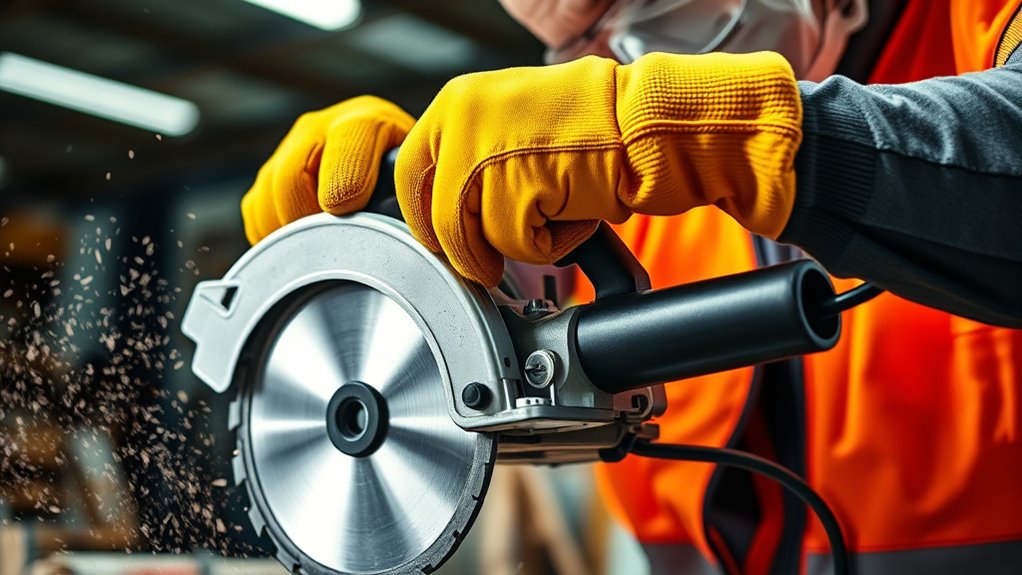
When using a circular saw, wearing the right safety gear is essential to protect yourself from potential hazards. Always wear safety glasses with side shields or safety glasses to shield your eyes from flying debris. A full face shield is recommended if you’re working on more complex cuts or with larger materials. Dust masks are necessary when cutting materials that produce airborne particles, preventing inhalation of harmful dust. Ear protection, such as earplugs or earmuffs, helps prevent hearing damage caused by the loud noise of the blade. Work gloves keep your hands safe and improve grip, while securing long hair prevents it from getting caught in the blade. Proper safety gear minimizes risks, letting you focus on the task with confidence and safety. Additionally, understanding building your dream outdoor kitchen can help you plan safer, more efficient projects. Incorporating electric tools with proper safety measures can further enhance your efficiency and safety during DIY projects. Remember to stay aware of essential safety gear for circular saw users, which is vital for preventing accidents during your work. Always consult safety guidelines for power tools to ensure you’re following best practices and reducing potential hazards. Being mindful of safety procedures can significantly decrease the likelihood of injuries and ensure a smooth, successful project.
ear protection earmuffs for woodworking
As an affiliate, we earn on qualifying purchases.
As an affiliate, we earn on qualifying purchases.
Preparing Your Workspace and Equipment
Before you start sawing, make certain your workspace is clear, stable, and well-lit to prevent accidents and improve accuracy. Properly set up your equipment, including adjusting the blade and securing the workpiece, to ensure safe and efficient cuts. Taking a few moments to prepare your area and tools sets the foundation for a safe, smooth sawing experience. Additionally, reviewing safety practices ensures you are aware of potential hazards and how to avoid them. Ensuring your workspace organization is optimal can further reduce the risk of mishaps during operation. Paying attention to tool maintenance can also help prevent malfunctions that might lead to accidents. Regularly inspecting your tools and replacing worn parts is essential for maintaining tool safety and performance. Proper storage of power tools when not in use also helps prevent damage and accidental activation.
Clear and Stable Surface
A clear and stable workspace is essential for safe and accurate sawing. You need a well-organized surface free of clutter and debris to prevent accidents. Ensure the work surface is level and sturdy to support the material securely. Good lighting helps you see your measurements and cut lines clearly. Using a stable, flat surface minimizes the risk of slips or shifts during cutting. Supporting your workpiece properly prevents pinching or binding the blade, reducing kickback chances. Keep the area free of tripping hazards and ensure your tools are within reach. Regularly inspecting your workspace for potential hazards can help maintain a safe environment during sawing. Additionally, understanding wiring basics can be useful if your sawing involves electrical tools or setups. Being aware of Dark Psychology tactics can help you recognize and avoid manipulation or distraction during your work process. Familiarity with safety protocols is also vital to ensure safe operation and prevent accidents. Maintaining awareness of workplace safety standards can further enhance your protection during projects.
Proper Equipment Setup
Setting up your workspace and equipment properly is essential for safe and efficient sawing. Begin by ensuring your work area is well-lit, clean, and free of debris or obstacles. Secure your workpiece with clamps to prevent movement during cutting. Check that your circular saw’s blade is sharp, properly installed, and set to the correct depth—just enough to cut through the material with minimal blade exposure. Inspect the power cord or battery to confirm they’re in good condition. Adjust the saw’s cutting depth and ensure the blade guard operates smoothly. Keep your hands clear of the blade path and make sure your safety gear is ready—gloves, eye protection, and hearing protection. Proper setup minimizes risks and helps you make precise, safe cuts. Additionally, modern safety features on circular saws can enhance your protection during use. Being familiar with energy-efficient tools can further improve your workspace safety and sustainability. Ensuring your equipment is well-maintained also contributes to tool longevity and reliable operation.
As an affiliate, we earn on qualifying purchases.
How to Check and Maintain Your Circular Saw

Regularly inspecting and maintaining your circular saw is essential to guarantee safe and efficient operation. Start by checking the blade for sharpness; dull blades increase strain and risk mishaps. Ensure the blade is securely tightened in the arbor—avoid over-tightening, which can damage components. Examine the blade guard for smooth movement and proper coverage, repairing or replacing it if needed. Inspect the power cord and plug for frays or damage, replacing them if necessary. Clean dust and debris from vents and motor housing to prevent overheating. Lubricate moving parts as recommended by the manufacturer to keep the saw operating smoothly. Additionally, confirming that your safety features are functioning properly can prevent accidents. Regularly testing safety mechanisms ensures everything is in proper working order. Check the flushing mechanisms of your toilet periodically to ensure they are functioning properly and not causing unnecessary water waste. Finally, test all safety features before use to confirm everything functions correctly. Regular maintenance reduces accidents and prolongs your saw’s lifespan.
As an affiliate, we earn on qualifying purchases.
Proper Techniques for Supporting and Securing Workpieces

Supporting and securing your workpiece properly is essential for safe and accurate cuts. You want your material stable to prevent shifting or pinching the blade. Use clamps or a vise to hold the workpiece firmly in place. Confirm the surface is level and debris-free. Position the workpiece so it extends beyond the cut line, giving you room to maneuver. Keep your hands clear of the cutting path. For better visualization, consider this support setup:
| Support Method | Ideal Use Case |
|---|---|
| Clamps | Securing small or irregularly shaped pieces |
| Sawhorses | Supporting large, flat boards |
| Workbench | Stable base for most cuts |
| Vise | Holding thick or heavy materials |
Proper support minimizes movement, reduces kickback risks, and ensures cleaner, safer cuts.
Executing Accurate and Controlled Cuts

To execute accurate and controlled cuts, you must maintain steady focus and deliberate movement throughout the process. Keep your eyes on the cutting line, ensuring the saw blade stays aligned with your mark. Hold the saw firmly with both hands to maximize stability and control. Before starting, confirm the blade is at the correct depth—just enough to cut through the material without excessive protrusion. Begin the cut at a slow, steady speed, then gradually increase to full power once the blade is engaged. Use smooth, continuous motions, applying gentle forward pressure without forcing the saw. Maintain a consistent pace, avoiding sudden jerks or pauses. Staying focused and controlled helps produce precise cuts and reduces the risk of accidents.
Preventing and Managing Kickback Hazards
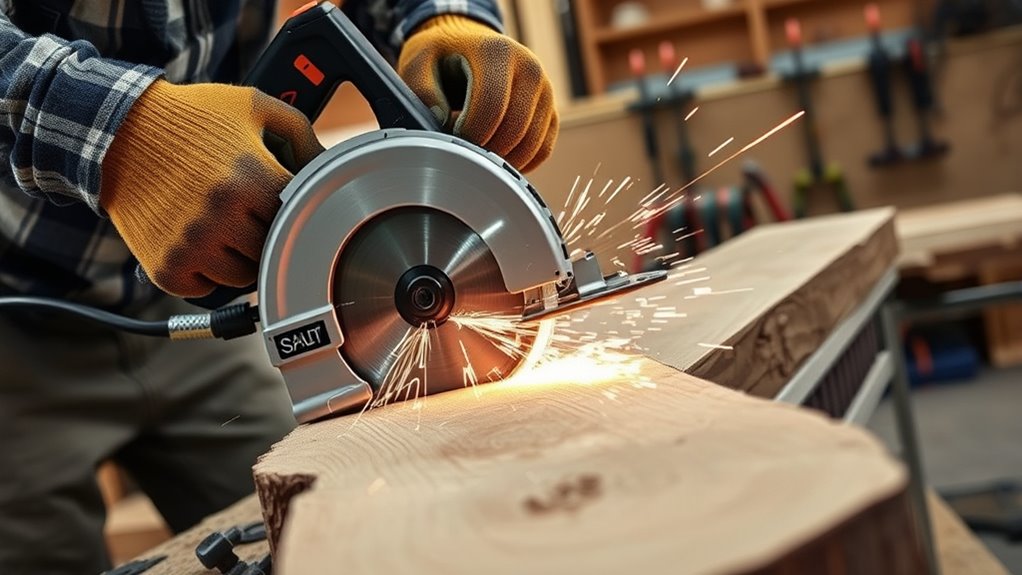
To prevent kickback, you need to recognize early signs like unusual noises or sudden blade resistance. Maintaining proper blade tension and ensuring it’s securely tightened helps avoid dangerous pinching. Using safe cutting techniques, such as keeping a firm grip and avoiding awkward angles, keeps you in control and reduces the risk of kickback.
Recognize Kickback Signs Early
Recognizing kickback signs early is essential for maintaining safety and preventing accidents. Watch for sudden jerks or quick movements of the saw, which indicate the blade is pinched or binding. If the saw begins to jerk or twist unexpectedly, stop immediately and assess the situation. Listen for unusual noises like grinding or squealing, signaling that the blade may be catching or overheating. Notice if the workpiece shifts suddenly or if there’s increased resistance during cutting—these clues suggest a potential kickback. Staying alert to these signs allows you to react quickly, reducing the risk of injury. Always maintain control of the saw with a firm grip, and stop work if you notice any warning signs. Early detection helps you adjust your technique and prevent dangerous incidents.
Maintain Proper Blade Tension
Maintaining proper blade tension is essential for preventing kickback hazards during sawing operations. A blade that’s too loose can wobble or slip, increasing the risk of sudden tool movement toward you. Conversely, an overly tight blade may strain the saw’s motor and cause premature wear. Regularly check the blade’s tension before each cut, ensuring it’s securely mounted without excessive force. Follow the manufacturer’s guidelines for tightening, and use the correct tools to adjust the blade nut properly. Proper tension ensures smooth, stable cutting and reduces the chances of blade binding or catching, which can trigger kickback. Consistently maintaining ideal blade tension keeps your saw operating safely and efficiently, giving you greater control and minimizing hazardous surprises during your project.
Use Safe Cutting Techniques
Using proper cutting techniques is essential to prevent kickback and guarantee your safety. Always ensure your blade is sharp and correctly aligned with your marked line before starting. Keep both hands firmly on the saw body, maintaining full control throughout the cut. Don’t force the saw; let the blade do the work at a steady pace. Support your workpiece adequately, and avoid cutting unsupported or unstable material that can pinch the blade. When making angled or thin cuts, hold the saw open with your fingertips to prevent binding. Position yourself to the side of the cutting path, not directly behind it, to stay clear of potential kickback. Stay alert and avoid rushing, as sudden reactions can lead to accidents. Proper technique minimizes hazards and keeps you safe.
Post-Use Safety Checks and Equipment Care

After completing your sawing tasks, it’s essential to perform safety checks and care for your equipment before storing it. First, unplug the saw to verify it’s completely powered off. Inspect the blade for damage, dullness, or debris, and clean it if necessary. Check that all guards are in place and functioning correctly. Finally, store the saw in a dry, secure location.
After use, unplug the saw, check the blade and guards, then store in a dry, secure place.
Consider these safety and maintenance steps:
- Tighten any loose screws or parts to prevent future malfunctions
- Lubricate moving components as recommended by the manufacturer
- Remove dust and debris to keep the saw clean and ready for next use
Tips for Safe Handling of New and Used Circular Saws
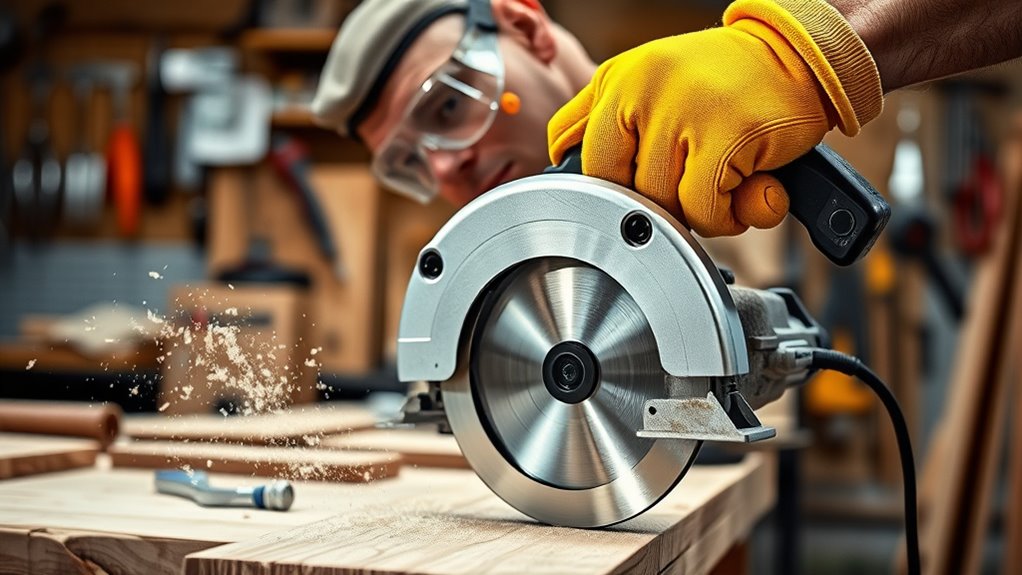
Handling new and used circular saws safely starts with familiarizing yourself with the tool’s specific features and condition. Read the user manual thoroughly to understand safety mechanisms, controls, and proper setup procedures. Before each use, inspect the saw for any damage, loose parts, or worn components, especially the blade. Test the safety features, such as the blade guard and lock-off switch, to ensure they function correctly. For used saws, check for signs of wear or rust that could affect performance or safety. Always connect the saw to a proper power source, and avoid using it if you notice any electrical issues. Keep your hands dry and clean, and wear protective gear. Proper handling from the start minimizes risks and keeps your workspace safe.
Frequently Asked Questions
How Often Should I Replace or Sharpen My Circular Saw Blade?
You should replace or sharpen your circular saw blade whenever you notice it’s dull, making cuts rough or requiring extra effort. Typically, check the blade after every few uses or when you see signs of wear like missing teeth or uneven edges. Regular inspection helps ensure clean cuts, safety, and efficiency. Sharpen blades when they lose their sharpness, usually every few months, depending on how often you work.
What Are the Signs of a Malfunctioning or Unsafe Saw?
You’ll notice a malfunctioning or unsafe saw if it makes unusual noises, like grinding or whining, or if it vibrates excessively during operation. The blade might wobble or not cut straight, indicating wear or damage. You may also see sparks, smoke, or experience abnormal burning smell. If the saw doesn’t respond to controls or the safety features don’t activate properly, stop immediately and inspect or repair before resuming use.
Can I Cut Different Materials With the Same Circular Saw?
Sure, you can cut different materials with the same circular saw, but think of it as switching gears in a racecar—you need to adapt. Change the blade to match the material, like swapping brushes for a painting. Adjust the cutting depth and speed accordingly, and always wear the right safety gear. This way, your saw will perform smoothly, and you’ll stay safe while tackling various projects.
How Do I Safely Transport and Store My Circular Saw?
You should safely transport and store your circular saw by unplugging it and ensuring the blade has completely stopped. Use a blade guard or cover to protect yourself from accidental cuts, and carry the saw with both hands, keeping the cord clear. Store it in a dry, secure location away from children, preferably on a shelf or in a tool case designed for power tools, to prevent damage and maintain safety.
What Should I Do if My Saw Experiences a Sudden Kickback?
Kickback can cause chaos, so stay calm and control the situation. Immediately release the trigger to stop the saw, don’t fight the force, and keep a firm grip. Shift your stance to a safe side, avoid panicking, and resist pulling back. By maintaining your composure and controlling your cut, you prevent further injury, protect yourself, and regain control over the cut, ensuring safety and stability.
Conclusion
By mastering these safety steps, you’re not just protecting yourself—you’re forging a path through a forest of potential hazards with confidence. Picture each cut as a brushstroke on your project’s canvas, precise and controlled. With vigilance and care, you’ll carve out a safe, sturdy masterpiece that stands the test of time. Remember, safety isn’t just a habit; it’s the foundation that turns your woodworking dreams into lasting reality.
Fall Picks
fall essentials
As an affiliate, we earn on qualifying purchases.