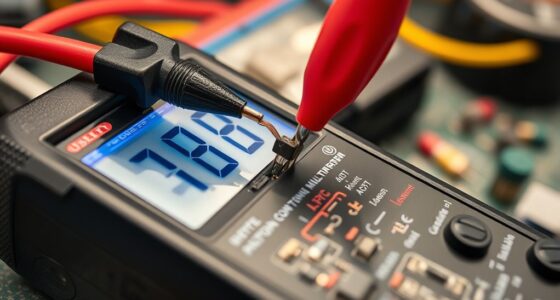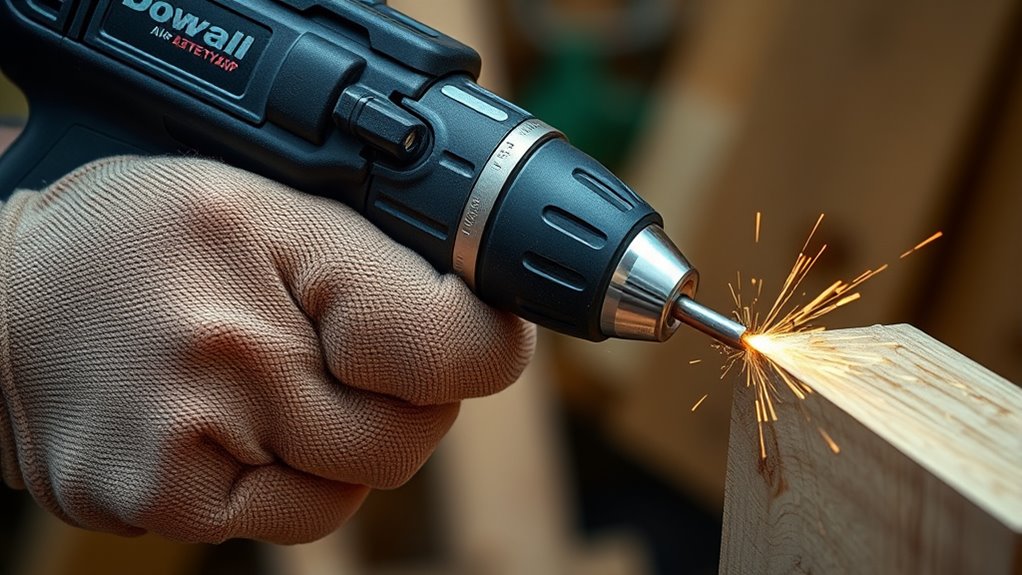

To use a power drill safely and effectively, start by preparing your workspace—clear cords, debris, and obstacles, and make certain good lighting. Inspect your drill and bits for damage, then wear proper PPE like safety glasses and gloves. Choose the right bit and hold the drill firmly, keeping it perpendicular to the surface. Use steady pressure and avoid forcing it. Storing your drill properly after use and understanding injury responses helps prevent accidents—continue to explore these essential steps for safe operation.

Get everyday essentials delivered free — and shop member deals
- Fast, free delivery on millions of items
- Access to Prime Big Deal Days deals on October 6–7
- Prime Video, Amazon Music and more included
Key Takeaways
- Always wear proper PPE, including safety glasses and gloves, and ensure the drill and accessories are in good condition.
- Securely grip the drill with both hands, keep the drill straight, and apply steady pressure for accurate, safe drilling.
- Select the appropriate drill bit and speed for the material, starting with a small pilot hole when necessary.
- Disconnect the power source before changing bits or performing maintenance to prevent accidental activation.
- Keep your workspace organized, well-lit, and free of obstacles to minimize hazards and maintain control during operation.
As an affiliate, we earn on qualifying purchases.
Preparing Your Workspace for Safe Drilling
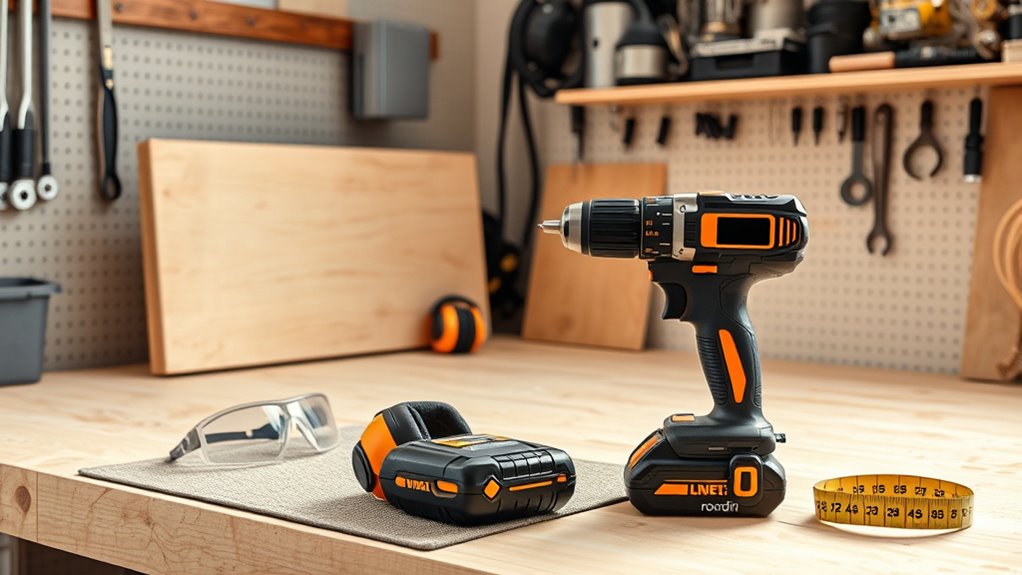
Before you start drilling, you need to prepare your workspace to guarantee safety. Clear the area of any cords, debris, or obstacles to prevent tripping or entanglement. Verify your work surface is stable and secure, so the material won’t shift during drilling. Remove any clutter that could cause distractions or accidents. Check that your lighting is adequate; good visibility helps you maintain control. Keep a fire extinguisher nearby in case of electrical issues. Make sure the floor is dry and free of spills to reduce the risk of slipping and electric shock. Keep bystanders at a safe distance, especially children and pets. Organizing your workspace reduces hazards, making your drilling safer and more efficient. Proper preparation is key to avoiding accidents and injuries. Additionally, understanding power supply safety practices ensures your tools operate reliably and safely during your project. Being aware of air purifier maintenance can help you maintain a clean and safe environment during your work. Moreover, ensuring your grounding and insulation are up to standard prevents electrical hazards during use.
As an affiliate, we earn on qualifying purchases.
Inspecting and Maintaining Your Power Drill
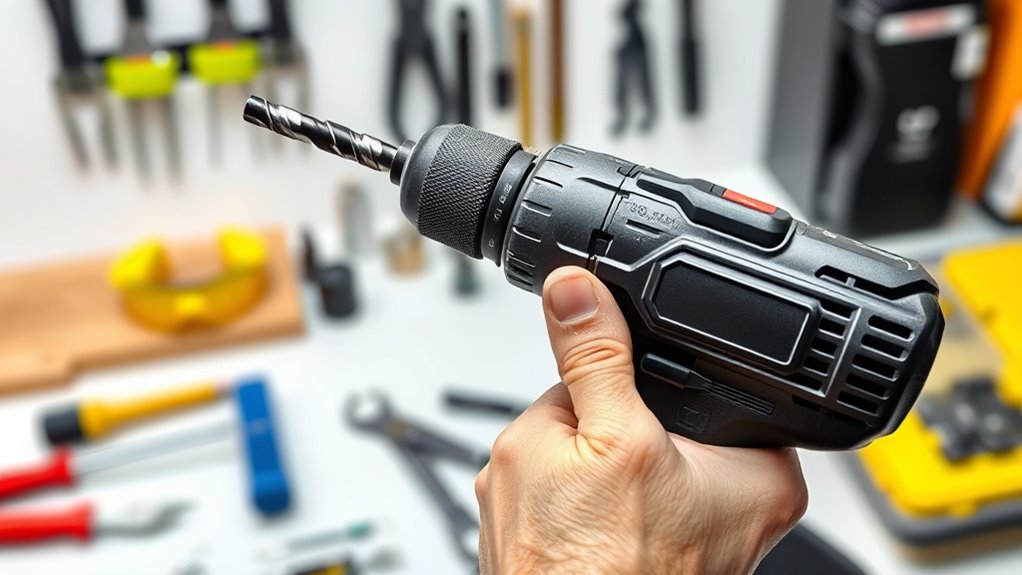
You need to regularly inspect your power drill for any damage or wear that could cause safety issues. Keep it clean by removing dust and debris, especially from vents and moving parts, to make sure proper functioning. Remember to replace worn or damaged parts promptly to maintain safety and efficiency during use. Additionally, understanding the biographical background of tools and their users can help in maintaining proper handling and care. Being aware of the design features of your drill can also aid in identifying potential issues early and ensuring safe operation. Regularly familiarizing yourself with manufacturer guidelines can further support safe use and maintenance practices. Incorporating preventative maintenance routines can extend the lifespan of your drill and prevent unexpected failures.
Regular Inspection Checks
Regular inspection checks are essential to keep your power drill operating safely and effectively. Before each use, examine the power cord or battery for damage, such as fraying or corrosion, to prevent electrical hazards. Check the drill bit for sharpness, proper attachment, and any signs of bending or wear. Inspect the housing for cracks or loose parts that could compromise safety or performance. Verify vents are clear of dust and debris to prevent overheating. Test the trigger and switch to confirm smooth operation. Regularly confirm that all safety features, like locks and guards, are in place and functioning correctly. Performing these simple checks helps avoid accidents, prolongs your drill’s lifespan, and guarantees optimal performance every time you work. Additionally, ensuring your drill is compatible with modern technology integration can enhance safety features and user experience. Remember to also maintain proper lubrication of moving parts to reduce wear and improve the tool’s longevity. Incorporating regular maintenance routines can further extend the lifespan and reliability of your power drill. Regularly inspecting your tool also helps identify potential safety hazards early, ensuring safe operation at all times.
Proper Cleaning Procedures
Proper cleaning is essential to keep your power drill functioning safely and efficiently. After each use, wipe down the exterior with a clean cloth to remove dust, debris, and lubricant buildup. Use compressed air to blow out dust from vents, air vents, and other hard-to-reach spots, preventing overheating and electrical issues. Check the chuck and bit holder for accumulated dirt or debris, and clean them with a brush or cloth. Confirm the cord and plug are free of dirt, frays, or damage. Keep the ventilation slots clear to promote proper airflow. Avoid using harsh chemicals that could damage plastic parts or electrical components. Regular cleaning reduces the risk of malfunctions, extends the tool’s lifespan, and helps you spot potential issues early. Incorporating preventive maintenance practices can further enhance the longevity and safety of your power drill.
Timely Replacement of Parts
Timely replacement of parts is essential to keep your power drill operating safely and efficiently. Regularly inspect the drill’s cords, switches, and housing for damage or wear. Worn or cracked parts can cause electrical shorts, overheating, or mechanical failure, increasing safety risks. Replace dull or damaged drill bits promptly to prevent binding, kickback, or inaccurate drilling. Check the motor brushes and brushes’ springs; replace them if they’re worn down to maintain peak performance. Keep vents clear of dust and debris to prevent overheating. Proper maintenance and staying attentive to your drill’s condition and replacing parts as needed ensure safer operation and extend your tool’s lifespan. Additionally, tool compatibility is important when replacing parts to ensure proper fit and function, reducing the risk of damage or injury. Regularly servicing your drill and using compatible parts can also prevent unnecessary damage or injury, supporting a safer working environment. Paying attention to essential safety precautions can further minimize the risk of accidents and enhance your overall safety during operation. Being aware of wear and tear indicators helps you identify when a part needs replacement before it causes a failure.
As an affiliate, we earn on qualifying purchases.
Choosing the Right Drill Bit and Accessories
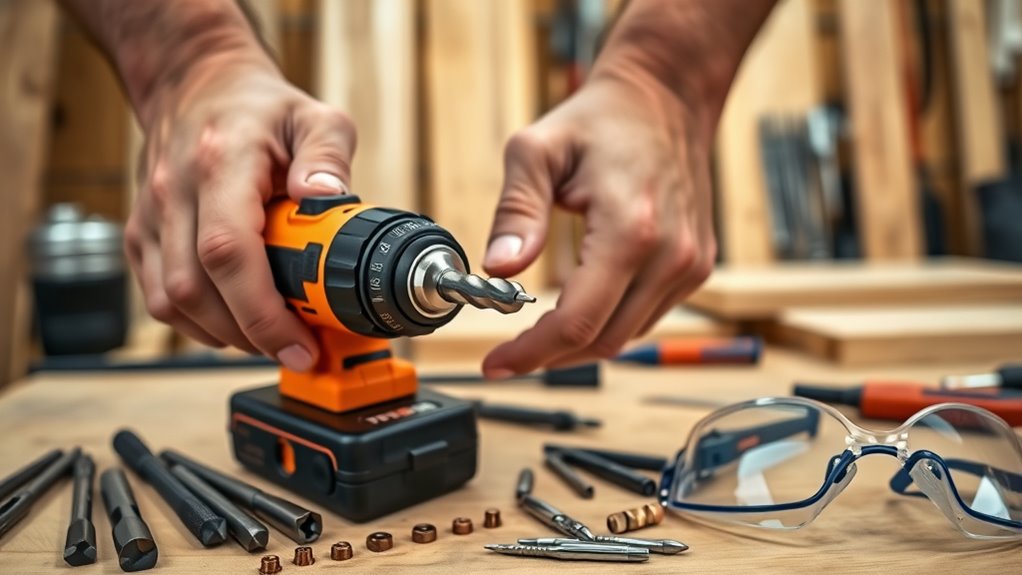
Selecting the right drill bit and accessories is essential for safe and efficient drilling. Start by matching the bit type to your material—use high-speed steel bits for metal, carbide-tipped bits for tile or masonry, and wood bits with sharp spurs. Check that the bit size fits your hole requirements; using the wrong size can cause binding or breakage. Always select quality accessories compatible with your drill’s chuck size and power. Use the proper screwdriver or socket bits for assembly tasks, and ensure they are securely attached to prevent slipping. Invest in accessories like depth stops or guides to improve accuracy and safety. Avoid forcing bits into materials; let the drill do the work at a steady pace. Properly chosen bits and accessories reduce the risk of accidents and damage. Additionally, verifying that your accessories meet safety standards—such as certified safety features—helps prevent potential hazards during operation. When working with different materials, consider the material compatibility of your accessories to ensure optimal performance and safety. Being aware of energyLast considerations can also help in selecting the most efficient tools for your project.
As an affiliate, we earn on qualifying purchases.
Proper Techniques for Handling and Operating the Drill
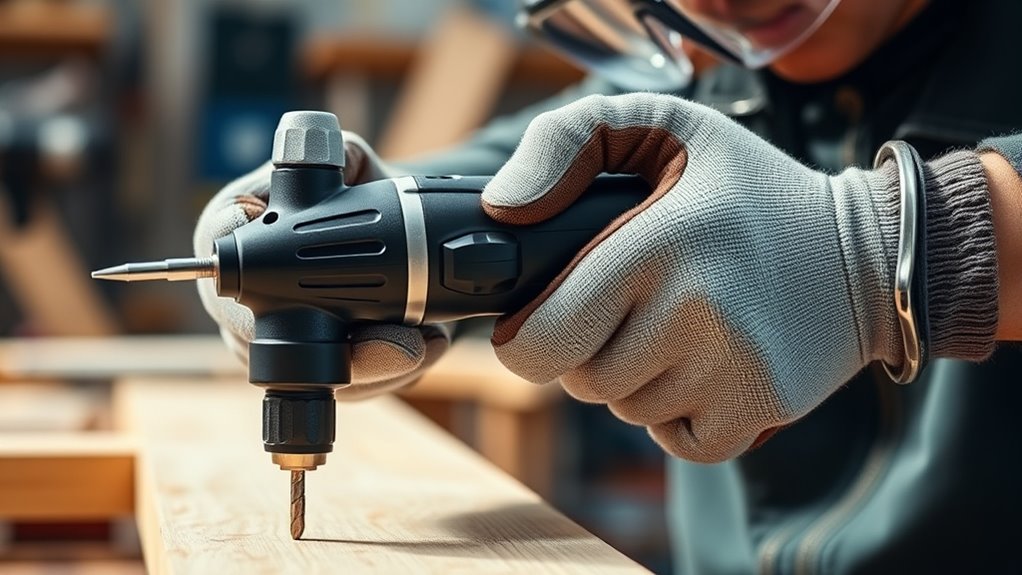
To operate a power drill safely, you need to focus on maintaining control and using proper handling techniques. Start by gripping the drill firmly with both hands to ensure stability. Keep your elbows slightly bent and stand with your feet shoulder-width apart for balance. Before drilling, align the bit straight with the mark and apply steady, even pressure—don’t force the tool, let it do the work. Keep the drill perpendicular to the surface to prevent bit slipping or binding. Use low speed for precision and hard materials, and increase speed gradually as needed. Always maintain a firm grip and avoid overreaching to prevent accidents. Regularly check your stance and grip to stay in control throughout the operation.
Ensuring Personal Protective Equipment Is Worn Correctly
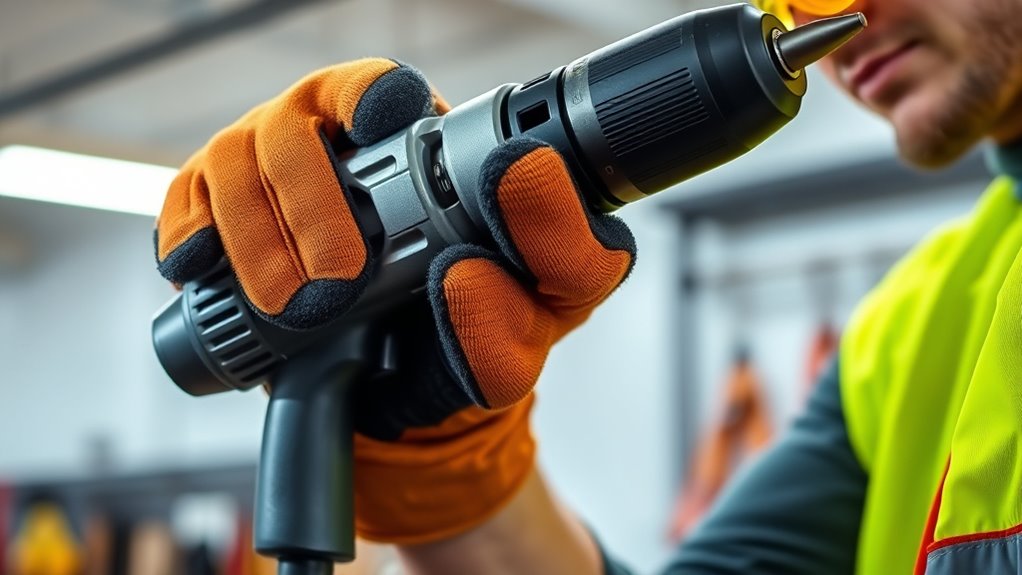
Wearing the right protective gear is essential for your safety when using a power drill. Make sure your PPE fits properly and feels comfortable so you’ll actually wear it correctly. Choosing the right gear for the task helps prevent injuries and keeps you safe throughout your work.
Proper PPE Fit and Comfort
Ensuring your personal protective equipment (PPE) fits properly and feels comfortable is essential for safe drill operation. Ill-fitting gear can distract you or cause discomfort, increasing the risk of accidents. Make sure your safety glasses fit snugly without pinching, and your gloves aren’t too tight or loose. Properly fitted PPE stays in place during work, providing reliable protection.
| PPE Type | Fit & Comfort Tips |
|---|---|
| Safety Glasses | Adjust strap to sit comfortably without pressure |
| Gloves | Choose size that allows movement without slipping |
| Ear Protection | Ensure ear muffs or plugs fit securely without discomfort |
Choosing Appropriate Gear
Choosing the right personal protective equipment (PPE) and wearing it correctly is essential for safe power drill operation. You need safety glasses or a face shield to protect your eyes from flying debris. Wear gloves only if they fit well and don’t interfere with your grip or control, but avoid loose gloves that could get caught. Hearing protection, like earplugs or earmuffs, reduces noise exposure during prolonged use. Make sure your PPE fits snugly and comfortably, so it stays in place and provides full coverage. Always check that your equipment is in good condition before starting. Proper PPE minimizes injury risks from flying debris, electrical shocks, burns, and other hazards associated with power drilling. Never skip wearing your protective gear—your safety depends on it.
Managing Electrical and Battery Safety Precautions

To safely manage electrical and battery components when using a power drill, you must always disconnect the power source before changing bits or attachments. Handle rechargeable batteries with care—avoid exposing them to heat, punctures, or drops, as damage can lead to fires or malfunctions. Charge batteries only in well-ventilated areas and monitor for overheating or swelling. When working near live electrical wiring, use tools with UL-approved insulated grips and keep a safe distance. Follow lockout/tagout procedures and only let qualified personnel work on energized equipment. Regularly inspect cords, plugs, and batteries for damage. Store batteries and drills in dry, secure locations to prevent electrical deterioration. These precautions minimize risk and ensure safe, reliable operation.
Drilling Into Different Materials Safely
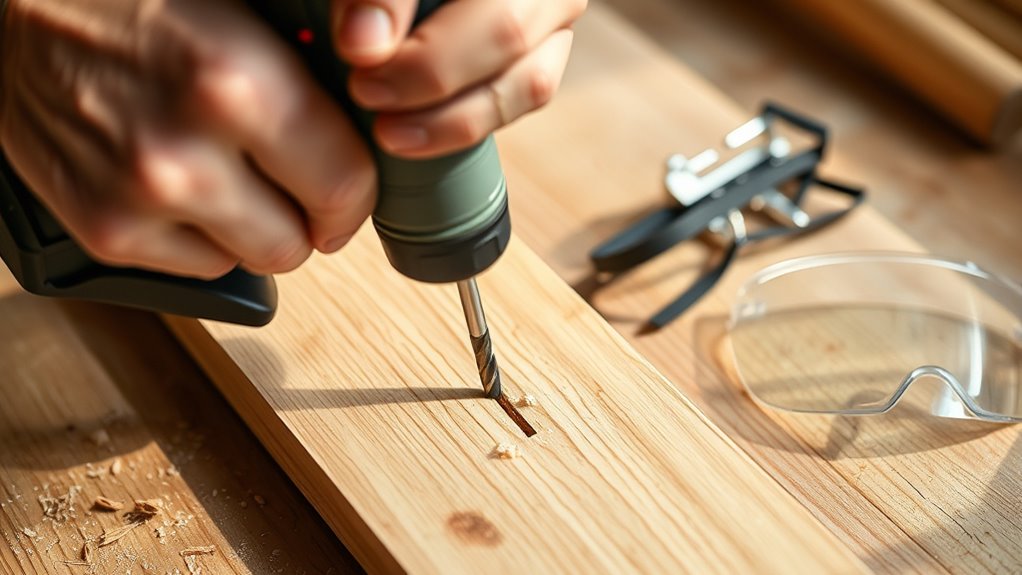
When drilling into different materials, understanding how each one responds to a power drill helps prevent accidents and damage. For hard materials like concrete or brick, use a hammer drill setting and slower speeds to avoid overheating and bit breakage. Soft materials like wood require sharp bits and gentle pressure to prevent splintering or kickback. Metal surfaces need drill bits designed for metal and cutting at lower speeds to reduce heat buildup. Always match the drill bit to the material for ideal results. Secure the material firmly to prevent slipping or movement. Start with a small pilot hole for precision and to lessen stress on the bit. Keep your work area clear, wear safety gear, and apply steady, controlled pressure for safe and effective drilling.
Handling Electrical Components and Avoiding Electrocution
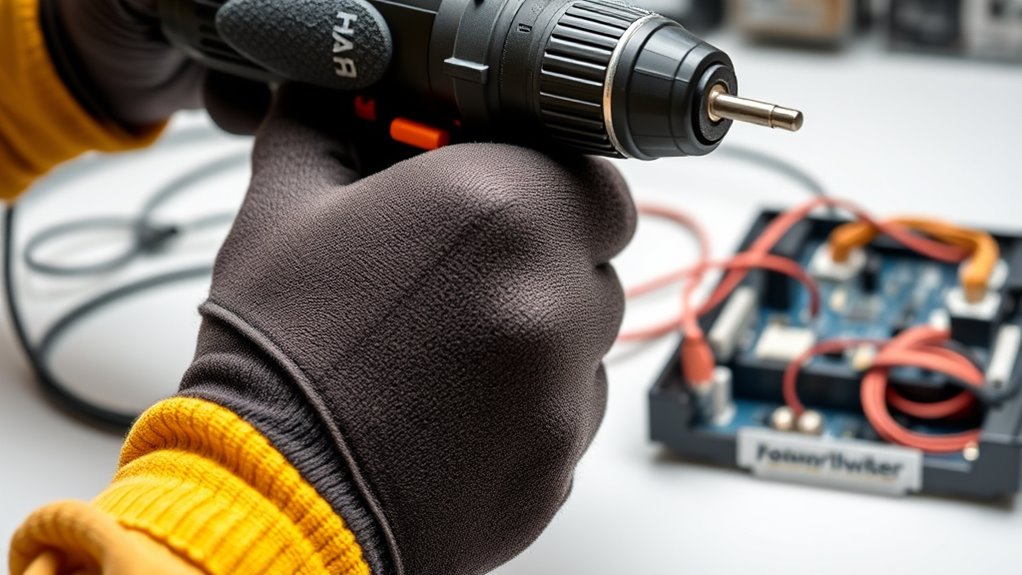
Always disconnect the power before changing bits or working on your drill to prevent accidental starts. Handle batteries with care, avoiding heat exposure or damage, to reduce fire risks. Use insulated tools when working near live wires to protect yourself from electrical shocks.
Disconnect Power Before Work
Before you start working on electrical components with your power drill, it’s crucial to disconnect the power source to prevent accidental activation. This simple step protects you from electric shock and potential injuries. Always unplug the drill from the outlet or remove the battery before changing bits or inspecting wiring. Use a lockout/tagout device if necessary, especially when working on energized equipment. Keep your work area dry and free of conductive materials. Remember, even a slight accidental contact with live wiring can be deadly. To stay safe, follow these key precautions:
| Step | Action | Why it Matters |
|---|---|---|
| Unplug or Remove Battery | Disconnect power before work | Prevents accidental startup |
| Confirm Power is Off | Use tester to verify no voltage | Ensures safety |
| Use Insulated Tools | For electrical contact | Reduces shock risk |
| Wear PPE | Safety gear when working near live wires | Protects against injury |
| Follow Lockout Procedures | Secure electrical sources | Keeps work safe from energization |
Handle Batteries Carefully
Handling rechargeable batteries with care is essential to prevent fires, leaks, and electrical injuries. Always inspect batteries for damage before use, looking for cracks, corrosion, or swelling. Never expose batteries to extreme heat or puncture them, as this can cause fires or leaks. Charge batteries in well-ventilated areas and avoid overcharging, which can lead to overheating. Store batteries away from flammable materials and out of reach of children.
Remember:
- Handle batteries gently to avoid physical damage.
- Keep them away from heat sources and direct sunlight.
- Dispose of damaged or old batteries responsibly at designated recycling centers.
Taking these precautions helps prevent accidents and ensures your safety while using power tools.
Use Insulated Tools
Have you considered how using insulated tools can substantially reduce your risk of electric shock when working near live wiring? Insulated tools have non-conductive handles that protect you from accidental contact with energized components. Always choose tools with proper insulation rated for electrical work, especially when working around electrical panels or wiring. Using these tools minimizes the chance of current passing through your body if a mistake occurs.
| Insulated Tool Benefits | Safety Precautions |
|---|---|
| Prevents electric shocks | Inspect insulation before use |
| Reduces accidental contact | Use tools rated for the voltage level |
| Enhances safety awareness | Never bypass insulation protections |
Storing and Caring for Your Power Drill After Use
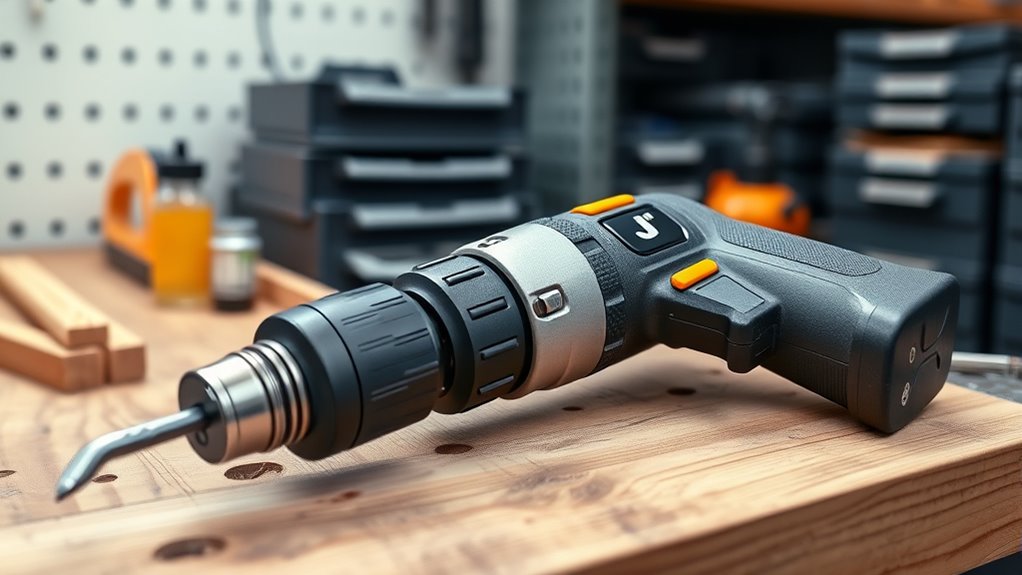
Properly storing and caring for your power drill after each use helps guarantee it remains safe, reliable, and in good working condition. After finishing your project, clean the drill by removing dust, debris, and any buildup around vents and moving parts. Store it in a dry, secure location away from moisture and extreme temperatures to prevent electrical damage and corrosion. Regularly inspect for worn or damaged cords, bits, or housing, replacing parts as needed. Proper storage also involves disconnecting the battery or unplugging the drill to avoid accidental activation. To reinforce good habits, consider these practices:
- Keep your drill in a dedicated, organized toolbox or storage case
- Use silica gel packs or dehumidifiers in storage areas to control moisture
- Follow manufacturer guidelines for maintenance and periodic checks
Recognizing and Responding to Common Power Drill Injuries
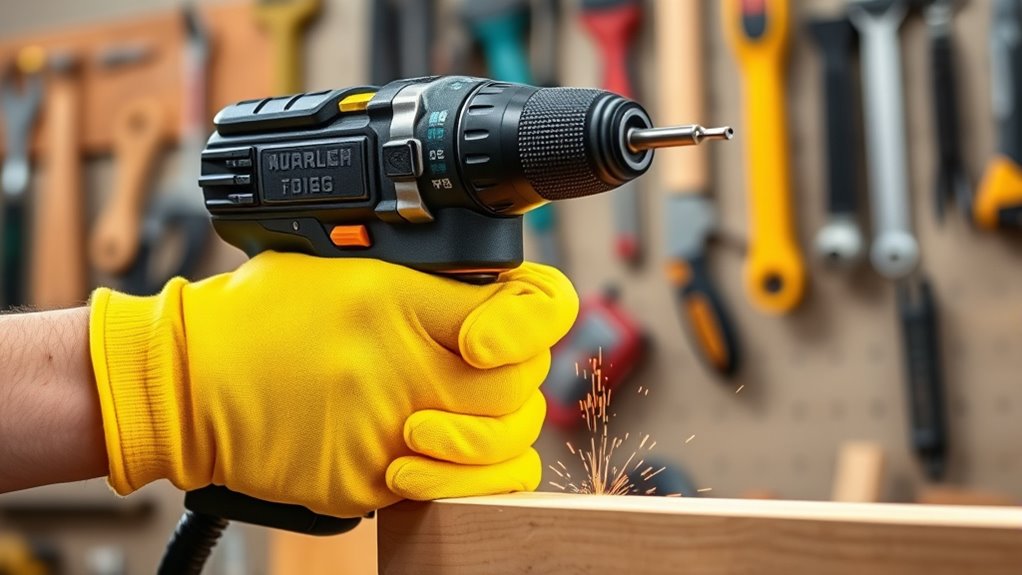
Recognizing the signs of common power drill injuries is essential for prompt and effective response. If you notice bleeding, swelling, or severe pain, stop immediately and assess the injury. Puncture wounds from drill bits may cause deep tissue damage, so clean the area gently and apply pressure to control bleeding. For burns, look for reddening, blistering, or charring; cool the burn with running water and seek medical help if needed. Electrocution symptoms include muscle spasms, numbness, or shock sensations—disconnect the power source and call emergency services. Eye injuries, such as debris or splinters, require immediate rinsing and professional evaluation. In all cases, don’t ignore severe pain or signs of internal injury—seek medical attention promptly to prevent complications.
Frequently Asked Questions
How Do I Identify a Damaged Power Drill Before Use?
You should inspect your power drill for visible damage before use. Look for frayed or cracked cords, loose or missing parts, and signs of corrosion or wear on the housing. Check the plug and switch for proper operation. Test the trigger to ensure it works smoothly. If you notice any damage or irregularities, don’t use the drill until it’s repaired or replaced to prevent accidents or injuries.
What Are the Signs of a Faulty Electrical Component in My Drill?
You should look for signs like frayed or cracked cords, burn odors, or sparks when you plug in your drill. If the drill heats up excessively, has inconsistent power, or makes unusual noises, these indicate electrical faults. Also, frequent tripping of circuit breakers or dead batteries might signal internal issues. Always inspect the wiring and connections thoroughly before use to prevent potential shocks or fires.
How Can I Prevent Drill Bit Slippage During Operation?
To keep your drill bit from slipping, start by choosing the right bit for your material and making sure it’s tightly secured in the chuck. Before drilling, tighten the chuck firmly with a key or your hand, ensuring it’s snug. Apply steady, even pressure during operation, and avoid forcing the drill. Checking the bit’s condition regularly helps prevent slippage, so replace worn or bent bits promptly to maintain safety and precision.
What Should I Do if I Experience an Electrical Shock?
If you experience an electrical shock, stop using the drill immediately and disconnect it from the power source. Move away from the tool and seek medical attention promptly, even if the shock seems minor. Check for burns or other injuries, and avoid touching metal parts or wiring until you’re sure the power is off. Have a qualified electrician inspect the tool before resuming use to guarantee safety.
How Often Should I Perform Maintenance on My Power Drill?
You should perform maintenance on your power drill regularly, ideally after every few uses or at least monthly for frequent users. Check for loose parts, clean air vents, and inspect electrical cords and connections for damage. Replace worn drill bits promptly and follow the manufacturer’s recommended maintenance schedule. Proper upkeep guarantees safe operation, prevents malfunctions, and extends your drill’s lifespan. Always disconnect the power before performing any maintenance tasks.
Conclusion
By following these safety tips, you reduce your risk of injury and make your drilling projects more efficient. Did you know that improper tool use accounts for nearly 30% of workplace injuries? Staying alert and prepared helps shield you from harm. Remember, a safe workspace and proper technique not only ensure quality work but also keep you safe. Keep these habits in mind, and you’ll enjoy your projects with confidence and security.
Fall Picks
fall essentials
As an affiliate, we earn on qualifying purchases.