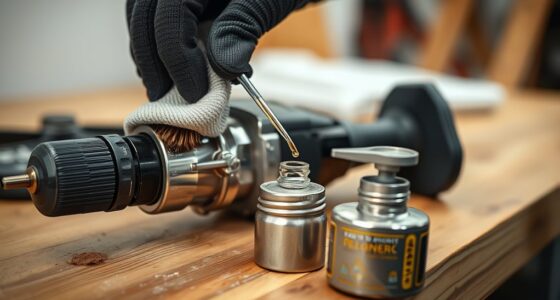
When you lack the right tool, don’t worry—you can get creative with substitutions. Use household items like coins as screwdrivers, heavy books for hammers, or butter knives to pry. Think about the core need, such as applying force or gripping, and find everyday objects that can do the job. Stay flexible and resourceful, and you’ll discover many effective hacks. Keep exploring further, and you’ll uncover even more clever solutions for your DIY challenges.

Get everyday essentials delivered free — and shop member deals
- Fast, free delivery on millions of items
- Access to Prime Big Deal Days deals on October 6–7
- Prime Video, Amazon Music and more included
Key Takeaways
- Identify the core function of the original tool to find suitable household substitutes.
- Use everyday objects like coins, heavy books, or butter knives to replicate tool functions.
- Employ improvisation techniques such as rubber bands, string, or modified items to achieve desired results.
- Focus on problem-solving and stay flexible to adapt quickly with available materials.
- Practice substitution methods to build confidence and turn challenges into creative solutions.

When you’re in the middle of a project and realize you don’t have the right tool, it can feel like a setback. But instead of panicking, you can turn the situation around by thinking creatively about alternative tools and improvisation techniques. The key is to stay resourceful and open-minded, recognizing that many tasks can be completed with what’s available if you approach them differently.
First, consider what tools or objects around you could serve as substitutes. For example, if you’re out of a screwdriver, a coin might work for loosening screws. If you lack a hammer, perhaps a heavy book or a sturdy piece of wood can deliver enough force. This kind of improvisation requires you to assess the task’s core needs—does it need force, precision, or grip? Once you identify the essential function, you can brainstorm alternative tools that fulfill the same role. Sometimes, everyday household items are surprisingly versatile; a butter knife might serve as a pry tool, or a pair of pliers can replace a wrench.
Beyond physical substitutions, improvisation techniques can be invaluable. Think about how professionals adapt on the fly; they modify their approach based on what’s at hand. For example, if you don’t have clamps, you might use rubber bands or string to hold parts in place temporarily. If you lack a measuring tape, a piece of string can be measured against a ruler or a known length. These improvisations often require a bit of creative thinking, but they can save your project from stalling. It’s about understanding the core purpose of each tool and finding a way to fulfill that purpose with what’s available.
Another tip is to stay calm and focus on problem-solving rather than the missing equipment. When you’re not fixated on what you don’t have, you’re more likely to see alternative options. Sometimes, the best solutions come from thinking outside the box. For instance, if you’re working on painting and run out of painter’s tape, you might use masking tape or even carefully cut painter’s paper to mask off areas. The ability to adapt your techniques based on available resources often leads to innovative solutions and can even improve your skills.
Additionally, understanding the contrast ratio of a projector can help you optimize your setup and lighting conditions, making improvisation easier by reducing the reliance on perfect equipment. Ultimately, no right tool means you need to be flexible. Embrace improvisation techniques, look around for alternative tools, and keep a creative mindset. With practice, you’ll find that many challenges become opportunities to develop new skills and discover unexpected solutions. When you master the art of smart substitutions, you’ll be able to keep your projects moving forward—even when the ideal tools aren’t within reach.
As an affiliate, we earn on qualifying purchases.
Frequently Asked Questions
How Do I Identify Suitable Substitute Tools Quickly?
To identify suitable substitute tools quickly, you should perform a quick assessment of your current needs and the task at hand. Look for alternative options that serve similar functions or share key features. Check specifications, compatibility, and user reviews to guarantee effectiveness. Trust your experience, and don’t hesitate to experiment with different tools nearby. This proactive approach helps you find the right substitute efficiently, saving time and effort in tight situations.
Are Homemade or DIY Tools Safe Alternatives?
Homemade or DIY tools can be safe options if you follow proper tool safety and guarantee they’re sturdy and well-made. Use DIY hacks that reinforce safety, like adding handles or grips, and avoid makeshift tools that could break or cause injury. Always test your DIY tools in a controlled environment first, and never compromise on safety standards. When in doubt, consult expert advice or opt for a proper tool when possible.
What Are Common Mistakes When Using Substitutes?
When using substitutes, you often make mistakes like ignoring tools safety and substitution ethics. You might choose a makeshift tool that isn’t strong enough, risking injury or damage. Always assess whether the substitute is appropriate, considering safety first. Avoid using unsafe or untested alternatives, and respect ethical boundaries by not misusing tools. Being cautious and informed helps you prevent accidents and ensures your substitutions are effective and responsible.
How Can I Test a Substitute’s Effectiveness?
You should test a substitute’s effectiveness by conducting emergency fixes cautiously, always considering safety considerations first. Start by applying it in a controlled environment and monitor its performance closely. Check for any signs of failure or unexpected behavior. If it holds up under stress, it’s likely effective. Remember, safety always comes first—if there’s any doubt about its reliability, avoid using it in critical situations.
When Should I Avoid Using a Substitute Altogether?
You should avoid using a substitute altogether when the risk assessment reveals potential safety hazards or significant quality issues. If alternative methods could compromise safety or fail to meet standards, it’s best to wait for the proper tool. Always consider the consequences, and if the substitute doesn’t guarantee reliable results, prioritize safety and effectiveness over convenience. Trust your judgment and the assessment to decide when a substitute isn’t worth the risk.
As an affiliate, we earn on qualifying purchases.
Conclusion
When you’re caught without the perfect tool, remember that even MacGyver found ways to improvise. Like a skilled detective piecing together clues, you can adapt and find clever substitutions to keep your project moving. Sometimes, necessity is the mother of invention, turning ordinary household items into extraordinary solutions. So next time you’re in a pinch, channel your inner MacGyver—trust your ingenuity, and you’ll conquer any challenge that comes your way.
As an affiliate, we earn on qualifying purchases.
As an affiliate, we earn on qualifying purchases.
Halloween Picks
halloween
As an affiliate, we earn on qualifying purchases.