To choose the right adhesive, consider your surface type and environmental conditions. Use glue for porous materials like wood or fabric; epoxy provides a strong bond for heavy-duty, non-porous surfaces such as metal or plastic; and caulk is best for sealing gaps and flexible joints. Proper surface prep and curing time are key for durability. To guarantee your project holds up over time, understanding these factors and options will help you make the best choice.

Get everyday essentials delivered free — and shop member deals
- Fast, free delivery on millions of items
- Access to Prime Big Deal Days deals on October 6–7
- Prime Video, Amazon Music and more included
Key Takeaways
- Match the adhesive to the material, using glue for porous surfaces, epoxy for heavy-duty non-porous materials, and caulk for sealing gaps.
- Consider environmental conditions like moisture and temperature to choose waterproof or heat-resistant adhesives.
- Proper surface preparation, including cleaning and light sanding, enhances bond strength regardless of adhesive type.
- Check curing times to ensure sufficient full-strength bonding before handling or stress.
- Assess the project’s flexibility needs and surface movement to select between rigid epoxy, flexible glue, or sealing caulk.
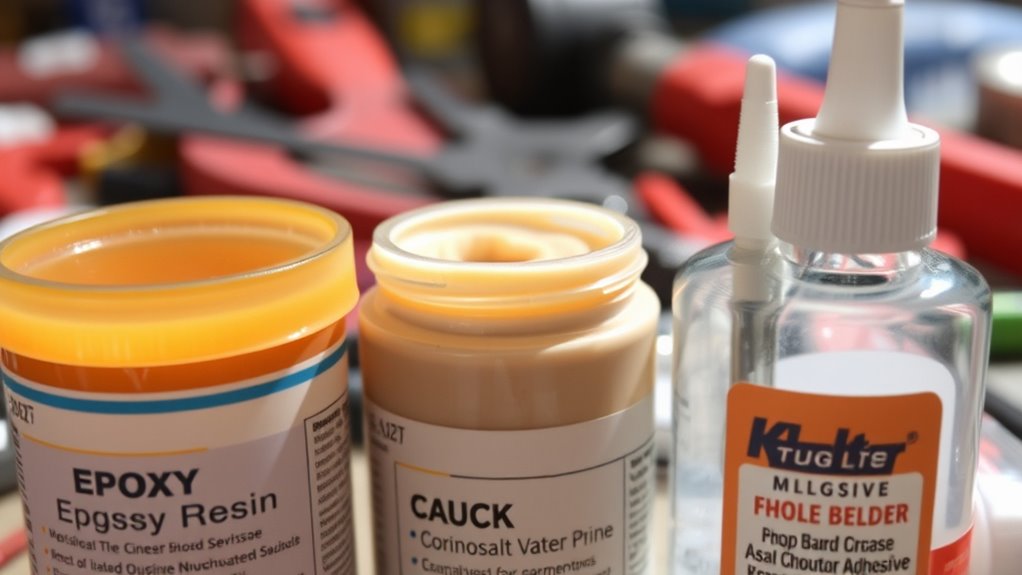
Selecting the right adhesive can make or break your project, so understanding the differences between options is vital. When choosing between glue, epoxy, or caulk, your first consideration should be surface preparation. Properly cleaning and roughening the surfaces will guarantee a stronger bond, regardless of the adhesive you pick. Dirt, grease, or loose particles can weaken adhesion, so take the time to thoroughly clean the surfaces with soap and water or a suitable solvent. For some adhesives, especially epoxy, lightly sanding the surface to create a better grip can considerably improve the bond’s strength. Skipping this step might lead to premature failure or weak adhesion, which can be frustrating and costly in the long run.
Proper surface prep ensures stronger bonds and prevents costly failures.
Another essential factor to consider is curing time. Different adhesives have varying curing periods, affecting how soon you can handle or use your project. For example, glue often sets quickly, sometimes within minutes, but may require several hours to reach full strength. Epoxy typically has a longer curing time, often between 24 to 72 hours, depending on the formulation and environmental conditions. Caulk, on the other hand, usually skins over in a matter of hours but might need a day or more to fully cure and achieve maximum adhesion. Knowing these curing times helps you plan your workflow accordingly, ensuring you don’t disturb the bond prematurely or wait longer than necessary.
The type of surface you’re working with also influences your choice. Glue generally works well for porous and lightweight materials like paper, fabric, or wood, offering flexibility and ease of use. Epoxy is ideal for heavy-duty applications or when working with non-porous surfaces like metal or plastic, providing a very strong, durable bond. Caulk is best suited for sealing joints, gaps, or areas where some flexibility is needed, especially in construction or home repair projects. Each adhesive type adheres differently depending on the surface, so matching the adhesive to the material is vital.
Lastly, consider the environmental conditions your project will face. Will it be exposed to water, heat, or movement? Some adhesives are waterproof and heat-resistant, making them suitable for outdoor or high-stress applications. Others may degrade when exposed to moisture or temperature fluctuations. Balancing these factors alongside surface preparation and curing time will help you select an adhesive that not only bonds well initially but also endures over time. Understanding these factors and making an informed choice now guarantees your project remains strong, durable, and successful in the long run.
As an affiliate, we earn on qualifying purchases.
Frequently Asked Questions
Can I Use Epoxy for Outdoor Bonding?
Yes, you can use epoxy for outdoor bonding because it offers excellent outdoor durability. Epoxy typically outperforms other adhesives like glue or caulk in harsh weather conditions, providing strong, long-lasting bonds. When comparing epoxy vs. other adhesives, epoxy’s resistance to moisture, UV rays, and temperature fluctuations makes it ideal for outdoor projects. Just make certain you choose a weather-resistant epoxy and follow application instructions for the best results.
How Long Does It Take for Caulk to Cure?
Caulk typically takes about 24 hours to fully cure, but drying time can be shorter, usually around 30 minutes to a few hours depending on the type. During the curing process, the sealant hardens and bonds effectively. To guarantee proper adhesion, avoid exposing it to water or stress during this period. Keep in mind that thicker applications may require more curing time for ideal results.
Is There a Non-Toxic Adhesive Option?
Sure, there are non-toxic adhesives out there—ironic, right? You can opt for eco-friendly options and natural adhesives that keep your project safe for everyone and the planet. These alternatives are often made from plant-based or biodegradable materials, making them perfect for sensitive environments. So, if you’re aiming to bond without harmful chemicals, go for natural adhesives—they’re effective, safer, and kinder to the earth.
Can Glue Be Used on Wet Surfaces?
You can use glue on wet surfaces, but proper adhesive application and surface preparation are essential. First, guarantee the surface is as dry as possible or damp only if the adhesive is designed for wet conditions. Clean the area thoroughly to remove debris or grease, and follow the manufacturer’s instructions. Using the right adhesive for wet surfaces improves bonding strength and durability, making your project successful even in less-than-ideal conditions.
Which Adhesive Is Best for Flexible Materials?
You need the ultimate flexible adhesive for your project? Search no further! For stretchable bonding and materials that bend, flexible adhesives are your best bet. They move with your surfaces without cracking or losing grip, making them perfect for rubber, fabric, or plastic. With the power of stretchable bonding, you’ll get a secure, durable hold that stays flexible, ensuring your project withstands the test of time and movement.
heavy-duty epoxy for metal and plastic
As an affiliate, we earn on qualifying purchases.
As an affiliate, we earn on qualifying purchases.
Conclusion
Now that you know the differences between glue, epoxy, and caulk, you’re practically an adhesive superhero! With this knowledge, you can tackle any project without breaking a sweat—your skills are unstoppable. Remember, choosing the right adhesive is like wielding a magic wand; it can make your repairs last a lifetime. So go ahead, pick wisely, and watch your projects transform from ordinary to extraordinary in the blink of an eye!
waterproof caulk for sealing gaps
As an affiliate, we earn on qualifying purchases.
As an affiliate, we earn on qualifying purchases.
As an affiliate, we earn on qualifying purchases.
Halloween Picks
halloween
As an affiliate, we earn on qualifying purchases.