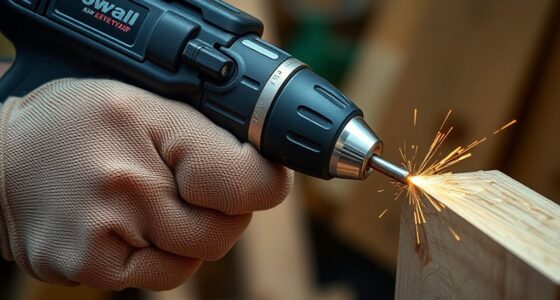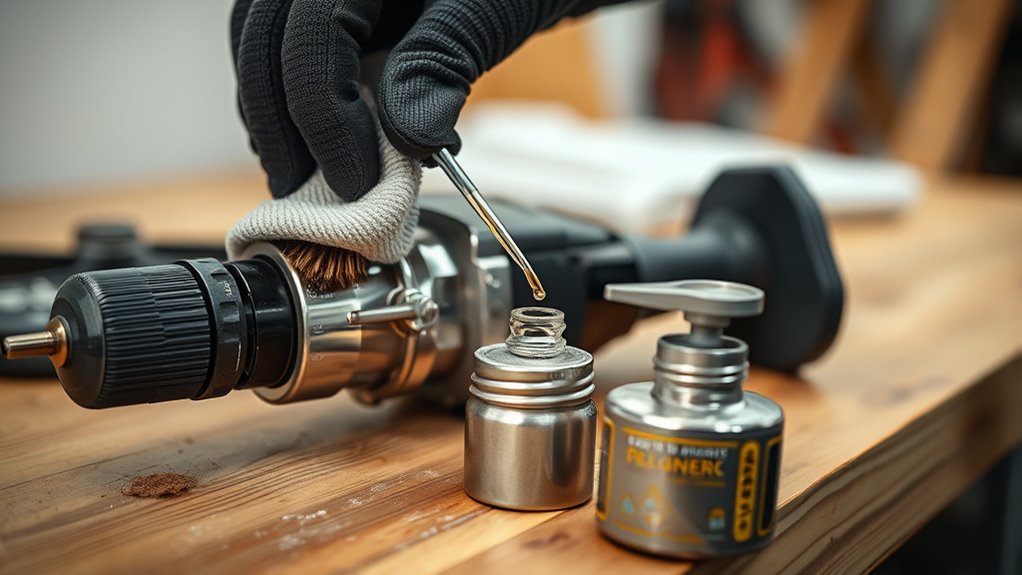

To keep your power tools in top shape, start by cleaning off dirt and dust after each use with a damp cloth, making sure they’re completely dry to prevent rust. Apply a light coat of oil on metal parts to reduce friction and stop rust from forming. Store tools in a dry, organized spot and keep batteries in a cool, dry place. For a fuller maintenance routine, there’s more to discover on how to prolong your tools’ life.

Get everyday essentials delivered free — and shop member deals
- Fast, free delivery on millions of items
- Access to Prime Big Deal Days deals on October 6–7
- Prime Video, Amazon Music and more included
Key Takeaways
- Remove dirt and debris after each use with a damp cloth, then dry thoroughly.
- Use mild soap and water for deep cleaning, ensuring all parts are completely dry afterward.
- Apply a light coat of oil to metal parts to prevent rust and reduce friction.
- Store tools in a dry, organized space with silica gel packs or dehumidifiers to control moisture.
- Regularly inspect, clean, and oil tools to maintain performance and extend their lifespan.
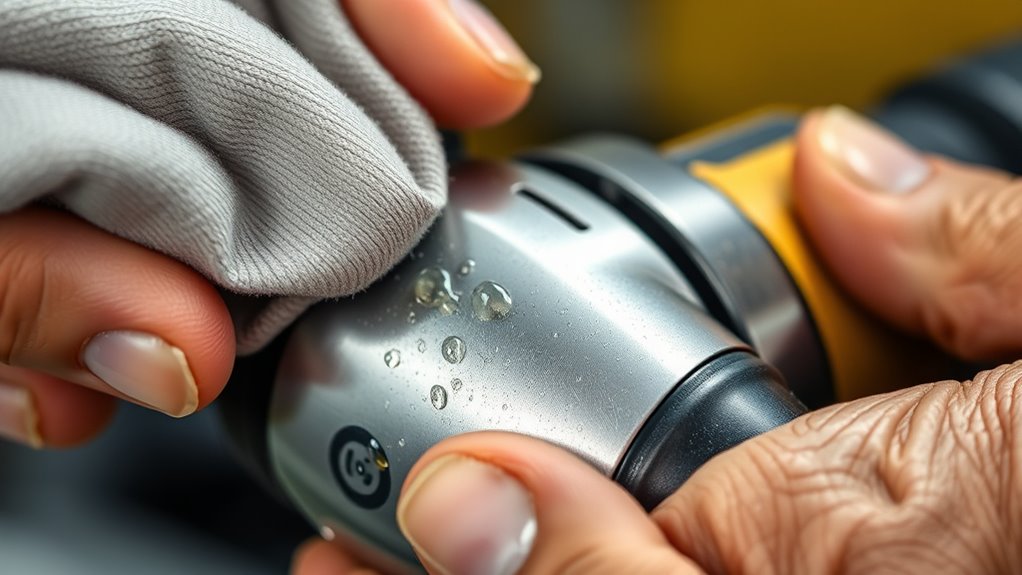
Have you ever wondered why well-maintained tools last longer and perform better? The secret lies in proper tool maintenance, especially when it comes to cleaning and oiling your power tools. Regular care not only preserves their lifespan but also ensures they operate at peak efficiency. To start, paying attention to battery care is vital. If your power tools are cordless, you need to keep batteries in good shape. Avoid letting batteries drain completely before recharging, as this can reduce their lifespan. Instead, recharge them when they’re around 20-30% capacity. Store batteries in a cool, dry place, away from direct sunlight and extreme temperatures, to prevent deterioration. Removing batteries from tools when not in use for extended periods can also help prevent corrosion and leakage, which can damage both the battery and the tool itself. Proper air purifier maintenance can also extend the life of your tools by keeping your environment cleaner and reducing dust buildup.
Using proper storage solutions is equally important. When you’re done working, clean off any dirt, dust, or debris from your tools. Dirt buildup can cause rust and interfere with moving parts, so a quick wipe with a damp cloth is often enough. For more thorough cleaning, use mild soap and water, but make sure everything is dried completely afterward to prevent rust. Once clean, apply a light coat of oil to metal parts to prevent rust and reduce friction during operation. This is especially critical for moving parts like gears, blades, or drill chucks. A good rule of thumb is to oil your tools after each use or at least once a month if you’re not using them regularly. Keep in mind that oiling is not just about lubrication; it’s also a form of rust protection.
Choosing the right storage solutions makes a big difference. Store your tools in a dry, organized toolbox or on a dedicated rack that keeps them off the ground and away from moisture. Use silica gel packs or dehumidifiers in your storage area to absorb excess humidity, which helps prevent rust. For batteries, consider keeping them in their original cases or in specially designed battery storage containers. This prevents accidental discharges or damage. By maintaining a consistent routine—clean, oil, and store properly—you’ll extend the life of your power tools and keep them functioning smoothly. Remember, investing a little time in battery care and choosing the right storage solutions pays off in the long run, saving you money and frustration down the line. Proper tool maintenance is simple but essential for keeping your equipment in top condition for years to come.
As an affiliate, we earn on qualifying purchases.
Frequently Asked Questions
How Often Should I Perform Maintenance on My Power Tools?
You should perform maintenance on your power tools based on the frequency guidelines provided by the manufacturer, generally after every use or weekly for frequent users. Regular maintenance scheduling helps prevent damage and guarantees the best performance. Check for debris, clean parts, and oil moving components regularly. By staying consistent with these practices, you extend your tools’ lifespan and keep them working safely and efficiently.
Can I Use Household Oil for My Power Tools?
You can’t use household oil for your power tools. Household oils aren’t formulated for power tool lubrication; they can gum up parts, cause corrosion, and reduce performance. Instead, choose specifically designed lubricants for your tools. Proper lubrication keeps your power tools running smoothly, prevents wear, and extends their lifespan. Always follow the manufacturer’s recommendations for oil types and maintenance routines to guarantee your tools stay in top shape.
What Are the Signs My Tool Needs Cleaning or Oiling?
You’ll know your tool needs cleaning or oiling if you notice excessive dust buildup or rust formation. When dust clogs vents or moving parts, it can cause overheating or reduced performance. Rust appears as reddish spots or flaky areas, which can weaken the tool’s components. Regularly inspect your power tools, and if you see these signs, clean them thoroughly and apply oil to keep everything running smoothly and prevent damage.
Is It Safe to Clean Power Tools With Water?
Cleaning power tools with water isn’t safe because water can cause damage and corrosion. Think of it like pouring rain on a metal sculpture; it’ll rust faster. Water damage can ruin your tool’s motor and internal parts. Instead, use a damp cloth or specialized cleaner to remove dirt. Proper cleaning prevents corrosion and extends your tool’s life, keeping it in top shape for your next project.
Are There Specific Brands of Oil Recommended for Tools?
You should use brand-specific lubricants recommended by your tool manufacturer for best results. These oils are formulated to match your tool’s needs and guarantee peak performance. However, generic oil options can work if they meet the same quality standards and are designed for power tools. Always check your user manual for specific recommendations, and avoid using household oils like WD-40, which aren’t suited for long-term lubrication.
As an affiliate, we earn on qualifying purchases.
Conclusion
Think of your power tools as a loyal engine; with regular cleaning and oiling, you keep it humming smoothly like a well-tuned orchestra. Neglect turns it into a rusty, clunky machine, ready to stall at the worst moment. By giving your tools tender care, you’re nurturing a reliable partner that performs like a finely sharpened blade—sharp, efficient, and ready to tackle any project. Keep them clean and oiled, and they’ll serve you faithfully for years to come.
As an affiliate, we earn on qualifying purchases.
silica gel packs for tool storage
As an affiliate, we earn on qualifying purchases.
As an affiliate, we earn on qualifying purchases.
Fall Picks
fall essentials
As an affiliate, we earn on qualifying purchases.