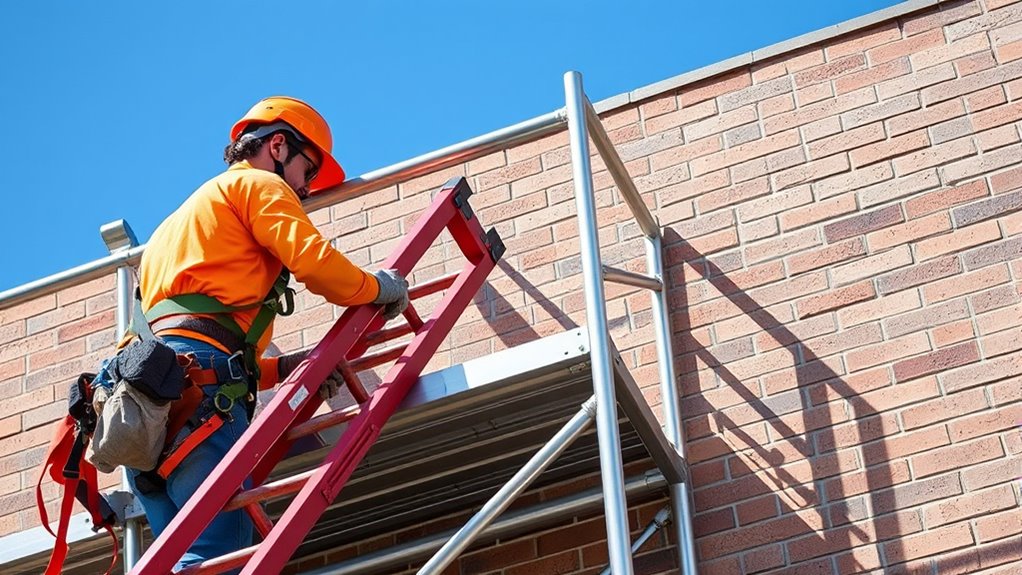

When working at heights, make certain you always use stable scaffolds with guardrails and secure extension ladders on firm ground. Wear proper fall protection gear like harnesses and double-check all equipment before use for signs of wear or damage. Attach lanyards securely to reliable anchors, and maintain three points of contact when climbing. Follow safety guidelines consistently; if you keep exploring, you’ll discover more essential tips to stay safe.

Get everyday essentials delivered free — and shop member deals
- Fast, free delivery on millions of items
- Access to Prime Big Deal Days deals on October 6–7
- Prime Video, Amazon Music and more included
Key Takeaways
- Ensure scaffolds are fully planked, stable, and equipped with guardrails before use.
- Use extension ladders on firm, level ground, extending at least three feet above the landing.
- Always maintain three points of contact while climbing ladders for stability.
- Secure lanyards properly to harnesses and reliable anchor points when working at heights.
- Conduct regular inspections of scaffolds, ladders, and fall protection equipment for damage or wear.

Have you ever wondered what it takes to work safely at heights? Whether you’re climbing a scaffold or extending a ladder, safety should always come first. One of the most critical aspects of working at elevated levels is ensuring you’re properly equipped with the right fall protection equipment, including safety harnesses. These harnesses are designed to distribute the force of a fall across your body, reducing the risk of serious injury. When used correctly, safety harnesses can be the difference between a safe descent and a catastrophic fall. They should always be worn when working on scaffolds or extension ladders, especially when working at considerable heights or in unstable conditions.
Safety harnesses are essential for working at heights to prevent falls and injuries.
Before you start, inspect your fall protection equipment thoroughly. Look for signs of wear, such as frayed straps, broken buckles, or damaged lanyards. Never compromise on equipment quality; using substandard fall protection gear puts your safety at considerable risk. Once your safety harnesses are secure and in good condition, you should attach them to a reliable anchor point. This anchor point must be capable of supporting the maximum load you might generate in a fall—it’s your lifeline, literally. Proper anchoring is essential to prevent falls or to minimize their impact if they occur.
When working on scaffolds, make sure the platform is stable, fully planked, and equipped with guardrails. Even with fall protection gear, avoid leaning too far over the edges or making sudden movements that could destabilize your position. Extension ladders should be placed on firm, level ground and extended at least three feet above the landing point. Always maintain three points of contact—two hands and one foot, or two feet and one hand—while climbing. Avoid overreaching or leaning too far to the sides, as this can cause the ladder to slip or tip over.
Using fall protection equipment isn’t just about wearing harnesses; it’s also about knowing how to use them correctly. Attach your lanyard securely to the harness and the anchor point, ensuring it’s not twisted or slack. Remember, fall protection equipment is most effective when it’s part of a broad safety plan that includes proper training, regular equipment inspections, and awareness of your surroundings. By following these guidelines, you considerably reduce the risk of falls and injuries, making your work at heights safer and more controlled. The right equipment, combined with proper techniques, keeps you safe so you can focus on your task with confidence. Additionally, understanding the thermal behavior of your equipment and environment can help prevent equipment failure during extreme conditions.
safety harness for working at heights
As an affiliate, we earn on qualifying purchases.
As an affiliate, we earn on qualifying purchases.
Frequently Asked Questions
How Often Should Scaffolds Be Inspected for Safety?
You should inspect scaffolds daily before use to guarantee proper scaffold maintenance and hazard identification. Additionally, conduct a thorough inspection after any incident, extreme weather, or modifications. Regular inspections help you spot potential hazards early, preventing accidents. Always document each inspection and address any issues immediately. Staying vigilant with frequent safety checks keeps your work environment secure and compliant with safety standards.
Are There Specific PPE Requirements for Working at Heights?
You need to wear appropriate personal protective equipment (PPE) when working at heights, including fall protection gear like harnesses and lanyards. Safety helmets, non-slip footwear, and gloves are also essential to prevent injuries. Always guarantee your PPE is in good condition and properly fitted. Using the right fall protection gear helps you stay safe, reduces the risk of falls, and complies with safety regulations, keeping you protected on the job.
What Are the Weight Limits for Extension Ladders?
Like a knight’s shield, your extension ladder’s weight capacity safeguards you from danger. Typically, the ladder’s weight limit ranges from 200 to 375 pounds, depending on the model. Always check the ladder’s label for the maximum load, including tools and equipment. Remember, scaffold load limits are separate but equally important. Staying within these limits ensures safety and stability, preventing accidents while working at heights.
How to Handle Weather Conditions When Working on Scaffolds?
You should always assess weather considerations before working on scaffolds. If it’s windy, rainy, or lightning is nearby, stop work immediately to protect your safety. Strong winds can compromise scaffold stability, making it dangerous to proceed. Confirm the scaffold is securely anchored and check for any signs of movement or instability. Postpone work during adverse weather and wait for conditions to improve to maintain a safe working environment.
What Training Is Necessary Before Working on Scaffolds or Ladders?
Before working on scaffolds or ladders, you need proper training in scaffold assembly and ladder safety. This training guarantees you understand how to correctly set up scaffolds, recognize hazards, and use ladders safely. You’ll learn essential skills to prevent falls and accidents, making sure you’re compliant with safety standards. Always complete certified training before starting work, and stay updated on best practices to keep yourself and others safe.
extension ladder with stabilizer
As an affiliate, we earn on qualifying purchases.
As an affiliate, we earn on qualifying purchases.
Conclusion
Remember, working safely at heights with scaffolds and extension ladders keeps you protected and confident. While it might seem quicker to skip some safety checks, taking a moment to set up properly prevents accidents and saves time in the long run. By following all safety guidelines, you’ll not only avoid injuries but also enjoy your work more. Stay vigilant, stay safe, and enjoy the satisfaction of doing your job right the first time.
As an affiliate, we earn on qualifying purchases.
As an affiliate, we earn on qualifying purchases.
Halloween Picks
halloween
As an affiliate, we earn on qualifying purchases.