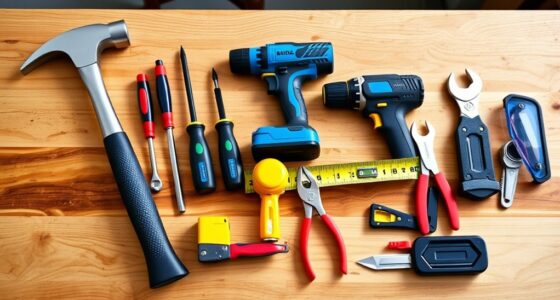

To avoid stripping screws, always select the right size and type of screwdriver tip for the screw head, ensuring a snug fit. Keep the tool perpendicular to the screw and apply steady, moderate pressure while turning smoothly. Avoid forcing the screw or using worn tips. If you want to master the art of screw driving and prevent damage, more tips and techniques are just ahead.
Key Takeaways
- Match the screwdriver tip size precisely to the screw head for a secure fit.
- Keep the screwdriver perpendicular to the screw to prevent slipping and stripping.
- Apply steady, moderate pressure during turning, avoiding excessive force.
- Use lubricants like soap or wax on threads to ease insertion and reduce resistance.
- Avoid forcing or over-tightening screws to prevent damage and stripping.
Choosing the Right Size and Type of Screwdriver Tip
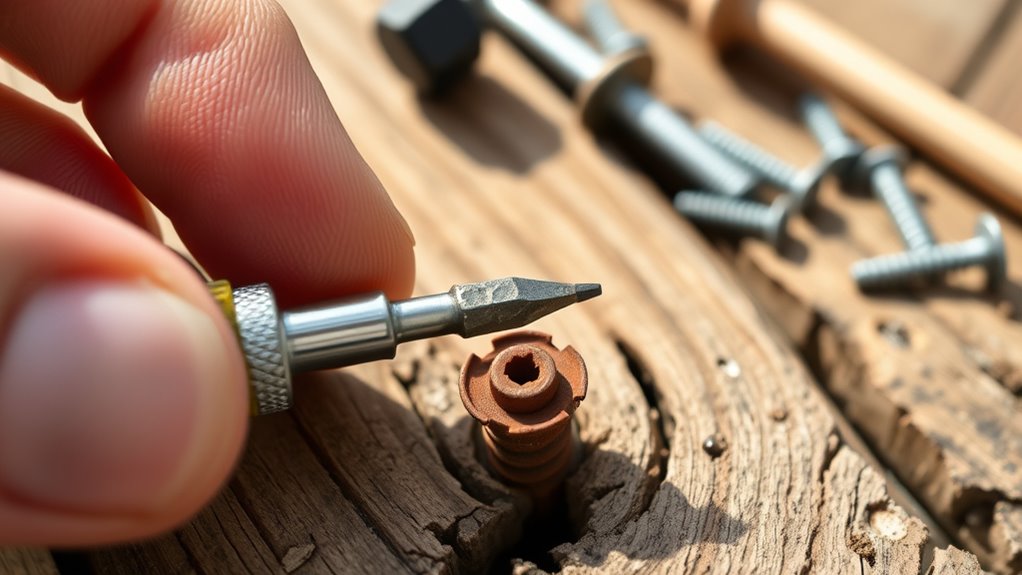
Choosing the right size and type of screwdriver tip is essential for efficient and safe screw driving. You want a tip that fits snugly into the screw’s recess to ensure proper torque transfer and prevent damage. Start by testing with a slightly larger tip and switch down until you find a tight, secure fit. Using a tip that’s too small can strip the screw head and mar surfaces, while a loose fit reduces grip and control. For Phillips-head screws, slight angles are tolerated, but proper sizing still matters. For slotted screws, match the tip width precisely to avoid marring the screw or surrounding material. Selecting the correct tip size guarantees you drive screws effectively without risking damage or stripping. Paying attention to auditory cues during the fitting process can further ensure optimal contact and control. Additionally, choosing the correct screwdriver tip for the material and screw type can significantly improve your fastening results. Ensuring the tip is made of durable materials can also prolong tool life and maintain performance over time.
Proper Technique for Driving Screws Effectively
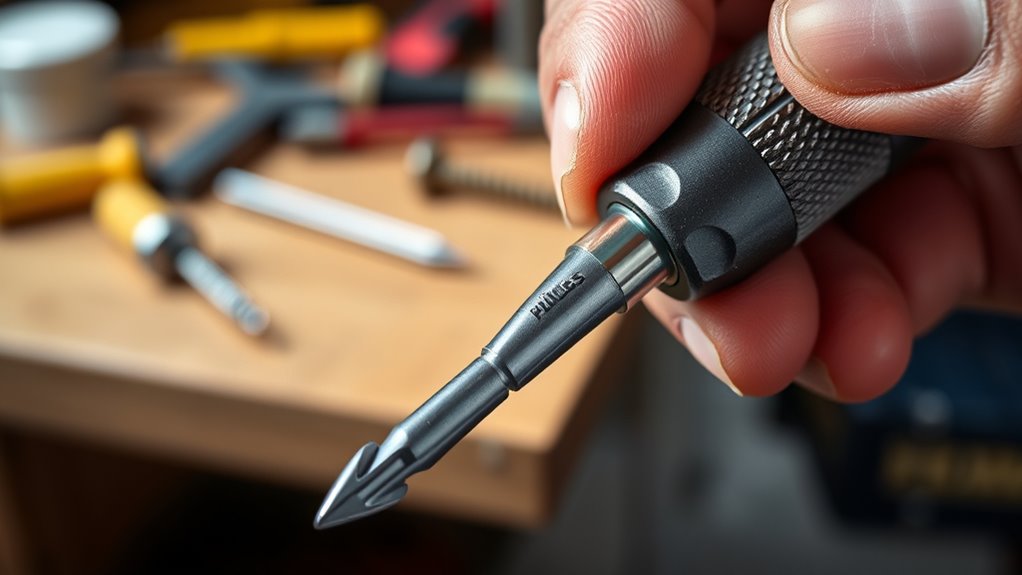
To drive screws effectively, you need to maintain proper alignment and apply the right amount of force. Keep the screwdriver perpendicular to the screw head to prevent slipping and stripping. Use steady, moderate pressure—press too hard, and you risk damaging the screw or material; too little, and the screw won’t stay engaged. Turn the screwdriver smoothly with controlled force, avoiding sudden twists. For stubborn screws, increase pressure gradually and work in small spurts. Ensure your grip is firm but comfortable, and keep your non-dominant hand close to the work for added control. Remember, patience is key. Additionally, understanding the importance of quality assurance in your technique can help prevent damage and ensure consistent results.
Common Mistakes to Avoid When Using Screwdrivers
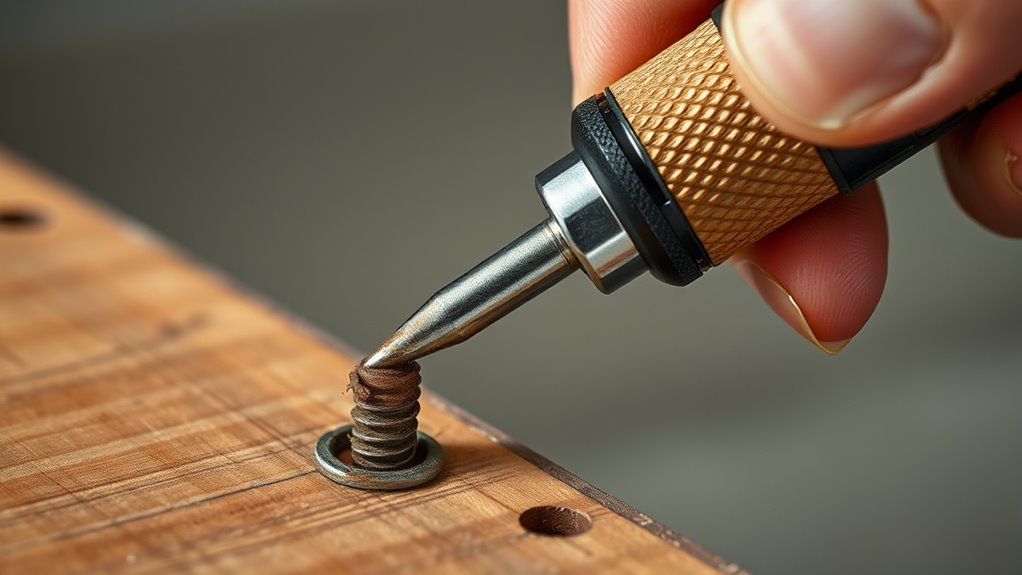
Using a screwdriver improperly can lead to damaged screws, stripped threads, or even injury. One common mistake is using the wrong tip size, which causes slipping or stripping. Never force a screwdriver beyond its capacity or use a tip that doesn’t fit snugly. Avoid using screwdrivers for prying or chiseling—these tasks can damage your tools and pose safety risks. Also, don’t carry screwdrivers loosely in pockets; sharp tips can cause injury or damage. Additionally, don’t ignore worn tips; they lose grip and increase stripping chances. Being mindful of proper technique and the importance of tool maintenance ensures safer and more effective use of your tools. Remember that correct tip size is crucial for preventing damage and maintaining efficiency during your tasks. Proper tool handling not only prolongs the lifespan of your screwdriver but also enhances safety during use. Paying attention to ergonomic grip can reduce hand fatigue and improve control, making your work safer and more precise.
Tips for Making Screw Driving Easier and More Efficient
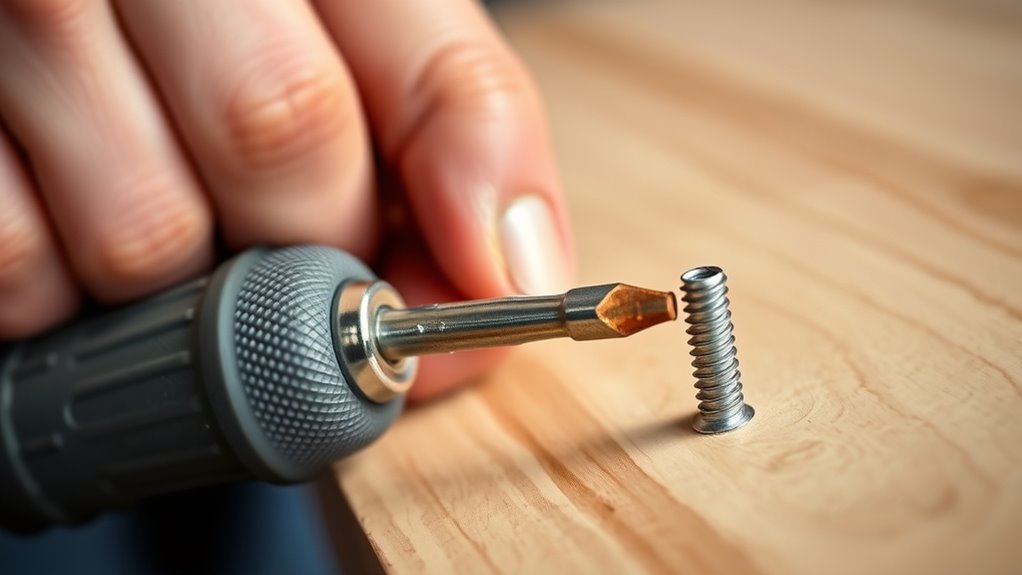
Making screw driving easier and more efficient starts with simple techniques that improve control and reduce effort. First, create a stable grip by holding the handle firmly but comfortably, and keep the screwdriver perpendicular to the screw head. Applying steady pressure before turning helps prevent slipping and stripping. Use your other hand to steady the tool or hold the screw in place if needed. For stubborn screws, increase leverage with an adjustable wrench or switch to a magnetic or screw holder for better grip. Lubricate screw threads with soap or wax to ease insertion. Additionally, work slowly with controlled torque—rushing can cause damage. Using the proper screwdriver technique ensures efficient and damage-free fastening. Incorporating correct tool selection based on screw type and size can further improve your results and prevent stripping. Being aware of proper torque application can also help avoid over-tightening and damaging the screw or material. Paying attention to screwdriver ergonomics can also reduce fatigue during extended tasks.
Understanding Different Types of Screwdrivers and Their Uses

Different types of screwdrivers are designed to handle specific tasks and screw types, making it important to select the right tool for the job. For instance, Phillips-head screwdrivers work well with cross-shaped screws, providing good grip and torque. Flat-head or slotted screwdrivers are best for straight, single-groove screws, but require precise sizing to prevent damage. Torx or star screwdrivers are ideal for tamper-resistant screws, often found in electronics or appliances. Precision screwdrivers are small, perfect for jewelry or electronics, while larger, heavy-duty screwdrivers are suited for construction tasks. Insulated screwdrivers are essential for electrical work to prevent shocks. Using the correct screwdriver type guarantees efficiency, reduces the risk of stripping screws, and protects both your work and the tool.
Essential Safety and Maintenance Practices

Practicing proper safety and maintenance guarantees you work efficiently and avoid accidents. To stay safe, always inspect your screwdriver for damage before use, replacing worn tips promptly. Keep handles clean and dry to prevent slipping, and store tools securely to prevent injuries. Use the correct tip size for each screw to avoid stripping or damaging materials. When working, maintain proper posture and avoid forcing tools beyond their capacity. Regularly clean and lubricate screwdrivers to ensure smooth operation, especially for frequent tasks. Check for rust or corrosion that could weaken the tool, and prevent water damage or corrosion by storing tools in a dry environment. Additionally, understanding how to detect passive voice can improve your overall writing clarity. Proper maintenance extends your tools’ lifespan and keeps your work safe and effective. Maintaining your tools also reduces the risk of injury due to tool failure and ensures consistent performance over time. According to the Vetted – Security Zone Info, keeping your tools in top condition is crucial for safety and reliability.
Troubleshooting and Fixing Stripped Screws
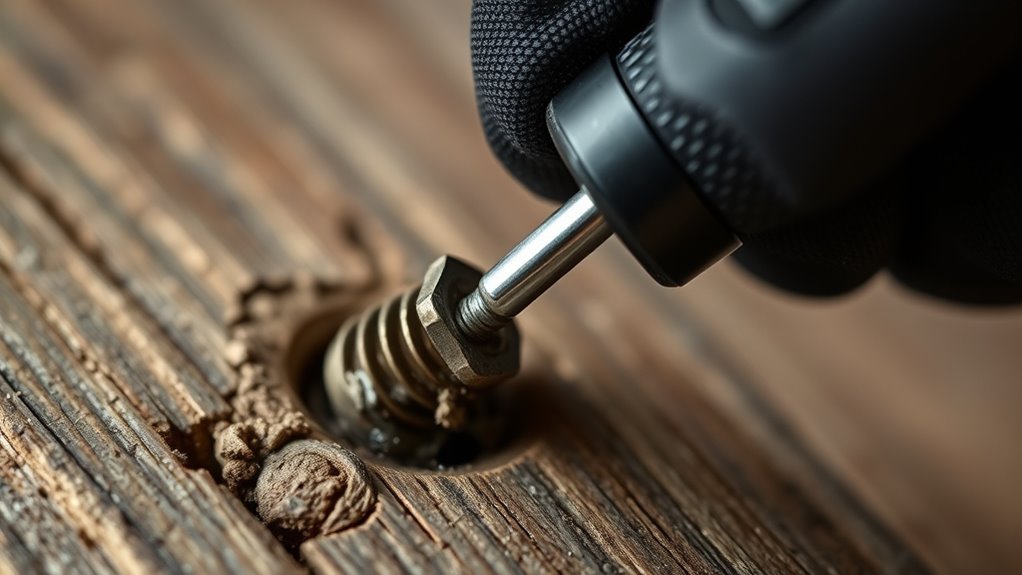
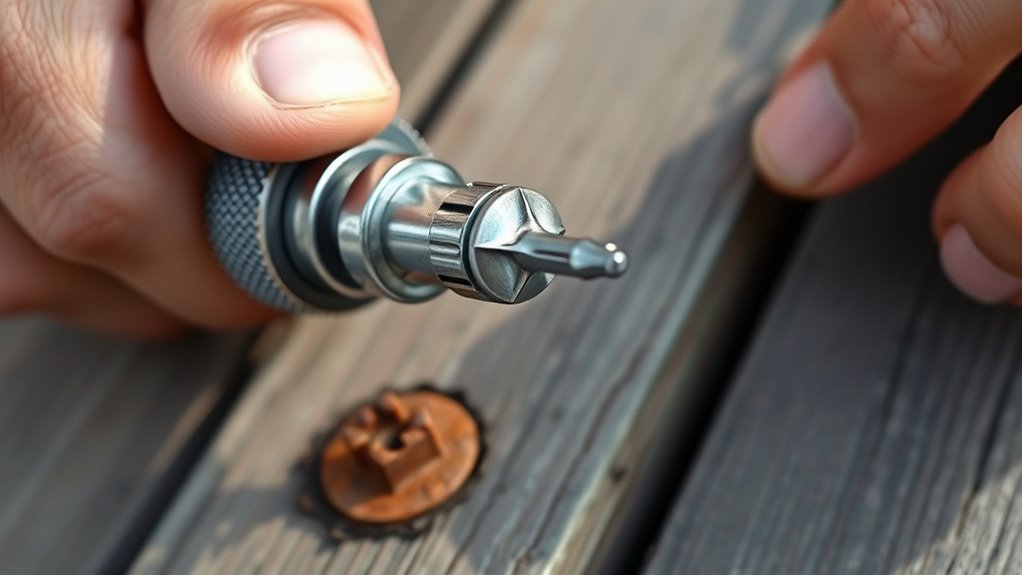
When you notice a screw is stripped, the first step is to identify what kind of damage it has—whether the head is rounded, the slot is widened, or threads are damaged. Once you know the damage, you can choose the best repair method, like using a screw extractor or a different driver tip. To prevent future stripping, always use the correct screwdriver size, apply steady pressure, and avoid forcing screws beyond their capacity. Proper tool use is essential for ensuring safety and effectiveness during repair work. Additionally, understanding the different types of screw damage can help you select the most appropriate repair technique. Being aware of safety guidelines can also prevent injuries while working with damaged screws.
Identify the Damage Type
Have you ever tried to remove a screw only to find it’s stripped and won’t turn? The first step is identifying the damage type. Look closely at the screw head:
- If the slot or cross is worn smooth, it’s a fully stripped screw.
- If the screw head shows signs of over-tightening, it may be embedded or damaged.
- If the screw head is rounded or chipped, it’s a partial damage.
- Check if the screw is loose or spinning in the material—indicating stripped threads.
- If the screw is stuck and shows no movement, it might be cross-threaded or damaged internally.
Understanding the damage helps determine your next move, whether it’s using a different tool, applying a repair method, or replacing the screw entirely. Proper identification prevents further damage.
Choose Correct Repair Method
If you encounter a stripped screw, choosing the right repair method is essential to prevent further damage and guarantee successful removal. First, assess how badly the screw is stripped. For minor damage, try using a rubber band or steel wool between the screwdriver and screw to improve grip. If that doesn’t work, opt for rubber band tricks or a screw extractor kit. For heavily stripped screws, drilling a small pilot hole into the screw head can help you remove it with pliers or a screw extractor. Sometimes, using locking pliers to grip and turn the screw is effective. Avoid forceful attempts that could worsen the damage. Selecting the appropriate method based on the screw’s condition saves time and preserves your materials.
Prevent Future Stripping
To prevent future screw stripping, focus on using the right tools and techniques during installation. Ensure your screwdriver tip fits snugly into the screw head, matching the size and type precisely. Apply steady, downward pressure and keep the screwdriver perpendicular to the screw for maximum torque. Avoid forcing the screw or over-tightening, which increases the risk of stripping. If a screw feels tight, back off slightly and recheck your fit. Use lubricants like soap or wax on threads for easier driving, especially in hardwoods. Consider drilling a pilot hole to guide the screw and reduce resistance. When dealing with stubborn screws, use a bit more leverage or a magnetic driver for better control. Proper technique is key to avoiding stripped screws and ensuring a secure, damage-free fastening.
- Match screwdriver tips exactly to screw heads
- Maintain perpendicular alignment during driving
- Use lubricants to reduce resistance
- Drill pilot holes for better control
- Apply consistent, moderate pressure
Frequently Asked Questions
How Do I Identify the Correct Screwdriver Tip Size for Different Screws?
To identify the correct screwdriver tip size, you need to match it snugly to the screw’s recess. Start with a slightly larger tip and switch down until you find a tight fit that doesn’t strip the screw. For slotted screws, ensure the tip’s width matches exactly to avoid marring the surface. Test different sizes if needed, and always select the largest tip that fits securely for the best grip and control.
Can Using the Wrong Screwdriver Tip Damage the Screw or Work Surface?
Using the wrong screwdriver tip can definitely damage the screw or work surface. When the tip doesn’t fit snugly, it can strip the screw head, making it hard to remove or tighten. It can also mar or gouge the material around the screw, especially if you apply excessive force. Always choose a tip that fits perfectly to prevent damage, guarantee proper torque, and make your work smoother and safer.
What’s the Best Way to Remove a Stripped Screw Without Damaging Surrounding Material?
To remove a stripped screw, start by applying a rubber band over the screw head to improve grip. Then, use a screwdriver with a slightly larger tip for better engagement, turning slowly with firm, steady pressure. If that doesn’t work, try pliers to grip and turn the screw or use a screw extractor tool. Be gentle to avoid damaging the surrounding material while ensuring enough force to loosen the screw.
Are There Specific Screwdrivers Recommended for Electrical Work Safety?
Think of electrical work as walking a tightrope—you need the right tools for balance and safety. Use insulated screwdrivers with properly rated voltage protection—they’re designed specifically for electrical tasks. Match the tip size precisely to the screw to prevent slips and damage. Never use worn or damaged screwdrivers, and always turn off power before working. These precautions keep you safe while ensuring your work stays secure and intact.
How Often Should I Replace Worn Screwdriver Tips for Optimal Performance?
You should replace worn screwdriver tips as soon as you notice signs of wear, such as rounding, chipping, or loss of shape. Regular inspections are key, especially after frequent use or on tough screws. Wearing tips can lead to slipping, stripped screws, or damage to your work. By replacing them promptly, you maintain ideal torque transfer, guarantee safety, and make your screw-driving tasks easier and more accurate.
Conclusion
With the right tools and techniques, you’re the captain steering clear of stripped screws, turning a frustrating task into a smooth sailing voyage. Think of your screwdriver as a trusty compass, guiding you through each turn with confidence. By respecting safety, choosing the proper tip, and avoiding common pitfalls, you’ll keep your projects shining like a lighthouse in the night. Master these skills, and every screw will obey your command effortlessly.