
To use a tape measure correctly, start by choosing one suited for your project, such as a 25-foot fiberglass tape for general tasks or a laser measure for long distances. Secure the tape’s hook at the start point, press firmly for inside measurements, and let the tape hang loose for outside ones. Keep the tape taut and smooth, and adjust the hook position for true zero. Want to master all the tricks? Keep going to learn more.

Get everyday essentials delivered free — and shop member deals
- Fast, free delivery on millions of items
- Access to Prime Big Deal Days deals on October 6–7
- Prime Video, Amazon Music and more included
Key Takeaways
- Ensure the tape measure is in good condition, clean, and fully retracted before use.
- Properly position the hook: against the edge for outside, pressed against the surface for inside measurements.
- Pull the tape taut without slack to maintain accuracy and prevent sagging.
- Use the correct measurement scale (metric or imperial) and verify the reading carefully.
- Double-check measurements by re-measuring to confirm accuracy before recording.
retractable steel tape measure 25 feet
As an affiliate, we earn on qualifying purchases.
As an affiliate, we earn on qualifying purchases.
Selecting the Right Tape Measure for Your Needs

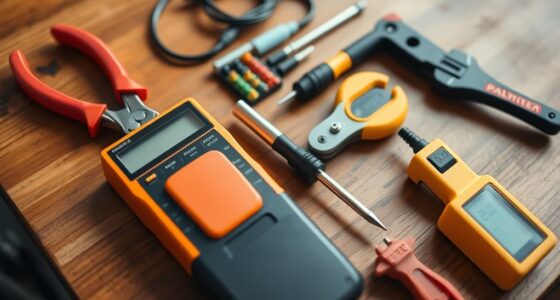
Choosing the right tape measure depends on what you plan to use it for. If you’re working around the house or on small projects, a retractable steel tape between 12 and 25 feet is ideal. For larger construction or land surveying, opt for longer tapes, like 50 to 100 feet, made of sturdy fiberglass or steel. Tailors should choose flexible cloth or plastic tapes for body and fabric measurements. If precision is critical, consider a laser tape measure for high accuracy over long distances. Outdoor or tough environments call for a durable, weather-resistant housing. By matching your needs with the tape’s length, material, and features, you’ll guarantee accurate measurements and ease of use, making your projects more efficient and precise. Additionally, understanding sound healing science can inspire innovative approaches to creating a calming workspace environment. Recognizing the importance of material durability can help ensure your tape measure withstands challenging conditions and maintains accuracy over time. Moreover, selecting a tape measure with ergonomic design can reduce fatigue and improve handling during extended use. Paying attention to aerospace-grade materials can further enhance the longevity and resilience of your measuring tools in demanding settings. Considering market standards for safety and quality can also help you choose a reliable and safe measuring tool.
laser distance meter for long measurements
As an affiliate, we earn on qualifying purchases.
As an affiliate, we earn on qualifying purchases.
Understanding the Key Features of Tape Measures

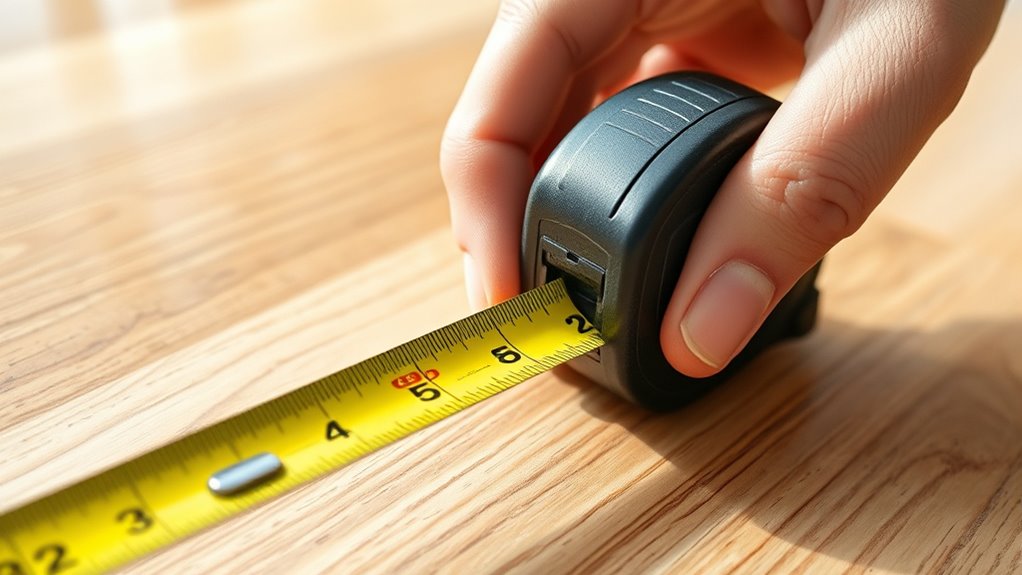
Understanding the key features of tape measures helps you use them accurately and efficiently. The hook at the end moves to account for its thickness, ensuring precise inside and outside measurements. Black diamonds every 19 3/16 inches mark spacing for floor joists, making repetitive tasks easier. The slot on the hook lets you attach the tape to nails or screws, allowing one-person measurements. Dual scales (metric and imperial) increase versatility, so you can measure in different units without changing tools. Some tapes include a self-marking feature with a graphite tip, enabling you to make quick, accurate marks directly from the tape. Recognizing these features helps you select the right tape for your task and improves measurement accuracy across various projects. Understanding measurement features can help you choose the most suitable tape and improve your overall accuracy. Additionally, being aware of vetted wave and wind considerations ensures your measurements remain reliable in different environmental conditions. Being familiar with proper tape handling techniques also contributes to more consistent and precise measurements in your projects. For outdoor or challenging environments, considering weather-resistant tapes can further enhance measurement reliability.
fiberglass measuring tape 50 feet
As an affiliate, we earn on qualifying purchases.
As an affiliate, we earn on qualifying purchases.
Preparing to Measure: Setting Up Properly

Before you start measuring, take a moment to prepare your workspace and tools. Clear the area around your measurement point to avoid obstructions and verify accuracy. Make sure your tape measure is in good condition—no frayed or bent parts—and fully retract it to check its smooth operation. If you’re measuring a long distance, gather a second person or use a nail or screw to anchor the tape’s end. Position your tape on a stable, flat surface or hold it firmly, ensuring it doesn’t sag or shift. Proper setup minimizes errors and makes your measurement precise and efficient. Additionally, understanding measurement accuracy principles can help you achieve more reliable results. Ensuring your measuring technique includes proper alignment and consistent tension can further improve your precision, leading to more dependable measurements. Being mindful of tape measure care can also extend the lifespan of your tool and maintain measurement reliability. Regularly inspecting and cleaning your tape measure can prevent dirt and debris from affecting its accuracy.
ergonomic tape measure with dual scales
As an affiliate, we earn on qualifying purchases.
As an affiliate, we earn on qualifying purchases.
Techniques for Accurate Inside and Outside Measurements

To get accurate inside and outside measurements, proper hook positioning is vital—you should press the hook firmly against the surface for inside measurements and hook the edge for outside. Always pull the tape taut to prevent sagging, which can lead to errors. Mastering these techniques ensures precise readings every time you measure. Additionally, understanding measurement accuracy and how to calibrate your tape measure can further improve your results. Incorporating smart measurement tools can also help achieve even greater precision in your projects. Proper technique not only enhances measurement reliability but also reduces the risk of costly mistakes. Maintaining proper technique is essential for reliable measurements, especially when detailed accuracy impacts the success of your work or health-related assessments. Ensuring reliable in-home care often relies on precise measurements for appropriate equipment sizing and setup, highlighting the importance of proper technique.
Proper Hook Positioning
Proper hook positioning is essential for obtaining accurate measurements, whether you’re measuring inside or outside dimensions. When measuring outside, hook the tape’s end securely on the edge of the object, ensuring it’s flush and stable. For inside measurements, hook the tape’s end against the surface, allowing the hook to slide as needed. Keep the hook firmly in place without forcing it, so it can move slightly to account for its thickness. This slight shift helps you get precise inside or outside readings. Always ensure the tape is straight and taut, with the hook properly engaged. Incorrect hook placement can lead to errors, so double-check that the hook is positioned correctly before recording your measurement. Proper positioning guarantees accuracy and reliable results every time. Additionally, understanding the safety guidelines for using a tape measure can prevent accidents and ensure consistent results.
Taut Tape Technique
Achieving accurate measurements depends heavily on keeping the tape taut throughout the process. When you pull the tape tight, you prevent sagging that can lead to errors, especially over longer distances. For inside measurements, press the hook firmly against the surface, ensuring it stays flush and stable. When measuring outside, hook the tape securely onto the edge and pull steadily until it’s taut. Use your body to maintain steady tension and avoid slack. Keep the tape straight without bending or twisting. Remember, a loose tape causes inaccuracies.
- Use steady, even pressure to keep the tape tight.
- Lock the tape in place if your model has a locking mechanism.
- Double-check measurements by pulling the tape again for consistency.
Using the Hook and True Zero for Precision

Ever wonder how to get the most accurate measurements with your tape measure? It all starts with using the hook and true zero correctly. The hook at the end is designed to move slightly, accounting for its thickness. When measuring outside edges, hook the tape’s edge directly on the starting point. For inside measurements, gently hook the tape’s tip against the surface, allowing the hook to shift inward. Always ensure the hook moves freely; resistance can throw off your reading. Use the true zero feature by adjusting the hook’s position based on your measurement type. This simple technique compensates for the hook’s thickness and ensures you’re measuring from the actual start point, giving you precise results every time. Additionally, understanding the measurement techniques can help you achieve even greater accuracy in your projects. Properly reading the tape measure markings is essential for minimizing errors and improving your overall precision.
Measuring Long Distances With Assistance or Tools

Measuring long distances accurately often requires assistance or specialized tools, especially when the span exceeds the length of your tape measure. To get precise measurements, consider using a helper to hold the tape steady or attach it to a fixed point like a nail or screw. For very long distances, laser distance meters are ideal—they provide quick, accurate readings without the need for a second person. Surveyor’s tapes, made of fiberglass or steel, can stretch up to 100 meters and are designed for outdoor use. Additionally, combining tools like a laser measure with a traditional tape can improve accuracy and efficiency. Here are some helpful tips:
- Use a helper to hold or anchor the tape
- Opt for laser or surveyor’s tapes for longer spans
- Combine tools for the best accuracy in large spaces
Taking Measurements on Curved or Irregular Surfaces
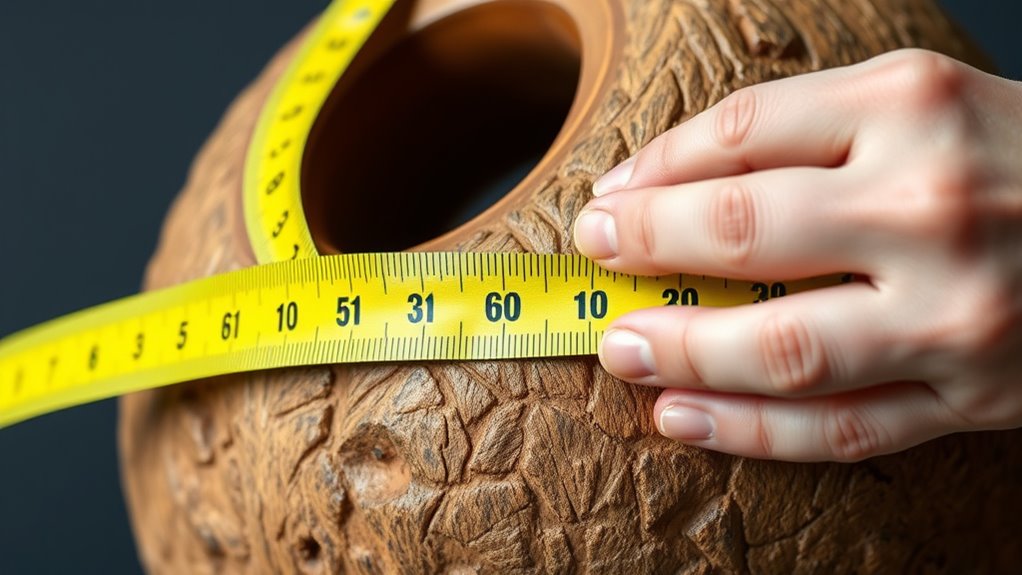
When taking measurements on curved or irregular surfaces, flexibility and technique are essential to guarantee accuracy. Use a flexible tape measure, like a tailor’s or plastic tape, that contours easily. Keep the tape snug against the surface, avoiding slack. Wrap the tape around curves smoothly, ensuring it lays flat without twisting. For complex shapes, take multiple measurements at different points and record each. To visualize, consider this table:
| Surface Type | Technique |
|---|---|
| Rounded edges | Wrap tape tightly, follow the curve |
| Irregular contours | Measure in sections, record each segment |
| Convex surfaces | Keep tape flush, avoid gaps |
| Concave surfaces | Use multiple measurements, approximate gaps |
Accuracy depends on steady, consistent tension and careful placement.
Maintaining Your Tape Measure for Accuracy

To keep your tape measure accurate, you need to check it regularly with calibration tests. Make sure to keep the blade clean and dry to prevent dirt and rust from affecting measurements. When you’re done, store it properly to avoid damage and maintain its precision over time.
Regular Calibration Checks
Regular calibration checks are essential for ensuring your tape measure stays accurate over time. Over months of use, tools can stretch, wear, or lose precision, impacting your measurements. To keep your tape reliable, periodically verify its accuracy.
You can do this by:
- Comparing the tape’s reading against a known standard, like a certified benchmark or ruler.
- Checking the tape at multiple points, especially after heavy use or exposure to extreme temperatures.
- Ensuring the hook and blade haven’t become loose or bent, which can throw off measurements.
Make calibration a routine part of your maintenance schedule, especially if you rely on your tape for precise work. Small checks can prevent costly mistakes and ensure your measurements remain trustworthy.
Keep Blade Clean and Dry
Keeping your tape measure blade clean and dry is essential for maintaining its accuracy. Dirt, dust, and moisture can cause the tape to stick or wear unevenly, leading to inaccurate measurements. After each use, wipe the blade with a soft, damp cloth to remove debris. If the tape is particularly dirty or sticky, use a mild soap solution, then dry it thoroughly with a clean cloth. Avoid exposing the tape to excessive moisture or leaving it outside in the rain, as rust and corrosion can develop. Make sure the blade is dry before retracting it into the case to prevent sticking or damage. Regularly maintaining a clean, dry blade helps preserve its precision and prolongs its lifespan, making your measurements consistently reliable.
Store Properly When Not in Use
Proper storage is essential for maintaining your tape measure’s accuracy and extending its lifespan. When you’re not using it, keep your tape in a dry, cool place away from moisture and extreme temperatures. Avoid leaving it in direct sunlight or in places with high humidity, which can cause rust or warping. Retract the tape fully to prevent it from bending or kinking, and store it flat or in a case to avoid unnecessary strain. If you have a long or specialized tape, consider hanging it on a hook or storing it in a toolbox to keep it organized and protected. Proper storage guarantees your tape stays accurate, functional, and ready for your next measurement task.
- Keep it in a dry, controlled environment
- Fully retract the tape after use
- Use a protective case or hook for long-term storage
Practical Tips for Common Measurement Tasks

When tackling common measurement tasks, using the right techniques can save time and improve accuracy. Always keep the tape tight to avoid slack that causes errors. When measuring outside, hook the tape securely onto the edge or nail, then pull it straight. For inside measurements, press the hook firmly against the surface, allowing the hook to shift for precise readings. Use the true zero feature by ensuring the hook moves as needed. For long distances, have someone hold the tape or attach it to a fixed point for stability. When measuring curved surfaces, opt for a flexible tape measure to follow the shape closely. Double-check your measurement before recording it to catch any mistakes. These simple tips help you get accurate results quickly and easily.
Frequently Asked Questions
How Do I Prevent Tape Measure Sagging During Measurements?
To prevent tape measure sagging, keep the tape taut as you extend it. Pull firmly but steadily, ensuring there’s no slack. When measuring long distances, have a partner hold the tape or attach it to a nail or screw for support. Avoid bending or twisting the tape, and use your hand to guide it straight along the surface. This way, you’ll get accurate readings without sagging or slack.
Can I Use a Metal Tape on Delicate Surfaces Without Damage?
You shouldn’t use a metal tape directly on delicate surfaces, as it can scratch or damage them. Instead, opt for a flexible tailor’s or cloth tape measure, which is gentler and designed for sensitive materials. If you must use a metal tape, place a soft protective layer like masking tape or cardboard underneath to prevent scratches. Always handle the tape carefully to avoid unnecessary pressure or damage.
What’s the Best Way to Store My Tape Measure to Keep It Accurate?
To keep your tape measure accurate, store it properly by retracting the tape fully and avoiding tight bends or kinks. Keep it in a cool, dry place away from direct sunlight and extreme temperatures. Use a protective case or hook it onto a tool belt to prevent damage. Regularly check for corrosion or warping, and calibrate if needed, especially for professional use. Proper storage guarantees your tape stays reliable and precise.
How Do I Read Measurements Accurately on Dual-Scale Tapes?
To read measurements accurately on dual-scale tapes, first identify which scale you need—metric or imperial. Align your eye with the measurement mark for precision, avoiding parallax errors. Use the correct side of the tape, and note the smallest divisions, whether inches or centimeters. Remember, some tapes have both scales side by side, so double-check which one you’re reading. This guarantees your measurements are precise every time.
Are Laser Tape Measures Suitable for Outdoor Use in Bright Sunlight?
Yes, laser tape measures are suitable for outdoor use in bright sunlight. They use laser technology, which isn’t affected by sunlight like traditional tape measures. You just point and shoot, and the laser beam provides an accurate reading. Keep in mind, though, that long-distance measurements might be less precise if there’s interference or reflective surfaces. For best results, guarantee a clear line of sight and stable positioning.
Conclusion
Don’t let uncertainty hold you back—practice makes perfect with your tape measure. Even if it feels tricky at first, mastering the techniques guarantees accurate results every time. Remember, a little patience and regular maintenance keep your tool reliable. So, next time you measure, trust your skills and don’t worry about small mistakes—they’re part of learning. With confidence and care, you’ll be measuring like a pro in no time!
Halloween Picks
halloween
As an affiliate, we earn on qualifying purchases.