Finding the right acoustic guitar for fingerstyle playing involves balancing tonal clarity, playability, and build quality. The Yamaha Red Label FS3 stands out as the best overall choice due to its balanced sound and comfortable neck. For players seeking versatility, the Creative Fingerstyle Guitar Collection offers a comprehensive technique resource, while budget-conscious musicians might prefer the 15pcs Finger Picks for added control. Each option reflects different priorities—tone, playability, learning tools, or affordability—making the decision more nuanced. Keep reading to see how these guitars and resources stack up and which fits your specific needs.

Get everyday essentials delivered free with Prime
- Fast, free delivery on millions of items
- Prime Video, Amazon Music and more included
- Member-only deals all year
Key Takeaways
- The top-ranked guitar, Yamaha Red Label FS3, excels in tonal balance and ease of play for fingerstyle players.
- Learning resources like the David Hamburger Method Book are invaluable for advancing technique but are complemented best by quality instruments.
- Budget options such as finger picks can enhance control but may not substitute for a high-quality guitar for serious playing.
- Guitar size and neck profile significantly impact comfort and accessibility for fingerstyle enthusiasts.
- Tradeoffs often involve balancing sound quality with price, with premium models offering richer tones but higher costs.
| Creative Acoustic Fingerstyle Guitar: Techniques to Advance Your Playing |  | Best for Intermediate to Advanced Players Looking to Expand Techniques | Type: Instructional book | Content Focus: Creative techniques, exercises | VIEW ON AMAZON | See Our Full Breakdown | |
| The Acoustic Guitar Fingerstyle Method Book with Online Audio by David Hamburger |  | Best for Beginners and Self-Learners Seeking Guided Practice | Type: Method book with online audio | Skill Level: Beginners and early intermediates | VIEW ON AMAZON | See Our Full Breakdown | |
| 15pcs Finger Picks for Acoustic Guitar |  | Best for Players Seeking Reliable, Natural-Tone Picks | Material: Celluloid | Quantity: 15 pieces | Suitable for: Acoustic guitar, electric guitar, bass, banjo, ukulele | VIEW ON AMAZON | See Our Full Breakdown |
| Fingerstyle Blues Guitar: Master Acoustic Blues Guitar Fingerpicking and Soloing |  | Best for Blues Enthusiasts Looking to Improve Soloing Skills | Type: Instructional book | Genre focus: Blues | VIEW ON AMAZON | See Our Full Breakdown | |
| 100 Most Popular Songs for Fingerpicking Guitar | 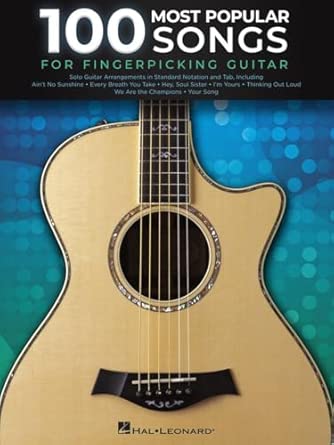 | Best for Repertoire Expansion and Song Practice | Content: Popular songs for fingerpicking | Notation: Standard and tab | Skill level: Various | VIEW ON AMAZON | See Our Full Breakdown |
| Yamaha Red Label FS3 – Natural |  | Best for Players Seeking Rich, Resonant Tone with Quality Materials | Number of Strings: 6 | Top Material: Sitka Spruce | Back and Sides Material: Mahogany | VIEW ON AMAZON | See Our Full Breakdown |
| Creative Fingerstyle Guitar Collection: Technique, Scale & Arpeggio Mastery for Acoustic Guitar |  | Best for Progressive Players Looking to Expand Technical Knowledge | VIEW ON AMAZON | See Our Full Breakdown | |||
| Advanced Acoustic Fingerstyle Guitar: Master Modern Acoustic Guitar Techniques with Daryl Kellie |  | Best for Experienced Players Pursuing Modern, Sophisticated Techniques | VIEW ON AMAZON | See Our Full Breakdown |
More Details on Our Top Picks
Creative Acoustic Fingerstyle Guitar: Techniques to Advance Your Playing
This book stands out for offering practical, creative techniques designed to push players beyond basic fingerpicking. Unlike the more structured approach of The Acoustic Guitar Fingerstyle Method Book with Online Audio, it emphasizes developing your own style through exercises and insights, making it ideal for players ready to refine their skills. The lack of detailed specifications and reviews means it’s less suited for absolute beginners or those seeking structured lessons, but it provides valuable ideas for seasoned players aiming to innovate. Its focus on advancing technique makes it a strong choice for those already comfortable with fundamentals and seeking fresh challenges.
Pros:- Provides creative, advanced fingerstyle techniques
- Includes practical exercises and insights for skill development
- Encourages personal musical growth and innovation
Cons:- No detailed specifications or accompanying audio
- Lacks reviews or audience feedback for validation
Best for: Intermediate to advanced fingerstyle guitarists wanting to deepen their technique and musical expression
Not ideal for: Beginners or players seeking step-by-step instruction with audio support, as this book lacks foundational guidance
- Type:Instructional book
- Content Focus:Creative techniques, exercises
Our verdict“This book is best suited for experienced players aiming to push their fingerstyle skills further through innovative techniques.”
The Acoustic Guitar Fingerstyle Method Book with Online Audio by David Hamburger
This method book makes a strong case for newcomers to fingerstyle guitar, especially with its included online audio, which offers crucial feedback absent in the simpler 15pcs Finger Picks set or the blues-focused Fingerstyle Blues Guitar book. Compared with more advanced resources, it prioritizes foundational skills and pairing exercises with listening practice, making it ideal for self-directed learners. However, it may lack depth for more experienced players seeking complex arrangements or advanced techniques. Its focus on roots songs and basic fingerpicking makes it a practical starting point, but seasoned players might find it too limited.
Pros:- Includes online audio for interactive learning
- Ideal for beginners and self-guided study
- Focuses on roots songs to develop foundational skills
Cons:- Limited to instructional material with no advanced content
- Lacks detailed product features or supplementary content
Best for: Self-learners and beginners wanting guided audio support to build core fingerstyle skills
Not ideal for: Advanced players or those seeking complex soloing and improvisation techniques, as content is beginner-focused
- Type:Method book with online audio
- Skill Level:Beginners and early intermediates
Our verdict“This book is perfect for beginners and self-learners who benefit from audio guidance and straightforward instruction.”
15pcs Finger Picks for Acoustic Guitar
This set of 15 celluloid finger picks offers durability and a warm, natural tone, making it a practical choice for players who want consistent sound quality across different instruments. Unlike the instructional-focused The Acoustic Guitar Fingerstyle Method Book, these picks are tools to enhance tone and playing comfort, especially for those who prefer using finger picks over nails or bare fingers. The main tradeoff is that they are limited to celluloid material, which may not satisfy players seeking eco-friendly or different material options. Without specific size or gauge details, some players might need to experiment to find the best fit.
Pros:- High-quality, durable celluloid material
- Suitable for multiple string instruments
- Provides a warm, natural tone
Cons:- Limited to celluloid, which may not suit eco-conscious players
- No size or gauge specifications provided
Best for: Experienced fingerstyle players and collectors who want durable, versatile picks for various stringed instruments
Not ideal for: Beginners who need guidance on fingerpick technique or players preferring finger nails over picks
- Material:Celluloid
- Quantity:15 pieces
- Suitable for:Acoustic guitar, electric guitar, bass, banjo, ukulele
Our verdict“This pick set is ideal for experienced players seeking reliable, warm-tone finger picks for regular use.”
Fingerstyle Blues Guitar: Master Acoustic Blues Guitar Fingerpicking and Soloing
This book offers an in-depth look at blues fingerpicking and soloing techniques, making it a specialized resource that differs from the more general 100 Most Popular Songs for Fingerpicking Guitar. While it excels at teaching blues-specific skills, it lacks audio or video support, which could be a drawback for learners who rely on listening. Compared to the broad repertoire of the songbook, this resource dives into stylistic nuances of blues, making it ideal for players committed to mastering this genre but less suitable for those seeking a wider variety of musical styles or comprehensive instruction for other genres.
Pros:- Comprehensive coverage of blues fingerpicking
- Focuses on soloing techniques for mastery
- Suitable for both beginners and intermediates
Cons:- No accompanying audio or video materials
- Requires prior guitar knowledge for best results
Best for: Blues guitar players seeking to deepen their soloing and fingerpicking mastery in the blues genre
Not ideal for: Players interested in pop, rock, or modern fingerpicking styles without a focus on blues techniques, or those who prefer multimedia learning
- Type:Instructional book
- Genre focus:Blues
Our verdict“This book is tailored for blues enthusiasts eager to develop authentic fingerpicking and soloing skills in the genre.”
100 Most Popular Songs for Fingerpicking Guitar
This collection stands out for offering a wide variety of popular songs arranged for fingerpicking, including hits from pop, rock, and contemporary genres. Unlike the more technique-oriented Creative Acoustic Fingerstyle Guitar, it emphasizes repertoire building with standard notation and tablature, catering to players looking to expand their song list. While it provides versatility, the lack of detailed content descriptions makes it harder to assess the difficulty level or specific styles covered. This songbook makes sense for those wanting to practice familiar tunes but may not serve as a comprehensive learning tool for mastering techniques.
Pros:- Includes a broad selection of popular songs
- Provides both notation and tablature for versatile learning
- Suitable for various skill levels
Cons:- No detailed content overview or difficulty ratings
- Focuses on song arrangements rather than technique development
Best for: Guitarists aiming to broaden their fingerpicking repertoire with familiar, popular songs
Not ideal for: Beginners seeking structured lessons or players looking for in-depth technique tutorials, as it’s primarily a song collection
- Content:Popular songs for fingerpicking
- Notation:Standard and tab
- Skill level:Various
Our verdict“This songbook is perfect for players wanting to add popular tunes to their repertoire and practice familiar pieces with fingerpicking.”
Yamaha Red Label FS3 – Natural
The Yamaha Red Label FS3 stands out for its solid Sitka spruce top, which delivers exceptional resonance and clarity compared to the laminated tops found in many budget models. Its solid mahogany back and sides contribute to a warm, balanced tone that suits fingerstyle playing well. Unlike the Creative Fingerstyle Guitar Collection, which offers techniques but lacks sound quality, this guitar provides a real instrument to practice those skills on. The absence of electronics means it remains purely acoustic, but this could be a drawback for players wanting amplification. This guitar is best suited for intermediate to advanced players who prioritize tonal richness and durability over added features.
Pros:- Solid Sitka spruce top offers excellent resonance and sound projection
- High-quality mahogany back and sides provide warmth and durability
- Elegant natural finish enhances aesthetic appeal
- Ebony fingerboard offers smooth playability
Cons:- Lacks built-in electronics for amplification
- Higher price point due to solid tonewoods
- No additional features or onboard pickups
Best for: Guitarists who want a high-quality, resonant instrument to develop their fingerstyle repertoire and appreciate solid wood craftsmanship.
Not ideal for: Beginners or players needing a budget-friendly option with onboard electronics or lighter weight for travel.
- Number of Strings:6
- Top Material:Sitka Spruce
- Back and Sides Material:Mahogany
- Fingerboard Material:Ebony
- Neck Material:African Mahogany
- Finish:Natural
Our verdict“This guitar is ideal for intermediate players seeking a durable, resonant instrument with a rich tonal palette for fingerstyle development.”
Creative Fingerstyle Guitar Collection: Technique, Scale & Arpeggio Mastery for Acoustic Guitar
This collection offers detailed insights into fingerstyle techniques, scales, and arpeggios, making it a valuable resource for those aiming to deepen their technical skills. Unlike the Yamaha FS3, which focuses on sound quality, these books focus on building your theoretical and technical foundation. They are ideal for players who already have an acoustic guitar and want to improve their fingerstyle skills through structured learning. However, without accompanying audio or video, applying the concepts can be challenging for visual learners. This collection is best suited for intermediate to advanced players committed to systematic skill-building.
Pros:- Comprehensive coverage of fingerstyle techniques and scales
- Suitable for various skill levels from intermediate to advanced
- Includes multiple books for structured learning
- Focus on theoretical understanding and practical application
Cons:- No specific product or sound quality features
- Requires prior guitar knowledge to fully benefit
- No multimedia content included
Best for: Guitarists who want a comprehensive guide to fingerstyle techniques, scales, and arpeggio mastery to enhance their playing repertoire.
Not ideal for: Beginners or players seeking an instrument or sound-focused resource rather than a technique manual.
Our verdict“This collection makes sense for dedicated players ready to systematically improve their fingerstyle technique and expand their musical vocabulary.”
Advanced Acoustic Fingerstyle Guitar: Master Modern Acoustic Guitar Techniques with Daryl Kellie
Advanced Acoustic Fingerstyle Guitar by Daryl Kellie targets players who have already mastered basic techniques and want to explore modern, complex fingerstyle concepts. Compared to the Creative Fingerstyle Guitar Collection, which covers fundamentals, this book dives into sophisticated techniques, making it a better fit for those seeking to push their skills further. The lack of audio or video support might hinder learning for some, but the focus on contemporary styles makes it ideal for players looking to modernize their sound. This pick is best for intermediate to advanced players aiming to refine and innovate their fingerstyle approach.
Pros:- Covers advanced, modern fingerstyle techniques
- Authored by an experienced guitarist with contemporary insights
- Focuses on expanding stylistic vocabulary
- Suitable for players aiming to elevate their playing
Cons:- No accompanying audio or video materials
- Designed mainly for intermediate to advanced players
- May be complex for those new to fingerstyle
Best for: Guitarists with a solid foundation seeking to master advanced techniques and explore modern acoustic fingerstyle styles.
Not ideal for: Beginners or players who prefer a more traditional or acoustic-only approach without complex modern techniques.
Our verdict“This book is well-suited for dedicated players eager to master modern fingerstyle techniques and elevate their acoustic guitar playing.”

How We Picked
The products in this roundup were evaluated based on their suitability for fingerstyle playing, considering tonal clarity, ease of fingerpicking, build quality, and playability. We prioritized guitars that offer comfortable neck profiles and balanced sound to enhance fingerstyle techniques. Learning resources and accessories were included to give a rounded view of tools that support skill development. The ranking reflects a combination of value, versatility, and user-friendly features, ensuring options for different budgets and skill levels.Factors to Consider When Choosing Acoustic Guitar For Fingerstyle
Choosing an acoustic guitar for fingerstyle requires more than just good looks. You should consider factors like body size, neck profile, and tone to match your playing style. Additional elements, such as fretboard material and pickup options, can influence both sound and comfort. Understanding these factors helps prevent common mistakes, such as opting for a guitar that’s too bulky or lacking clarity, which can hinder fingerpicking. Balancing budget with quality ensures you get a guitar that supports your growth without unnecessary compromises.Body Size and Shape
Body size impacts both comfort and sound projection. Smaller bodies like concert or parlor guitars tend to be more comfortable for intricate fingerpicking and often produce a focused, articulate tone. Larger dreadnoughts or jumbos offer more volume and bass response but can be cumbersome for precise fingerstyle work. Consider your physical comfort and the kind of tone you prefer when selecting body size—this choice influences your overall playing experience and how well your guitar complements your style.
Neck Profile and Playability
A narrow, slim neck profile facilitates faster, more precise finger movements, especially for complex fingerpicking patterns. Thicker necks can provide more sustain and a fuller feel but may cause fatigue over extended sessions. It’s essential to choose a neck profile that fits your hand size and playing style, as discomfort or difficulty reaching chords can hinder progress. Test different neck shapes if possible, and prioritize comfort alongside technical needs.
Tone and Sound Quality
For fingerstyle, clarity and articulation are key. Guitars with balanced tone and well-defined trebles allow individual notes to ring out clearly, which is vital for intricate picking. Solid wood tops, especially spruce or cedar, tend to offer richer, more responsive sound. Pay attention to the guitar’s sustain and how resonant it feels when played softly—these qualities directly impact your ability to perform expressive fingerstyle pieces.
Additional Features and Accessories
Features like built-in pickups can expand your performance options but might add weight or alter tone. High-quality fretboards made from rosewood or ebony improve feel and durability. Accessories such as finger picks or capos can enhance control and versatility, especially for beginners or performers on the go. Be mindful of these extras, balancing their benefits against potential costs or added complexity.
Budget and Value Considerations
While high-end guitars often deliver superior tone and craftsmanship, many budget-friendly options now provide excellent playability for beginners and intermediate players. Investing more in a quality instrument can pay off in longevity and sound, but it’s also wise to consider what features truly matter for your current skill level. Avoid overspending on features you won’t use, and remember that a well-chosen affordable guitar can support your growth just as well as a premium model.
Frequently Asked Questions
Can I use any acoustic guitar for fingerstyle, or do I need a specific type?
While you can play fingerstyle on any acoustic guitar, certain features make some guitars better suited for this style. Look for guitars with a balanced tone, articulate trebles, and a comfortable neck profile. Smaller body sizes can enhance clarity and ease of fingerpicking, but larger bodies may produce a fuller sound if you prefer more resonance. Ultimately, choosing a guitar that matches your hand size and tonal preferences will make practicing and performing more enjoyable.
Is a more expensive guitar really better for fingerstyle playing?
Higher-priced guitars often feature superior materials, craftsmanship, and tonal qualities, which can significantly enhance fingerstyle playing. They tend to produce clearer notes, better sustain, and more nuanced dynamics. However, affordability doesn’t mean a beginner cannot find a suitable instrument; many mid-range guitars offer excellent value and perform well for fingerstyle. Your choice should balance your current skill level, goals, and budget, with more expensive models reserved for players aiming for professional sound quality.
What accessories should I consider when choosing an acoustic guitar for fingerstyle?
Beyond the guitar itself, accessories like high-quality finger picks, capos, and a comfortable strap can improve your playing experience. A good tuner ensures your instrument stays in tune, which is crucial for expressive fingerstyle. If you perform live, a pickup system might be worth considering. Also, a case or gig bag protects your investment and makes transportation easier. These extras can help you get the most out of your guitar and support consistent practice.
How important is the guitar’s neck profile for fingerstyle players?
The neck profile directly affects how comfortably you can execute complex fingerpicking patterns. Slim, narrow necks tend to facilitate faster finger movements and ease of chord transitions, especially for players with smaller hands. Thicker necks can provide more sustain but may cause fatigue or limit intricate finger movements. Testing different neck profiles, when possible, helps ensure you choose an instrument that supports your technical needs and playing comfort.
Should I prioritize tone or playability when choosing a guitar for fingerstyle?
Both tone and playability are vital, but which you prioritize depends on your current goals. If you’re focused on developing nuanced, expressive fingerpicking, a guitar with a clear, balanced tone will be more inspiring. For beginners or players with smaller hands, comfort and ease of movement may take precedence to encourage practice and technical growth. Ideally, find a guitar that offers a good balance—good tone with a comfortable neck—so you can enjoy practicing and playing for years to come.
Conclusion
For most players, the Yamaha Red Label FS3 emerges as the best overall choice, thanks to its balanced tone and comfortable design. Beginners or those on a budget will find strong value in more affordable options like the 15pcs Finger Picks, which can enhance control while being easy to upgrade later. Serious enthusiasts or performers seeking a premium sound should consider the Creative Fingerstyle Guitar Collection or high-end models, which deliver richer tone and advanced features. Ultimately, your ideal pick depends on your skill level, playing goals, and budget—each of these options offers a pathway to better fingerstyle guitar mastery.
Halloween Picks
halloween
As an affiliate, we earn on qualifying purchases.