Discover clever DIY tool hacks that repurpose everyday items to organize and protect your tools. Use muffin tins or ice cube trays for small parts, hang power tools on foam-lined hooks to prevent damage, or repurpose shoe organizers for easy access to hand tools. These simple ideas boost safety, save space, and extend your tools’ lifespan. Keep exploring to find more inventive ways to upgrade your workspace and make your projects smoother.
Key Takeaways
- Repurpose muffin tins or ice cube trays to organize small parts like screws and nails efficiently.
- Use hanging shoe organizers to store hand tools, keeping them accessible and clutter-free.
- Mount foam-lined hooks on walls for power tools to prevent drops and damage.
- Store batteries separately in labeled containers to avoid draining and corrosion.
- Convert household items, such as jars or baskets, into tool storage solutions for quick and easy access.
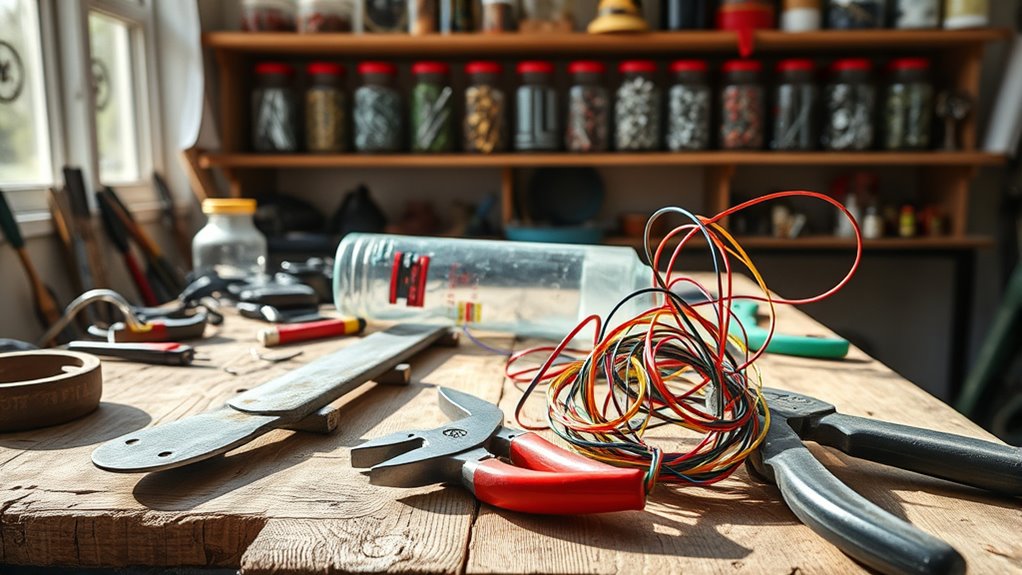
Ever wondered how to get more out of your tools without spending extra money? The secret lies in smart hacks that maximize what you already have. One of the most important aspects to consider is power tool safety. When you’re pushing your tools to their limits or repurposing them, you need to guarantee they stay safe to use. Always inspect your power tools before each use, checking for frayed cords, loose parts, or damaged guards. Properly storing your tools also plays a big role in maintaining their safety and longevity. When stored correctly, you reduce the risk of accidental injuries and prevent damage that could lead to costly repairs or replacements.
Organizing your tools isn’t just about keeping your workspace tidy; it’s a vital step toward efficient and safe DIY work. Use wall-mounted racks or pegboards to keep frequently used power tools within easy reach, preventing the clutter that can lead to accidents. Smaller hand tools can be stored in labeled containers or toolboxes, making it simple to find what you need quickly. When you keep your tools organized, you not only save time but also reduce hazards caused by misplaced or unstable storage systems. A well-organized space encourages you to handle each tool with care, reinforcing good power tool safety habits.
Beyond safety, clever storage solutions can also extend the life of your tools. For example, hanging power tools on foam-lined hooks prevents accidental drops and damage. Keep batteries charged and stored separately from the tools when not in use to avoid draining or corrosion. Using clear containers for small parts like screws and nails allows you to see exactly what’s inside, avoiding unnecessary rummaging that could lead to mishandling or injury. Also, consider investing in a dedicated toolbox or storage cabinet for sharp or heavy tools, so they’re safely contained and easily accessible when needed.
Another smart hack is to repurpose everyday household items for organizing or protecting your tools. Old muffin tins or ice cube trays work great for small parts, while hanging shoe organizers can store hand tools or accessories. These simple hacks keep your workspace safer and more efficient, making your DIY projects more enjoyable. Additionally, incorporating natural materials for storage or decoration can help create an eco-friendly and visually appealing workspace. When your tools are stored properly and your workspace is organized, you can focus on your project instead of hunting for misplaced items or worrying about safety hazards. This not only improves your craftsmanship but also boosts your confidence to take on more challenging DIY tasks.
Frequently Asked Questions
Can I Use Household Items Instead of Specialized Tools?
Yes, you can often use household items as alternative tools for DIY projects. Household hacks involve repurposing everyday items like spoons, rubber bands, or scissors to substitute specialized tools. For example, a butter knife can replace a flat-head screwdriver, and a rubber band can tighten a loose screw. Just make certain the alternative tools are suitable for the task to avoid damage or injury, and always prioritize safety.
How Do I Ensure Safety When Improvising With Tools?
Imagine you’re building a birdhouse with a makeshift saw; safety comes first. Always wear protective gear like goggles and gloves, and work in a well-ventilated, clutter-free space. Keep your tools in good condition and stay alert to avoid accidents. Prioritize a safe workspace by clearing debris and securing materials. Remember, improvising is smart, but your safety is smarter—never cut corners when it comes to protecting yourself.
Are There Tools That Are Unsafe to Repurpose?
You should avoid repurposing power tools like saws, drills, or grinders, as they pose significant tool safety risks if not used properly. Hand tools with damaged or worn parts are also unsafe, increasing the risk of injury. Always assess the condition of a tool before reusing, and understand the potential risks involved. If unsure, consult safety guidelines to minimize repurposing risks and ensure safe handling.
What Are Some Hidden Features of Common Tools?
You might not realize that many common tools have hidden functionalities that demonstrate tool innovation. For example, a hammer’s claw can be used for prying, while a screwdriver often features a magnetic tip to hold screws. Some pliers include wire-cutting edges, and measuring tapes may have built-in levels. Exploring these hidden features allows you to maximize your tools’ potential, making your projects more efficient and showcasing clever tool innovation.
How Can I Maintain and Clean Repurposed Tools Effectively?
Imagine repurposing an old paintbrush as a cleaning tool for narrow tool parts; regular tool maintenance keeps them in top shape. To clean, use appropriate cleaning techniques like wiping with a cloth and applying lubricant to prevent rust. Store tools properly, keep them dry, and inspect for damage. Proper cleaning and maintenance extend their lifespan, ensuring they stay effective for your DIY projects.
Conclusion
Now that you’ve uncovered these clever DIY tool hacks, your toolbox is practically unstoppable. With just a few simple tricks, you can turn everyday tools into powerful, multi-purpose gadgets that might just outlast your entire home renovation. Remember, mastering these hacks can make you feel like a DIY superhero—capable of tackling any project with ease. So go ahead, experiment boldly, and transform the ordinary into the extraordinary. Your newfound skills will revolutionize your DIY game forever!