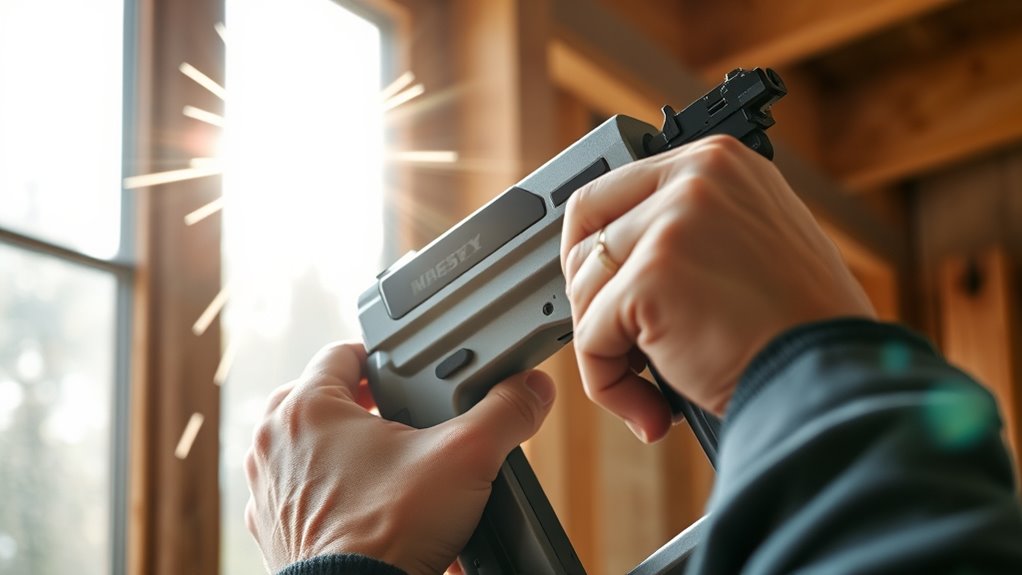
To use a nail gun safely, always familiarize yourself with its safety features like trigger locks and nose safety mechanisms, and follow the manufacturer’s guidelines. Wear appropriate PPE such as safety glasses and ear protection, and keep your hands away from the trigger when not firing. Never bypass safety features or modify the tool, and disconnect it before maintenance. For more tips on keeping safe, you’ll find useful advice if you look further into proper nail gun handling.

Get everyday essentials delivered free with Prime
- Fast, free delivery on millions of items
- Prime Video, Amazon Music and more included
- Member-only deals all year
Key Takeaways
- Always read and follow the manufacturer’s safety guidelines before operating a nail gun.
- Wear appropriate PPE, including safety glasses and ear protection, during use.
- Keep hands and body away from the trigger and point the tool away from yourself and others.
- Ensure the nail gun is disconnected from power when loading, maintaining, or storing.
- Regularly inspect the tool for damage or jams and perform maintenance as recommended.
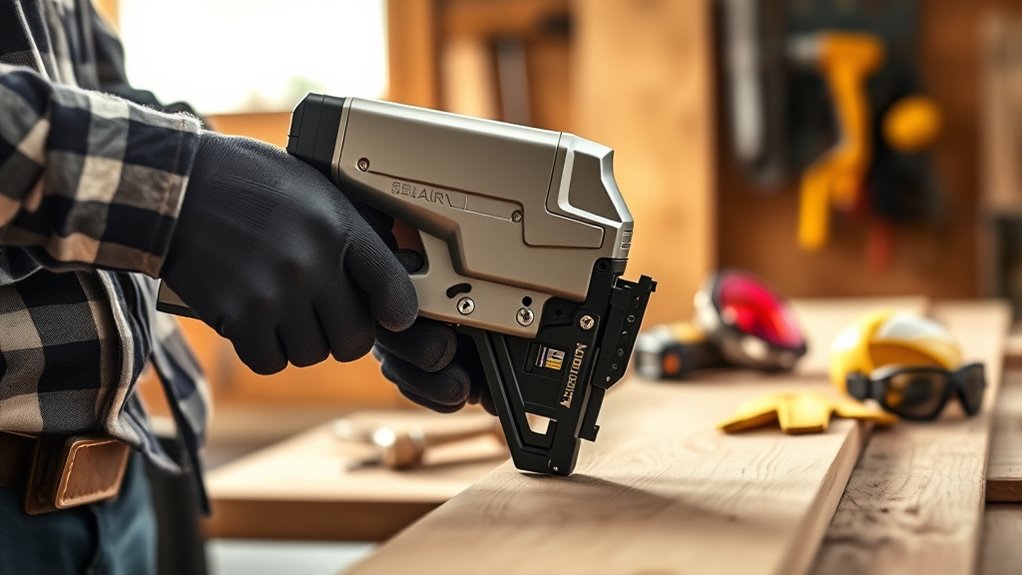
If you’re new to construction or DIY projects, understanding nail guns is essential for efficient and accurate fastening. Nail guns speed up your work and make tasks easier, but they can also be dangerous if you don’t follow proper safety precautions. Before you start, familiarize yourself with the safety features of your tool, such as trigger locks and nose safety mechanisms. Always wear protective gear like safety glasses and ear protection to prevent injury from flying debris or loud noises. Keep your hands and body away from the nailer’s trigger area when not actively firing, and never point the gun at yourself or others. When handling the nail gun, always ensure it’s unplugged or disconnected from the power source before loading nails or performing maintenance. Understanding tool safety features is crucial for preventing accidents and ensuring proper operation.
Maintaining your nail gun is vital for both safety and performance. Regular maintenance tips include cleaning dust and debris from the tool after each use to prevent jams and ensure smooth operation. Check the air hose and connections if you’re using a pneumatic nailer; leaks or damage can cause misfires or accidents. Lubricate moving parts as recommended by the manufacturer to keep the gun operating efficiently. Also, inspect the nails regularly to confirm they’re the correct size and type for your project, as using improper nails can cause jams or misfires, increasing safety risks. Always follow the manufacturer’s guidelines for cleaning and maintenance to extend the lifespan of your nail gun and keep it functioning safely.
When it comes to safety precautions, it’s crucial to handle your nail gun with respect and caution at all times. Never bypass safety features or try to modify the tool, as this can lead to dangerous malfunctions. Be aware of your surroundings, especially when working in tight spaces or near other people, to avoid accidental injuries. When storing your nail gun, keep it in a secure, dry place, away from children. Disconnect the tool when not in use, and regularly check for signs of wear or damage. If you notice any issues such as misfires, jams, or unusual noises, stop using the gun immediately and troubleshoot or seek professional repair to prevent accidents.
best safety glasses for nail guns
As an affiliate, we earn on qualifying purchases.
As an affiliate, we earn on qualifying purchases.
Frequently Asked Questions
Can I Use a Nail Gun for Heavy-Duty Construction Projects?
Yes, you can use a nail gun for heavy-duty applications and construction projects. Make sure to select a model designed for demanding tasks, such as framing or framing nailers, which handle thicker materials and longer nails. Always follow safety guidelines, wear protective gear, and guarantee you’re using the right nail size and power setting. Proper use ensures efficiency and safety on your heavy-duty construction projects.
What Are the Signs of a Nail Gun Malfunction?
A nail gun’s heartbeat skips when you notice frequent jams or misfires, signaling trouble in its machinery. You might see inconsistent nail depth, an unusual noise, or a sudden loss of power—these are all signs of common malfunctions. Regular nail gun maintenance can prevent these issues, but if you spot these symptoms, it’s time to troubleshoot or seek professional help before the tool becomes a rogue agent on your construction site.
How Do I Troubleshoot a Jammed Nail Gun?
When troubleshooting jams, first disconnect your nail gun from the power source to guarantee safety. Clear any stuck nails using a tool, like pliers, and inspect for debris or damage. Check the nail magazine for proper alignment and re-lubricate moving parts as part of regular nail gun maintenance. If jams persist, consult the manufacturer’s instructions or seek professional repair to prevent further issues.
Are There Specific Safety Gear Recommendations Beyond Goggles and Gloves?
Wearing safety gear is like armor for your workday. Besides goggles and gloves, you should also wear protective clothing to shield your skin from flying debris and ear protection to guard against loud noises. Hearing damage can sneak up on you, so don’t skip ear plugs or muffs. These extra precautions help keep you safe, comfortable, and focused, ensuring your project goes smoothly without unnecessary risks.
Can I Convert a Brad Nailer Into a Framing Nailer?
You can’t easily convert a brad nailer into a framing nailer because of significant differences in size, power, and design. Nail gun conversions and brad nailer modifications are limited and typically not feasible without extensive, specialized modifications. Attempting such a conversion risks damaging your tool and compromising safety. Instead, it’s best to purchase a framing nailer suited for heavy-duty tasks to guarantee safety and efficiency.
pneumatic nail gun with trigger lock
As an affiliate, we earn on qualifying purchases.
As an affiliate, we earn on qualifying purchases.
Conclusion
Now that you know the basics of using a nail gun safely, you’re ready to handle it confidently. Think of it as a trusted tool in your hands, like a trusty steed ready to carry you through your project. Always stay alert, follow safety tips, and wear protective gear—your safety is the anchor in this woodworking adventure. With care and practice, you’ll turn your DIY dreams into reality without missing a beat.
As an affiliate, we earn on qualifying purchases.
As an affiliate, we earn on qualifying purchases.
Halloween Picks
halloween
As an affiliate, we earn on qualifying purchases.