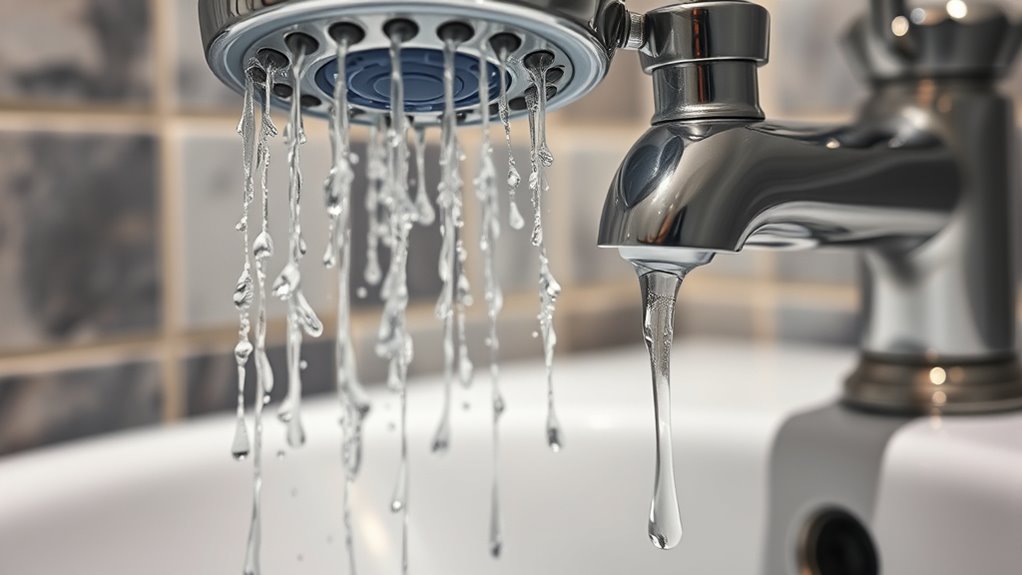

If your faucet or showerhead drips, start by turning off the water supply. Remove the fixture and check the washer or O-ring for signs of wear or damage—replacing these usually stops leaks quickly. For more persistent issues, the valve might need replacement. Tightening loose connections can also help. Staying on top of these simple fixes saves water and cuts bills; keep going for more tips to tackle stubborn leaks effectively.
Key Takeaways
- Turn off the water supply before attempting any repairs to prevent water damage.
- Replace worn-out washers or O-rings, which are common causes of leaks in faucets and showerheads.
- Tighten loose connections or fittings to stop drips caused by loose parts.
- Clean mineral buildup or debris from the valve or showerhead to improve sealing and flow.
- If leaks persist after basic fixes, consider replacing the entire fixture or consulting a professional plumber.
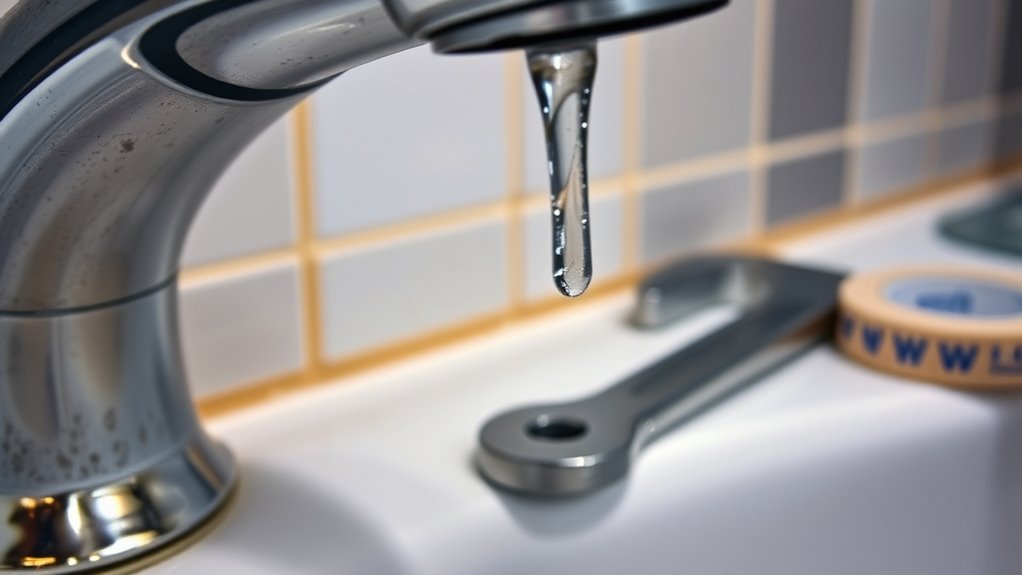
A leaky faucet or showerhead might seem like a minor annoyance, but it can quickly lead to wasted water and higher utility bills. The constant drip-drip not only wastes resources but can also cause water pressure issues over time. If you notice a persistent leak, it’s likely due to a worn-out washer, a faulty valve, or other internal components that need attention. Addressing the problem promptly can save you money and prevent further damage.
A leaky faucet or showerhead wastes water and raises bills—address leaks promptly to save resources and prevent damage.
One of the first things you should check is the water pressure. Low water pressure can sometimes cause leaks or make existing leaks worse. If you notice a sudden drop in water pressure, it might be related to a problem in the plumbing, such as a clogged aerator or a failing valve. Conversely, excessively high water pressure can strain your fixtures and lead to leaks. Testing your home’s water pressure with a gauge can help you determine if it’s within the *ideal* range of 40-60 psi. If it’s outside this range, adjusting the pressure regulator or replacing faulty valves might be necessary. Proper water pressure management can significantly prolong the lifespan of your fixtures. Additionally, understanding how plumbing components interact can help you troubleshoot more effectively. Regular inspection of these components can also prevent minor issues from turning into major repairs.
Valve replacement is often a straightforward fix for persistent leaks. Over time, valves can corrode, become clogged, or simply wear out. Replacing the valve isn’t as *intimidating* as it sounds; it involves turning off the water supply, disassembling the fixture, and installing a new valve designed for your specific faucet or showerhead. Doing this can restore proper water flow and eliminate leaks caused by faulty valves. When replacing valves, always *think about* you select the right size and type to match your plumbing setup. If you’re unsure, a quick consultation at your local hardware store or a professional plumber can help.
In many cases, fixing a leaky faucet or showerhead can be as simple as tightening connections or replacing worn-out components like washers or O-rings. However, if you’ve tried these basic repairs and the leak persists, it’s time to *contemplate* replacing the entire fixture or seeking professional help. Remember, addressing these issues early not only prevents water wastage but also preserves your plumbing system’s integrity. Regular maintenance, including inspecting for leaks and checking water pressure, can go a long way in avoiding costly repairs down the line. So, don’t ignore that drip—tackle it head-on, save water, and keep your home running smoothly.
Additionally, understanding the importance of proper maintenance can help prevent leaks before they start by ensuring all components are regularly checked and replaced as needed. Proper maintenance routines can extend the lifespan of your plumbing fixtures and reduce the likelihood of leaks developing unexpectedly.
Frequently Asked Questions
How Long Does a Typical Faucet Repair Take?
A typical faucet repair takes about 30 minutes to an hour, depending on your DIY maintenance skills. You can usually fix minor leaks quickly, which helps conserve water. If you’re comfortable with tools, you might complete the repair sooner. However, for more complex issues, it’s wise to call a professional. Regular maintenance saves water and prevents costly repairs down the line.
Can I Fix a Leak Without Turning off the Water Supply?
You shouldn’t try fixing a leak without turning off the water supply, as it risks water damage and complicates leak detection. Instead, reduce water pressure temporarily to minimize flow while inspecting the faucet. If you’re experienced and confident, you might attempt minor adjustments, but turning off the main supply is safest for avoiding messes and accurately pinpointing the leak. Always prioritize safety and proper leak detection methods.
What Tools Are Needed for Fixing a Leaky Showerhead?
You’ll need a basic plumber tools set and a repair kit to fix your leaky showerhead. Ironically, fixing a drip might seem complex, but with these simple tools—like an adjustable wrench, screwdriver, and Teflon tape—you can handle it yourself. The repair kit usually includes replacement washers and O-rings, making the process straightforward. Just gather your tools, follow a few easy steps, and enjoy a drip-free shower again.
Are There Eco-Friendly Solutions for Preventing Leaks?
Yes, you can prevent leaks using eco-friendly solutions like water-saving devices and eco-friendly materials. Installing low-flow showerheads and faucet aerators reduces water waste and minimizes the risk of leaks. Choose sustainable, durable seals and washers made from eco-friendly materials to guarantee long-term effectiveness. These simple upgrades help conserve water, lower your utility bills, and support environmental sustainability, all while keeping your plumbing leak-free.
When Should I Call a Professional Plumber Instead of Fixing It Myself?
Think of fixing plumbing yourself like walking a tightrope—you might balance well, or you could fall. You should call a professional when DIY risks outweigh your expertise, especially if the leak is severe or an emergency situation arises. If you’re unsure about turning off water supplies or suspect hidden damage, it’s safer to get expert help. This avoids costly repairs and potential water damage, giving you peace of mind.
Conclusion
A dripping faucet or showerhead not only wastes water but can also increase your bills. Luckily, most leaks are simple fixes you can do yourself with just a few tools. So, next time you hear that steady drip, ask yourself: is it worth ignoring or fixing before it becomes a bigger problem? With a little effort, you can stop the leak and save money—and water—today. Don’t let that drip turn into a flood of regret.