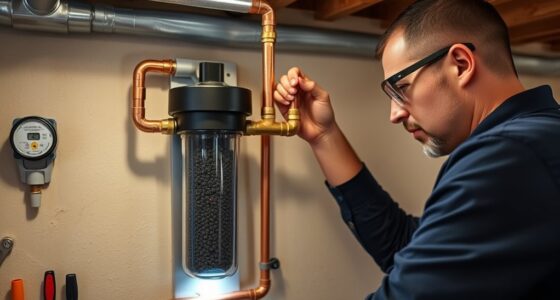
To relight a pilot light safely, turn off the appliance and wait a few minutes for any gas to dissipate. Locate the pilot assembly, turn the gas control to “off,” and then follow the manufacturer’s instructions—either pressing an igniter or using a match—while keeping your face away from the opening. If you continue, you’ll find detailed steps to guarantee safe and successful relighting.
Key Takeaways
- Turn off the appliance and wait several minutes to clear residual gas before attempting to relight.
- Locate the gas control knob, set it to “off,” then wait before accessing the pilot assembly.
- Use a piezo igniter or match to carefully ignite the pilot port, keeping face away from the opening.
- Hold the control knob in “pilot” position for 30 seconds after lighting to heat the thermocouple.
- Verify the pilot stays lit, then turn the control to “on” and check for proper operation and leaks.
If your gas appliance’s pilot light has gone out, relighting it is a straightforward process you can do yourself with some basic safety precautions. Before you begin, verify the area is well-ventilated by opening windows or doors to disperse any lingering gas. Turn off the appliance and wait a few minutes to allow any accumulated gas to dissipate—this reduces the risk of a fire or explosion. Always follow the manufacturer’s instructions carefully, as different models may have specific steps or safety warnings. Never attempt to relight a pilot light if you smell a strong gas odor; in that case, evacuate the area immediately and contact a professional.
Always ensure proper ventilation and follow safety instructions before relighting a pilot light.
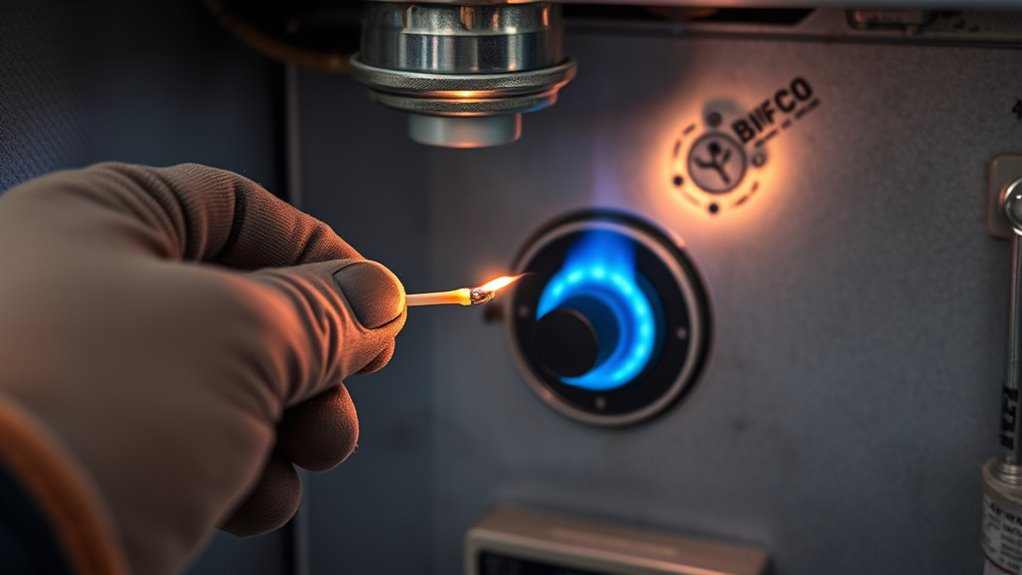
When you’re ready to proceed, locate the gas control knob and set it to the “off” position. Give the appliance a few minutes to ensure any residual gas is cleared. This is a vital safety measure, as attempting to light the pilot too soon could ignite the gas. Next, find the pilot light assembly, which typically involves a small opening or access panel. Carefully follow the troubleshooting tips provided in your manual or on the appliance itself to identify the correct igniter or pilot port. If your model uses a piezo igniter, you’ll press and hold the ignition button while simultaneously turning the control knob to “pilot.” If you’re using a match or lighter, keep a safe distance from the gas outlet and ignite it once the pilot port is open.
While relighting the pilot, remain vigilant and keep your face away from the opening to avoid any unexpected flare-ups. If the pilot doesn’t light after a few attempts, turn everything off and wait for a few minutes before trying again. This allows any unburned gas to clear out, preventing a dangerous buildup. If the pilot light still refuses to stay lit or if you notice any irregularities—such as an unusual smell, soot around the pilot, or inconsistent flame—these are signs you should stop and call a professional. Troubleshooting tips like checking the thermocouple or cleaning the pilot assembly can sometimes resolve common issues, but safety always comes first. Additionally, understanding home appliance safety practices can help you prevent potential hazards during maintenance.
Once the pilot is lit and stable, hold the control knob in the “pilot” position for about 30 seconds to verify the thermocouple heats up and keeps the pilot lit. Then, release the knob and observe if the pilot remains on. If it does, turn the control to the “on” position and confirm the appliance is functioning properly. Always double-check for leaks or strange smells after relighting, and if you feel unsure at any point, don’t hesitate to seek professional help. Following these safety precautions and troubleshooting tips ensures you can relight your pilot light safely and effectively.
Frequently Asked Questions
How Often Should I Relight My Pilot Light?
You should reignite your pilot light only when it goes out, which might happen due to drafts or gas issues, so follow your maintenance schedule and check it regularly. If it goes out frequently, it’s time for troubleshooting tips, like inspecting for leaks or clogged burners. Don’t reignite it too often; if problems persist, contact a professional to prevent potential hazards and ensure your appliance functions safely.
What Safety Precautions Are Necessary Before Relighting?
Picture yourself as a cautious explorer before entering a dark cave. First, verify there’s no gas leak by sniffing for that rotten egg smell; if you detect any, leave immediately. Wear protective gear like gloves and safety goggles to shield yourself from potential hazards. Turn off the gas supply, ventilate the area, and wait a few minutes. Only then can you proceed safely to relight the pilot light.
Can I Relight the Pilot Light if I Smell Gas?
No, you shouldn’t attempt to relight the pilot light if you smell gas. A gas leak poses serious safety risks, so ventilate the area immediately and leave the space. Avoid igniting anything until you’ve confirmed the gas is gone and a professional has inspected the appliance. Ensuring proper ventilation safety is vital to prevent potential explosions or health hazards caused by accumulated gas.
How Long Should I Wait After Turning off the Gas Before Relighting?
Think of it like waiting for a storm to pass—you should wait at least five minutes after turning off the gas before relighting. This pause allows any lingering gas to dissipate, reducing the risk of a gas leak or explosion. Make certain proper ventilation and safety before attempting to relight. If you still smell gas, don’t proceed—leave the area, ventilate, and call a professional.
What Tools Do I Need to Relight the Pilot Light?
You’ll need a few tools to relight the pilot light, including a long lighter or matches, and sometimes an ignition switch if your system has one. Check if your thermostat or pilot assembly needs replacement parts before proceeding. Make sure the gas is off, then carefully access the pilot assembly, use the ignition switch to light it, and replace any faulty parts to guarantee safe operation.
Conclusion
Now that you’ve reignited your pilot light, think of it as lighting a tiny spark that breathes new life into your home’s warmth. With patience and care, you’ve coaxed the flame to dance once more, transforming a flicker of hope into a steady glow. Remember, a well-tended pilot is like a loyal guardian—standing watch, ready to warm your space whenever you need it. Keep an eye on it, and your comfort will never flicker out.