
To create a rain garden that absorbs rainwater runoff, you need to select a low-lying spot away from your home’s foundation and shape it into a shallow depression. Use native plants suited to your climate, placing wet-loving species at the center and drought-tolerant ones around the edges. Proper design and maintenance guarantee the garden effectively filters pollutants, reduces flooding, and promotes sustainability. Keep exploring to discover how to design and care for your rain garden successfully.
Key Takeaways
- Select a low-lying, well-drained site away from foundations, shaping it into a shallow depression to capture and infiltrate rainwater.
- Use native, moisture-tolerant plants at the center for water absorption and drought-tolerant species around the edges for durability.
- Design the garden with proper size and depth based on local rainfall patterns to ensure effective water infiltration without pooling.
- Incorporate deep-rooted native plants to stabilize soil, prevent erosion, and enhance permeability for stormwater absorption.
- Maintain the rain garden by minimizing the use of fertilizers and pesticides, promoting native plant health for long-term sustainability.

Ever wonder how you can manage rainwater effectively while enhancing your landscape? Creating a rain garden is a smart way to do just that. A rain garden serves as a natural solution for stormwater management, capturing runoff before it reaches storm drains or causes erosion. When designed properly, it can reduce flooding, filter pollutants, and add beauty to your yard. The key is understanding how to direct rainwater into a designated area where it can safely soak into the ground.
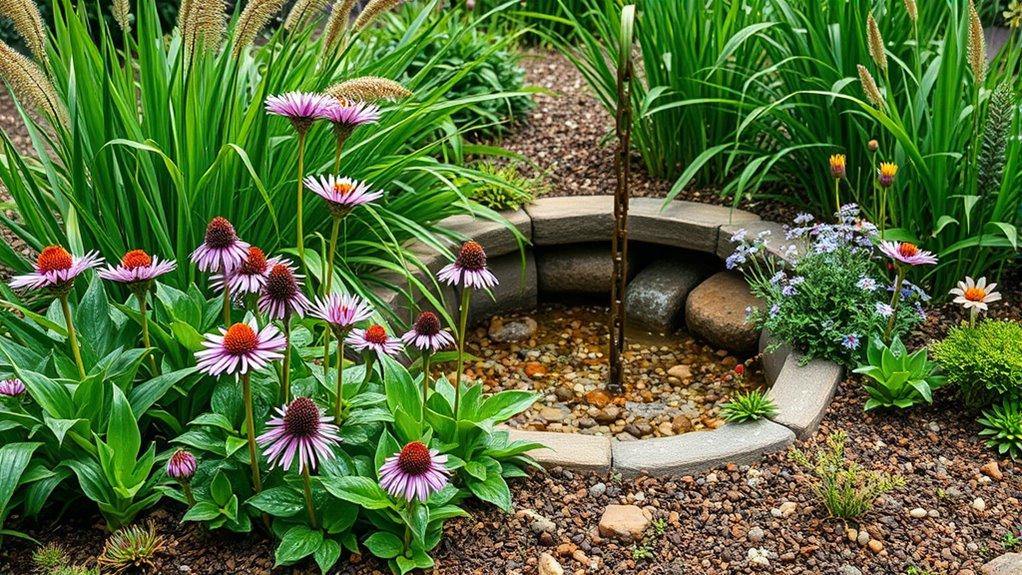
Your first step is to identify a low-lying spot in your landscape that naturally collects water after a storm. This area should be away from your home’s foundation and existing structures to prevent water damage. Once you’ve chosen the location, you need to shape the garden — typically into a shallow depression that allows water to pool temporarily. The depth and size depend on your rainfall patterns and the amount of runoff you expect. Remember, the goal isn’t to hold water indefinitely, but to give it enough time to infiltrate the soil.
Native plant selection plays a crucial role in ensuring your rain garden functions well and remains sustainable. Native plants are adapted to your climate and soil conditions, making them resilient and low-maintenance choices. They also attract beneficial pollinators and support local ecosystems. When selecting plants, choose a mix that can tolerate both wet and dry conditions — these are called wetland plants or moisture-tolerant species. Grasses, sedges, and flowering perennials like swamp milkweed or swamp sunflower are excellent options. These plants help stabilize the soil, prevent erosion, and improve water absorption.
Incorporating native plants also simplifies your maintenance routine. Since they’re adapted to your environment, they require less watering, fertilizers, or pesticides. Their deep roots increase soil permeability and help your rain garden handle larger storm events. Additionally, native plants tend to be more resistant to pests and diseases, making your rain garden more resilient over time. When planting, arrange species based on their water needs, with the most water-loving plants at the center or lowest point, gradually transitioning to more drought-tolerant species around the edges. Understanding deeper root systems can enhance soil stability and water absorption, further improving your rain garden’s effectiveness.
Frequently Asked Questions
Can Rain Gardens Attract Pests or Mosquitoes?
Rain gardens can attract pests or mosquitoes if you don’t maintain them properly. Standing water creates ideal mosquito breeding sites and can lead to pest attraction. To prevent this, make sure your rain garden drains well and doesn’t hold water for more than a few days. Regularly remove debris and avoid overwatering. With proper upkeep, your rain garden will effectively absorb rainwater runoff without becoming a pest or mosquito breeding ground.
What Plants Are Best for Rainy Climates?
In rainy climates, you should choose native species and drought-tolerant plants that thrive with excess water. Think of your garden as a sponge, absorbing rain efficiently. Native plants like swamp milkweed or blue flag iris handle soggy soil well, while drought-tolerant options like sedum can survive drier spells. Mixing these guarantees your rain garden stays vibrant and resilient, even during heavy downpours.
How Much Space Is Needed for a Functional Rain Garden?
You should plan for about 100 to 300 square feet for a functional rain garden, depending on your property’s size and runoff needs. Focus on proper rain garden design by selecting a suitable location and ensuring effective soil preparation. Dig a shallow depression, improve drainage with organic soil, and create a gentle slope to maximize rainwater absorption. This setup helps manage runoff and supports healthy plant growth.
Are Rain Gardens Suitable for Small or Urban Yards?
Urban landscaping thrives with rain gardens, making them perfect for small or urban yards. You can incorporate a rain garden into your yard design, turning a compact space into a functional, attractive feature. Imagine a vibrant patch of native plants absorbing rainwater, reducing runoff and enhancing your yard’s beauty. Even with limited space, a thoughtfully designed rain garden brings eco-friendly benefits and aesthetic appeal to your urban environment.
How Often Should I Maintain My Rain Garden?
You should maintain your rain garden regularly, ideally on a seasonal upkeep schedule. Check it after heavy storms to clear debris and guarantee proper water absorption. Trim overgrown plants, remove weeds, and replenish mulch annually to keep it functioning efficiently. In colder months, insulate or protect sensitive plants. Staying consistent with your maintenance schedule ensures your rain garden continues to absorb runoff effectively and enhances your yard’s health year-round.
Conclusion
Think of your rain garden as a gentle sponge, soaking up the rain’s tears and releasing them slowly, like a caring hand guiding water back to the earth. By creating this garden, you become the gardener of a small, essential ecosystem—protecting your home and the environment. With each rainfall, you’re nurturing a living shield that turns stormwater into a helpful resource. Your rain garden transforms chaos into calm, making your yard a haven of harmony.