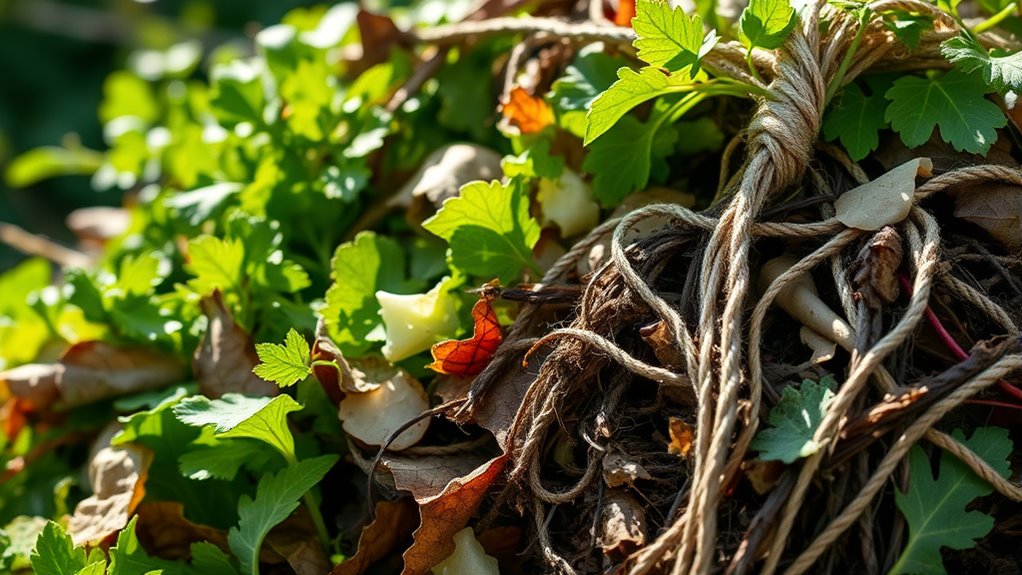

If your compost bin smells bad or slows down, check for proper aeration and moisture. Turn the pile regularly to introduce oxygen and add dry materials like shredded newspaper or leaves if it’s soggy or compacted. Balance green and brown scraps to prevent odors and boost decomposition. Ensuring correct moisture levels—like a wrung-out sponge—also helps keep microbes active. For more tips on fixing issues, keep exploring ways to optimize your compost process.

Get everyday essentials delivered free with Prime
- Fast, free delivery on millions of items
- Prime Video, Amazon Music and more included
- Member-only deals all year
Key Takeaways
- Turn the compost regularly to aerate and reduce foul odors, promoting faster decomposition.
- Balance moisture levels by adding dry materials or watering lightly to prevent sogginess.
- Incorporate browns like shredded paper or straw to absorb excess moisture and nitrogen-rich greens.
- Monitor and adjust temperature; cool down hotspots by turning or adding carbon-rich materials.
- Avoid overfeeding green waste and ensure proper bedding to prevent slow breakdown and unpleasant smells.
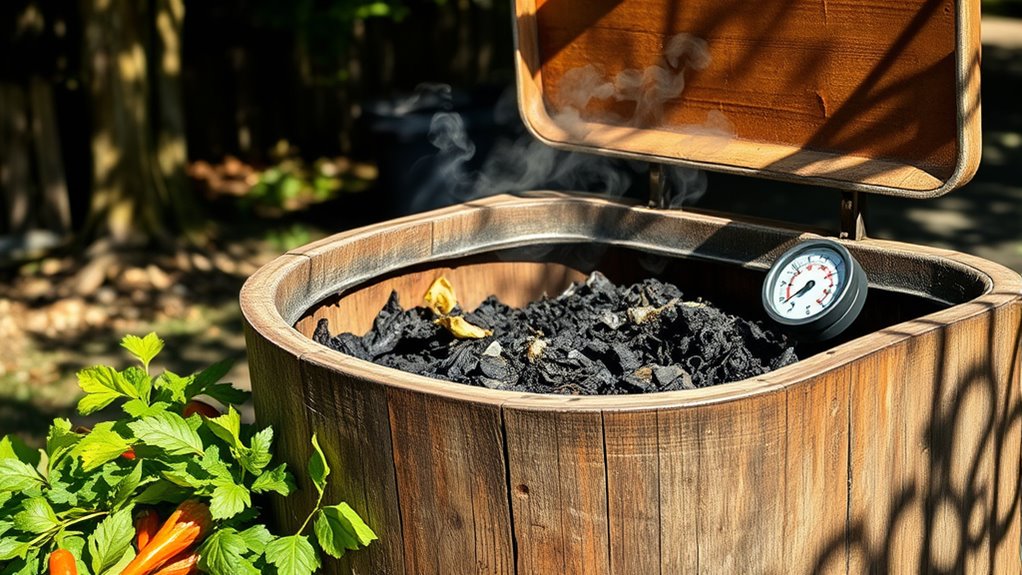
If your compost isn’t breaking down as quickly as you’d like, don’t worry—many composters face similar issues. One common cause is neglecting proper worm bin maintenance. If you’re using worms to compost, make sure they’re healthy and thriving. Check the bedding regularly, keeping it moist but not soggy, and add fresh, shredded newspaper or straw if it’s too compacted. Healthy worms are key to faster decomposition, so avoid overfeeding or adding too many green materials at once. Regularly harvesting finished compost and turning the bin helps aerate the mix, preventing anaerobic conditions that slow down the process. Monitoring compost temperature is another vital step. Compost should ideally stay between 135°F and 160°F during active decomposition. If it’s too cold, microbial activity slows, causing your compost to take longer to break down. Use a compost thermometer to check the temperature at different spots in the bin. If temperatures drop below the ideal range, add more nitrogen-rich greens or moisture to boost microbial activity. Conversely, if it gets too hot, it may kill beneficial microbes and worms, so turn the pile to cool it down and reintroduce some browns like shredded paper or leaves. When your compost is smelly or slow to decompose, it’s often because of imbalance or poor aeration. Turning the pile regularly introduces oxygen and redistributes moisture, which prevents foul odors caused by anaerobic bacteria. Incorporate dry materials or browns to absorb excess moisture if the compost feels wet or slimy. If you notice a strong smell, it’s a sign you need to improve worm bin maintenance—adding shredded paper or dry leaves can help absorb excess moisture and balance the nitrogen-to-carbon ratio. Additionally, aeration techniques can significantly improve compost health and speed. Keep an eye on moisture levels too. Compost should be moist like a wrung-out sponge, not dripping wet or bone dry. Proper moisture encourages microbial activity and worm health, speeding up the decomposition process. If it’s too wet, add dry bedding; if it’s too dry, lightly water the pile. Remember, consistent monitoring of compost temperature and maintaining a balanced environment through worm bin maintenance are your best tools for fixing a smelly or slow compost bin. With patience and attention to these details, you’ll transform your compost into rich, usable soil faster and more efficiently.
As an affiliate, we earn on qualifying purchases.
Frequently Asked Questions
How Often Should I Turn My Compost for Optimal Results?
You should turn your compost every 1-3 days for ideal results. This frequent turning promotes compost aeration, which helps break down materials faster and prevents odors. Adjust your turning frequency based on the compost’s activity level; if it’s hot and moist, more frequent turning is beneficial. Consistent turning ensures proper oxygen flow, accelerates decomposition, and keeps your compost healthy and odor-free.
Can I Compost Meat or Dairy Products Safely?
You can compost meat and dairy products, but it’s not recommended for most home composters due to odor and pest issues. If you do engage in meat composting or dairy disposal, do so cautiously by burying these items deep in the pile and maintaining a high carbon-to-nitrogen ratio. Regular turning helps manage odors, but keep in mind that these materials can slow down the composting process and attract pests.
What’s the Ideal Moisture Level for Composting?
Sure, because who wouldn’t want their compost to double as a soggy sponge? The ideal moisture measurement for composting is about 50-60%. You want enough moisture to keep the compost hydrated without turning it into a swamp. Think of it as a damp sponge—lightly moist, not dripping. Regularly check your compost hydration, and adjust with water or dry materials to maintain that perfect balance for healthy decomposition.
How Do I Prevent Pests in My Compost Bin?
To prevent pests in your compost bin, you should use pest prevention techniques like building compost bin barriers such as mesh or wire around the bin to keep critters out. Always bury food scraps beneath other compost materials, and avoid adding meat, dairy, or oily foods that attract pests. Keep the bin covered with a tight-fitting lid, and maintain proper moisture levels to discourage unwanted visitors.
How Long Does It Typically Take for Compost to Be Ready?
It usually takes about 3 to 6 months for your compost to reach maturity, depending on factors like materials and weather. You can tell when it’s ready by testing it—sift through the compost to check for a dark, crumbly texture and earthy smell. Compost testing helps confirm maturity, showing it’s nutrient-rich and safe to use in your garden. Keep turning and maintaining your bin for faster results.
As an affiliate, we earn on qualifying purchases.
Conclusion
Think of your compost bin as a garden’s heartbeat—when it’s healthy, everything flows smoothly. If it starts to smell or slow down, it’s like a song hitting a sour note. By balancing green and brown materials, turning regularly, and watching moisture levels, you’re tuning it back to harmony. With patience and care, your compost will soon hum with life, transforming waste into rich soil—your garden’s symphony in perfect pitch.
As an affiliate, we earn on qualifying purchases.
As an affiliate, we earn on qualifying purchases.
Halloween Picks
halloween
As an affiliate, we earn on qualifying purchases.