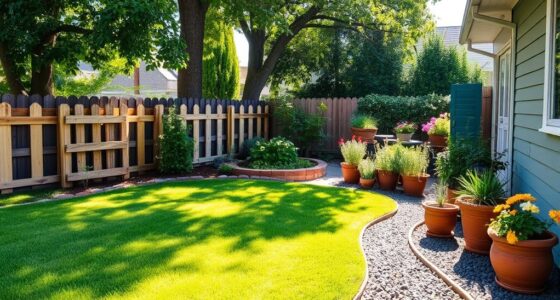

To build a durable garden wall, plan your design carefully by marking the layout and choosing natural stones like limestone or granite for a natural look. Prepare a solid foundation with crushed gravel and stack stones securely, using a level to keep everything straight. Incorporate varied textures and sizes for visual interest, and add plants to soften the edges. For more detailed tips on construction and design, keep exploring to create a beautiful, functional garden wall.
Key Takeaways
- Plan the wall’s size, shape, and layout before starting to ensure proper fit and stability.
- Prepare a solid base with gravel or sand and dig a trench along the wall line for support.
- Stack stones from the bottom up, checking for levelness and secure placement at each layer.
- Incorporate varied textures and sizes of natural stones to create a natural, visually appealing look.
- Add plants or landscaping features to soften the wall and enhance integration with your garden.
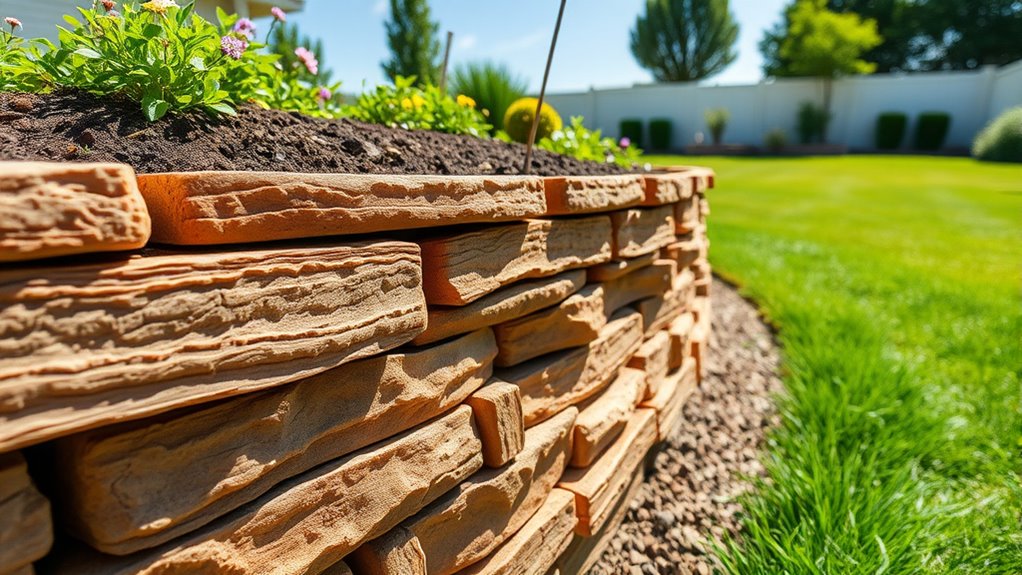
Ever wondered how to transform a sloped yard into a functional and attractive space? Building a DIY retaining wall is a smart way to do that, and choosing the right materials can make all the difference. One popular option is natural stone, which adds a timeless appeal and blends seamlessly into various landscape designs. When planning your project, consider how the natural stone’s textures and colors will complement your existing landscape and create a cohesive look. This approach not only enhances the aesthetic appeal but also provides durability and stability to your garden space.
Transform your sloped yard with natural stone retaining walls for timeless beauty and lasting stability.
Before diving into construction, take time to plan your landscape design carefully. Determine the size and shape of your retaining wall, and mark the area clearly. Think about how the wall will fit into the overall design—whether it’s a simple straight line or a curved feature to soften the *changeover* between different levels of your yard. Proper planning saves you time and helps avoid costly mistakes down the line. It’s also essential to check local building codes and permits, especially if your wall is taller than a certain height, to *guarantee* your project complies with regulations.
When selecting materials, natural stone is a standout choice because it’s both sturdy and visually appealing. You can choose from various types like limestone, granite, or fieldstone, depending on your budget and aesthetic preferences. Natural stone requires a bit more effort to install, but the result is a rugged, authentic look that enhances your landscape design. To *assure* stability, dig a trench along the planned wall line, and lay a solid base of crushed gravel or gravel and sand. This foundation helps with drainage and prevents shifting over time. When stacking the stones, start from the bottom and work your way up, making sure each layer is level and secure. Use a level frequently to keep everything straight and avoid a crooked wall.
Incorporate your natural stone into your landscape design by creating visual interest with varied textures and sizes. Mix smaller stones with larger ones for a natural, organic feel, or opt for uniform blocks for a more structured appearance. You can also add plants in the gaps or along the top of the wall to soften the look and integrate it more seamlessly into your garden. Remember, building a retaining wall isn’t just about stacking stones; it’s about creating a functional feature that enhances your outdoor space. Take your time, work carefully, and enjoy the process of transforming your yard into a beautiful, practical landscape.
Frequently Asked Questions
What Are the Best Materials for DIY Retaining Walls?
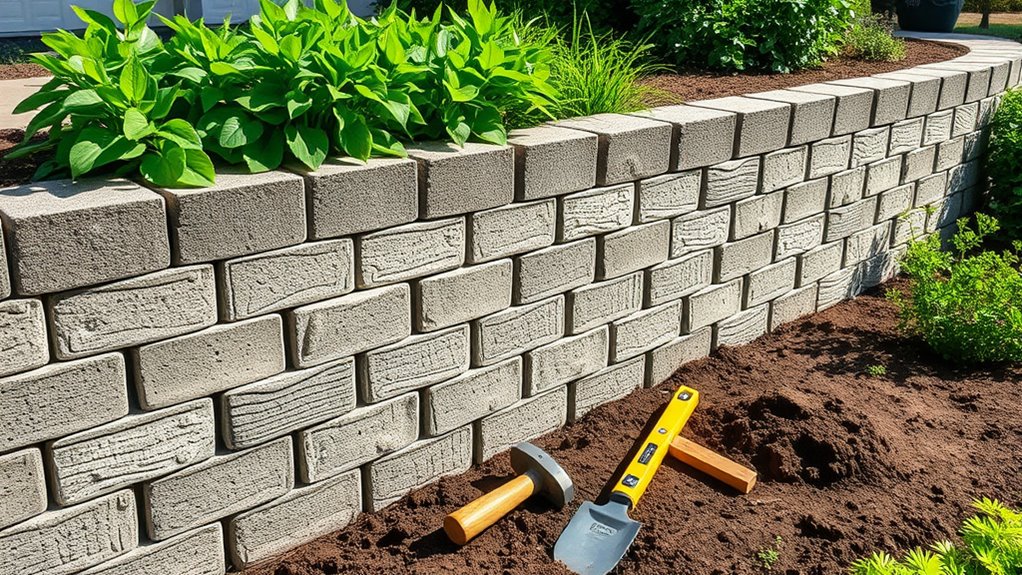
You should choose durable materials like concrete blocks or a variety of natural stone options for your retaining wall. Types of concrete, such as poured or modular blocks, offer strength and ease of installation. Natural stone options like limestone, slate, or granite provide a rustic, attractive look. Both materials are sturdy, but your choice depends on your style preferences and budget. Remember to contemplate drainage and foundation for a long-lasting wall.
How Do I Calculate the Wall’s Stability?
You calculate your wall’s stability by analyzing soil pressure and ensuring proper drainage solutions, like gravel backfill and weep holes, to prevent water buildup. Reinforce your wall with geogrids or ties to resist shifting. Visualize the pressure forces acting on the wall, then check that your design can withstand these forces over time. Regularly inspect and maintain drainage and reinforcement to keep your garden wall stable and secure.
What Permits Are Required for Building a Retaining Wall?
You need to check your local regulations to determine if permits are required for building a retaining wall. The permitting process varies by area, so visit your city or county building department’s website or contact them directly. Generally, if your wall exceeds a certain height or involves specific materials, a permit is necessary. Failing to obtain the proper permits can lead to fines or needing to undo your work later.
How Do I Prevent Water Damage Behind My Wall?
To prevent water damage behind your wall, you should install proper drainage solutions like weep holes or gravel backfill to direct water away. Guarantee your wall is reinforced with sturdy materials and proper footing to handle water pressure. Regularly inspect and maintain drainage systems, and consider adding a waterproof membrane or drainage pipe behind the wall for extra protection. These steps keep water out and preserve your wall’s integrity.
What Tools Are Essential for Construction?
Think of building your wall as forging a sturdy sword—you need the right tools to succeed. Essential tools include a level, shovel, trowel, and a tamper for foundation preparation. Don’t forget safety equipment like gloves and goggles to protect yourself during the process. With these tools in hand, you can guarantee your construction is solid, safe, and precise, setting the stage for a durable garden wall.
Conclusion
Building your own retaining wall is like crafting a sturdy backbone for your garden’s dreams. With patience and careful planning, you shape a lasting foundation that endures as steadfast as a mountain’s embrace. Think of each stone as a brushstroke in your landscape masterpiece, turning dirt and concrete into a work of art. When finished, you’ll stand back and see your effort bloom — a testament to your hands’ quiet power to transform and support nature’s beauty.