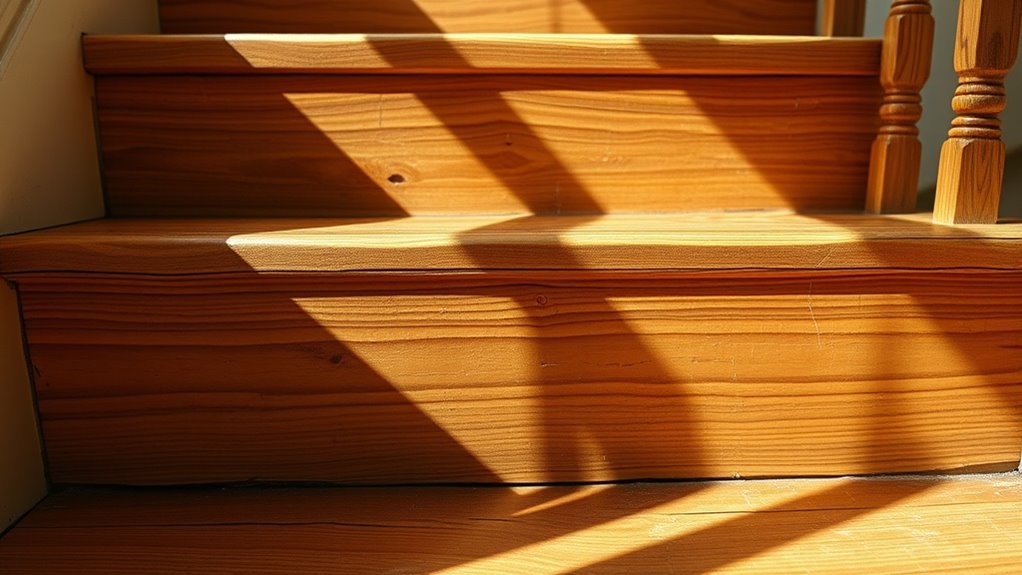

To fix squeaky stairs, start by inspecting the treads, risers, and joints to find loose parts. Tighten loose screws or nails, and consider drilling new pilot holes for added stability. Applying powdered graphite or talcum powder can reduce friction, while shimming loose treads with wood blocks may help. For stubborn squeaks, adding wood glue before re-fastening can guarantee a snug fit. If these steps don’t resolve the issue, learn more about effective solutions to silence your stairs.
Key Takeaways
- Identify the squeak source by carefully walking and listening to pinpoint loose or worn stair components.
- Tighten loose treads, risers, or stair joints with screws or nails to eliminate movement-causing friction.
- Apply powdered graphite or talcum powder at contact points to reduce friction and squeaking noise.
- Use shims, wood blocks, or glue to stabilize loose treads or joints before re-fastening.
- Seek professional help if repairs are complex, persistent, or involve structural components to ensure safety and longevity.
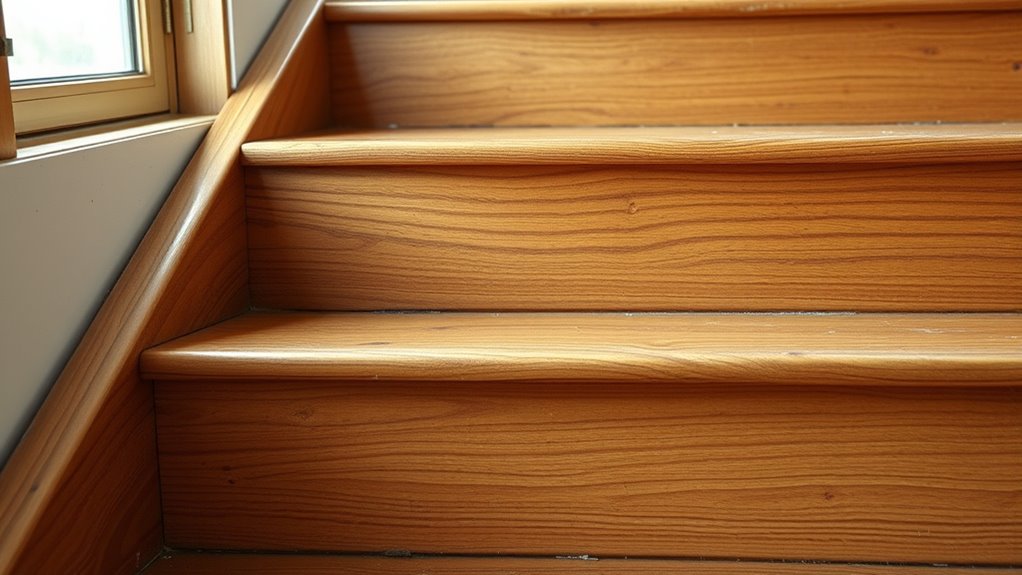
Few sounds are as common and annoying in a home as the creak of stairs and staircases. When you step on a stair and hear that squeak, it’s not just irritating—it can also signal underlying problems like floor squeaks or stair joint issues. These noises usually happen because of movement between the stair components, often caused by loose connections or worn parts. Addressing these problems quickly can restore quiet and safety to your staircase.
Start by pinpointing where the squeaks originate. Walk up and down the stairs carefully, listening closely. Usually, a squeak occurs at specific points where parts rub or shift against each other. Once you identify the noisy spots, you can determine whether the issue stems from floor squeaks or stair joint issues. Floor squeaks happen when the stair treads or risers loosen, allowing movement that creates noise. Stair joint issues involve loose or worn connections between the stringers, treads, or handrails, which can also produce squeaks.
Identify squeak sources by carefully walking the stairs; determine if issues are from loose treads or stair joints.
In addition, understanding the causes of squeaky stairs can help you prevent future problems and maintain a quiet, safe staircase.
To fix floor squeaks, you’ll want to tighten the connections between the treads and stringers. Use a hammer and a drill to insert wood screws through the surface of the treads into the framing underneath. Be cautious not to damage the finish. If the squeak persists, applying a powdered graphite or talcum powder into the joints can help lubricate the contact points, reducing friction and noise. For more stubborn squeaks, inserting shims or wood blocks between the tread and the framing can stabilize the step and eliminate movement.
If the problem is related to stair joint issues, carefully examine the connections between the stair components. Loose nails or screws are often the culprits. Tighten or replace them as needed. For larger gaps, you might need to add wood glue to the joint before reassembling it with new fasteners. In some cases, you may need to replace worn or damaged parts, like cracked stringers or rotted wood. When doing this, ensure the new parts are properly aligned and secured to prevent future squeaks.
In either case, the key is to eliminate the movement that causes the noise. Regular maintenance, like tightening loose fasteners and applying lubricants, can keep your stairs quiet over time. If you’re unsure about handling repairs yourself or if the problem persists despite your efforts, consider consulting a professional. Fixing creaky stairs not only restores peace but also ensures your staircase remains safe and stable for years to come.
Frequently Asked Questions
How Often Should I Inspect My Stairs for Creaking Issues?
You should inspect your stairs regularly—at least once every few months—as part of your maintenance schedule. Frequent inspections help you catch creaking issues early, preventing further damage. Pay attention to areas that get heavy use or show signs of wear. By staying proactive with your inspection frequency, you guarantee your stairs remain safe and quiet, and you can address squeaks before they worsen. Regular checks save you time and money in the long run.
Can I Fix Squeaky Stairs Without Professional Help?
You can definitely fix squeaky stairs yourself, especially if a sudden urge to improve your home strikes. DIY solutions like tightening loose nails or adding shims are effective, but always prioritize safety precautions—wear goggles, use proper tools, and work carefully. While it’s doable without a pro, if the stairs are severely damaged or unsafe, consulting a professional is the safest choice. Trust your skills but know your limits.
What Tools Are Necessary for Repairing Creaking Stairs?
You’ll need a few basic tools for repairing creaking stairs, including a screwdriver, hammer, drill, and wood screws or shims. An overview of these tools helps you understand their purpose—screws for tightening joints and shims for filling gaps. Always follow safety precautions, like wearing goggles and gloves, to protect yourself during the repair process. With the right tools and safety measures, you can fix your stairs effectively.
Are There Specific Types of Wood More Prone to Squeaking?
Did you know that softwoods like pine and cedar are over 50% more likely to squeak? You notice that, right? These woods, with their uneven grain and higher moisture content, tend to expand and contract more with temperature changes, causing squeaks. Hardwoods like oak or maple are less prone because their tighter grain and lower moisture content keep them stable. So, choose your wood wisely to reduce future squeaks.
How Long Does a Typical Stair Repair Take?
A typical stair repair takes about a few hours to a day, depending on the extent of the issue. You’ll want to contemplate how the repair affects your staircase aesthetics, as well as repair costs, which can vary. If you’re comfortable with DIY, you might finish quicker and save money. Otherwise, a professional can ensure the fix is durable, though it may add to the overall repair costs.
Conclusion
Don’t let squeaky stairs disrupt your home’s comfort. With just a few simple tools and some patience, you can silence those creaks and restore peace to your staircase. While it might seem intimidating at first, tackling the problem yourself saves money and gives you a satisfying sense of accomplishment. Remember, even if you’re not a DIY expert, most fixes are straightforward—so go ahead, give your stairs a quiet upgrade today.