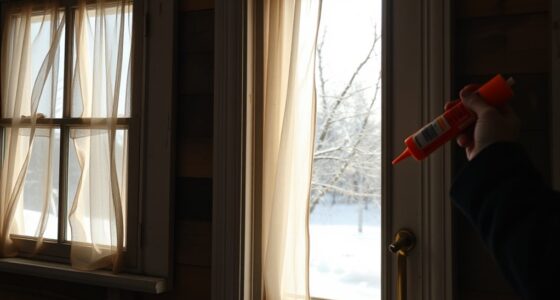
To stop foggy or sweaty windows, control indoor humidity by using a dehumidifier and keeping it between 30-50%. Improve insulation with double-pane windows or thermal curtains to keep surfaces warmer. Ventilate regularly by opening windows or using exhaust fans to reduce moisture build-up. Seal leaks around windows to prevent drafts. If you continue exploring, you’ll discover more effective ways to keep your windows clear and your home comfortable.

Get everyday essentials delivered free with Prime
- Fast, free delivery on millions of items
- Prime Video, Amazon Music and more included
- Member-only deals all year
Key Takeaways
- Keep indoor humidity between 30-50% using dehumidifiers and exhaust fans to reduce moisture buildup.
- Improve window insulation with double-pane glass, thermal curtains, or insulation film to prevent cold surface formation.
- Increase ventilation by opening windows on dry days and using air exchange systems to carry moisture outside.
- Seal windows properly to eliminate drafts and cold spots that attract condensation.
- Maintain warmer interior surfaces to prevent moisture from condensing on cold window panes.

Window condensation can be frustrating, but understanding its causes helps you manage it effectively. When you see foggy or sweaty windows, it’s often a sign that moisture in your home’s air is hitting a cold surface and condensing. The key to reducing this problem lies in controlling humidity levels and improving your home’s insulation. Humidity control is essential because excess moisture in the air increases the likelihood of condensation. Using a dehumidifier can help you keep indoor humidity between 30% and 50%, which is generally ideal for comfort and health. If your home feels damp or you notice persistent condensation, adjusting your humidifier settings or using exhaust fans in bathrooms and kitchens can make a key difference.
In addition to humidity control, insulation upgrades play a vital role in preventing window condensation. When your windows aren’t well-insulated, they tend to be colder, making them more prone to condensation. Upgrading to double-pane or even triple-pane windows provides a better barrier against outside cold and helps keep interior surfaces warmer. You might also consider adding window insulation film or thermal curtains, which act as an extra layer of protection, reducing heat transfer and maintaining warmer window surfaces. Proper insulation not only helps with condensation but also boosts your home’s overall energy efficiency, lowering heating costs and making your space more comfortable. Insulation improvements can significantly reduce cold surface temperatures that cause condensation. Additionally, ensuring your windows are properly sealed prevents drafts that can contribute to cold spots.
It’s also important to pay attention to how you ventilate your home. Proper airflow helps carry moisture away from indoor spaces before it settles on your windows. Opening windows slightly on days when the outdoor air is dry can considerably reduce indoor humidity. Using exhaust fans in the kitchen and bathroom removes moisture generated during cooking or showering, preventing it from lingering in the air. Additionally, ensuring your home has good overall ventilation helps maintain a healthy indoor environment and reduces condensation buildup on your windows. Proper ventilation can be further supported by air exchange systems that promote consistent airflow and moisture removal. Maintaining a balanced indoor environment with appropriate humidity levels also helps keep windows clear. Remember, home insulation improvements and effective heating can further minimize cold surfaces that attract condensation.
As an affiliate, we earn on qualifying purchases.
Frequently Asked Questions
Can Window Condensation Cause Mold Growth?
Yes, window condensation can cause mold growth if left unchecked. When moisture accumulates, it reduces your air quality and creates a damp environment ideal for mold to thrive. Improving your insulation efficiency helps prevent condensation, keeping windows dry and reducing mold risk. Make sure to ventilate regularly and fix any leaks, as these steps help control moisture levels and maintain a healthier indoor environment.
Are There Specific Window Types Prone to Condensation?
Like a magnet craving moisture, single-pane windows are especially prone to condensation. You’ll find double glazed windows better at resisting it, thanks to their insulating layers. Low E coatings further improve this by reflecting heat back into your home, reducing internal humidity. If you want to keep your windows clear and dry, opt for double glazed with low E coatings, which work together to minimize condensation and keep your view crystal clear.
How Does Outdoor Weather Affect Indoor Window Condensation?
Outdoor weather markedly impacts indoor window condensation. When outdoor humidity rises, especially during seasonal changes like winter to spring, moisture in the air increases, making it easier for condensation to form on your windows. Cold outdoor temperatures cause indoor warm, moist air to meet the cold glass surface, creating droplets. To reduce this, you can use dehumidifiers, improve ventilation, or keep indoor temperatures consistent, especially during humid seasons.
Can Window Condensation Damage My Window Frames?
Yes, window condensation can damage your window frames. When moisture persists, it accelerates window frame deterioration and can cause paint damage over time. Think of it as a slow, unseen process that weakens the structural integrity of your windows. To prevent this, keep humidity levels in check and improve ventilation. Addressing condensation early helps preserve your window frames and avoids costly repairs down the line.
Is Professional Help Necessary to Fix Window Condensation Issues?
You don’t always need professional help to fix window condensation. Start by improving ventilation and using a dehumidifier to reduce indoor humidity. These steps often solve the problem quickly. However, if condensation persists despite these efforts or if you notice damage, it’s wise to consult a professional. They can assess the situation thoroughly and recommend specific solutions, ensuring your windows stay clear and damage-free.
double-pane window insulation kits
As an affiliate, we earn on qualifying purchases.
As an affiliate, we earn on qualifying purchases.
Conclusion
By following these simple tips, you can keep your windows clear and dry, like a gust of fresh air on a foggy day. Remember to improve ventilation, use a dehumidifier, and insulate your windows properly. These steps are your shield against stubborn condensation, making your home more comfortable. Think of it as clearing a foggy mirror—you’ll see your reflection clearly again, and your windows will stay crisp and dry, no matter how humid it gets outside.
As an affiliate, we earn on qualifying purchases.
As an affiliate, we earn on qualifying purchases.
Halloween Picks
halloween
As an affiliate, we earn on qualifying purchases.