To fix squeaky doors or floors quickly, clean the hinges or floorboards first to remove dirt and debris. Apply a lubricant like WD-40 or silicone spray to hinges, and use shims or talcum powder for loose floorboards to reduce friction and noise. Regular maintenance, such as re-lubricating or shimming, prevents future squeaks. With these simple steps, you can quieten household noises fast—continue to uncover more tips for a quieter home.
Key Takeaways
- Identify squeak sources by listening carefully to door hinges or floorboards during use.
- Apply lubricant like WD-40 or silicone spray directly to hinges or between floorboards to reduce friction.
- Use shims or small nails to tighten loose floor sections and stop squeaks.
- Regularly inspect and lubricate hinges and floors to prevent recurring noises.
- For stubborn squeaks, lift floorboards or hinge areas for targeted fixing and long-term quietness.

Household noises can be disruptive, but many common issues have simple fixes. If you’re hearing a squeak whenever you open or close a door, the problem often comes down to door hinge lubrication. Over time, hinges can dry out and accumulate dirt and debris, causing that irritating squeal. The good news is that fixing this is straightforward. First, identify which hinges are causing the noise through floor squeak identification—listen carefully as you open and close doors to pinpoint the exact spots. Once you’ve located the squeaky hinges, you can take quick action.
Squeaky doors? Lubricate hinges and identify the cause for a quieter home.
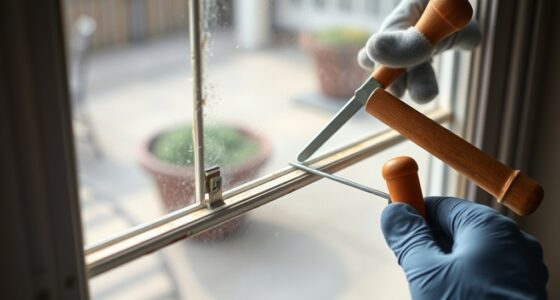
Start by cleaning the hinges to remove any dust, dirt, or old lubricant that might be trapping moisture or grime. Use a cloth or a brush to wipe away surface debris. After cleaning, apply a lubricant designed for door hinges—something like WD-40 or a silicone spray works well. Spray a small amount directly onto the hinge pin and the moving parts. Open and close the door several times to work the lubricant into the hinge. This ensures smooth movement and eliminates squeaks. If the squealing persists, repeat the process or try a different lubricant. Remember, regular maintenance prevents future squeaks, so consider applying lubricant periodically, especially if you notice the noise returning.
Floor squeak identification is just as important when tackling creaky floors. These sounds often come from the floorboards rubbing against each other or shifting with foot traffic. To identify the source, walk across the area and listen carefully—note where the squeaks happen most often. Once you’ve pinpointed the problem spots, you can choose the right fix. Common solutions include inserting shims or small nails between the floorboards and the joists beneath. For minor squeaks, applying a powdered graphite or talcum powder into the gaps can also reduce friction and silence the noise. Simply sprinkle the powder into the crevices and walk over the area to help it settle. For more stubborn squeaks, lifting the floorboard slightly and inserting a shim or securing it with nails might be necessary. Additionally, understanding the role of contrast ratio and other projector features can help you create a more comfortable home environment that minimizes distractions, including noise.
Addressing household noises like squeaky doors or floors doesn’t have to be complicated. With a little effort, you can identify the cause—be it door hinge dryness or loose floorboards—and apply simple fixes like lubrication or shimming. These quick solutions not only silence the noise but also help maintain your home’s comfort and quiet. Regular inspections and timely maintenance make a big difference, so don’t ignore those squeaks. Instead, consider preventive maintenance and take action with a few easy steps, and enjoy a quieter, more peaceful home environment. Being aware of common household issues can help you troubleshoot effectively and avoid more extensive repairs down the line. Additionally, understanding how proper piercing care and hygiene can prevent infections is important for maintaining overall household health and safety. Proper home maintenance can extend the life of your fixtures and prevent issues like squeaks from recurring prematurely.
Frequently Asked Questions
Can I Fix Squeaky Doors Without Professional Help?
Yes, you can fix squeaky doors without professional help by trying simple DIY maintenance. First, identify the hinge with a squeak. Then, apply a lubricant like WD-40 or silicone spray directly to the hinges. Open and close the door several times to distribute the lubricant. If the noise persists, tightening the hinge screws might help. This approach saves you from unnecessary professional repairs and keeps your door functioning smoothly.
What Tools Are Needed for Quick Household Noise Repairs?
For quick household noise repairs, you need basic DIY maintenance tools. A screwdriver is essential for tightening hinges or loose screws, while a wrench helps with any bolts. Lubricants like WD-40 are perfect for squeaky hinges or door hinges. A putty knife can help remove debris. When selecting tools, choose durable, easy-to-handle options to make your DIY maintenance efficient and effective, ensuring quieter, smoother household operations.
How Often Should I Lubricate Hinges to Prevent Squeaks?
You should lubricate hinges during your regular hinge maintenance routine, ideally every six months. Establishing a lubrication schedule helps prevent squeaks before they start. Use a silicone spray or light oil, applying it directly to the hinge pin and moving parts. This proactive approach keeps hinges smooth and quiet, saving you time and effort in the long run. Consistent lubrication is key to maintaining a squeak-free home.
Are There Eco-Friendly Solutions for Fixing Squeaky Floors?
Think of fixing squeaky floors as smoothing out a rough patch on a favorite quilt. You can opt for eco-friendly solutions like using sustainable materials or biodegradable lubricants that nurture the environment while silencing those creaks. These options are safe for your home and planet, offering a gentle fix that keeps your floors quiet and the Earth happy. Embrace green choices for a quieter, more sustainable living space.
What Signs Indicate a More Serious Household Noise Problem?
If you notice persistent, loud, or worsening noises, it’s a sign you should investigate further. You might be detecting structural damage or diagnosing electrical issues, which could pose safety risks. Look for unusual cracks, sagging floors, or flickering lights. If these signs appear, it’s wise to consult a professional to assess the problem thoroughly, ensuring your home’s safety and preventing more severe damage down the line.
Conclusion
No matter the cause, tackling household noises is like tuning a delicate instrument—you just need the right touch. With these quick fixes, you’ll silence squeaks and creaks, restoring harmony to your home’s symphony. Think of each fix as a small adjustment that keeps your space peaceful, like fine-tuning a guitar string. Soon enough, your home will resonate with quiet comfort, proving that even the tiniest tweaks can bring back the melody of serenity.