To shore up a bouncy, sagging floor, start by identifying the supported areas and inspect the joists for rot or damage. You can add support beams or sister new joists alongside existing ones to strengthen them. Installing adjustable jack posts directly under the sagging spots can lift and stabilize the floor. Reinforcing the framework and possibly addressing soil movement beneath will improve stability. Keep exploring to discover more effective techniques to fix and prevent future issues.
Key Takeaways
- Identify the cause of the sagging to determine the appropriate reinforcement method.
- Use jack posts to lift and level the floor temporarily or permanently.
- Reinforce or replace weakened joists with sistering or additional support beams.
- Stabilize shifting soil or foundation movement to prevent future sagging.
- Incorporate bridging and regular maintenance to enhance overall floor stability.
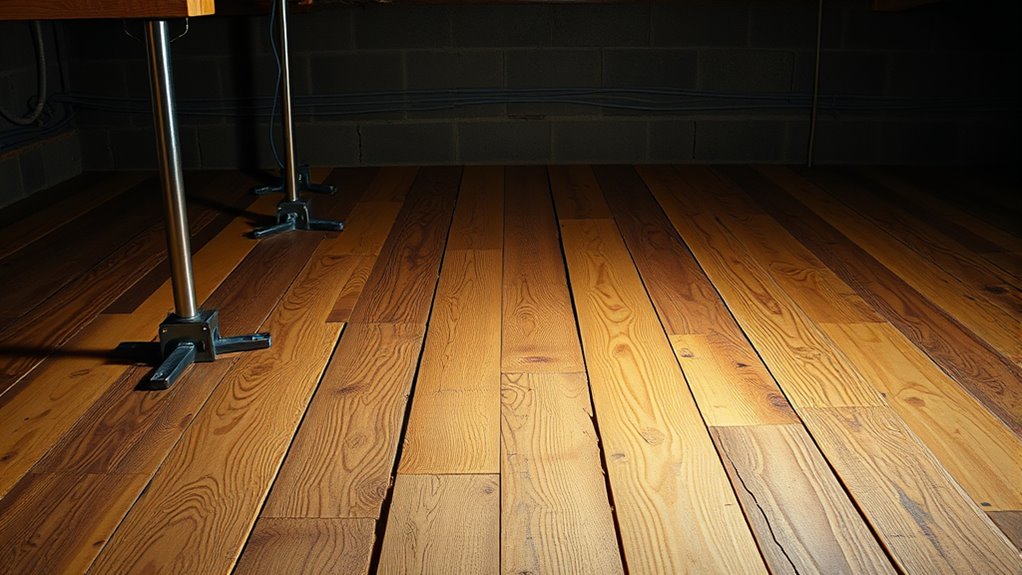
Sagging floors can jeopardize the safety and stability of your home, but addressing the issue promptly can restore both comfort and security. When you notice uneven or bouncy floors, it’s essential to act quickly to prevent further damage. One of the most effective ways to stabilize a sagging floor is through joist reinforcement. The joists are the main horizontal support beams that carry the weight of the floor above. Over time, these beams can weaken due to rot, termite damage, or shifting soil beneath your foundation. Reinforcing them involves adding additional support or sistering new joists alongside existing ones to strengthen the entire structure. This process provides immediate stability and prolongs the lifespan of your flooring.
In many cases, installing a jack post is a practical and straightforward solution. Jack posts, also known as adjustable steel columns, are designed to provide temporary or permanent support beneath sagging floors. During jack post installation, you position the post directly under the compromised joist or beam. You then adjust the height of the post to lift and level the sagging section of your floor. This method is especially useful in areas where the floor has dipped considerably, creating a noticeable bounce or unevenness. As you tighten the jack post, you’re effectively redistributing the load and transferring it to a more stable part of your foundation or basement. This process not only stops the sagging but also helps prevent further structural issues.
Using jack posts is often more affordable and less invasive than other repair methods. They are easy to install and can be adjusted over time as needed, making them ideal for DIY projects or temporary fixes while you plan more extensive repairs. When installing jack posts, ensure they are placed directly beneath the affected joists for maximum support. You may also need to reinforce the joists themselves by sistering new lumber or adding bridging to prevent lateral movement. Reinforcing the joists properly is crucial for structural integrity, and incorporating additional support techniques can further enhance stability. Additionally, considering soil stabilization techniques can help prevent future foundation shifts that cause sagging. Incorporating smart home technology such as sensors can also help monitor your foundation’s movement over time, providing early warnings of potential issues. Regularly inspecting your foundation and maintenance practices can help catch issues before they become severe. Combining joist reinforcement with jack post installation gives your floor a robust foundation, restoring its levelness and reducing bounce.
Frequently Asked Questions
How Long Does It Take to Repair a Sagging Floor?
It typically takes a few days to repair a sagging floor, depending on the extent of damage. First, you should perform a crawl space inspection to identify weak or damaged floor joists. Then, floor joist reinforcement is necessary, which involves installing support beams or sistering joists. The process can be quicker if you have experience, but professional help guarantees a proper and safe fix within this timeframe.
Can I Fix a Sagging Floor Myself?
You can attempt DIY fixes for a sagging floor if you have some carpentry skills and the right tools, but it’s wise to first get a professional assessment. Professionals can identify underlying issues and recommend the best solutions, ensuring safety and durability. While simple fixes like adding joist hangers or sistering joists might be manageable, consulting an expert helps prevent future problems and guarantees a more stable, long-lasting repair.
What Are the Costs Associated With Floor Shoring?
Shoring up a bouncy floor can cost as little as a few hundred dollars or as much as a few thousand, depending on the severity. Your cost factors include the materials used and the complexity of the job. Contractor fees vary based on location and expertise, so expect to pay for skilled labor. Always get multiple estimates to find the best deal and guarantee your floor gets the sturdy fix it needs.
Will Repairs Disrupt My Home’s Foundation?
Repair work can temporarily disrupt your home’s foundation stability and structural integrity, but skilled contractors plan carefully to safeguard impact. They use precise techniques to ensure your foundation remains stable during repairs. While some noise and access restrictions might occur, the goal is to restore your floor’s bounce and strengthen your foundation without compromising safety. Trust experienced professionals to manage the process efficiently, protecting your home’s long-term structural integrity.
How Can I Tell if My Floor Is Dangerously Weak?
You can tell if your floor is dangerously weak by looking for sagging floor signs like uneven surfaces, creaking sounds, or noticeable dips. Perform a floor joist inspection by checking for loose or damaged joists beneath the floor. If you notice these signs or feel excessive bounce, it’s time to consult a professional. Addressing issues early can prevent further damage and guarantee your home’s safety.
Conclusion
Dealing with a sagging or bouncy floor can seem overwhelming, but with the right solutions, you can restore stability and peace of mind. From reinforcing joists to adding support beams, you have options to strengthen your floor effectively. Don’t let a weak floor compromise your comfort—aren’t your home and safety worth the effort? Take action today and enjoy a solid, reliable floor beneath your feet once again.