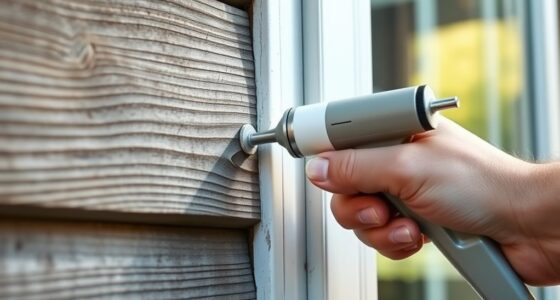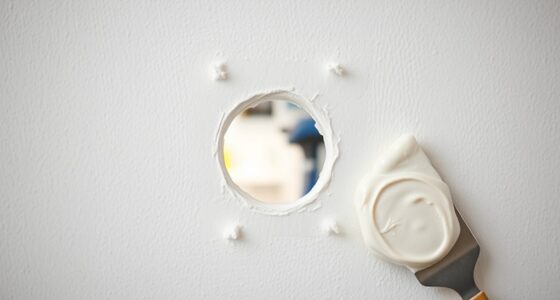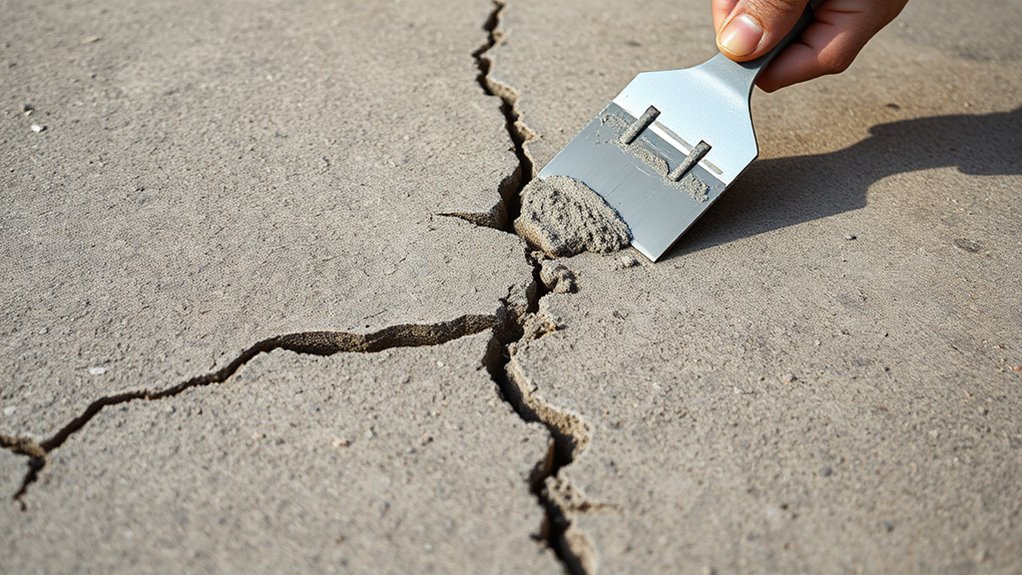

To patch and repair concrete cracks in your sidewalk or steps, start by cleaning the area thoroughly to remove debris and loose material. For small, superficial cracks, use a liquid crack filler or concrete patching compound, applying it with a putty knife and smoothing it out flush with the surface. For wider or deeper cracks, consider professional repair methods like epoxy injections. Addressing cracks early prevents further damage—continue exploring how to guarantee long-lasting repairs and maintain your concrete’s durability.
Key Takeaways
- Clean and remove debris from cracks using a wire brush and water before repairing.
- For small, hairline cracks, apply liquid crack filler to seal and prevent further damage.
- Use concrete patching compound and a putty knife for filling and smoothing larger or wider cracks.
- Avoid DIY fixes for wide or deep cracks; consider professional assessment for structural issues.
- Regularly inspect your sidewalk or steps to catch and repair cracks early, maintaining safety and durability.
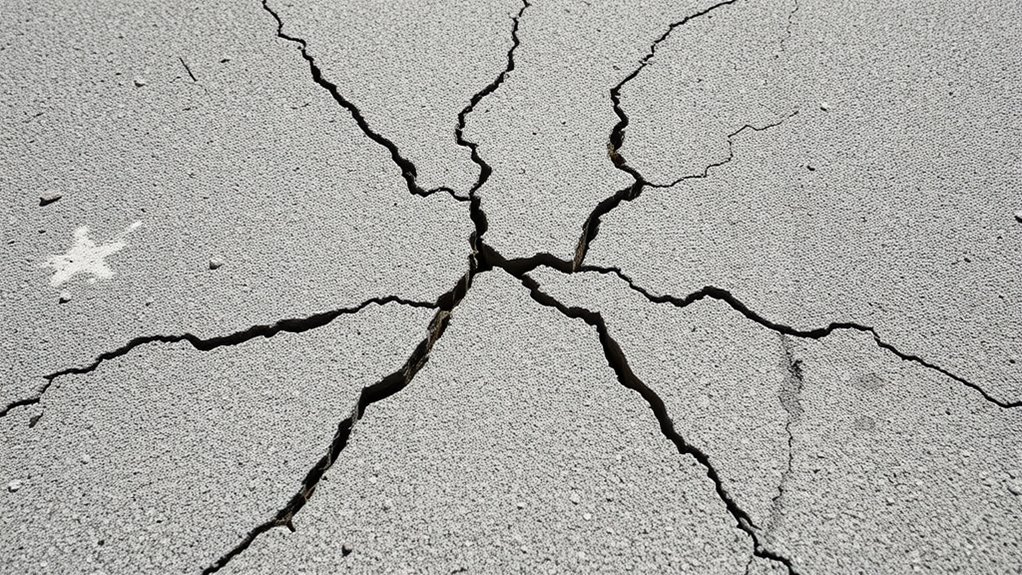
Have you ever noticed cracks forming in your concrete surfaces? It’s a common problem that can make your sidewalk or steps look worn and unsafe. The good news is, you don’t always have to call in a professional for repairs. Many minor cracks can be fixed with simple DIY methods that save you time and money. However, for larger or more severe damage, professional repairs might be necessary to ensure your concrete stays durable and safe over the long term.
When tackling small cracks yourself, start by cleaning the area thoroughly. Remove any loose debris, dirt, or crumbling concrete with a wire brush or a broom. Then, rinse the crack with water and let it dry completely. Using a concrete patching compound, which you can find at any hardware store, you can fill in these cracks. Mix the compound according to the instructions, and use a putty knife or trowel to press it into the crack, smoothing the surface flush with the surrounding concrete. For hairline cracks, a liquid crack filler can work well, as it penetrates deeply and prevents further expansion. These DIY methods are effective for minor cracks but aren’t meant for structural issues or wide gaps.
Clean, dry, and fill small cracks with concrete patching compound for quick DIY repairs.
If the cracks are wider or more numerous, it’s wise to contemplate professional repairs. A professional contractor can assess whether the cracks are signs of deeper structural problems or just surface damage. They may use specialized tools and techniques, like epoxy injections or polyurethane foam, to stabilize the concrete. These methods restore the integrity of your sidewalk or steps, preventing future cracking and ensuring safety. Hiring a professional also means the repair will be more durable, especially if the cracks are caused by ground shifting or other underlying issues. While professional repairs cost more upfront, they often last longer and provide peace of mind that your concrete won’t crumble further.
In the end, whether you choose DIY methods or professional repairs depends on the severity of the cracks. Small, superficial cracks are manageable with simple patching techniques that you can do yourself, but don’t overlook larger or more complex issues. Regular inspections help catch cracks early before they worsen. If you notice cracks expanding or if your concrete shows signs of shifting or sinking, it’s best to consult a professional. Proper repair now can save you money and hassle in the future, keeping your sidewalk and steps safe, sturdy, and looking good. Additionally, understanding the causes of concrete cracking can help you prevent future issues and maintain the longevity of your surfaces.

DAP Concrete Crack Filler, Gray, 1.62 lb (7079860500)
Concrete crack filler repairs horizontal cracks in concrete, stone and other masonry materials
As an affiliate, we earn on qualifying purchases.
As an affiliate, we earn on qualifying purchases.
Frequently Asked Questions
How Long Should I Wait Before Walking on Repaired Concrete?
You should wait at least 24 to 48 hours before walking on your repaired concrete. Follow DIY repair tips carefully and guarantee the patch is fully set before use. During this time, avoid excessive weight or pressure. Safety precautions include wearing gloves and protective gear, and making sure the repair area is dry and cured. Rushing too soon can compromise the repair’s durability, so patience is key for a lasting fix.
Can I Mix My Own Concrete for Repairs?
You can definitely DIY mix your own concrete for repairs, but it’s essential to follow proper concrete formulas. Mixing your own concrete can be satisfying, like finding that perfect puzzle piece. Use a reliable recipe, typically combining cement, sand, gravel, and water, to guarantee durability. Just remember, accurate measurements matter. When you create your own mix, you control quality and save money, making your repair project both rewarding and cost-effective.
What Tools Are Best for Small Crack Repairs?
For small crack repairs, you’ll want to use hand tools like a chisel and wire brush to clean out the crack. A putty knife or trowel helps apply patching compounds smoothly. Power tools, such as a small rotary tool, can help prep the area more efficiently. Make sure to choose high-quality patching compounds designed for concrete, and follow the manufacturer’s instructions for the best results.
How Do Weather Conditions Affect Concrete Patching?
A stitch in time saves nine, and that’s true for patching concrete too. Weather impact and temperature effects can make or break your repair. Cold weather causes concrete to freeze and crack, while high temperatures can dry it too quickly, leading to weak spots. Ideally, patch during moderate, dry conditions, avoiding rain or extreme heat to guarantee your repair bonds properly and lasts longer.
Is Professional Repair Necessary for Large Cracks?
For large cracks, professional repair is recommended because DIY techniques might not provide a long-lasting fix. Professionals have the right tools and expertise to guarantee the crack is properly sealed and reinforced, preventing further damage. While it might cost more upfront, considering cost considerations, a professional repair saves you time, effort, and future expenses. Trusting experts guarantees a durable repair and maintains your sidewalk or steps’ safety and appearance.

Sika – Sikacryl – Gray – Ready-Mix Concrete Patch – for Repairing spalls and Cracks in Concrete and Masonry – Textured – 1 qt (Pack of 1)
FOR EASY REPAIRS — It's the ideal concrete patch repair mix, neatly fixing cracks and spalls so your…
As an affiliate, we earn on qualifying purchases.
As an affiliate, we earn on qualifying purchases.
Conclusion
Imagine each crack as a tiny wound in your sidewalk or steps, telling a story of time and weather. With the right patching techniques, you can heal these imperfections, restoring strength and beauty. Think of it like mending a broken bone—carefully and precisely, you bring new life to your concrete. Don’t let small cracks grow into big problems; take action now, and watch your outdoor space regain its sturdy, inviting charm.

RadonSeal Complete DIY Foundation Crack Repair Kit, 10 Ft – Low-Viscosity Urethane Injection Sealant for Crawl Spaces & Concrete Basement Walls, Stops Water Leaks & Radon Gas, Drill-Free Filler
Drill-Free Injection: Repair basement wall cracks effortlessly without drilling, ensuring minimal disruption to your home's structure.
As an affiliate, we earn on qualifying purchases.
As an affiliate, we earn on qualifying purchases.

Rust-Oleum 301012 Concrete Patch & Repair, 24 oz, Gray
Ideal for indoor/outdoor use to repair concrete cracks and holes in concrete
As an affiliate, we earn on qualifying purchases.
As an affiliate, we earn on qualifying purchases.