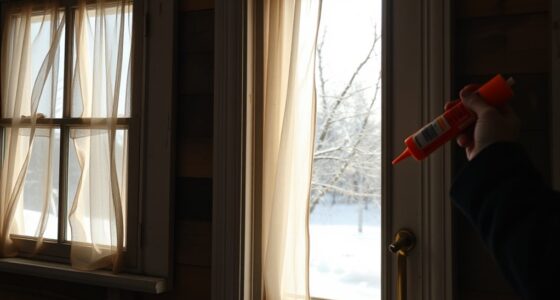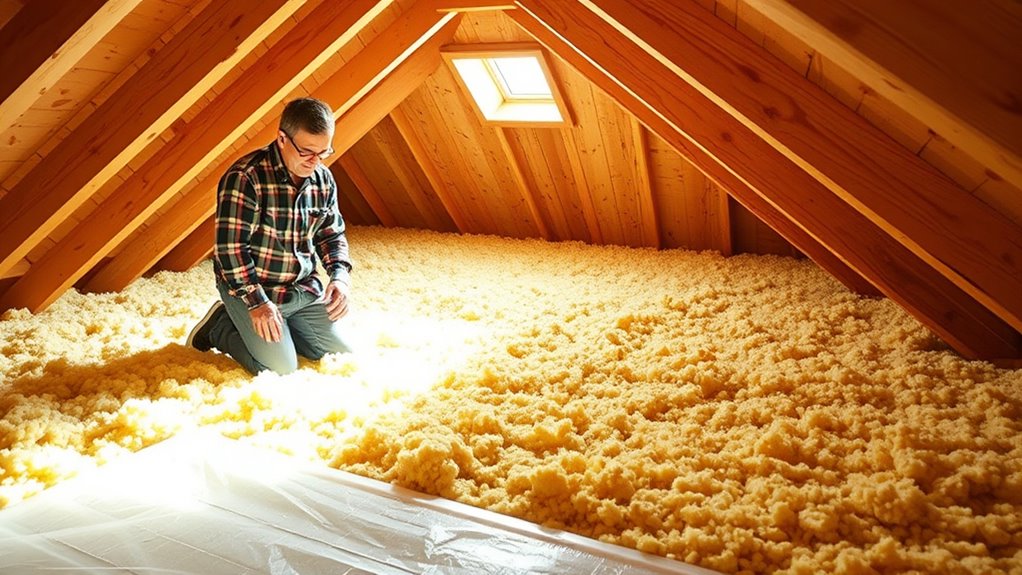

To insulate your attic DIY-style, start by assessing your current insulation and ensuring proper ventilation with vents or fans. Choose the right insulation material, like fiberglass batts or cellulose, based on your climate and budget. Install insulation evenly over the attic floor, avoiding compression and gaps for ideal effectiveness. Don’t forget to confirm your attic’s ventilation system is functional to prevent moisture issues. Keep exploring to learn how these steps can considerably cut your energy bills.

Get everyday essentials delivered free — and shop member deals
- Fast, free delivery on millions of items
- Access to Prime Big Deal Days deals on October 6–7
- Prime Video, Amazon Music and more included
Key Takeaways
- Assess attic ventilation and ensure proper airflow before installing insulation.
- Choose suitable insulation materials like fiberglass batts or cellulose based on budget and needs.
- Seal air leaks and gaps to maximize insulation efficiency and prevent heat escape.
- Install insulation evenly across the attic floor, avoiding compression for optimal R-value.
- Regularly inspect and maintain vents and insulation to sustain energy savings and home comfort.
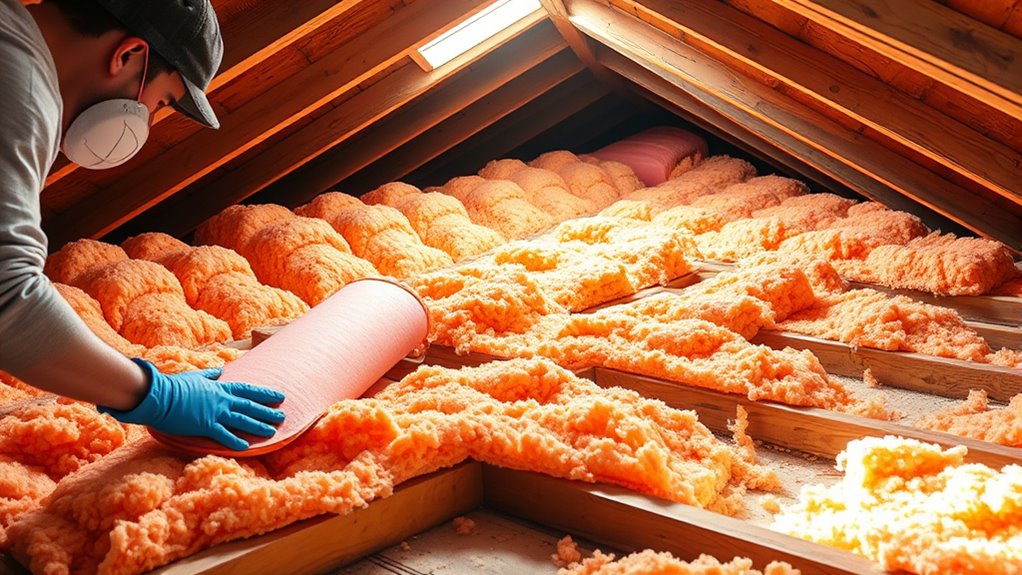
Thinking about saving on energy bills and making your home more comfortable? Insulating your attic is one of the most effective ways to achieve both goals. Proper insulation keeps warm air inside during winter and prevents heat from seeping in during summer, which reduces the workload on your heating and cooling systems. To get started, you’ll need to understand the best insulation materials suited for your attic. There are several options, including fiberglass batts, spray foam, cellulose, and mineral wool. Each has its pros and cons, but fiberglass batts are popular for DIY projects because they’re affordable and easy to install. Spray foam offers superior insulation but can be tricky to apply correctly without professional help, and cellulose is eco-friendly and cost-effective but requires proper sealing to prevent air leaks. When choosing insulation materials, consider the R-value, which measures the insulation’s ability to resist heat flow. Higher R-values mean better insulation, so select materials that match your climate and insulation needs.
Once you’ve selected your insulation materials, focus on creating a well-ventilated attic. Attic ventilation is vital because it helps regulate temperature and moisture levels, preventing issues like mold and ice dam formation. Good attic ventilation involves a combination of soffit vents, ridge vents, and possibly gable vents. These work together to allow cool air to enter from the eaves or soffits and warm air to escape through the ridge or gable vents. This airflow keeps the attic dry and reduces the risk of condensation that can compromise your insulation and damage the roof structure. Before installing insulation, ensure your attic has adequate ventilation. If it lacks vents, adding them is a worthwhile investment that enhances the overall effectiveness of your insulation. Attic ventilation is especially important in maintaining a balanced system. Proper insulation and ventilation create a synergistic effect that maximizes energy efficiency and home comfort. Additionally, understanding the Gold IRA markets can be helpful if you are considering diversifying your investments to include precious metals as part of your financial planning. Regularly inspecting your ventilation system can help identify issues early and maintain optimal airflow.
fiberglass attic insulation batts
As an affiliate, we earn on qualifying purchases.
As an affiliate, we earn on qualifying purchases.
Frequently Asked Questions
Can I Install Insulation Myself Without Professional Help?
Yes, you can install insulation yourself, but be aware of DIY pitfalls and insulation myths. Many underestimate the complexity, risking gaps or poor coverage that reduce efficiency. Make sure to wear proper gear, follow safety guidelines, and do thorough research. While it saves money, if you’re unsure about the process or dealing with tricky areas, consulting a professional guarantees proper insulation and avoids costly mistakes.
What Is the Best Type of Insulation for Attics?
You might think fiberglass batts are the best, but don’t be fooled—they excel in thermal resistance and material durability. Fiberglass offers excellent insulation value, resisting heat flow effectively, and lasts for decades if installed properly. It’s affordable and straightforward for DIY projects. So, if you want reliable, long-lasting attic insulation, fiberglass is your best bet—just handle it carefully to avoid irritation and maximize its benefits.
How Do I Prevent Mold Growth in Attic Insulation?
To prevent mold growth in your attic insulation, guarantee proper attic ventilation to reduce moisture buildup. Regularly check for leaks or water intrusion and fix them promptly. Use vapor barriers if needed, especially in humid climates, and keep humidity levels low inside your home. By maintaining good airflow and controlling moisture, you create an environment that discourages mold growth and protects your insulation’s effectiveness.
What Safety Precautions Should I Take During Installation?
When installing attic insulation, prioritize fire safety by keeping heat sources away and avoiding open flames. Always wear personal protective equipment like gloves, goggles, and a dust mask to prevent irritations and injury. Guarantee proper ventilation and work carefully in confined spaces. Follow manufacturer instructions and stay alert to potential hazards. Taking these precautions helps you stay safe while effectively insulating your attic and saving on energy bills.
How Often Should Attic Insulation Be Replaced or Upgraded?
You should replace or upgrade your attic insulation every 15 to 20 years, depending on its insulation lifespan. Regularly check for signs of wear, moisture, or damage, which can reduce effectiveness and indicate it’s time for a replacement. Upgrading your insulation improves energy efficiency and comfort. Keep an eye on your insulation’s condition, and don’t wait too long to update it for peak savings and performance.
attic ventilation vents and fans
As an affiliate, we earn on qualifying purchases.
As an affiliate, we earn on qualifying purchases.
Conclusion
Now that you’ve learned how to insulate your attic, imagine cozy winter nights where warmth softly wraps around you like a favorite blanket. With each roll of insulation you lay, you’re carving out a haven from the cold and slashing your bills. Your home becomes a fortress of comfort, quiet and secure. So grab your tools, take pride in your work, and turn your attic into a warm, inviting space—your savings and comfort await.
As an affiliate, we earn on qualifying purchases.
attic insulation installation kit
As an affiliate, we earn on qualifying purchases.
As an affiliate, we earn on qualifying purchases.
Fall Picks
fall essentials
As an affiliate, we earn on qualifying purchases.