If your plug won’t stay in the outlet, the most common cause is a worn or loose receptacle. Turn off the power at the circuit breaker before inspecting it. Tighten the outlet’s screws, replace it if the internal contacts are worn, or upgrade to a tamper-resistant or grounded outlet for better security. Regular maintenance can prevent future issues. Stick around, and you’ll discover simple steps to fix loose outlets quickly and safely.
Key Takeaways
- Turn off power and remove the faceplate to inspect the receptacle for damage or looseness.
- Replace worn or damaged outlets with new, properly rated, and grounded receptacles.
- Ensure wires are securely connected to the correct terminals to prevent loose fit.
- Consider upgrading to tamper-resistant or grounded outlets for better plug stability.
- Regularly inspect outlets and address loose connections promptly to maintain safety and functionality.
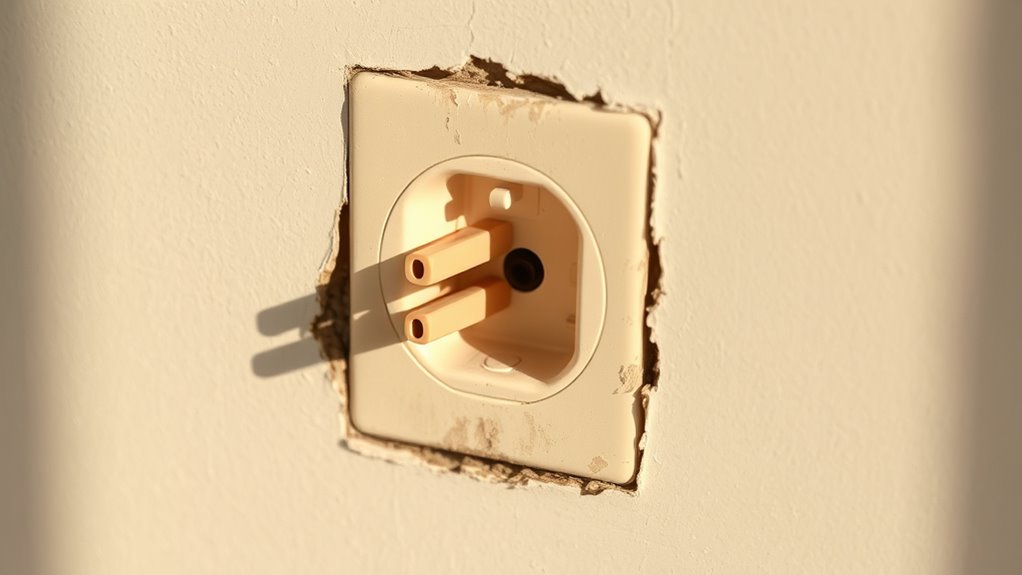
If your plug keeps slipping out of the outlet, it can be frustrating and potentially unsafe. A loose connection not only makes it difficult to power your devices but also increases the risk of electrical sparks or shorts. The root of this problem often lies in wiring issues or a worn-out receptacle, so understanding how to address these can save you time and money.
First, you should turn off the power to the affected outlet at the circuit breaker. Safety is paramount, so never work on live electrical components. Once the power is off, remove the faceplate and carefully pull out the receptacle. Inspect it closely; if it looks damaged, loose, or worn, it’s time for a receptacle replacement. Over time, frequent use can wear out the internal contacts, causing a loose fit for plugs. Replacing a receptacle is straightforward: disconnect the wires, note their connections, and install a new one, ensuring the wires are securely attached to the correct terminals. Ensuring the proper installation is crucial for a snug fit and safe operation.
Turn off power, remove the faceplate, inspect and replace worn or damaged receptacles for a secure fit.
Sometimes, the issue isn’t solely with the receptacle but with wiring problems behind the outlet. Loose or frayed wiring can cause inconsistent contact, leading to the plug slipping out. Check the wiring connections to ensure they’re tight and properly secured. If you notice any damaged wires or signs of burning or corrosion, you might need to repair or replace the wiring. Persistent wiring issues could also indicate an underlying electrical problem, so consider consulting a professional if you’re unsure. Electrical troubleshooting can help identify hidden issues. Additionally, using a properly rated outlet can improve the fit and reduce the likelihood of plugs slipping out over time. A secure connection between the plug and receptacle is essential for safety and functionality.
In some cases, the receptacle might be the correct type but simply worn down from extensive use. Receptacle replacement is usually the best fix here. When replacing, opt for a grounded, tamper-resistant outlet if you’re upgrading, and make sure to match the amperage and voltage ratings. Proper installation ensures a snug fit for plugs and reduces the chance of slipping out in the future. Checking the field‑of‑view of your outlet setup can help ensure you’re choosing the right type of receptacle for your specific needs. Regular inspection and maintenance can also prevent this issue from recurring.
If you’re comfortable working with electrical components, replacing a receptacle can be a DIY project. Just remember to double-check all connections and test the outlet with a voltage tester before restoring power. If you’re unsure about wiring or suspect more complex electrical issues, it’s best to call in a licensed electrician. They can accurately diagnose wiring problems, replace faulty receptacles, and ensure your electrical system is safe and up to code.
Addressing a loose outlet promptly keeps your devices working properly and minimizes safety hazards. Whether it involves simple receptacle replacement or fixing wiring issues, understanding what to look for and how to handle it makes a big difference. Don’t ignore this problem—taking action now can save you from bigger electrical troubles down the road.
Frequently Asked Questions
Can a Loose Outlet Cause Electrical Fires?
Yes, a loose outlet can cause electrical fires. It jeopardizes electrical safety by increasing the risk of sparks and overheating, which can ignite nearby materials. Proper outlet maintenance is essential to prevent this danger. If you notice a loose plug or outlet, avoid using it and call a professional to inspect and fix it. Regularly checking your outlets helps ensure safety and prevents potential fire hazards in your home.
How Often Should I Replace Worn-Out Outlets?
You should replace worn-out outlets every 10 to 15 years to avoid shocking surprises. Think of outlet lifespan like a ticking time bomb—ignoring it could lead to sparks or worse. Regular replacement frequency guarantees safety and prevents electrical mishaps. If your outlets look discolored, loose, or feel warm, don’t delay; upgrade promptly. It’s better to be safe than sorry, especially when it comes to your home’s electrical health.
Is It Safe to Fix Outlet Issues Myself?
You can fix outlet issues yourself, but always prioritize DIY safety. Make sure to turn off the power at the circuit breaker before starting any work. Follow electrical code guidelines closely to avoid hazards. If you’re unsure or uncomfortable, it’s best to hire a licensed electrician. Proper safety precautions protect you from shocks or fires, ensuring your repairs are both safe and compliant with local regulations.
What Tools Are Needed to Tighten an Outlet?
Did you know that over 60% of electrical issues are caused by loose outlets? To tighten an outlet, you’ll need a screwdriver set to remove the faceplate and tighten the terminal screws. It’s also wise to have electrical tape on hand as a safety measure. With these tools, you can securely fix the outlet yourself, saving time and money while ensuring your home’s electrical safety.
When Should I Call a Professional Electrician?
You should call a professional electrician if tightening the outlet doesn’t fix the problem, or if you notice any signs of electrical damage, sparks, or burning smells. While cost-effective solutions like tightening or replacing the outlet are helpful, safety precautions are crucial. An electrician ensures the job is done safely, especially when dealing with wiring issues or if you’re uncomfortable working with electricity. Don’t risk safety—professional help is the best choice.
Conclusion
Dealing with a loose outlet can be frustrating, but with these simple fixes, you’re well on your way to a safer, more secure connection. Remember, addressing outlet issues promptly can prevent potential electrical hazards. So, next time your plug won’t stay put, will you take the easy steps to fix it yourself or wait for help? Taking a little time now can save you from bigger problems later. Stay safe and confident tackling those outlet issues!