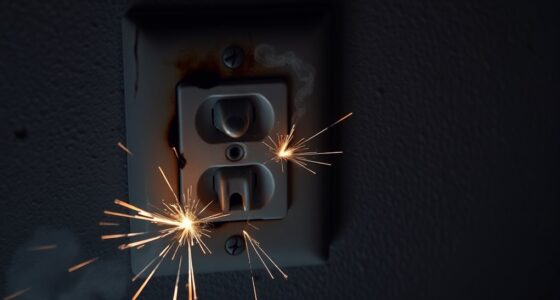

Ground faults happen when a live wire unintentionally contacts ground, causing current leakage and risk of shocks or fires, and are protected by GFCIs that trip quickly to cut power. Arc faults involve sparks caused by loose or damaged wiring, which can ignite fires; AFCIs monitor for arcing and shut off power when needed. Understanding these differences helps you choose the right circuit breakers to keep your home safe—there’s more to discover about how they work.
Key Takeaways
- Ground faults involve unintended current to ground, detected by GFCIs, and prevent shocks and fires.
- Arc faults are caused by sparks or arcing, detected by AFCIs, and help prevent electrical fires.
- GFCIs trip on current imbalance between hot and neutral wires, protecting against shocks.
- AFCIs trip on signs of arcing, preventing damage and fires from deteriorating wiring.
- Proper circuit protection requires both GFCIs and AFCIs for comprehensive electrical safety.

Understanding the difference between ground faults and arc faults is essential for maintaining electrical safety in your home or workplace. Both faults can pose serious hazards, but they behave differently and require distinct approaches to circuit protection. Recognizing these differences helps ensure your electrical system meets safety standards and keeps everyone safe from potential fires or shocks.
Knowing the differences between ground and arc faults helps ensure electrical safety and proper protection.
A ground fault occurs when an unintended connection forms between a live wire and the ground. This can happen if a wire becomes damaged or worn, or if a device’s insulation fails. When this occurs, current leaks directly to the ground, creating a path that can cause electrical shocks or fire hazards. Ground Fault Circuit Interrupters (GFCIs) are specifically designed to detect such leaks by monitoring the current difference between the hot and neutral wires. When a discrepancy is detected, the GFCI trips almost instantly, cutting power and preventing harm. These devices are vital in areas prone to moisture, like kitchens and bathrooms, where ground faults are more likely to occur. They adhere to strict safety standards aimed at reducing electrical shock risks and preventing fires caused by faulty wiring or appliances.
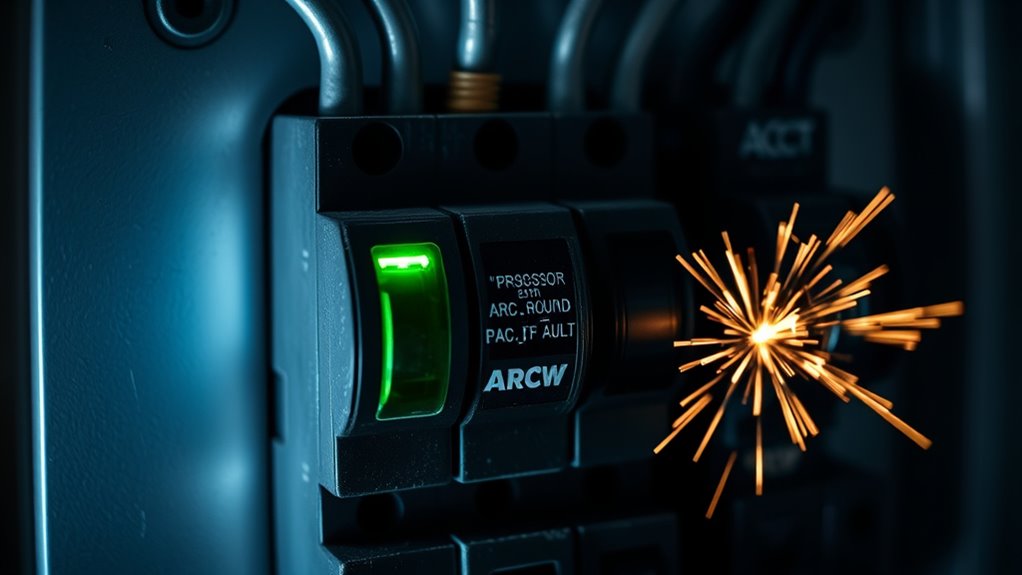
Arc faults, on the other hand, involve an unintended electrical discharge that occurs when a loose or damaged wire creates a visible spark. These sparks generate high heat, which can ignite surrounding materials and cause fires. Arc faults are often harder to detect because they don’t always produce a noticeable electrical leak like ground faults do. Instead, they produce intermittent sparks and heat that can smolder beneath insulation or within wall cavities. To address this hazard, Arc Fault Circuit Interrupters (AFCIs) are used. AFCIs constantly monitor the electrical current for signs of arcing, and when detected, they trip to disconnect power. This proactive approach is crucial for preventing fires caused by deteriorating wiring or electrical faults that could go unnoticed until it’s too late. Electrical safety is significantly enhanced when AFCIs are integrated into home electrical systems.
Both ground faults and arc faults require different types of circuit protection to meet safety standards and effectively safeguard your property. While GFCIs are your first line of defense against shocks from ground faults, AFCIs serve as advanced circuit breakers that detect arcing and prevent fires. Understanding these distinctions allows you to select the right safety devices and ensure your electrical system is up to code. Properly addressing both types of faults not only enhances safety but also provides peace of mind, knowing that your home or workplace is protected against electrical hazards that could lead to injury or property damage. By staying informed and using the appropriate circuit protection, you can help maintain a safer environment for everyone.

ELEGRP GFCI Outlet 15 Amp, Self-Test GFI Electrical Outlet with Thinner Design, TR Tamper Resistant GFCI Receptacle, Ground Fault Circuit Interrupters with Wall Plate, UL Listed, Matte White, 1 Pack
✅【Innovative Dual Protection System】Features twin solenoid and double silicon controlled rectifier (SCR), ensuring an always-on GFCI protection to…
As an affiliate, we earn on qualifying purchases.
As an affiliate, we earn on qualifying purchases.
Frequently Asked Questions
Can Ground and Arc Faults Occur Simultaneously?
Yes, ground and arc faults can occur simultaneously, especially in complex electrical systems. Fault detection systems are designed to identify both types quickly, ensuring safety protocols are activated to prevent damage or fire hazards. When both faults happen at once, advanced circuit breakers can isolate the issues promptly, maintaining safety. Staying vigilant about these faults helps protect your electrical system and reduces risks, keeping your environment safe and compliant.
How Do I Identify a Ground Fault in My Home?
To identify a ground fault in your home, start with a wiring inspection for signs of damage or corrosion. Use fault detection devices or circuit testers to check outlets and appliances for stray currents. If you notice frequent tripping of your circuit breaker or tingling sensations, these could be signs of a ground fault. Regular inspections help catch issues early, ensuring safety and preventing electrical fires.
Are Arc Fault Circuit Interrupters Required by Code Everywhere?
Arc fault circuit interrupters (AFCIs) aren’t required everywhere, but local electrical codes often mandate their use in bedrooms and living areas. You should check your local building codes for specific requirements. When installing AFCIs, make certain equipment compatibility and follow proper installation procedures to guarantee safety and compliance. Proper installation involves verifying the breaker’s compatibility with your wiring and adhering to manufacturer instructions to prevent potential electrical hazards.
What Maintenance Is Needed for Advanced Circuit Breakers?
Think of maintaining your advanced circuit breaker like tending a fine instrument. You should perform regular preventive inspections and follow testing procedures to guarantee it functions properly. Check for signs of wear, corrosion, or damage, and test the breaker periodically according to manufacturer guidelines. Keeping up with these steps helps prevent failures, ensuring your electrical system stays safe and reliable, much like a well-tuned instrument performs flawlessly.
Do Ground and Arc Faults Pose Different Fire Risks?
Yes, ground and arc faults pose different fire risks. Ground faults can cause grounding hazards, leading to potential electric shocks and fires if not properly protected. Arc faults generate intense heat and sparks, increasing the risk of an arc flash that can ignite nearby materials. Both types require advanced circuit breakers to mitigate these dangers, but arc faults often present a higher immediate fire risk due to their sparking nature.
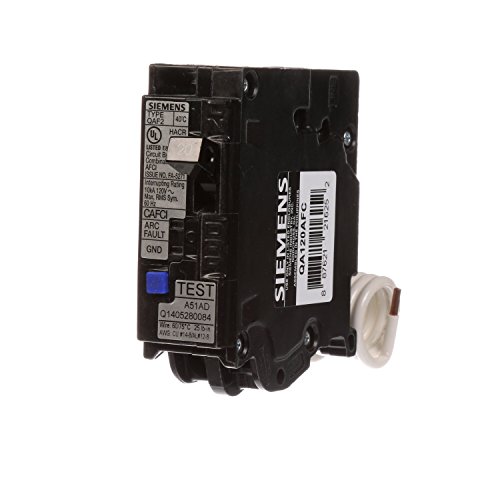
Siemens QA120AFC 20-Amp Single Pole 120-volt Plug-On Combination AFCI Breaker
Single pole, 20 Amp, Combination type AFCI circuit breaker
As an affiliate, we earn on qualifying purchases.
As an affiliate, we earn on qualifying purchases.
Conclusion
Understanding the difference between ground faults and arc faults helps you protect your home effectively. By choosing the right circuit breakers, you’re not just avoiding trouble—you’re staying ahead of the game. Remember, knowledge is power, and when it comes to electrical safety, it’s better to be safe than sorry. Don’t wait for problems to knock on your door; be proactive today and keep your home safe and sound.

OAONAN GFCI Replacement Plug Assembly Auto Reset 15 Amp 3 Prongs, 5 Years Warranty, Ground Fault Circuit Interrupter Safety Plug for Pressure Washer, Hot Tub, Air Conditioner, Hair Dryer
Ultimate Safety with Surge & Lightning Protection – This GFCI replacement plug offers surge protection and lightning resistance,…
As an affiliate, we earn on qualifying purchases.
As an affiliate, we earn on qualifying purchases.

15 Amp 1-Pole Combination Type AFCI Plug-On Neutral Circuit Breaker
Simply installs like any other breaker, now without the pigtail
As an affiliate, we earn on qualifying purchases.
As an affiliate, we earn on qualifying purchases.