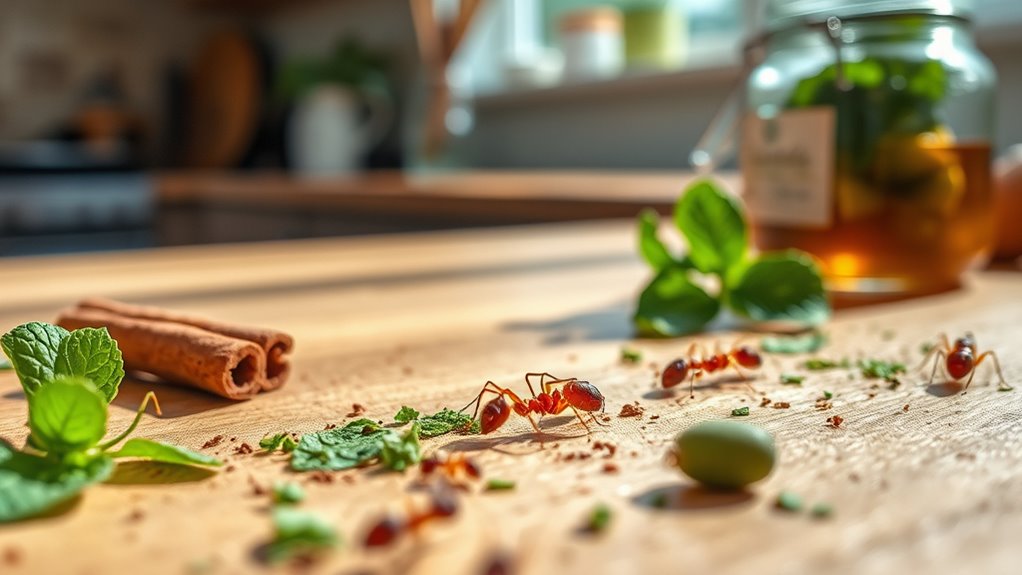

To get rid of ants naturally, use household ingredients like vinegar, lemon juice, cinnamon, or peppermint oil to disrupt their trails and deter entry. Seal gaps and cracks with caulk, install door sweeps, and place barriers like diatomaceous earth or talcum powder at entry points. You can also set bait with sugar and borax or baking soda to target colonies. Keep pests at bay by combining these simple strategies, and learn more about effective natural methods as you go.
Key Takeaways
- Use natural repellents like vinegar, lemon juice, cinnamon, and essential oils to disrupt ant trails and deter entry points.
- Seal cracks and gaps with caulk, weatherstripping, or mesh screens to block ant access into your home.
- Create bait stations with sugar and borax or baking soda to target and eliminate ant colonies effectively.
- Apply physical barriers such as talcum powder, diatomaceous earth, or sticky tapes at entry points for ongoing prevention.
- Regularly inspect and reapply natural repellents and barriers to maintain long-term, eco-friendly ant control.
Natural Repellents to Deter Ants
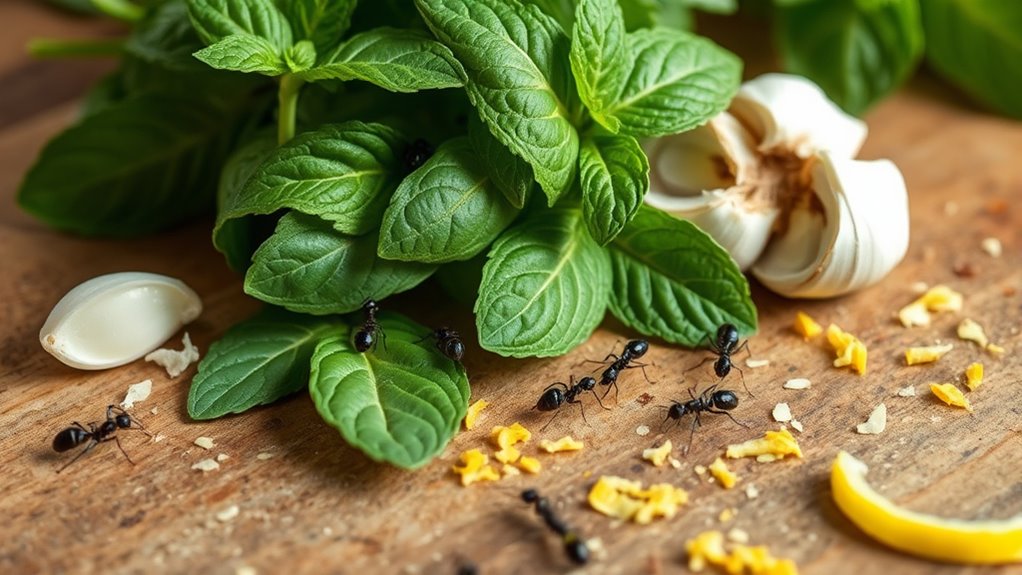
Natural repellents are an effective way to keep ants at bay without resorting to harsh chemicals. You can use simple household items like vinegar and lemon juice to disrupt ant trails and eliminate their scent markers. Spraying a vinegar solution along entry points confuses ants and deters new invaders. Lemon juice works similarly by breaking down their scent trails, making it harder for them to navigate. Spices like cinnamon and pepper irritate ants’ smell receptors, discouraging them from crossing treated areas. Essential oils such as clove, tea tree, lemon eucalyptus, and cinnamon leaf release strong scents that repel ants naturally. Applying these oils via sprays or saturated cotton balls in problem areas creates an effective barrier. These natural repellents are safe, inexpensive, and easy to incorporate into your pest control routine. Vetted Additionally, understanding the passive voice detection can help you improve your writing clarity and engagement. Incorporating knowledge about home remedies can further enhance your DIY pest control efforts by using readily available ingredients. For example, employing natural pest control strategies reduces chemical exposure and promotes a healthier living environment. Using scientific research on natural repellents ensures you select the most effective ingredients for your needs.
Using Household Ingredients to Control Ants
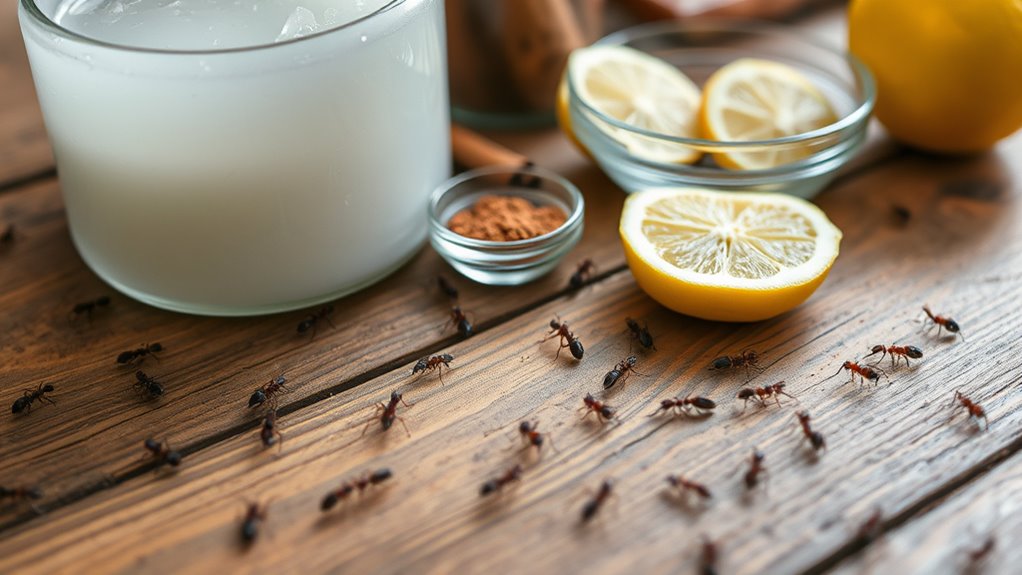
Using common household ingredients can be an effective and affordable way to control ants around your home. You can use simple items you already have to disrupt their trails or kill them on contact. Here are some effective options:
- Mix equal parts vinegar and water in a spray bottle and apply it along ant trails and entry points to break down their scent trails.
- Squeeze fresh lemon juice around doorways and windows to repel ants naturally.
- Sprinkle cinnamon or black pepper along ant paths and near nests to deter them.
- Create a homemade bait by combining sugar and baking soda; ants take it back to the colony, leading to their elimination.
These ingredients are safe, inexpensive, and easy to use for quick ant control.
Effective Mechanical and Physical Barriers
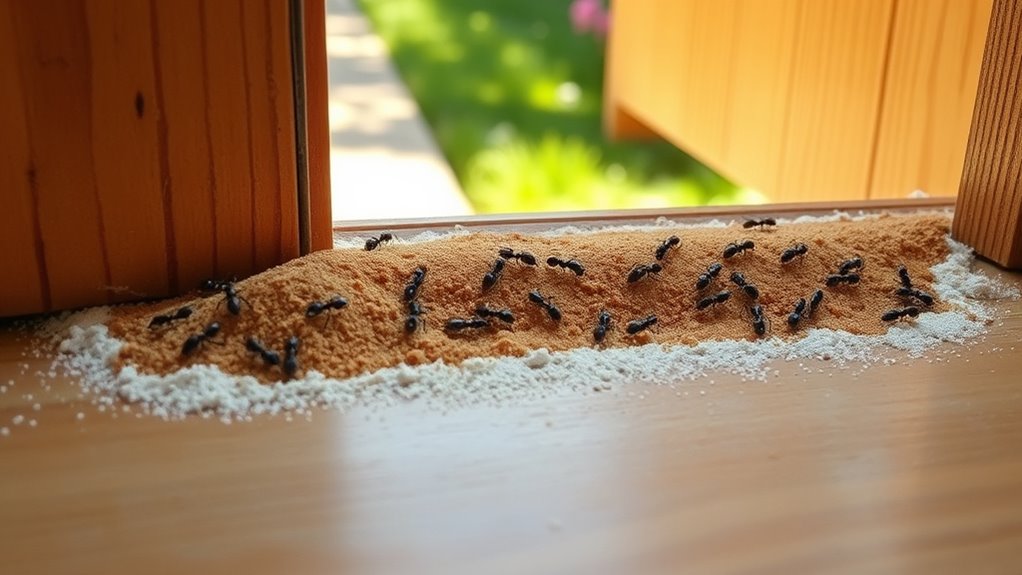
Setting up effective mechanical and physical barriers is one of the most reliable ways to prevent ants from entering your home or garden. You can start by sealing cracks and gaps around doors, windows, and foundations with caulk or weatherstripping to block entry points. Installing door sweeps helps prevent ants from slipping in under doors. Use fine mesh screens on vents, chimneys, and windows to keep ants out while allowing airflow. Creating physical barriers like sticky tapes or talcum powder around entry points can deter ants from crossing. Placing barriers such as gravel or diatomaceous earth around garden beds or building foundations disrupts ant movement and access. Regularly inspecting and maintaining these barriers ensures they stay effective, reducing the chances of ants invading your space. Incorporating safe installation practices ensures these barriers remain durable and effective over time. Additionally, choosing non-chemical methods helps maintain a safe environment for your family and pets while controlling pest entry points. Employing integrated pest management strategies can further enhance your efforts in keeping ants at bay naturally.
Safe and Organic Pest Control Options
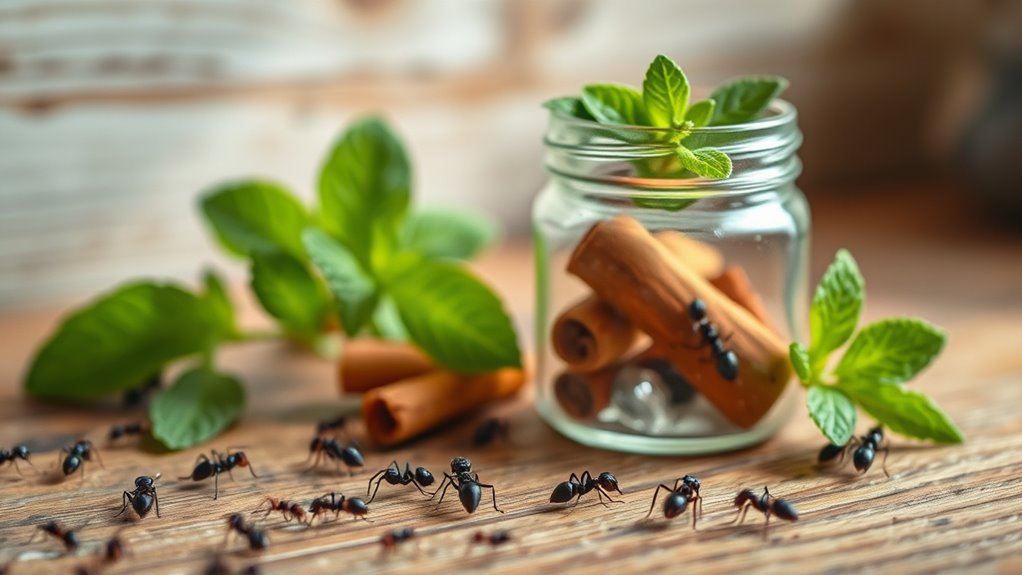
When choosing pest control methods that are safe and eco-friendly, you can rely on a variety of organic options that effectively target ants without harmful chemicals. These solutions are simple to use and pose minimal risk to your family and pets. Using energy-efficient appliances can also help reduce overall household energy consumption, creating a healthier environment. Additionally, understanding pest biology can help you target ant colonies more effectively. 1. Use essential oils like clove, tea tree, lemon eucalyptus, and cinnamon leaf by spraying diluted mixtures or placing saturated cotton balls in problem areas. 2. Apply cinnamon or pepper around ant trails and entry points to repel and disrupt their scent markings. 3. Create bait stations with sugar and borax for colony feeding; ants carry the toxin back to the nest. 4. Sprinkle food-grade diatomaceous earth along trails and around nests to dehydrate and kill ants safely. These methods combine safety with proven effectiveness, making them ideal for natural ant control.
Combining Strategies for Long-Term Results
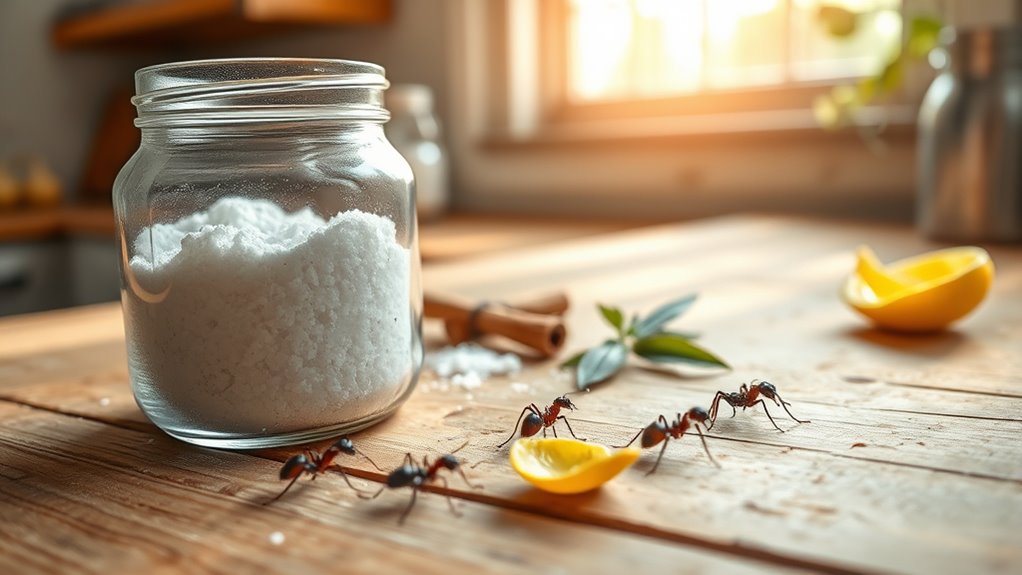
Relying on a single method rarely provides a lasting solution to ant problems. To keep ants at bay long-term, you need to combine strategies like natural repellents, baiting, and physical barriers. Start by applying natural repellents such as lemon eucalyptus oil or cinnamon around entry points and trails to deter foraging ants. Use bait stations with sugar and borax or baking soda to target colonies underground. Physical barriers like talcum powder or diatomaceous earth can block access to specific areas. Regularly inspect and reapply these methods, especially after rain or weather changes. Understanding ant behavior can help you anticipate their movements and improve your control strategies. Incorporating integrated pest management techniques creates a layered defense, disrupting trails, killing foragers, and preventing new colonies from establishing. Consistency and varied tactics are key to sustainable, long-term ant control. Additionally, monitoring ant activity patterns can help you identify the most active times to apply your control measures effectively. Being aware of pest control methods can also help you select the most suitable approach for your situation. A good grasp of family photoshoot fails can also remind you to be adaptable and patient when tackling persistent ant issues.
Frequently Asked Questions
How Long Do Natural Ant Repellents Typically Last Before Reapplication?
Natural ant repellents usually last from a few days up to a week before you need to reapply. Factors like weather, humidity, and the type of repellent influence how long they remain effective. For example, essential oils may need reapplication every few days, especially after rain or cleaning. Regularly check treated areas and reapply as needed to maintain their effectiveness and keep ants at bay.
Are DIY Ant Control Methods Safe for Pets and Children?
You should be cautious with DIY ant control methods around pets and children. Natural repellents like vinegar, lemon juice, and essential oils are generally safe if used properly, but ingredients like borax and diatomaceous earth can pose risks if ingested or inhaled. Always keep these substances out of reach, follow safety instructions, and consider using pet- and child-friendly options like food-grade diatomaceous earth or physical barriers to minimize hazards.
Can Natural Remedies Eliminate Entire Ant Colonies or Just Foraging Workers?
Did you know that some natural remedies can only take out foraging workers, not the entire colony? You’ll mostly see these methods disrupt trails or repel ants, like cinnamon or essential oils. To eliminate the whole colony, you’ll need baits with borax or spinosad, which carry toxins back to the nest. Combining repellents and baiting gives you the best chance of wiping out the entire ant community effectively.
Which Natural Ingredients Are Most Effective for Outdoor Versus Indoor Ant Control?
For outdoor ant control, cinnamon, lemon eucalyptus oil, and diatomaceous earth work best by repelling or physically damaging colonies. Indoors, vinegar, lemon juice, and essential oils like tea tree and clove are effective at disrupting trails and deterring ants. Use repellents around entry points outside and apply bait or sprays inside to target foragers. Combining these ingredients helps you manage ants naturally both inside and outside your home.
How Do I Identify the Best Ant Control Approach for My Specific Ant Species?
Imagine walking into your space and spotting tiny trails of ants marching in perfect lines, each species with its own telltale signs. To identify the best control, observe their behavior—are they nesting outdoors or inside? Look for the trail’s entry points, food preferences, and mound types. Once you spot these clues, choose targeted repellents or baits, like cinnamon for outdoor colonies or vinegar for indoor trails, to effectively curb their invasion.
Conclusion
Just like a wise hero fights off invaders with clever tricks, you can keep ants at bay using simple, natural methods. By combining repellents, household ingredients, and barriers, you create an unbreakable defense, ensuring these tiny intruders stay out of your home. Remember, patience and persistence are your greatest allies—think of it as your own quest to reclaim your space, just like the legendary battles of old. Stay vigilant, and your home will remain ant-free.