
To remove stubborn stains, first identify the type—such as greasy, enzymatic, or dye-based—and choose the right treatment. Use tools like brushes or cloths to blot or scrape excess; pre-treat with dish soap, vinegar, or baking soda depending on the stain. For tough spots like wax or makeup, carefully scrape and apply heat or blotting. Proper washing and post-treatment care help prevent re-staining. Keep exploring for more tips to keep your clothes spotless.

Get everyday essentials delivered free with Prime
- Fast, free delivery on millions of items
- Prime Video, Amazon Music and more included
- Member-only deals all year
Key Takeaways
- Identify stain type and origin to select the appropriate removal method and prevent fabric damage.
- Pre-treat stubborn stains with enzymatic detergents, dish soap, or natural remedies like vinegar and baking soda.
- Gently blot fresh stains immediately to prevent setting and scrape off excess before treatment.
- Use proper washing techniques, including correct water temperature and cycle, to effectively remove stains.
- Inspect and ensure stain removal before drying, as heat can set stains permanently.
enzyme stain remover for clothes
As an affiliate, we earn on qualifying purchases.
As an affiliate, we earn on qualifying purchases.
Identifying Different Types of Stains and How to Handle Them
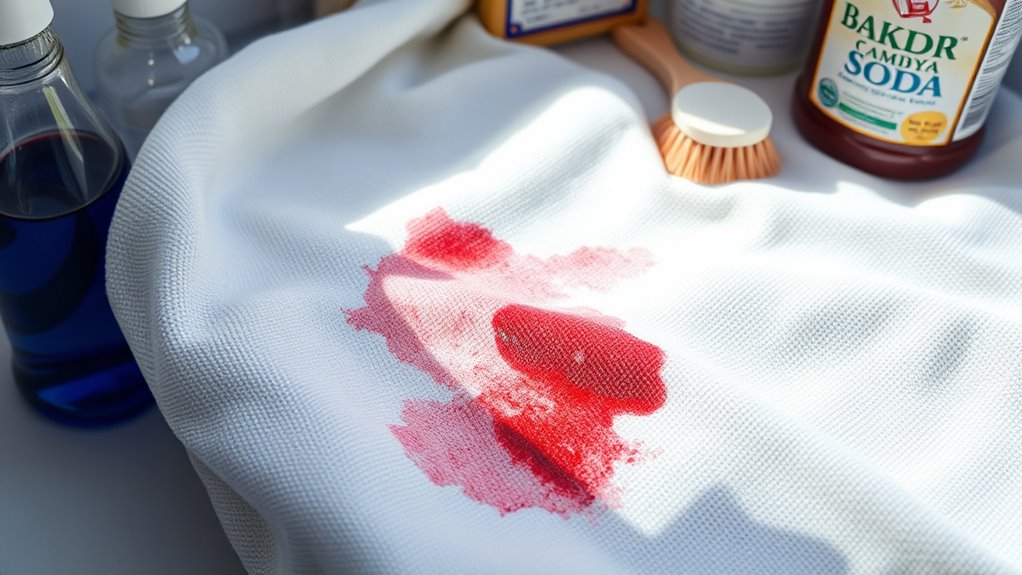
Understanding the different types of stains is essential for effective removal. When you spot a stain, first remove any excess substance by scraping or brushing gently. Blot fresh stains with a dry or damp cloth to soak up liquids immediately. Identifying the stain type—such as enzymatic, greasy, body soil, bleachable, or clay/dirt—is vital because each needs a specific pretreatment. For example, enzymatic stains like blood or sweat respond well to enzyme-based cleaners, while greasy stains benefit from dish soap. Understanding stain chemistry can help you choose the most effective cleaning agents for each type of stain. Recognizing the stain’s origin assists in selecting the proper cleaning method and prevents damage to fabrics. Additionally, knowing the history of stain formation can provide clues for more targeted removal approaches. Avoid drying the garment before completely removing the stain, as heat can set it permanently. Proper initial handling increases your chances of successful stain removal and keeps your clothes looking their best. Proper stain removal techniques are crucial for preserving fabric integrity and appearance. Incorporating visual and auditory cues can also aid in understanding and addressing stubborn stains effectively.
As an affiliate, we earn on qualifying purchases.
Essential Supplies and Tools for Effective Stain Removal
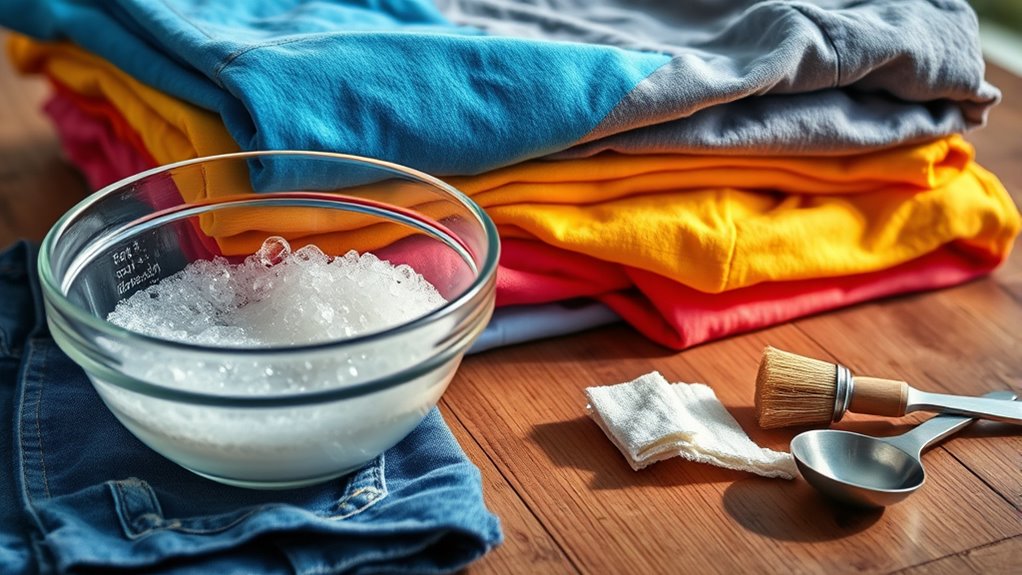
Having the right supplies and tools on hand is essential for effective stain removal. You’ll want a set of basic items: a clean soft cloth or sponge for blotting, a dull knife or brush for scraping off excess, and stain-specific treatments like liquid detergents or enzyme-based removers. Keep a spray bottle for applying solutions precisely and a small bowl for soaking garments if needed. A toothbrush or soft brush helps work treatments into fabric fibers without damage. Also, have white vinegar, baking soda, and hydrogen peroxide available for natural remedies. Additionally, using proper handling techniques can prevent further damage to your clothes. Utilizing gentle pre-treatment methods can improve stain removal outcomes and preserve fabric integrity. For particularly stubborn stains, applying a specialized remover may be necessary to achieve the best results. Incorporating appropriate cleaning supplies can further enhance the effectiveness of your stain removal process. It’s also helpful to know the air purifier maintenance dos and don’ts to keep your environment fresh and reduce future stains caused by airborne particles. Finally, a timer or clock ensures you don’t over-soak or leave treatments on too long. These tools streamline the process, making stain removal more efficient and less stressful.
As an affiliate, we earn on qualifying purchases.
Pre-Treatment Techniques for Common Stain Types
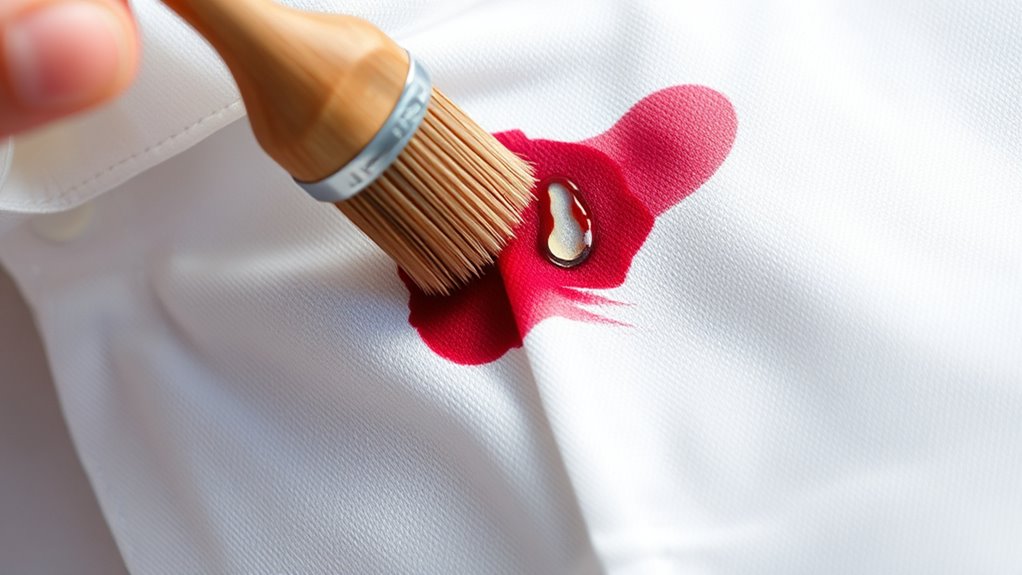
Enzymatic stains like blood and sweat respond well to liquid detergents or enzyme-based removers, which you should apply directly and gently agitate. For greasy or oily spots, soaking the fabric in warm water with dish soap or pre-treating with liquid dish detergent breaks down the oils effectively. Knowing the right pre-treatment methods for these common stains helps guarantee they come out cleanly and quickly. Incorporating sound healing science techniques can also promote relaxation during the cleaning process, making stain removal a more calming experience. Additionally, using essential oils such as lavender or eucalyptus during pre-treatment can enhance clothing freshness and provide a soothing aroma. Understanding ventilation considerations can improve the overall effectiveness of your laundry routine and ensure a comfortable environment during cleaning. Proper skin protection during pre-treatment can prevent irritation from harsh chemicals and make the process safer.
Enzymatic Stain Treatments
Did you know that enzymatic stain treatments are highly effective for breaking down protein-based stains like blood, sweat, and food residues? These treatments contain enzymes that target proteins, making stain removal more efficient. To maximize effectiveness, apply liquid detergent or enzyme-based stain remover directly to the stain. Gently rub or use a soft brush to work it in. For best results, let it sit for 15-30 minutes before washing. Here’s a quick guide:
| Stain Type | Recommended Enzyme Treatment | Best Practice |
|---|---|---|
| Blood | Enzyme-based stain remover | Apply and wait 20 mins |
| Sweat | Liquid detergent | Pre-treat and soak |
| Food residues | Enzymatic spray | Rinse and wash |
| Egg or dairy | Enzyme laundry booster | Soak before washing |
| Protein stains | Commercial enzyme detergent | Use in wash cycle |
Enzymatic stain treatments are especially useful because they work effectively at lower temperatures, helping to preserve fabric quality while removing tough stains. Additionally, these enzyme-based products are compatible with various fabric types, making them versatile for household use. Using the correct pre-treatment techniques can further enhance stain removal effectiveness and protect your clothing. Proper understanding of stain removal methods can lead to better results and prolong the life of your garments. Regularly inspecting your appliances for power consumption can also help you identify energy-saving opportunities during laundry.
Greasy Stain Preparations
Greasy stains can be particularly stubborn, but proper pre-treatment can make a significant difference in their removal. To tackle these stains, start by soaking the garment in warm water with a few drops of dish soap, which breaks down oils effectively. Next, try these techniques:
- Apply liquid dish detergent directly to the stain and gently rub in.
- Let the garment sit for 10-15 minutes to loosen grease.
- Use a soft brush or cloth to work the detergent into the fabric.
- Rinse thoroughly with warm water before washing.
- For stubborn stains, repeat the process or pre-soak in warm water with dish soap overnight.
- Choosing the right dog bed can also help reduce the spread of grease and dirt in your laundry area.
- Incorporating connected home technology like smart washing machines can optimize cleaning cycles for stubborn stains, saving time and effort.
These steps ensure you break down and lift greasy residues, making your laundry more effective. Always check your fabric’s care label to avoid damage.
As an affiliate, we earn on qualifying purchases.
Natural Remedies and Home Solutions for Tough Stains

Vinegar and baking soda are powerful natural stain fighters you can easily try at home. Applying vinegar helps lift many stains, while baking soda works to break down stubborn dirt when soaked. Pairing lemon juice with salt creates a natural bleach that can tackle specific discolorations effectively.
Vinegar and Baking Soda
When tackling tough stains, natural remedies like vinegar and baking soda can be highly effective. Vinegar works as a natural degreaser and stain lifter, while baking soda absorbs odors and lifts stubborn marks. To use vinegar, apply it directly to the stain or soak the fabric for 15-30 minutes, then wash as usual. Baking soda can be dissolved in warm water or made into a paste for spot treatment. It’s especially useful for greasy or organic stains. Combine these ingredients for added power:
- Soak stained clothing in a mix of vinegar and water
- Create a baking soda paste for targeted spots
- Use baking soda in the wash cycle to boost cleaning
- Rinse thoroughly after vinegar treatment to prevent odor
- Repeat treatments if stains persist for best results
Lemon and Salt Pairing
Lemon and salt form a powerful natural duo for tackling tough stains, especially those caused by organic substances or discoloration. You can create a simple paste by mixing fresh lemon juice with salt, then apply it directly to the stain. Let it sit for about 15-30 minutes, allowing the acid in lemon and the abrasive salt to lift and break down the stain. For stubborn or set-in stains, gently rub the mixture into the fabric before rinsing with cold water. This natural remedy works well on stains like rust, coffee, or wine, and can also help whiten and brighten whites. Always test on a hidden area first to prevent discoloration, and avoid using on delicate fabrics that may be sensitive to acids.
Specialized Approaches for Stains Like Wax and Makeup
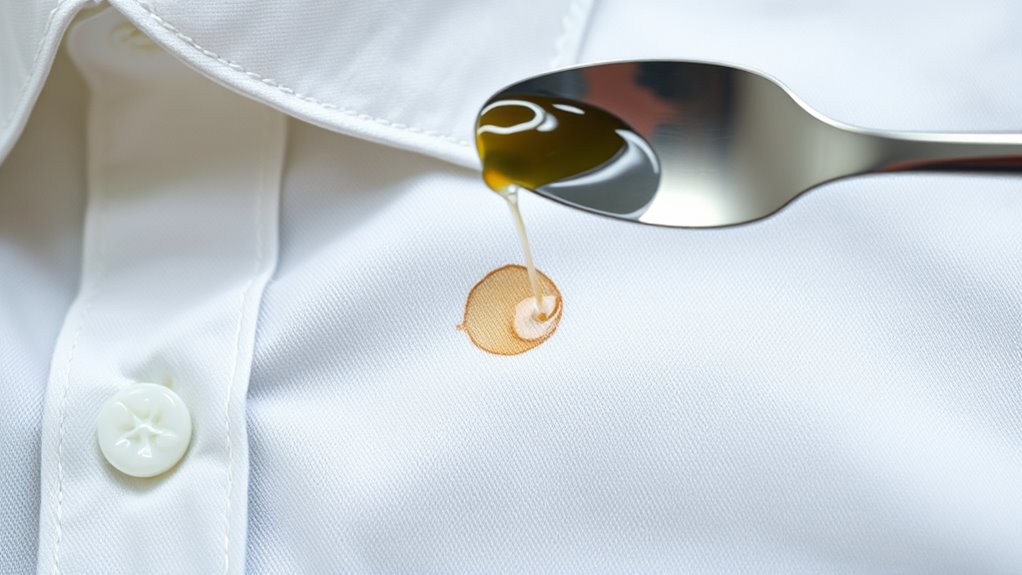
Removing stains like wax and makeup requires specialized techniques to effectively lift and dissolve stubborn residues. For wax, start by scraping off excess with a dull knife. Then, place a paper towel or brown paper bag over the stain and gently iron on low heat to absorb remaining wax. Follow up with a pretreatment if needed before washing. Makeup stains benefit from a targeted approach: first, scrape off excess, then blot with a damp cloth. Use a mixture of vinegar, water, and detergent to tamp down oily residues. For stubborn spots, apply a degreaser or enzyme-based stain remover. Always test on hidden fabric first. To ensure complete removal, repeat treatments if necessary before drying.
Best Practices for Washing and Post-Treatment Care

Proper washing and post-treatment care are essential to effectively remove stains and preserve your garments. Always check the care label for temperature and cycle instructions to prevent damage. Use the right amount of detergent based on your load size and fabric type—more isn’t always better. For stubborn stains, soak clothes in cold water immediately after treatment to prevent heat from setting the stain. For greasy stains, warm water with appropriate detergent works best, but guarantee it matches the fabric’s care guidelines. After washing, inspect garments before drying; if stains remain, repeat the pretreatment and washing steps. Air drying is preferable until you’re sure the stain is gone, as heat from dryers can set stains permanently. Following these practices keeps your clothes clean and stain-free longer.
Safety Tips to Ensure Effective and Safe Stain Removal
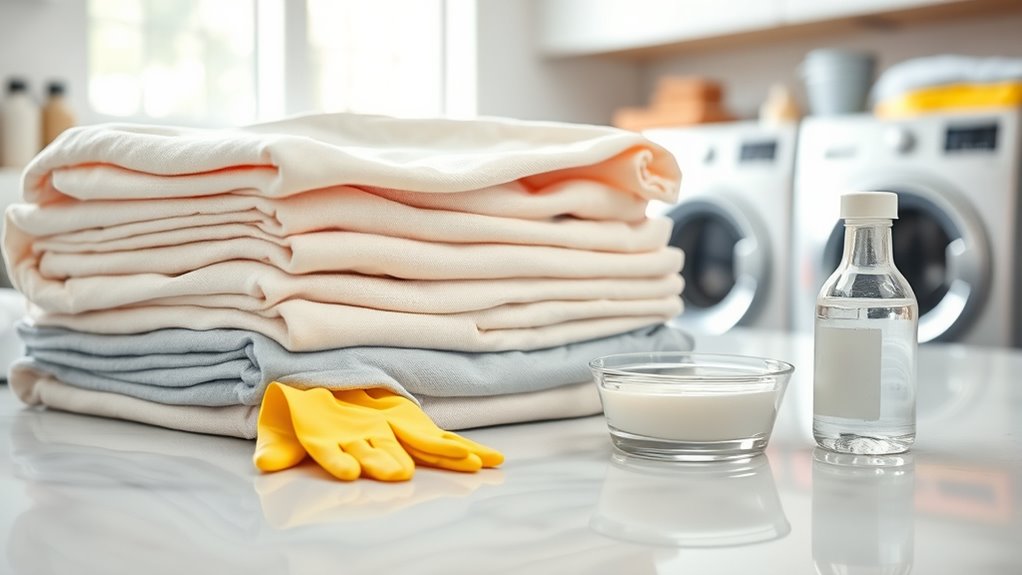
To guarantee your stain removal efforts are both safe and effective, always prioritize testing any treatment on a hidden or inconspicuous area of the garment first. This helps prevent color bleeding or fabric damage. Additionally, keep these safety tips in mind:
- Avoid mixing harsh chemicals like bleach and ammonia to prevent toxic fumes.
- Use environmentally friendly stain removers when possible to reduce chemical exposure.
- Follow label instructions carefully, especially regarding water temperature and fabric type.
- Wear gloves and work in well-ventilated areas to protect your skin and lungs.
- Always rinse thoroughly after applying treatments to remove residues that could harm fabrics or skin.
Tips for Preventing Future Stains and Maintaining Clothes
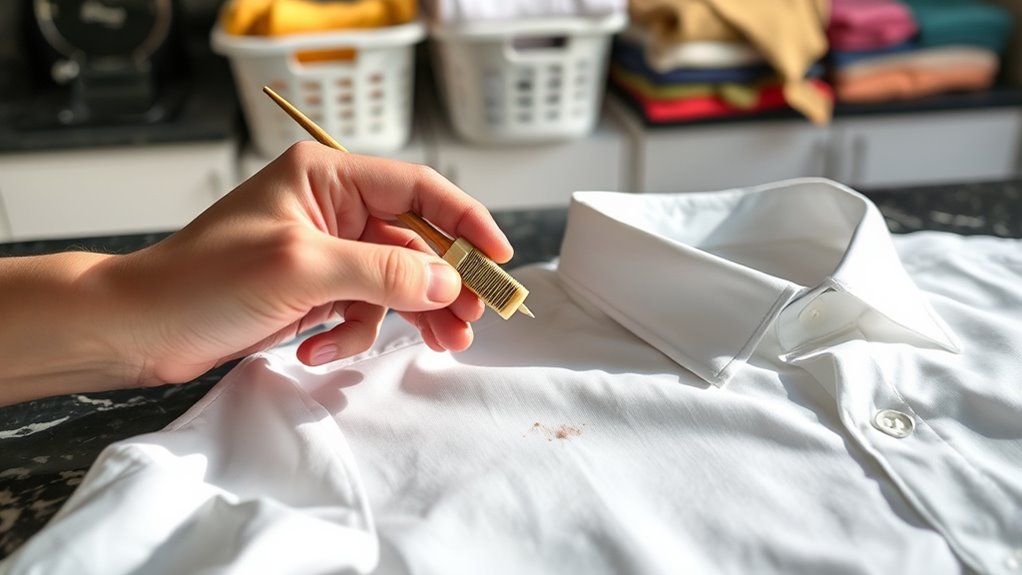
Preventing future stains starts with mindful habits and careful handling of your clothes. Always check care labels before washing, choosing the right water temperature and cycle. Treat stains immediately—blot spills quickly and avoid rubbing, which can embed stains deeper. Use protective measures like aprons or stain shields when working with messy foods or crafts. Pre-treat especially oily or enzymatic stains before washing to prevent setting. Keep clothes separate by color and fabric type to avoid dye transfer and damage. Regularly clean your washing machine to prevent dirt buildup that can transfer to clothing. Store clothes properly, avoiding damp or dirty environments that attract stains. By adopting these habits, you prolong your clothes’ lifespan and keep them looking fresh longer.
Frequently Asked Questions
Can I Use Bleach on All Types of Stains Safely?
No, you shouldn’t use bleach on all stain types safely. Bleach works best on whites and colorfast fabrics, especially for bleachable stains. Avoid applying it to protein stains like blood or sweat, as it can set the stain. Test first on a hidden area, and always follow fabric care instructions. For delicate or non-colorfast fabrics, opt for natural remedies or specialized stain removers instead of bleach.
How Do I Remove Old Set-In Stains Effectively?
Did you know that properly treating old stains increases removal success by up to 80%? To remove set-in stains, start by soaking the garment in cold water with an oxygen-based booster or enzyme detergent for several hours. Then, pretreat the stain with a specialized stain remover or a mixture of baking soda, hydrogen peroxide, and salt. Finally, wash on the warmest setting safe for the fabric, inspecting before drying.
Are Natural Remedies Safe for Delicate Fabrics?
Natural remedies are generally safe for delicate fabrics if you use them carefully. You should always test any solution, like vinegar or lemon juice, on a hidden area first to check for colorfastness. Avoid excessive soaking or strong concentrations to prevent damage. Gently blot or apply remedies, and rinse thoroughly. When in doubt, consult the garment’s care label or opt for specialized, gentle stain removers to protect delicate fabrics.
What’s the Best Way to Prevent Color Bleeding During Stain Removal?
Oh, the thrill of color bleeding—like a fashion show gone rogue. To prevent it, always test stain removers on hidden fabric areas first, then use cold water for pretreating and soaking. Avoid hot water, which is basically an invitation for colors to mingle and create chaos. Keep whites separate from colored clothes, and don’t overload your washing machine—your fabrics will thank you, and so will your wardrobe.
How Long Should I Wait Before Rewashing a Stained Garment?
You should wait until you’re sure the stain is completely gone before rewashing the garment. Typically, give it at least 15 to 30 minutes after treatment to see if the stain lifts. For stubborn stains, you might need to repeat pretreatment and wait a bit longer, up to a few hours or overnight. Always inspect the stain before drying, because heat can set it permanently.
Conclusion
Mastering stain removal isn’t just about quick fixes; it’s about understanding your fabrics and acting swiftly. Think of stains as lessons from life—sometimes stubborn, but always solvable with patience and the right approach. If you believe that prevention is better than cure, remember that caring for your clothes today can save you from tougher stains tomorrow. Ultimately, a little effort now keeps your wardrobe looking fresh and vibrant for years to come.
Halloween Picks
halloween
As an affiliate, we earn on qualifying purchases.