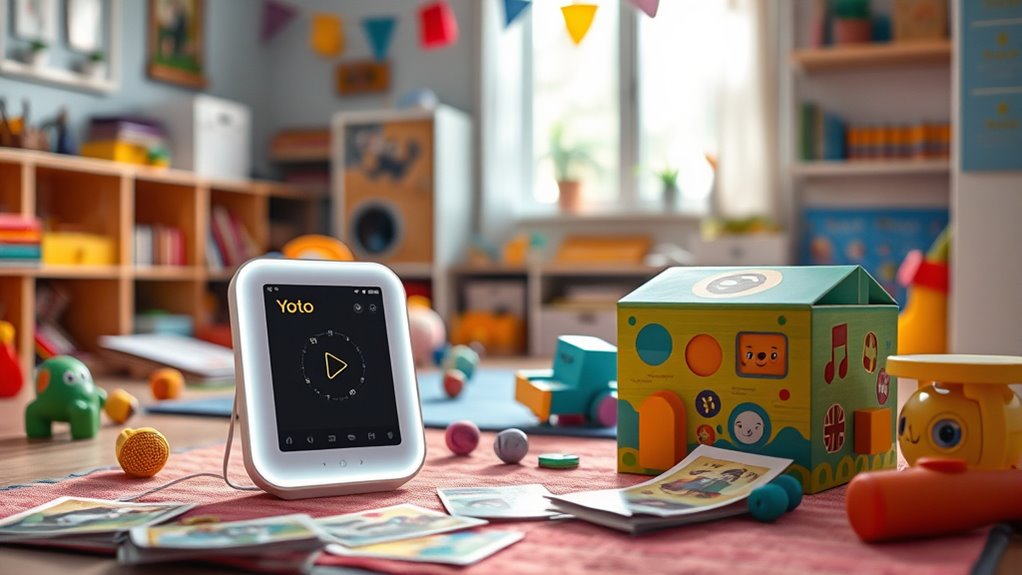

When choosing between a Yoto Player and a Toniebox, parents often weigh factors like content variety, ease of use, and durability. The Yoto Player (3rd Gen.) stands out for its extensive library and screen-free design, making it ideal for older kids who enjoy customization. Meanwhile, the Toniebox offers a simple, tactile experience perfect for younger children or those new to digital audio. The main tradeoffs include content access, device complexity, and price—each device targets different age groups and learning preferences. Continue reading for a detailed comparison to help you find the best fit for your child’s needs.

Get everyday essentials delivered free with Prime
- Fast, free delivery on millions of items
- Prime Video, Amazon Music and more included
- Member-only deals all year
Key Takeaways
- The Yoto Player excels in offering a vast, customizable library with extensive content options, making it ideal for older children or tech-savvy parents.
- The Toniebox provides a more straightforward, tactile experience, better suited for younger kids or those who prefer physical interactions over screens.
- Durability and ease of setup favor the Toniebox, but the Yoto Player offers more flexibility with content and personalization features.
- Price points vary significantly, with the Yoto generally costing more upfront but offering more content options over time, while the Toniebox may be more budget-friendly initially.
- Both devices have unique accessories and bundles; choosing the right one depends on whether you prioritize content variety, simplicity, or budget.
| YOTO Player (3rd Gen.) + Starter Pack for Little Kids Bundle |  | Best Overall for Versatile Screen-Free Entertainment | Model: 3rd Generation | Content Included: YOTO Player, Starter Pack with audio cards | Display: Pixel display | VIEW ON AMAZON | See Our Full Breakdown |
| Yoto Mini (2024 Edition) + Starter Pack for Little Kids Bundle, Ages 3+ |  | Best for Portability and On-the-Go Use | Weight: 160 g | Dimensions: 1.57″D x 2.76″W x 2.76″H | Display Technology: Pixel display | VIEW ON AMAZON | See Our Full Breakdown |
| YOTO Player (3rd Gen.) + Kids Disney Classics Bundle – Screen-Free, Ages 4+ |  | Best for Disney Fans and Older Kids | Bundle Includes: YOTO Player (3rd Gen.) and 6 Disney story cards | Age Range: Ages 4+ | Battery Life: Up to 16 hours | VIEW ON AMAZON | See Our Full Breakdown |
| YOTO Mini Summer Travel Bundle for Kids – Screen-Free Audio Player, Starter Story Pack, Headphones, Case & Jacket |  | Best for Summer Travel and Long Journeys | Device: YOTO Mini (2024 Edition) | Content: Starter Story Pack with 6 cards, 1000+ stories, music, activities | Battery Life: Up to 14 hours | VIEW ON AMAZON | See Our Full Breakdown |
| YOTO Player (3rd Gen.) – Kids Audio Player, Screen-Free, Ages 3-12 |  | Best for Wide Age Range and Long-Term Use | Audio Output Mode: Stereo | Mounting Type: Tabletop | Internal Memory: 32GB | VIEW ON AMAZON | See Our Full Breakdown |
| Yoto Mini (2024 Edition) – Kids Travel Audio Player, Screen-Free, Ages 3-12 |  | Best for Portability and Travel | Battery Life: Up to 14 hours | Display: Pixel display | Content: Over 1000 cards including audiobooks, music, educational activities, podcasts, soundscapes | VIEW ON AMAZON | See Our Full Breakdown |
| yoto player vs toniebox review | Battery Life | Display |
|---|---|---|
| YOTO Player | Up to 16 hours | Pixel display |
| Yoto Mini | — | — |
| YOTO Player | Up to 16 hours | — |
| YOTO Mini Summer Travel Bundle | Up to 14 hours | Pixel display |
| YOTO Player | — | — |
| Yoto Mini | Up to 14 hours | Pixel display |
More Details on Our Top Picks
YOTO Player (3rd Gen.) + Starter Pack for Little Kids Bundle
The YOTO Player (3rd Gen.) stands out for its combination of a vivid display, parental controls, and multiple functions like stories, music, and nightlight, making it a comprehensive choice for parents who want a safe, all-in-one device. Compared with the Yoto Mini, it offers a larger form factor and a more robust feature set, though at the cost of portability and potentially higher price. Its reliance on physical cards for most content can be a drawback for those seeking instant access without extra purchases, but this tradeoff ensures a tactile, collectible experience that many children enjoy. The long battery life and large controls make it accessible for little hands and extended use. However, the device’s content library is limited without additional card purchases, and battery performance may vary depending on usage. This pick makes the most sense for families prioritizing a comprehensive, expandable media experience that is easy to control and safe for children.
Pros:- All-in-one device with stories, music, podcasts, and nightlight
- Large, easy-to-use controls suitable for young children
- Parental controls and app support for safe content management
- Long battery life up to 16 hours
Cons:- Requires physical cards for most content, which can be lost or need extra purchase
- Limited content without additional card packs
- Bulkier design may be less portable
Best for: Parents seeking a durable, feature-rich device for kids that promotes independent play and learning
Not ideal for: Travelers or families needing ultra-portable devices due to its larger size and reliance on physical cards
- Model:3rd Generation
- Content Included:YOTO Player, Starter Pack with audio cards
- Display:Pixel display
- Battery Life:Up to 16 hours
- Features:Bluetooth speaker, nightlight, alarm clock, room thermometer, parental controls
Our verdict“This device is ideal for families wanting a versatile, safe, and expandable audio solution for young children at home.”
Yoto Mini (2024 Edition) + Starter Pack for Little Kids Bundle, Ages 3+
The Yoto Mini (2024 Edition) excels in portability, weighing just 160 grams and fitting easily into a bag or pocket, making it perfect for travel or outings. Unlike the larger YOTO Player, it’s designed for children on the move, with simple card insertion and a clear pixel display that shows content titles. It offers parental controls, Bluetooth connectivity, and multiple functions like sleep sounds and alarms, but it lacks visual or video features, limiting its entertainment scope. The reliance on physical cards remains, which can be inconvenient if lost, especially during travel. Its battery life of up to 14 hours is adequate for most outings, although longer trips might require frequent charging. This model makes the most sense for families who want a lightweight, easy-to-use device that provides a variety of audio content without the bulk of larger devices.
Pros:- Compact and lightweight for easy portability
- Simple card insertion for quick content access
- Parental controls for safe usage
- Multiple functions including sleep sounds and alarms
Cons:- No visual or video features, limiting engagement
- Requires physical cards, which can be misplaced or lost
- Limited battery life compared to larger models
Best for: Active families seeking a portable, durable device to entertain children during outings or travel
Not ideal for: Children who prefer visual content or interactive features, as it focuses solely on audio
- Weight:160 g
- Dimensions:1.57″D x 2.76″W x 2.76″H
- Display Technology:Pixel display
- Connectivity Technology:Bluetooth
- Supported Media Type:Audio Card
- Additional Features:Parental Control, Sleep Sounds, Alarm Clock, Headphone Support
Our verdict“This pick is perfect for families prioritizing portability and ease of use during travel or outdoor activities.”
YOTO Player (3rd Gen.) + Kids Disney Classics Bundle – Screen-Free, Ages 4+
The YOTO Player (3rd Gen.) combined with the Disney Classics bundle offers a rich library of stories, music, and educational content tailored for children 4 and up. Compared with the Yoto Mini, it provides a larger, more robust experience with over 1000 cards and more extensive features like a vivid pixel display, room thermometer, and Bluetooth speaker. This setup is ideal for children who appreciate Disney characters and desire a device capable of growing with them through a broader content library. However, the dependence on physical cards for content still involves additional purchases, which can add up over time. The device’s charging needs and some setup complexity may deter less tech-savvy parents. Overall, this model makes the most sense for families seeking a durable, feature-rich, child-friendly device that can handle longer-term use and larger content collections.
Pros:- Extensive content library including Disney classics
- Large, vivid display and multiple functions like nightlight and thermometer
- Easy physical controls and app support
- Long battery life up to 16 hours
Cons:- Requires additional card purchases for full content library
- Bulkier for smaller children or travel
- Some features need app setup and updates
Best for: Families with Disney-loving children aged 4+ who want a durable, expandable device
Not ideal for: Children under 4 or families seeking a device with visual or interactive digital features
- Bundle Includes:YOTO Player (3rd Gen.) and 6 Disney story cards
- Age Range:Ages 4+
- Battery Life:Up to 16 hours
- Features:Pixel display, sleep sounds, nightlight, alarm clock, room thermometer, Bluetooth speaker
- Content Compatibility:Over 1000 cards including stories, music, activities, podcasts
Our verdict“Ideal for Disney fans and families wanting a long-lasting, content-rich device for children aged 4 and up.”
YOTO Mini Summer Travel Bundle for Kids – Screen-Free Audio Player, Starter Story Pack, Headphones, Case & Jacket
The YOTO Mini Summer Travel Bundle is designed specifically for on-the-go entertainment, combining portability with a comprehensive travel-ready package including a travel case, headphones, and a themed adventure jacket. Its lightweight design, at just 160 grams, and battery life up to 14 hours make it a strong alternative to larger devices like the YOTO Player (3rd Gen.) for travel. While it offers similar features such as storytelling, sleep sounds, alarms, and parental controls, it is limited to audio content, which may be less engaging for children who prefer visual media. The reliance on physical cards for content means extra care is needed to prevent loss or damage during trips. This bundle is best suited for families who want a dedicated, portable device for long trips, outdoor adventures, or vacations, providing entertainment without screens.
Pros:- Lightweight and travel-friendly design
- Includes a complete travel kit with headphones and case
- Multiple functions including storytelling, sleep sounds, and alarms
- Content library that grows with kids
Cons:- Limited to audio content, no visual features
- Physical cards can be lost or damaged, especially during travel
- Dependent on battery life for extended use
Best for: Traveling families seeking a lightweight, durable device for long journeys with children aged 3+
Not ideal for: Children who enjoy visual or interactive content, as this device offers only audio media
- Device:YOTO Mini (2024 Edition)
- Content:Starter Story Pack with 6 cards, 1000+ stories, music, activities
- Battery Life:Up to 14 hours
- Display:Pixel display
- Includes:Adventure jacket, wired headphones, travel case
Our verdict“Perfect for families prioritizing portable, screen-free entertainment during travel or outdoor activities.”
YOTO Player (3rd Gen.) – Kids Audio Player, Screen-Free, Ages 3-12
The YOTO Player (3rd Gen.) offers a versatile platform suitable for children from ages 3 to 12, with a long-lasting 24-hour battery and extensive content options via physical cards. Its robust design and features like a nightlight, room thermometer, and Bluetooth/Wi-Fi connectivity support longer-term use, making it a flexible choice for growing children. Compared with the Yoto Mini, it provides a larger form factor and more comprehensive controls, which can be advantageous for older children or multiple users. The main tradeoff is its reliance on physical cards for content, which can be inconvenient if lost or damaged, and the device’s larger size may be less ideal for travel. This device makes sense for families seeking a durable, adaptable device that can serve a wide age range over many years.
Pros:- Wide age range support from 3 to 12 years
- Long battery life up to 24 hours with fast USB-C charging
- Extensive content library with over 1000 cards
- Features like nightlight, room temperature, and Bluetooth/Wi-Fi connectivity
Cons:- Requires physical cards, which can be lost or damaged
- Larger and less portable than smaller models like the Yoto Mini
- Some setup complexity for app and feature updates
Best for: Families wanting an adaptable device for children aged 3-12 with a broad content library and long battery life
Not ideal for: Travelers or families seeking ultra-portable, lightweight devices for short-term or travel use
- Audio Output Mode:Stereo
- Mounting Type:Tabletop
- Internal Memory:32GB
- Speaker Size:4.37 inches
- Power:USB-C fast charge, up to 24hrs playback
- Battery Capacity:4500mAh
Our verdict“Ideal for families seeking a durable, long-term audio device that grows with their children’s interests and age range.”
Yoto Mini (2024 Edition) – Kids Travel Audio Player, Screen-Free, Ages 3-12
The Yoto Mini (2024 Edition) stands out for its compact, battery-powered design, making it ideal for families on the go. Compared with the larger YOTO Player, it’s more lightweight and easier to pack, but it sacrifices a larger screen and richer interface. Its physical card system offers tactile interaction, which is great for young children, yet the reliance on physical cards can lead to misplacement—a tradeoff for the simplicity it offers. The pixel display provides basic visual cues, but it doesn’t support interactive or video content, limiting engagement to audio only. Parental controls and a sizable library of over 1000 cards covering audiobooks, music, and educational activities make it versatile, but the need to keep the cards charged and organized can be a hassle during trips. Overall, this pick makes the most sense for families who prioritize portability and screen-free operation, especially during travel or outdoor activities.
Pros:- Highly portable with a compact, lightweight design
- Up to 14 hours of battery life supports long outings
- Physical cards provide tactile, screen-free interaction
- Extensive content library with educational and entertainment options
Cons:- Requires physical cards, which can be misplaced or lost
- Limited to audio content without any visual or interactive elements
- Dependent on battery charge, which may need frequent recharging during extended use
Best for: Parents seeking a durable, portable device for travel, car rides, or outdoor use, with a focus on screen-free entertainment.
Not ideal for: Families wanting a device with visual or interactive features, or those who prefer digital-only content without physical cards, as the system relies heavily on physical media that can be lost.
- Battery Life:Up to 14 hours
- Display:Pixel display
- Content:Over 1000 cards including audiobooks, music, educational activities, podcasts, soundscapes
- Controls:Physical dials and app control
- Age Range:3-12+
- Size:Compact portable design
- Connectivity:Wi-Fi and app integration
- Weight:Lightweight for travel
- Durability:Child-proof build
Our verdict“This device is perfect for active families who need a durable, screen-free audio player for travel and outdoor adventures, accepting the tradeoff of physical media reliance.”

How We Picked
The products in this roundup were selected based on their popularity, feature sets, user reviews, and overall value. We evaluated performance factors such as ease of use, content availability, durability, and customization options. Consideration was also given to price, included accessories, and target age group to ensure the choices cater to a broad range of needs. The rankings reflect a balance between functionality, value for money, and suitability for different types of children and parents. This approach helps ensure that each pick addresses specific buyer priorities while offering a clear comparison point.| yoto player vs toniebox review | Battery Life |
|---|---|
| YOTO Player | Up to 16 hours |
| Yoto Mini | — |
| YOTO Player | Up to 16 hours |
| YOTO Mini Summer Travel Bundle | Up to 14 hours |
| YOTO Player | — |
| Yoto Mini | Up to 14 hours |
Factors to Consider When Choosing Yoto Player Vs Toniebox Review
Choosing between a Yoto Player and a Toniebox involves understanding your child’s age, interests, and your priorities for content access and device durability. Beyond features, consider how the device fits into your daily routines, your budget, and whether your child prefers tactile controls or digital customization. Examining these factors can help avoid common pitfalls like overspending on unnecessary features or selecting a device incompatible with your child’s preferences.Age and Ease of Use
For younger children just starting to explore audio content, a device with simple controls like the Toniebox often makes more sense. Its tactile, toy-like design encourages independent use without screens or complex menus. Conversely, older kids or tech-savvy users may appreciate the Yoto Player’s screen-free customization, which allows for more diverse content and personalized playlists. Matching the device to your child’s developmental stage ensures engagement and reduces frustration.
Content Library and Customization
The Yoto Player offers a larger, more diverse library of stories, music, and educational content, especially with its extensive digital library and custom playlists. This flexibility is ideal for parents who want to tailor content or introduce new topics. The Toniebox relies on physical figurines called Tonies, which limit content to available figurines but provide a tactile, collectible experience. Think about whether your child prefers browsing a digital library or playing with physical figures for their entertainment.
Durability and Build Quality
Durability is key for active kids. The Toniebox’s soft, toy-like exterior and simple design make it resilient to drops and rough handling, making it a good choice for younger children. The Yoto Player, with its screen and more delicate components, may require more careful handling or protective accessories. Weigh your child’s activity level and your household environment to pick a device that withstands daily use.
Price and Value
Initial costs vary: the Yoto Player tends to be pricier upfront but offers a broader range of content options over time through digital purchases and subscriptions. The Toniebox often costs less initially but requires purchasing Tonies figurines for new content, which can add up. Consider your long-term content needs and whether investing in digital flexibility or a straightforward toy-like device makes more sense for your budget.
Accessories and Compatibility
Both devices offer various bundles and accessories, such as headphones, cases, or travel kits. The Toniebox’s accessories are generally simple and durable, suitable for on-the-go use. The Yoto Player may require additional accessories for optimal use, like speakers or protective covers, especially for travel. Think about where and how your child will use the device most often to choose the best accessory setup.
Frequently Asked Questions
Can a child easily switch between Yoto Player and Toniebox?
Switching between the two devices is straightforward but involves different interactions. The Yoto Player offers digital customization through app-based controls and a menu system, which may require guidance for younger children. The Toniebox relies on physically placing Tonies figurines, promoting independent use for even very young kids. The choice depends on whether your child prefers digital or tactile interactions, and both devices are designed for simple operation suited to their target age groups.
Do these devices support the same content types?
While both devices primarily focus on storytelling and audio entertainment, their content access differs. The Yoto Player offers a vast digital library, including music, audiobooks, and educational content accessible via downloads or subscriptions. The Toniebox’s content depends on physical Tonies, which are preloaded with stories or songs. If you want a wide array of digital content and updates, the Yoto is preferable; for collectible physical stories, the Toniebox is more suitable.
Which device is better for travel?
The Yoto Mini (2024 Edition) and the Yoto Mini Summer Travel Bundle are designed with portability in mind, offering lightweight, compact options. The Toniebox, with its soft exterior and included travel accessories, also performs well on the go. However, the Yoto Mini’s digital nature means no physical figurines are needed, making it easier to pack and manage without losing pieces. The Toniebox’s durability and simplicity also make it a good choice for travel, especially for younger kids.
Are there subscription costs involved with either device?
Yes, both devices have optional subscription services. The Yoto platform offers a subscription for access to a large library of stories, music, and other content, which can significantly expand what your child can listen to. The Toniebox relies on purchasing individual Tonies, with some offering downloadable content without subscriptions. Consider your content preferences and whether a recurring fee or one-time purchases align better with your budget.
Which device offers better value for long-term use?
This depends on your child’s preferences and your content needs. The Yoto Player generally provides more flexibility for growing children, with a broad digital library and customization options, making it a good long-term investment despite a higher initial price. The Toniebox excels in durability and simplicity, which can be more cost-effective for younger kids or households seeking a straightforward experience. Evaluating your child’s age, interest level, and how much content you plan to buy will help determine the best value.
Conclusion
The Yoto Player is the best overall choice for families seeking extensive content, customization, and growth potential, especially for children comfortable with digital devices. The Toniebox makes more sense for parents prioritizing durability, simplicity, and a tactile experience for younger children. For those on a budget, the Toniebox offers a solid entry point, while the Yoto Player suits households ready to invest in a versatile, long-term entertainment device. Beginners or parents with very active kids may prefer the Toniebox, whereas tech-savvy families will appreciate the Yoto’s flexibility and library size.
Fall Picks
fall essentials
As an affiliate, we earn on qualifying purchases.