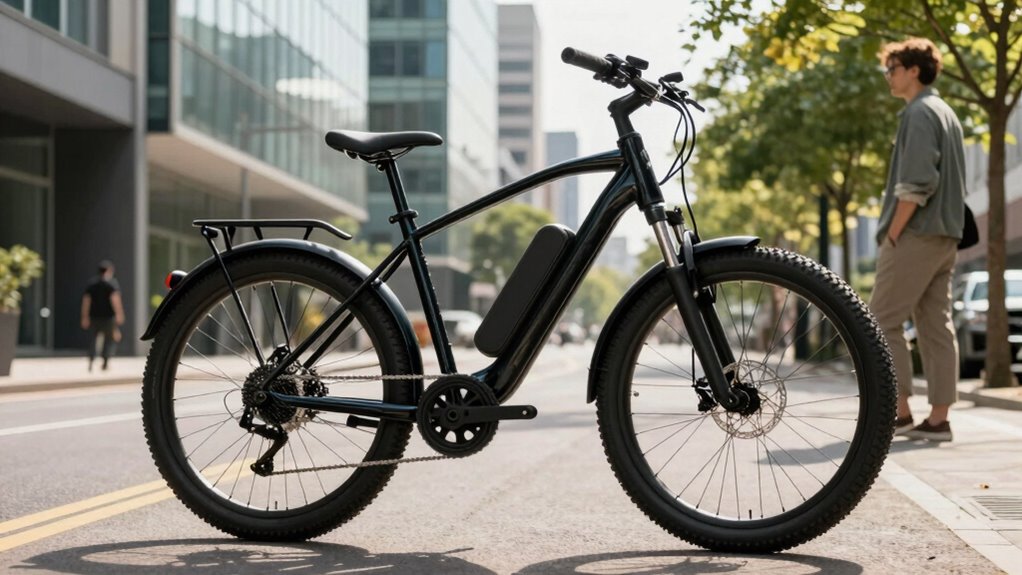

To see if an e-bike fits your lifestyle, consider your daily routines, commute distance, and terrain. If you often face hilly routes or long distances, an e-bike can make travel easier and more enjoyable. Think about maintenance needs, safety comfort, and storage space. Reflect on your fitness goals—whether you want a workout or a convenient ride. Want to find the best fit? Keep exploring to discover how all these factors come together.

Get everyday essentials delivered free with Prime
- Fast, free delivery on millions of items
- Prime Video, Amazon Music and more included
- Member-only deals all year
Key Takeaways
- Assess your daily commute and riding terrain to determine if e-bike assistance enhances your travel experience.
- Consider your maintenance comfort level and safety confidence with electrical components and higher speeds.
- Match e-bike features to your environment, such as bike lanes, trails, or hilly areas, for optimal usability.
- Evaluate if e-bike storage needs and weight fit your lifestyle and available space at home or work.
- Balance your fitness goals with pedal assistance to decide if an e-bike complements or replaces your physical activity.

Deciding if an electric bike suits your lifestyle starts with understanding your daily routines and transportation needs. Think about how you usually get around—whether it’s commuting to work, running errands, or enjoying leisure rides on weekends. If your commute is long or involves hilly terrain, an e-bike can make your journey easier and more enjoyable. But before making a purchase, consider the level of bike maintenance required. Electric bikes tend to need a bit more upkeep than traditional bikes, especially in terms of battery care and electrical components. If you’re not comfortable with regular maintenance or don’t have access to a local bike shop, an e-bike might not be the best fit. Also, take into account your riding safety. Electric bikes can reach higher speeds than regular bikes, so you need to feel confident handling your bike in traffic or on busy paths. Make sure you’re comfortable with the riding posture and controls, and always wear protective gear to stay safe. Evaluating your environment is essential; if you frequently ride on bike lanes or quiet streets, an e-bike can be a safe and convenient option. On the other hand, if your routes include rough terrain or unpaved trails, check whether the e-bike’s specifications match those conditions. Additionally, understanding the flushing mechanisms and efficiency of different bikes can help you choose a model that balances power and water conservation. Being aware of the battery life and charging times is also crucial in choosing a model that fits your usage patterns. Additionally, learning about sound vibrations and frequencies can be helpful in understanding how e-bikes operate quietly and smoothly. It’s also important to consider the overall durability of the bike, especially if you plan to ride frequently or on challenging surfaces. A new technology in electric bikes has improved their overall performance and reliability. Next, think about your physical fitness and how much exercise you want from your rides. An electric bike can supplement your fitness routine or replace some of your workouts, depending on how much pedal assistance you use. If you’re looking to stay active but need some help to avoid exhaustion, an e-bike offers a good balance. However, if you prefer traditional cycling for exercise, a regular bike might serve you better. Consider your storage options as well. E-bikes tend to be heavier due to their batteries and motors, so you’ll want a secure spot at home or work for storing it safely. If you’ll be taking your bike on public transportation or storing it in a small space, make sure it fits comfortably and can be handled easily. Finally, think about your budget—not just for the initial purchase but also ongoing costs like battery replacements and maintenance. If you’re ready for a reliable, low-maintenance ride that enhances your daily commute or leisure time, an e-bike could be a perfect match. But if you’re not prepared for the upkeep or safety considerations, sticking with a traditional bike until you’re more comfortable might be the smarter choice. Overall, deciding if an electric bike fits your lifestyle involves weighing your routines, safety, maintenance willingness, and personal preferences.
electric bike with long battery life
As an affiliate, we earn on qualifying purchases.
As an affiliate, we earn on qualifying purchases.
Frequently Asked Questions
What Is the Typical Lifespan of an Electric Bike Battery?
An electric bike battery typically lasts about 3 to 5 years, depending on your charging habits. Proper battery longevity relies on maintaining good charging habits, like avoiding overcharging and letting it drain completely. Regularly using the bike and storing it in a cool, dry place also helps extend battery life. With careful care, you can maximize your battery’s lifespan and enjoy reliable performance for years to come.
Are Electric Bikes Suitable for All Weather Conditions?
Sure, your electric bike is ready for all weather conditions—except maybe when it’s pouring cats and dogs or snowing heavily. Weather adaptability varies, making seasonal riding tricky. Rain or snow can compromise safety, while extreme heat might affect battery life. So, if you love riding year-round, you’ll need weatherproof gear and a cautious approach. Otherwise, you might just enjoy the thrill of riding in perfect conditions, leaving the storms to the weather apps.
How Much Maintenance Do Electric Bikes Require?
Electric bikes generally require moderate maintenance. You’ll need to regularly check the battery’s health to guarantee longevity and keep it charged properly, which impacts battery longevity. Maintenance frequency includes routine tire inflation, brake checks, and chain lubrication—about once a month or after long rides. Keeping up with these tasks helps your e-bike perform well and extends its lifespan, making it easier and more reliable for your daily commutes or adventures.
Can I Legally Ride an Electric Bike on All Paths?
Sure, you can ride your electric bike on all paths—if you ignore legal regulations and path restrictions. In reality, laws vary widely, and many trails restrict e-bikes to protect pedestrians and natural scenery. Before you zoom off, check local rules, signage, and designated paths. Otherwise, you might find yourself politely asked to dismount or facing fines, turning your smooth ride into an unplanned adventure in the legal wilderness.
What Is the Cost Comparison Between Electric and Traditional Bikes?
Electric bikes typically cost more upfront than traditional bikes, but they save you money over time. You’ll want motor insurance to protect your investment and consider theft prevention measures, like sturdy locks and secure storage. While the initial purchase may be higher, electric bikes often have lower maintenance costs and fewer repairs, making them a cost-effective choice in the long run. Balancing these factors helps determine if they fit your budget.
mountain e-bike for hilly terrain
As an affiliate, we earn on qualifying purchases.
As an affiliate, we earn on qualifying purchases.
Conclusion
Ultimately, deciding if an e-bike suits your lifestyle comes down to your daily needs and adventures. Sure, some worry about maintenance or cost, but think of it as an investment in fun, health, and convenience. If you’re ready to explore new places effortlessly and reduce your carbon footprint, an e-bike could be just what you need. Don’t let potential hurdles hold you back—embrace the ride and see how it transforms your routine!
As an affiliate, we earn on qualifying purchases.
As an affiliate, we earn on qualifying purchases.
Fall Picks
fall essentials
As an affiliate, we earn on qualifying purchases.