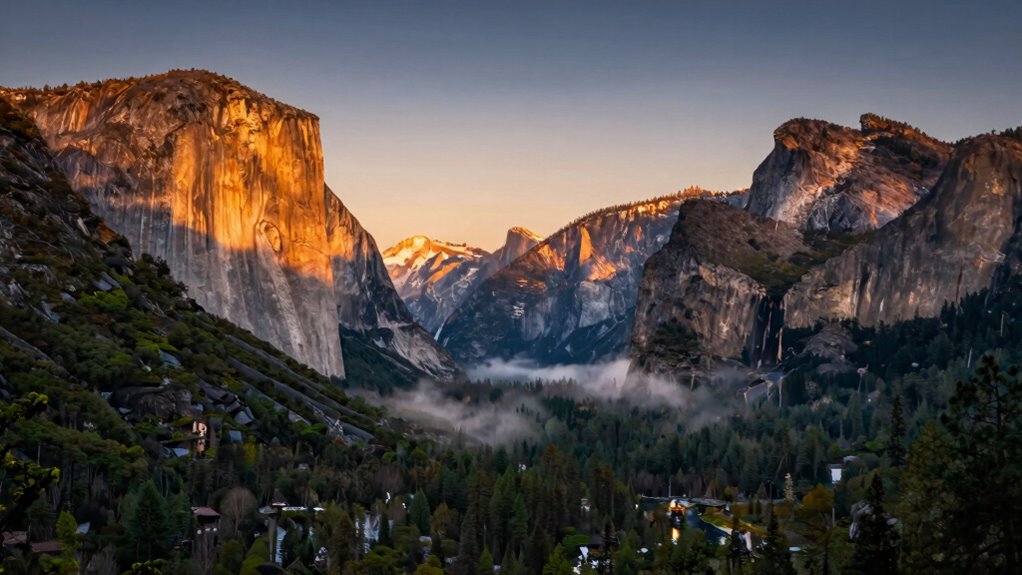

When exploring California’s national parks, remember that conservation is key to protecting fragile ecosystems and endangered species. Stay on trails, keep a safe distance from wildlife, and follow park guidelines to minimize your impact. Enjoy scenic viewpoints like Yosemite’s Glacier Point and Sequoia’s Inspiration Point, which reveal millions of years of geological history. Recognizing the parks’ ecological and geological diversity helps you appreciate their natural beauty. Keep this info in mind as you discover more about these stunning landscapes.
Key Takeaways
- Prioritize understanding conservation practices to protect endangered species and fragile ecosystems across California’s parks.
- Explore key scenic viewpoints like Glacier Point and Inspiration Point for breathtaking vistas.
- Recognize the diverse ecosystems, from alpine meadows to deserts, that support rich wildlife.
- Follow park rules to observe wildlife responsibly and minimize environmental impact.
- Appreciate the geological history behind landscapes to deepen your connection and commitment to preservation.
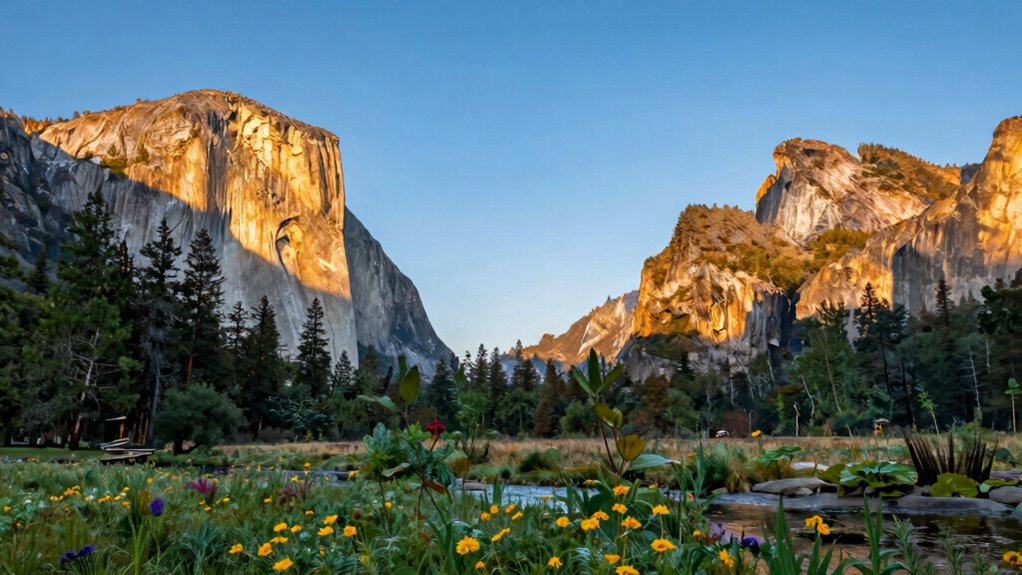
Are you ready to explore some of the most stunning landscapes in the United States? If so, California’s national parks offer an incredible array of sights that will leave you in awe. As you plan your adventure, it’s essential to understand that these parks aren’t just about breathtaking scenery—they’re also crucial for wildlife conservation. Many parks serve as sanctuaries for endangered species and fragile ecosystems, so your visit can support efforts to preserve nature’s diversity. Respect the wildlife by keeping a safe distance, staying on designated trails, and following park guidelines. This helps minimize environmental impact and supports ongoing conservation initiatives, which are vital for the health of these ecosystems. By doing so, you help ensure that future generations will also get to enjoy these natural wonders.
Explore California’s stunning parks responsibly to help preserve their beauty for future generations.
When it comes to scenic viewpoints, California’s national parks are unmatched. Whether you’re gazing over the vast valleys, rugged coastlines, or towering mountain peaks, each viewpoint provides a unique perspective on the state’s diverse landscape. Take your time at spots like Glacier Point in Yosemite or Inspiration Point in Sequoia, where panoramic views stretch for miles. These scenic viewpoints aren’t just great for photos—they’re perfect places to pause, breathe deeply, and soak in the natural beauty around you. As you stand there, remember that these vistas are the result of millions of years of geological activity and natural processes. Protecting these areas means preserving their pristine views for others to enjoy, especially considering the importance of landscape preservation in maintaining these scenic environments. Recognizing the geological history of these formations can deepen your appreciation for their enduring beauty.
Your journey through California’s national parks will also introduce you to a variety of ecosystems, from alpine meadows to desert landscapes. Each environment is teeming with life, and you’ll likely spot some remarkable wildlife along the way. Birdwatchers, in particular, will appreciate the opportunity to see species native to California’s diverse habitats. Keep your eyes open for deer, foxes, or even the occasional bear, but always observe from a distance to avoid disturbing their natural routines. Participating in wildlife conservation efforts, such as following park rules and staying on marked trails, helps maintain healthy ecosystems and protects the animals that call these parks home. Additionally, understanding the importance of contrast ratio in natural settings can deepen your appreciation for how these landscapes are visually preserved and appreciated. Every landscape’s visual harmony plays a vital role in its overall ecological balance and aesthetic appeal, making conservation efforts all the more crucial.

Lonely Planet Yosemite, Sequoia & Kings Canyon National Parks (National Parks Guide)
As an affiliate, we earn on qualifying purchases.
As an affiliate, we earn on qualifying purchases.
Frequently Asked Questions
Which California National Park Is Best for Family Visits?
Yosemite National Park is perfect for family visits, offering stunning scenic viewpoints and diverse wildlife photography opportunities. Kids will love exploring the giant sequoias and waterfalls, while adults can enjoy breathtaking vistas like Tunnel View and Glacier Point. The park provides easy-to-access family-friendly trails and educational programs, making it a memorable experience for all ages. Your family will appreciate the natural beauty and adventure that Yosemite consistently delivers.
Are There Any Parks With Accessible Trails for Disabled Visitors?
Many California parks offer accessible trails and disability accommodations for visitors with mobility challenges. Yosemite, Sequoia, and Lassen Volcanic National Park feature paved or accessible trails designed for wheelchair users and those with limited mobility. Always check each park’s specific facilities beforehand, as they often provide shuttle services, accessible restrooms, and visitor centers to enhance your experience. Planning ahead guarantees you enjoy the natural beauty comfortably and safely.
What Are the Entry Fees for California National Parks?
You’ll find that park entrance fees in California vary, typically around $30 per vehicle for most parks, with some offering discounts for seniors or residents. Many parks participate in fee waiver programs, allowing you to visit free of charge during specific days. Check each park’s website beforehand to confirm current fees and see if you qualify for fee waivers, ensuring you get the most affordable experience.
When Is the Best Time to Visit Each Park?
You should visit California parks during their best seasons: spring for wildflower blooms and late spring to early summer for lush landscapes. For snowy adventures, go in winter when snowmelt creates stunning scenery. Keep in mind, visiting during shoulder seasons often means fewer crowds and better weather. Plan ahead around wildflower seasons or winter snowmelt to enjoy the parks at their most vibrant and accessible.
Are There Guided Tours Available in These Parks?
Yes, there are guided tour options available in California’s national parks. You can join park ranger programs, which offer insightful guided walks, educational talks, and special experiences like night sky viewing or wildlife spotting. These programs enhance your visit and help you learn more about the parks’ history, geology, and ecology. Be sure to check each park’s schedule for specific guided tour options and ranger programs during your visit.
scenic viewpoint binoculars Yosemite Sequoia
As an affiliate, we earn on qualifying purchases.
As an affiliate, we earn on qualifying purchases.
Conclusion
As you explore California’s stunning national parks, remember that over 70 million visitors flock here each year, enthusiastic to witness its natural wonders. From the towering giants of Sequoia to the geothermal wonders of Lassen, these parks offer unforgettable experiences. So pack your gear, embrace adventure, and make the most of your visit. California’s parks aren’t just beautiful—they’re a proof to nature’s incredible diversity, waiting for you to discover and protect for generations to come.

San Diego Zoo Official Guidebook
As an affiliate, we earn on qualifying purchases.
As an affiliate, we earn on qualifying purchases.

Moon California Hiking: The Complete Guide to 1,000 of the Best Hikes in the Golden State (Moon Outdoors)
As an affiliate, we earn on qualifying purchases.
As an affiliate, we earn on qualifying purchases.