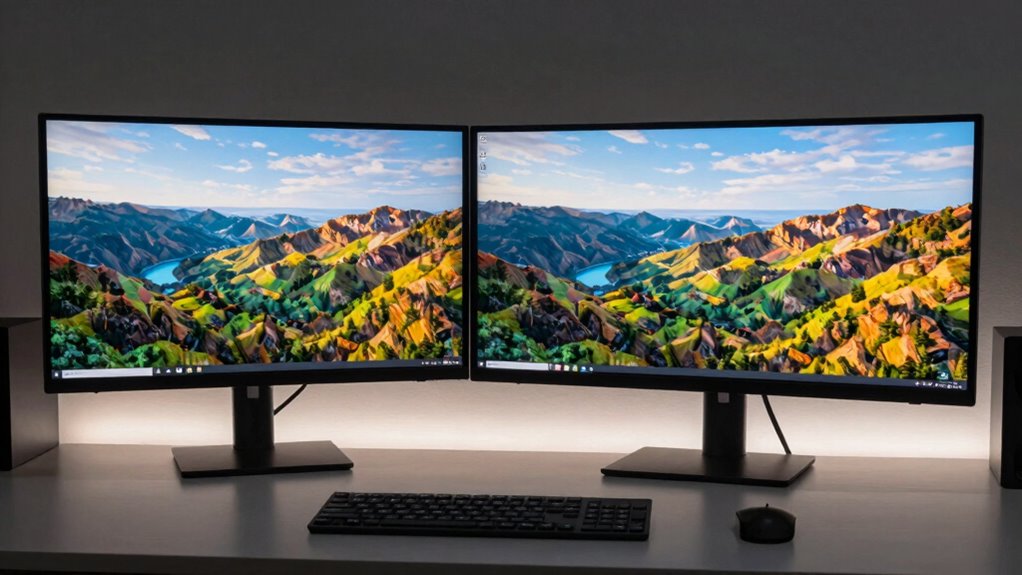

When comparing 4K and ultrawide monitors, think about your workflow and what matters most—sharpness or extra screen space. If you need detailed visuals, go for a 4K display with high pixel density. But if multitasking and wider workspace boost your productivity, ultrawide might suit you better. Consider how each monitor type aligns with your tasks and visual comfort. Continue exploring to uncover all the factors that will help you make the smartest choice.

Get everyday essentials delivered free with Prime
- Fast, free delivery on millions of items
- Prime Video, Amazon Music and more included
- Member-only deals all year
Key Takeaways
- Assess your workflow needs: prioritize multitasking, detailed visuals, or color accuracy for optimal monitor choice.
- Compare resolution and pixel density to ensure visual clarity aligns with your project requirements.
- Evaluate screen size and aspect ratio to balance workspace efficiency and comfort.
- Check color calibration capabilities for projects demanding high color accuracy and consistency.
- Stay informed on digital publishing trends to select monitors compatible with evolving creative workflows.
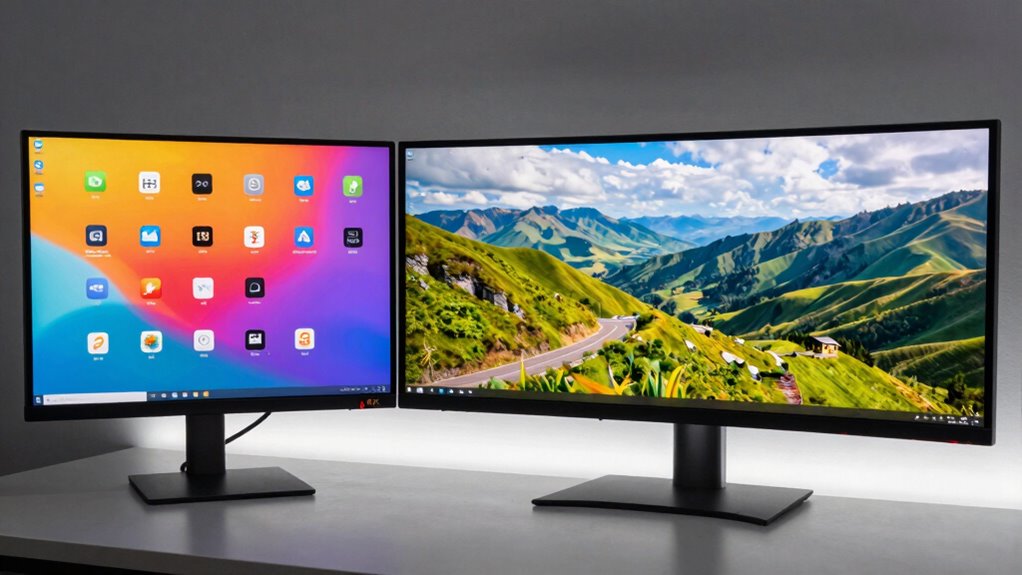
When comparing these options, think about whether you need the extra width for productivity or prefer the pixel-perfect clarity of a 4K display. Additionally, consider the printmaking paper choices and how the different monitor types can complement your workflow, especially if you work with detailed visuals or color-sensitive projects. Paying attention to color accuracy and calibration can further ensure that your monitor setup matches your project needs. It’s also helpful to evaluate how emerging trends in digital publishing influence monitor features and your overall editing process.
As an affiliate, we earn on qualifying purchases.
Frequently Asked Questions
How Does Color Accuracy Differ Between 4K and Ultrawide Monitors?
Color accuracy varies between 4K and ultrawide monitors mainly due to differences in color calibration and display uniformity. 4K monitors often offer better color calibration, providing more precise and consistent colors across the screen. Ultrawide monitors may struggle with display uniformity, causing color shifts at edges. If you prioritize color accuracy for work like photo editing, a well-calibrated 4K monitor typically outperforms ultrawide options.
Are Ultrawide Monitors Better for Multitasking Than 4K Monitors?
Ultrawide monitors are generally better for multitasking because their broader display enhances display ergonomics, allowing you to view multiple windows side-by-side comfortably. They often consume less power than multiple 4K monitors, making them more energy-efficient. With a wider screen, you can organize your workspace more efficiently, reducing clutter and improving productivity. However, consider your specific tasks and desk setup before choosing, as some setups may favor 4K’s higher resolution.
Which Monitor Type Has Lower Input Lag for Gaming?
For gaming, ultrawide monitors generally have lower input lag than 4K monitors, giving you a more responsive experience. You’ll enjoy quicker reactions, smoother gameplay, and less delay between your actions and the screen. Keep in mind, display size influences immersion, while power consumption varies with technology. So, if you prioritize fast response times, an ultrawide monitor is your best bet for a seamless gaming experience.
How Do Refresh Rates Compare Between 4K and Ultrawide Displays?
You’ll find that refresh rates for 4K monitors often max out around 60Hz, but some gaming models reach 120Hz or higher. Ultrawide displays, on the other hand, can also hit higher refresh rates, offering smoother visuals for gaming and multitasking. When choosing, consider ergonomic design and audio quality, as these factors improve your overall experience. Higher refresh rates enhance motion clarity, making both monitor types more enjoyable for fast-paced activities.
What Are the Best Mounting Options for Each Monitor Type?
Imagine you’re setting up a creative workspace; using a wall mount for your ultrawide monitor saves desk space and offers flexible positioning. For 4K monitors, adjustable arm mounts work well, providing ergonomic setup and easy height adjustments. Both types benefit from versatile mounting solutions like VESA-compatible mounts, which guarantee secure attachment and ideal viewing angles. Proper mounting enhances comfort and maximizes your monitor’s capabilities, whether it’s for work, gaming, or content creation.
ultrawide monitor for multitasking
As an affiliate, we earn on qualifying purchases.
As an affiliate, we earn on qualifying purchases.
Conclusion
When weighing whether to choose 4K or ultrawide, remember that your decision depends on your demands and desires. Explore details, determine your needs, and don’t delay your decision. By balancing benefits with boundaries, you’ll find the perfect monitor that matches your multitasking, media, or gaming goals. Ultimately, making mindful, measured choices will lead to a monitor that maximizes your productivity and pleasure. Make your move wisely, and enjoy the upgrade!
As an affiliate, we earn on qualifying purchases.
As an affiliate, we earn on qualifying purchases.
Halloween Picks
halloween
As an affiliate, we earn on qualifying purchases.