
TL;DR

Get everyday essentials delivered free — and shop member deals
- Fast, free delivery on millions of items
- Access to Prime Big Deal Days deals on October 6–7
- Prime Video, Amazon Music and more included
EU Climate Commissioner Jørgensen inaugurated the Greensand CCS project, marking a significant step in Europe’s carbon capture initiatives. The event underscores EU’s commitment to climate goals, though details about project scope remain limited.
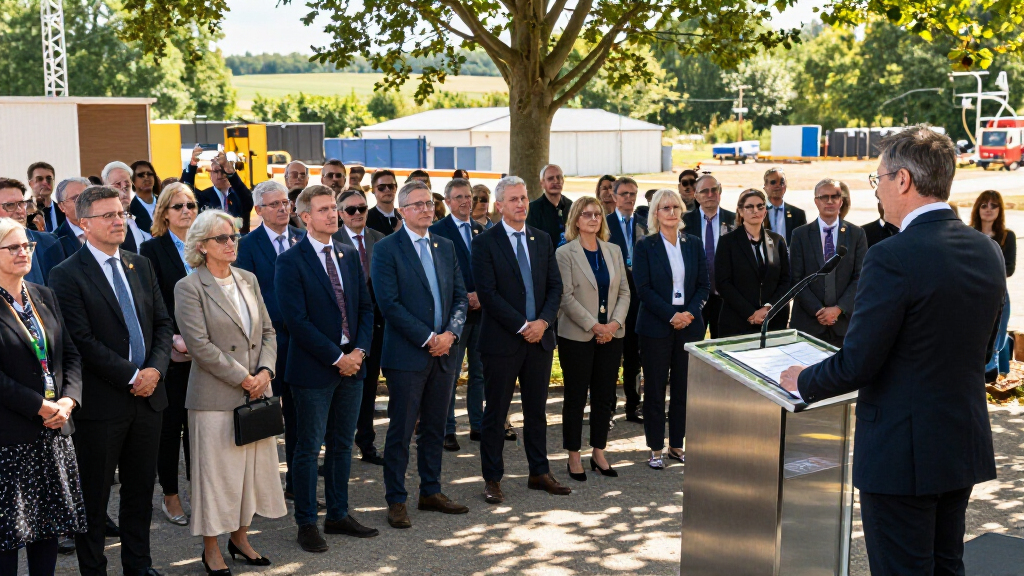
EU Climate Commissioner Vera Jørgensen officially inaugurated the Greensand CCS project today, highlighting its importance in Europe’s efforts to reduce carbon emissions. The ceremony took place at the project site, located in Denmark, where officials and industry representatives gathered to mark the beginning of what is considered a key initiative in the EU’s climate strategy.
The Greensand CCS project aims to develop large-scale carbon capture and storage (CCS) infrastructure in the North Sea region, with a focus on capturing CO2 emissions from industrial sources and transporting them for underground storage. Commissioner Jørgensen’s speech underscored the project’s alignment with the EU’s target to achieve climate neutrality by 2050 and its role in supporting member states’ decarbonization commitments.
While the EU Commission has confirmed the project’s official launch, specific details about the project’s capacity, funding, and operational timeline remain undisclosed. Officials indicated that the project is still in the early planning stages, with detailed technical assessments and environmental impact studies underway. The project is part of the broader EU strategy to scale up CCS as a critical tool for meeting climate targets, especially in heavy industry and power generation sectors.
Why the Greensand CCS Launch Matters for EU Climate Goals
The inauguration of the Greensand CCS project signifies a tangible step in Europe’s push to expand carbon capture infrastructure, which is vital for meeting its climate commitments. As the EU faces increasing pressure to reduce emissions, CCS is viewed as a necessary technology to decarbonize sectors that are difficult to electrify or transition quickly, such as cement, steel, and chemical manufacturing.
This project also demonstrates the EU’s commitment to fostering innovation and investment in climate technologies. The official launch by Jørgensen signals political backing and could catalyze further funding and development in CCS across Europe. However, critics and environmental groups remain cautious, citing concerns about the long-term safety and environmental impact of underground storage, as well as the need for clear oversight and regulation.
carbon capture and storage equipment
As an affiliate, we earn on qualifying purchases.
As an affiliate, we earn on qualifying purchases.
Background and EU’s CCS Strategy
The EU has been increasingly emphasizing carbon capture and storage as part of its climate policy, aiming to complement renewable energy and energy efficiency measures. The European Commission’s climate strategy includes scaling up CCS projects, with several pilot initiatives launched over the past decade. The Greensand region in Denmark has been identified as a promising site due to its geological suitability for safe CO2 storage.
Prior to this event, the EU has committed to supporting CCS through funding programs and partnerships with industry stakeholders. The Greensand project is among the first large-scale initiatives to reach the operational phase, reflecting a broader trend of integrating CCS into national and regional climate plans. The project’s success could influence similar efforts across other member states, especially in sectors where emissions are hardest to abate.
It is worth noting that the EU’s climate strategy remains subject to political and economic uncertainties, including debates over the environmental risks associated with CCS and the availability of sufficient funding.
As an affiliate, we earn on qualifying purchases.
Unconfirmed Details About Project Scope and Timeline
Specifics regarding the project’s capacity, funding sources, operational timeline, and environmental safeguards have not yet been disclosed. It is unclear when the CCS infrastructure will become fully operational or how much investment will be allocated.
Additionally, the long-term safety and environmental impact assessments are still ongoing, leaving some questions about potential risks and regulatory oversight unresolved.
As an affiliate, we earn on qualifying purchases.
Next Steps in Developing the Greensand CCS Initiative
The project team is expected to complete detailed technical assessments and environmental studies over the coming months. Following this, formal approvals and funding allocations are anticipated, with construction possibly beginning within the next two to three years.
Further announcements from the EU Commission and project partners are likely as milestones are reached, including potential updates on capacity, costs, and operational timelines. Monitoring and regulatory frameworks will also be developed to ensure environmental safety and compliance.
carbon capture project monitoring tools
As an affiliate, we earn on qualifying purchases.
As an affiliate, we earn on qualifying purchases.
Key Questions
What is the main goal of the Greensand CCS project?
The primary goal is to develop large-scale carbon capture and underground storage infrastructure to help reduce industrial CO2 emissions in Europe, supporting the EU’s climate neutrality target by 2050.
When will the CCS infrastructure become operational?
Details about the timeline are still under development. Industry sources suggest construction could start within the next two to three years, but official dates have not been announced.
How much funding is allocated to the project?
Funding details have not yet been disclosed. The project is still in the planning and assessment phases, with financial commitments expected to be clarified later.
What are the environmental concerns associated with CCS?
Critics raise concerns about the safety of underground storage, potential leakage, and long-term environmental impacts. The project team is conducting ongoing assessments to address these issues.
Does this project indicate a shift away from renewable energy?
No. CCS is intended as a complementary technology to renewables, especially for sectors where decarbonization is challenging. It is part of a broader strategy to achieve climate goals.
Source: primary
Fall Picks
fall essentials
As an affiliate, we earn on qualifying purchases.