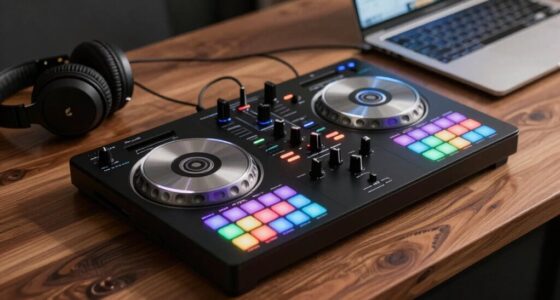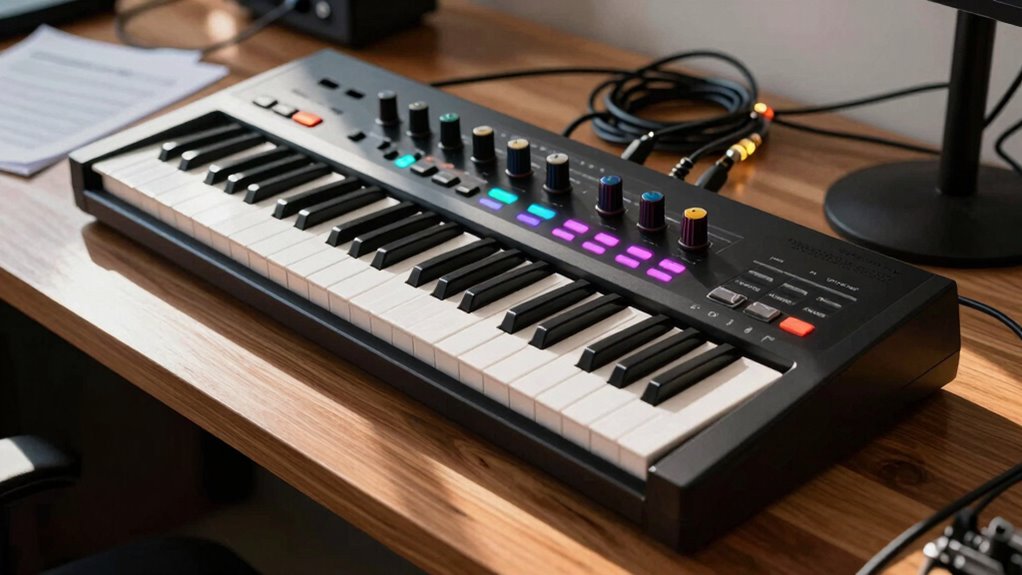

A good synthesizer for music production offers a balance of sound quality, user-friendly controls, and reliable connectivity. It should provide versatile sound design options, whether through analog warmth, digital precision, or hybrid features, to match your artistic style. Easy-to-use interfaces, real-time modulation, and solid MIDI capabilities help you experiment and integrate seamlessly into your setup. When these elements come together, your creative potential is liberated—so keep exploring to discover more about choosing the perfect synth for you.

Get everyday essentials delivered free with Prime
- Fast, free delivery on millions of items
- Prime Video, Amazon Music and more included
- Member-only deals all year
Key Takeaways
- Versatile sound design options, including analog, digital, or hybrid technology, to suit various artistic needs.
- Robust MIDI capabilities for seamless integration with other hardware and software in complex setups.
- Intuitive user interface with accessible controls to facilitate real-time manipulation and creative experimentation.
- High sound quality that aligns with the desired sonic aesthetic, whether warm, organic, or precise and digital.
- Durable build quality ensuring reliability and consistent performance in studio and live environments.
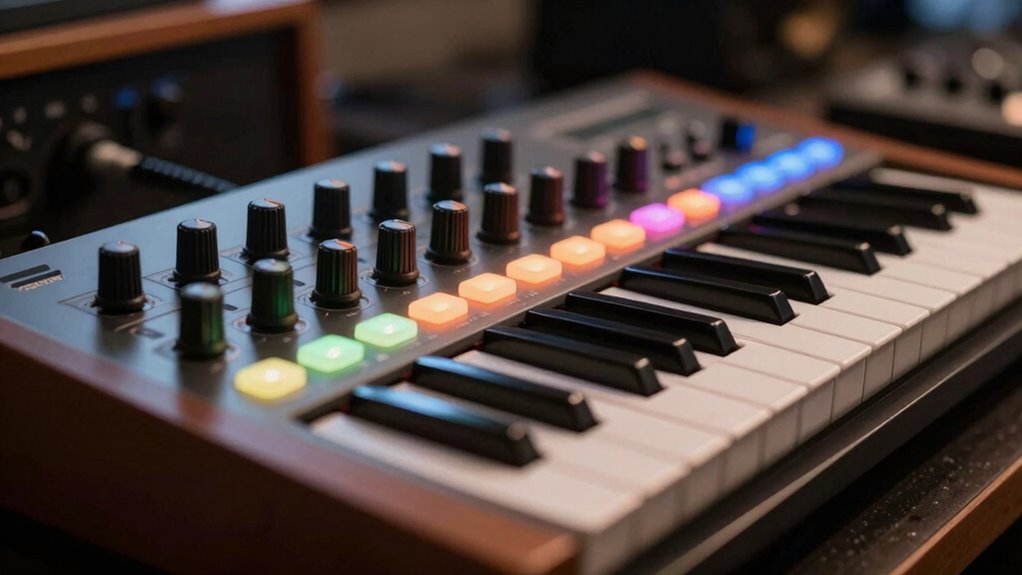
A synthesizer is an indispensable tool in modern music production, capable of creating a vast array of sounds and textures that shape your overall soundscape. When choosing a synthesizer, understanding the differences between analog and digital models is essential. Analog synthesizers generate sound through continuous electrical signals, offering warm, rich tones that many producers find more organic and expressive. Digital synthesizers, on the other hand, use digital signal processing to produce sounds, often providing a wider variety of presets, more precise control, and easier integration with other digital equipment. Your choice depends on your preferred sound aesthetic and workflow needs. Many producers opt for hybrid setups that combine both, leveraging the warmth of analog and the versatility of digital. Understanding sound quality** is crucial for selecting the right instrument that aligns with your artistic goals. Additionally, considering the technology used can influence the overall sonic character and usability of the synthesizer. A good synthesizer also benefits from robust MIDI capabilities**, which allow for more complex and dynamic control over your sounds.
A synthesizer is essential for modern music, shaping sounds with warmth or digital precision to suit your creative workflow.
MIDI integration is another critical aspect that determines a synthesizer’s suitability for your music production. MIDI (Musical Instrument Digital Interface) allows your synthesizer to communicate with other hardware or software, giving you the ability to control multiple sounds, automate parameters, and synchronize with your digital audio workstation (DAW). A good synthesizer should have extensive MIDI capabilities—such as multiple MIDI ports, assignable CC (control change) messages, and seamless integration with your DAW. This connectivity expands your creative possibilities, enabling you to layer sounds, automate parameters like filter cutoff or modulation, and incorporate your synth into complex production setups. Moreover, future-proofing your setup by selecting a synthesizer with comprehensive MIDI features ensures compatibility with evolving technology standards.
Beyond the technical features, the user interface plays a significant role in how effectively you can craft sounds. A good synthesizer should have an intuitive layout with accessible controls, whether it’s knobs, sliders, or a touchscreen. This allows you to manipulate sounds in real-time, fostering spontaneous creativity. Consider the availability of modulation options—such as LFOs and envelope generators—as these are essential for adding movement and expression to your sounds. Additionally, look for a synthesizer with a solid build quality, especially if you plan to perform live or work in different environments.
In essence, a good synthesizer for music production balances sound quality, connectivity, and user experience. Whether you lean towards analog warmth or digital versatility, make sure it offers robust MIDI integration so you can expand your setup and streamline your workflow. When these elements align, your synthesizer becomes a powerful partner in shaping your unique sound, inspiring your creativity, and elevating your productions.
best analog synthesizer for music production
As an affiliate, we earn on qualifying purchases.
As an affiliate, we earn on qualifying purchases.
Frequently Asked Questions
Can Beginners Easily Learn to Use Advanced Synthesizers?
Yes, beginners can easily learn to use advanced synthesizers, especially if they choose models with user-friendly interfaces. These synths often come with intuitive controls and clear layouts that make exploration easier. Additionally, many manufacturers offer beginner tutorials, helping you understand basic functions quickly. With practice, you’ll become more comfortable steering through complex features, making advanced synthesizers accessible and rewarding for new users enthusiastic to grow their skills.
How Important Is Brand Reputation in Choosing a Synthesizer?
Brand reputation plays a significant role when choosing a synthesizer because brand influence often reflects product quality and reliability. A reputable brand’s significance lies in its consistent performance, customer support, and durability, which can save you time and money in the long run. While brand shouldn’t be the sole factor, opting for well-known names can give you peace of mind, knowing you’re investing in a trusted, high-quality instrument.
Are Vintage Synthesizers Better Than Modern Ones?
Are vintage synthesizers better than modern ones? It depends on what you’re after. Vintage synths often deliver rich analog warmth that’s hard to replicate, giving your tracks a timeless feel. But modern synths offer cutting-edge features and greater creative versatility, letting you experiment more easily. If you crave classic tones, vintage may be better. For flexibility and innovation, modern synths shine. Your choice hinges on your unique sound and production goals.
What Are the Maintenance Requirements for Synthesizers?
You should perform regular maintenance on your synthesizer, typically every few months, to keep it in top shape. Keep it clean and dust-free, check cables, and guarantee all connections are secure. If issues arise, follow repair procedures like replacing faulty components or updating firmware. Proper maintenance frequency and understanding repair procedures help prevent costly repairs, extend your synthesizer’s lifespan, and ensure consistent performance for your music production needs.
How Do Software Synths Compare to Hardware in Sound Quality?
Think of software synths as digital painters, capturing the essence of hardware with remarkable detail. They often match hardware in sound fidelity thanks to advanced digital emulation, providing crisp, clear tones. While some purists argue hardware offers a richer, warmer sound, modern software can deliver studio-quality audio at a fraction of the cost. Ultimately, your choice depends on your workflow and the sound you aim to achieve.
digital synthesizer with MIDI capabilities
As an affiliate, we earn on qualifying purchases.
As an affiliate, we earn on qualifying purchases.
Conclusion
Think of a good synthesizer as your musical toolbox—filled with versatile tools that inspire your creativity. When you choose one with the right features, it’s like having a magic wand that transforms your ideas into vibrant sounds. With the right synth, you’re the captain steering your ship through a sea of possibilities. Embrace the journey, experiment freely, and let your music flow like a river—dynamic, powerful, and uniquely yours.
hybrid synthesizer for studio use
As an affiliate, we earn on qualifying purchases.
As an affiliate, we earn on qualifying purchases.
user-friendly synthesizer with real-time modulation
As an affiliate, we earn on qualifying purchases.
As an affiliate, we earn on qualifying purchases.
Columbus Day / Indigenous Peoples' Day Picks
long weekend sales
As an affiliate, we earn on qualifying purchases.