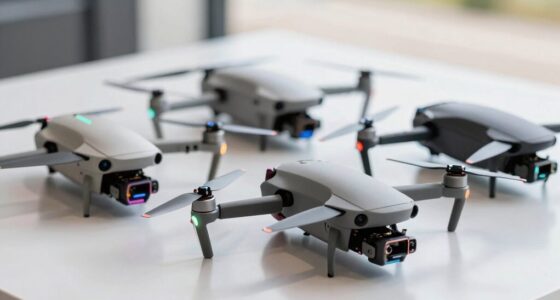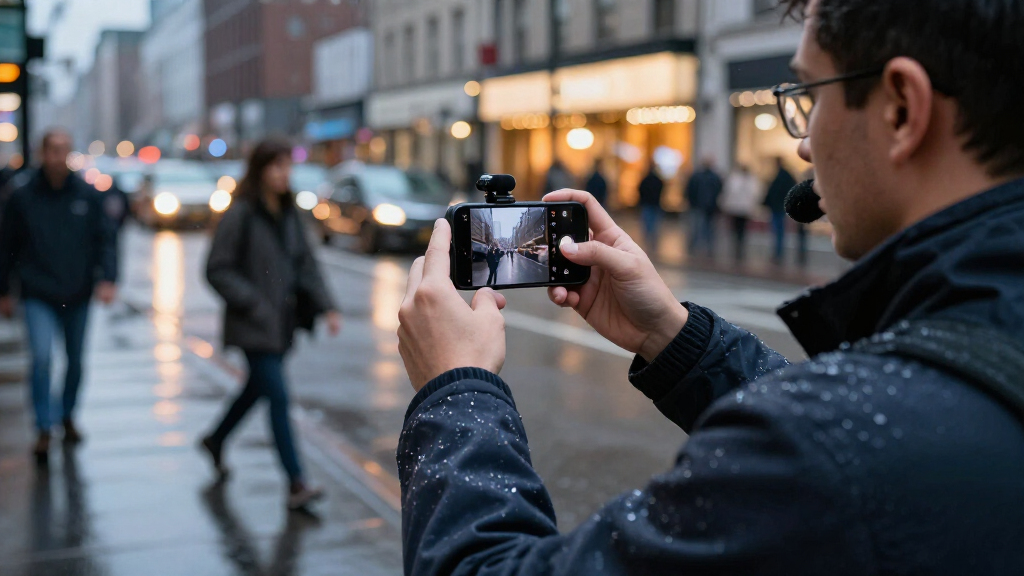
For most mobile reporters, I’d choose the Samsung Galaxy XCover6 Pro as the best overall pick because its rugged design and removable battery suit demanding field work. The Sony Xperia 5 IV is a stronger fit for camera-focused reporting, while the Motorola Moto G Power 5G (2024) offers a more accessible route for everyday assignments. The main tradeoffs are durability versus camera and audio flexibility, plus whether you need specialist tools such as thermal imaging or push-to-talk. Carrier compatibility, refurbished condition, and how long you need to record away from power also matter. Read on for the full breakdown of all seven phones and the reporting workflows each one suits.

Get everyday essentials delivered free with Prime
- Fast, free delivery on millions of items
- Prime Video, Amazon Music and more included
- Member-only deals all year
Key Takeaways
- The Galaxy XCover6 Pro is the most balanced field pick: it combines a rugged design with a removable battery, a practical advantage when assignments run long.
- The Sony Xperia 5 IV favors media control over ruggedness: its camera-focused strengths make it a better fit for image-led work than rough outdoor assignments.
- The Ulefone Armor Mini 20T Pro and LAGENIO Eagle Pro Mini are specialist choices: thermal imaging and a dedicated 4K action camera address distinct reporting needs rather than general newsroom use.
- The UNIWA F400 prioritizes communication: push-to-talk can suit coordinated crews, but it is less compelling as a camera-first reporting phone.
- Network and condition checks matter across this lineup: carrier-specific or renewed models can be poor fits if bands, activation status, battery health, or return terms do not match your needs.
| UNIWA F400 Rugged 4G LTE Push-to-Talk Android Phone |  | Best for Push-to-Talk Field Teams | Operating system: Android 15 | Processor: MediaTek Helio G81 octa-core | Memory and storage: 4 GB RAM; 64 GB storage, expandable to 256 GB via microSD | VIEW LATEST PRICE | See Our Full Breakdown |
| Ulefone Armor Mini 20T Pro 5G Rugged Smartphone with Thermal Imaging |  | Best for Thermal Field Documentation | Operating system: Android 16 | Processor: MediaTek Dimensity 6300, octa-core, up to 2.4 GHz | Memory and storage: 8 GB RAM, up to 16 GB with virtual RAM; 256 GB storage, expandable by TF card up to 2 TB | VIEW LATEST PRICE | See Our Full Breakdown |
| LAGENIO Eagle Pro Mini 5G Rugged Smartphone with 4K Action Camera |  | Best for Compact 4K Field Video | Operating system: Android 16 | Processor: MediaTek D7300 | Memory and storage: 12 GB physical RAM, up to 36 GB with virtual expansion; 256 GB storage, expandable to 1 TB | VIEW LATEST PRICE | See Our Full Breakdown |
| Motorola Moto G Power 5G (2024), 128GB, 8GB RAM, Midnight Blue, Unlocked (Renewed) |  | Best for Screen-First Everyday Reporting | Display: 6.7-inch LCD, 2400 × 1080, 391 ppi, 120 Hz | Processor: MediaTek Dimensity 7020, octa-core, up to 2.2 GHz | Memory and storage: 8 GB RAM; 128 GB storage | VIEW LATEST PRICE | See Our Full Breakdown |
| Samsung Galaxy XCover6 Pro 5G, 128GB, Black, T-Mobile (Renewed) |  | Best Rugged All-Rounder for T-Mobile | Operating system: Android 12, upgradable to Android 13 | Processor and memory: Qualcomm Snapdragon 778G 5G, octa-core up to 2.4 GHz; 6 GB RAM | Storage: 128 GB | VIEW LATEST PRICE | See Our Full Breakdown |
| Sonim XP Pro X800 Unlocked Rugged Smartphone, 256GB, Black (Renewed) |  | Best for Harsh Field Conditions | Operating system: Android 14 | Display: 6.58-inch LCD, 2340 × 1080 | Storage and RAM: 256GB storage, 8GB RAM | VIEW LATEST PRICE | See Our Full Breakdown |
| Sony Xperia 5 IV 128GB Unlocked Smartphone, Black |  | Best for Mobile Video Reporting | Operating system: Android 12 | Display: 6.1-inch FHD HDR OLED, 1080 × 2520, 120Hz | Storage and RAM: 128GB storage, 8GB RAM; SD card slot | VIEW LATEST PRICE | See Our Full Breakdown |
| smartphones for mobile reporting | Operating system | Display | Durability | Processor |
|---|---|---|---|---|
| UNIWA F400 Rugged 4G LTE Push- | Android 15 | 4.0-inch IPS touchscreen, 800 × 480 | IP65 water resistance | MediaTek Helio G81 octa-core |
| Ulefone Armor Mini 20T Pro 5G | Android 16 | 4.7-inch, 720 × 1600, 90 Hz, 700 nits | MIL-STD-810H, IP68, and IP69K | MediaTek Dimensity 6300, octa-core, up to 2.4 GHz |
| LAGENIO Eagle Pro Mini 5G Rugg | Android 16 | 4.0-inch | IP68, IP69K, MIL-STD-810H; underwater shooting up to 1.5 meters | MediaTek D7300 |
| Motorola Moto G Power 5G | Android 14 | 6.7-inch LCD, 2400 × 1080, 391 ppi, 120 Hz | — | MediaTek Dimensity 7020, octa-core, up to 2.2 GHz |
| Samsung Galaxy XCover6 Pro 5G | Android 12, upgradable to Android 13 | 6.6-inch FHD+ LCD, 1080 × 2408, 120 Hz | MIL-STD-810H compliant; IP68 dust and water resistance | — |
| Sonim XP Pro X800 Unlocked Rug | Android 14 | 6.58-inch LCD, 2340 × 1080 | MIL-STD-810H, IP68/IPX9K | — |
| Sony Xperia 5 IV 128GB Unlocke | Android 12 | 6.1-inch FHD HDR OLED, 1080 × 2520, 120Hz | — | — |
More Details on Our Top Picks
UNIWA F400 Rugged 4G LTE Push-to-Talk Android Phone
I’d choose the UNIWA F400 when quick team communication matters more than a roomy screen or polished reporting workflow. Its support for push-to-talk apps such as Zello, dual SIM, and a removable 4,350 mAh battery suit long shifts where staff need to coordinate and swap a battery rather than stop to charge. The IP65 build and operating range also make it a more work-focused choice than the Motorola Moto G Power 5G (2024), which offers a much larger, sharper display but lacks water resistance. The tradeoff is substantial: the F400’s 4-inch, 800 × 480 screen limits comfortable reading, editing, and reviewing footage, and its 13MP rear camera is modest for visual reporting. Carrier support is narrow, too: it is not compatible with AT&T, Verizon, Sprint, or MetroPCS, and push-to-talk depends on a compatible service.
Pros:- Supports push-to-talk apps including Zello and Real PTT for quick team coordination.
- Removable 4,350 mAh battery can be swapped during a long field shift.
- IP65-rated design and a stated operating range from -20°C to 60°C.
- Includes NFC, multiple satellite navigation systems, and an infrared camera.
Cons:- Carrier compatibility excludes AT&T, Verizon, Sprint, and MetroPCS.
- The 4-inch 800 × 480 display is cramped for reading notes and reviewing photos.
- Push-to-talk functionality requires a compatible network service.
Best for: Field crews on T-Mobile or a supported T-Mobile-network MVNO who prioritize push-to-talk coordination, a replaceable battery, and a rugged phone over a large screen.
Not ideal for: Reporters who need a large, high-resolution display for reviewing footage, or anyone using AT&T, Verizon, Sprint, or MetroPCS.
- Operating system:Android 15
- Processor:MediaTek Helio G81 octa-core
- Memory and storage:4 GB RAM; 64 GB storage, expandable to 256 GB via microSD
- Display:4.0-inch IPS touchscreen, 800 × 480
- Battery and charging:4,350 mAh removable battery; 15 W fast charging
- Connectivity:4G LTE, dual SIM, dual-band Wi-Fi, Bluetooth 5.0, NFC
- Cameras:13 MP rear, 13 MP infrared, 5 MP front
- Durability:IP65 water resistance
- Weight:8.64 ounces
Our verdict“Choose the F400 for rugged, T-Mobile-based team communication; skip it if screen space, camera flexibility, or broad carrier support matters more.”
Ulefone Armor Mini 20T Pro 5G Rugged Smartphone with Thermal Imaging
The Ulefone Armor Mini 20T Pro earns its place for reporting assignments where documenting heat is part of the story: built-in FLIR Lepton 3.5 thermal imaging can add a distinct visual record of equipment, buildings, or infrastructure. That specialist tool separates it from the LAGENIO Eagle Pro Mini, whose dedicated action camera is aimed at stabilized 4K video rather than temperature imaging. The Ulefone also pairs a 50MP main camera with a 6,200mAh battery, wireless charging, and a bright multi-mode LED, giving field workers useful tools beyond its thermal sensor. Its IP68, IP69K, and MIL-STD-810H ratings suit rough conditions. Still, the 4.7-inch display leaves less room for scripts and edits than the Motorola Moto G Power’s 6.7-inch screen, while 10.6 ounces and carrier exclusions for AT&T and Cricket may narrow its appeal.
Pros:- FLIR Lepton 3.5 thermal imaging adds a specialized visual reporting tool.
- 6,200mAh battery supports extended field use and offers wired, wireless, and reverse charging.
- IP68, IP69K, and MIL-STD-810H ratings suit demanding field conditions.
- 130-LED light provides up to 500 lumens for poorly lit work areas.
Cons:- Not compatible with AT&T or Cricket.
- The 4.7-inch screen is small for reviewing and editing reports.
- At 10.6 ounces, it is heavier than a typical compact phone.
Best for: Infrastructure, facilities, and environmental reporters who need thermal images alongside conventional photos and work on a supported carrier.
Not ideal for: Reporters who prioritize a large editing screen, a lightweight everyday phone, or AT&T or Cricket compatibility.
- Operating system:Android 16
- Processor:MediaTek Dimensity 6300, octa-core, up to 2.4 GHz
- Memory and storage:8 GB RAM, up to 16 GB with virtual RAM; 256 GB storage, expandable by TF card up to 2 TB
- Display:4.7-inch, 720 × 1600, 90 Hz, 700 nits
- Rear camera and thermal imaging:50 MP Samsung ISOCELL GN1; FLIR Lepton 3.5 thermal imaging
- Battery and charging:6,200 mAh; 33 W wired, 15 W wireless, reverse charging
- Cellular connectivity:5G, dual SIM; not compatible with AT&T or Cricket
- Durability:MIL-STD-810H, IP68, and IP69K
- Weight:10.6 ounces
Our verdict“Pick the Ulefone when thermal documentation is a real reporting need, not merely a bonus feature.”
LAGENIO Eagle Pro Mini 5G Rugged Smartphone with 4K Action Camera
For mobile reporters who need moving footage from a small, rugged phone, the LAGENIO Eagle Pro Mini has a clear specialty: its dedicated 48MP ultra-wide action camera records stabilized 4K video, with an underwater mode rated up to 1.5 meters. That makes it a more video-specific pick than the Ulefone Armor Mini 20T Pro, which instead adds thermal imaging and a brighter work light. The LAGENIO’s 4-inch body, 5G, dual SIM, and storage expansion to 1TB suit field capture where portability and recording time matter. But compactness cuts both ways: the 4-inch display is less comfortable for framing, playback, and edits than the Motorola Moto G Power’s 6.7-inch panel. Carrier limits matter as well; it is not compatible with AT&T or Verizon, so check network support before relying on it for a live assignment.
Pros:- Dedicated 48MP, 152.6-degree ultra-wide action camera records stabilized 4K video.
- Compact 4-inch form and 210 g weight are easier to carry on active assignments.
- IP68, IP69K, and MIL-STD-810H protection, with underwater shooting up to 1.5 meters.
- 256 GB storage can be expanded up to 1 TB.
Cons:- Not compatible with AT&T or Verizon.
- The 4-inch display limits comfortable framing, footage review, and on-phone editing.
- Its specialized action camera may be less useful for reporters focused mainly on written or interview-based work.
Best for: Mobile video reporters who want a compact, rugged handset with a dedicated stabilized ultra-wide camera for action and underwater footage.
Not ideal for: Reporters who need a large screen for editing, or who rely on AT&T or Verizon service.
- Operating system:Android 16
- Processor:MediaTek D7300
- Memory and storage:12 GB physical RAM, up to 36 GB with virtual expansion; 256 GB storage, expandable to 1 TB
- Display:4.0-inch
- Connectivity:5G, dual SIM; not compatible with AT&T or Verizon
- Action camera:48 MP, 152.6-degree ultra-wide, stabilized 4K video
- Other cameras:50 MP rear camera; 32 MP front camera
- Durability:IP68, IP69K, MIL-STD-810H; underwater shooting up to 1.5 meters
- Weight:210 g
Our verdict“Choose the LAGENIO for rugged, stabilized wide-angle field video if its small screen and carrier limits fit your workflow.”
Motorola Moto G Power 5G (2024), 128GB, 8GB RAM, Midnight Blue, Unlocked (Renewed)
The Motorola Moto G Power 5G (2024) is the most approachable choice here for reporters who spend as much time reading notes, reviewing photos, and writing updates as they do capturing them. Its 6.7-inch Full HD+ display gives scripts and documents more breathing room than the 4-inch LAGENIO Eagle Pro Mini or UNIWA F400, while the 120Hz refresh rate keeps scrolling fluid. The 50MP main camera with optical image stabilization and an 8MP ultrawide provide a more conventional all-purpose setup than either rugged mini phone’s specialized tools. A 5,000mAh battery and stereo speakers round out a practical daily-work package. The compromise is protection: unlike the IP68-rated Samsung Galaxy XCover6 Pro, this model is not water resistant. It is also a renewed, single-SIM device, so buyers should weigh that format against field conditions and their preference for a larger screen.
Pros:- Large 6.7-inch Full HD+ display gives notes and footage more room than the compact rugged phones.
- 50MP main camera includes optical image stabilization for steadier capture.
- 5,000mAh battery supports a full day of mixed reporting tasks.
- Stereo speakers with Dolby Atmos can help with interview playback and media review.
Cons:- Not water resistant, unlike the Samsung Galaxy XCover6 Pro and rugged mini phones.
- Single Nano SIM limits flexibility for managing separate work and personal lines.
- Renewed condition may not suit buyers who want a new device.
Best for: Reporters who want a large screen for notes and editing, a stabilized main camera, and an unlocked 5G phone for everyday assignments.
Not ideal for: Field reporters working in wet or dusty environments who need rated water protection or a removable battery.
- Display:6.7-inch LCD, 2400 × 1080, 391 ppi, 120 Hz
- Processor:MediaTek Dimensity 7020, octa-core, up to 2.2 GHz
- Memory and storage:8 GB RAM; 128 GB storage
- Operating system:Android 14
- Rear cameras:50 MP wide with OIS; 8 MP ultrawide
- Front camera:16 MP
- Battery:5,000 mAh lithium-ion
- Connectivity and SIM:5G, Bluetooth 5.3, USB Type-C; single Nano SIM
- Water resistance:Not water resistant
Our verdict“Pick the Motorola for screen space and everyday reporting tools, but choose a rugged model for assignments where water and impact protection are priorities.”
Samsung Galaxy XCover6 Pro 5G, 128GB, Black, T-Mobile (Renewed)
The Samsung Galaxy XCover6 Pro is the stronger all-round field pick for reporters who need a genuinely rugged phone without giving up a useful-sized display. Its 6.6-inch FHD+ 120Hz screen is far more workable for reviewing footage and typing notes than the 4-inch UNIWA F400 or LAGENIO Eagle Pro Mini, and its IP68 and MIL-STD-810H ratings better suit rough assignments than the Motorola Moto G Power, which has no water-resistance rating. The 50MP main and 8MP ultrawide cameras cover common reporting needs, while the removable 4,050mAh battery offers a practical way to carry backup power. This is not a universal recommendation: it is locked to T-Mobile, weighs 14.88 ounces, and arrives as a renewed device. Android 12, upgradable to Android 13, is also an older software baseline than the Android 15 and 16 options here.
Pros:- IP68 water and dust resistance plus MIL-STD-810H compliance suit demanding field work.
- 6.6-inch FHD+ display offers more room for notes and footage than the compact rugged phones.
- Removable 4,050mAh battery can be replaced during a long assignment.
- 50MP main and 8MP ultrawide cameras cover standard reporting shots.
Cons:- Locked to T-Mobile service.
- At 14.88 ounces, it is heavy for a phone carried throughout a reporting shift.
- Listed with Android 12, upgradable to Android 13, an older version than the Android 15 and 16 models here.
Best for: T-Mobile reporters working in demanding environments who want a large, readable screen, water resistance, and a removable battery.
Not ideal for: Reporters on other carriers, those seeking a lightweight handset, or buyers who want a newer listed Android version.
- Operating system:Android 12, upgradable to Android 13
- Processor and memory:Qualcomm Snapdragon 778G 5G, octa-core up to 2.4 GHz; 6 GB RAM
- Storage:128 GB
- Display:6.6-inch FHD+ LCD, 1080 × 2408, 120 Hz
- Cameras:50 MP wide and 8 MP ultrawide rear; 13 MP front
- Battery:4,050 mAh removable
- Cellular connectivity:5G, T-Mobile service only
- Durability:MIL-STD-810H compliant; IP68 dust and water resistance
- Weight:14.88 ounces
Our verdict“Choose the XCover6 Pro for a large-screen rugged work phone on T-Mobile; skip it if carrier freedom or lighter carry matters more.”
Sonim XP Pro X800 Unlocked Rugged Smartphone, 256GB, Black (Renewed)
For reporting from wet, dusty, or impact-prone locations, the Sonim XP Pro X800 puts physical resilience ahead of advanced camera tools. Its MIL-STD-810H and IP68/IPX9K protection can help reduce the risk of a field assignment being interrupted by rough conditions, while 256GB of storage leaves room for recordings and documents. The 5,000 mAh battery, 5G, and Wi-Fi 6E also suit reporters who need to work away from a desk. Compared with the Samsung Galaxy XCover6 Pro, this model offers more listed storage and wireless charging, but the supplied details do not specify a comparable reporting-focused accessory ecosystem. Its 1080p video ceiling is a real limitation beside the Sony Xperia 5 IV and its 4K HDR capture. This is a renewed device with a 90-day limited warranty, so condition and coverage deserve attention.
Pros:- MIL-STD-810H and IP68/IPX9K protection ratings suit demanding field conditions
- 256GB storage and 8GB RAM provide room for files and everyday reporting tasks
- Unlocked 5G and Wi-Fi 6E offer flexible connectivity options
- 5,000 mAh battery and wireless charging support
Cons:- Video capture is limited to 1080p, below the Xperia 5 IV’s listed 4K HDR recording
- Renewed condition and a 90-day limited warranty may not suit buyers seeking new-device coverage
- The 6.58-inch LCD is larger than a compact reporting phone and is not specified as OLED
Best for: Field reporters working around rain, dust, or rough handling who prioritize durability, onboard storage, and an unlocked 5G connection over high-resolution video.
Not ideal for: Video journalists who need 4K recording, or buyers who want a new device and longer warranty coverage rather than a renewed phone with a 90-day limited warranty.
- Operating system:Android 14
- Display:6.58-inch LCD, 2340 × 1080
- Storage and RAM:256GB storage, 8GB RAM
- Cellular:Unlocked 5G, dual SIM
- Durability:MIL-STD-810H, IP68/IPX9K
- Battery:5,000 mAh; wireless charging supported
- Video capture:1080p
- Condition and warranty:Renewed; 90-day limited warranty
Our verdict“Choose the XP Pro X800 for rugged assignments where storage and protection matter more than 4K video or a new-device warranty.”
Sony Xperia 5 IV 128GB Unlocked Smartphone, Black
The Sony Xperia 5 IV is the video-first choice here: its three rear cameras support 4K HDR recording up to 120 fps, giving reporters more scope for detailed footage and slow-motion clips than the Sonim XP Pro X800’s 1080p capture. Its 6.1-inch 120Hz HDR OLED keeps the phone more compact than the Sonim’s 6.58-inch display while offering a screen suited to reviewing footage on location. The 3.5mm headphone jack is useful for wired audio monitoring, and the SD card slot can expand space beyond the listed 128GB. The tradeoff is a less clearly rugged build: water resistance is listed, but no protection level is specified. Android 12 is also older than the Sonim’s Android 14. This is the better fit for camera-led reporting, not for assignments where confirmed heavy-duty protection leads the brief.
Pros:- Three rear cameras support 4K HDR recording up to 120 fps
- 6.1-inch 120Hz HDR OLED offers a compact screen for reviewing footage
- SD card slot allows storage expansion beyond the built-in 128GB
- 3.5mm headphone jack supports wired audio monitoring
Cons:- Water resistance level is not specified, unlike the Sonim XP Pro X800’s stated protection ratings
- Android 12 is older than the Sonim XP Pro X800’s Android 14
- Listed built-in storage is 128GB, half the Sonim’s 256GB
Best for: Mobile journalists who shoot video regularly, want 4K HDR slow-motion options, and value a compact phone with a headphone jack and expandable storage.
Not ideal for: Reporters working in highly abrasive or wet environments who need explicit IP and military-grade protection ratings, or buyers who prioritize a newer listed Android version.
- Operating system:Android 12
- Display:6.1-inch FHD HDR OLED, 1080 × 2520, 120Hz
- Storage and RAM:128GB storage, 8GB RAM; SD card slot
- Cellular:5G, single SIM
- Rear cameras:Three 12MP cameras
- Video recording:4K HDR up to 120 fps
- Battery:5,000 mAh lithium-polymer; wireless charging supported
- Connectors:3.5mm headphone jack, USB Type-C
- Water resistance:Water resistant; level not specified
Our verdict“Pick the Xperia 5 IV when video quality, slow-motion capture, and audio connections matter more than clearly rated rugged protection.”
How We Picked
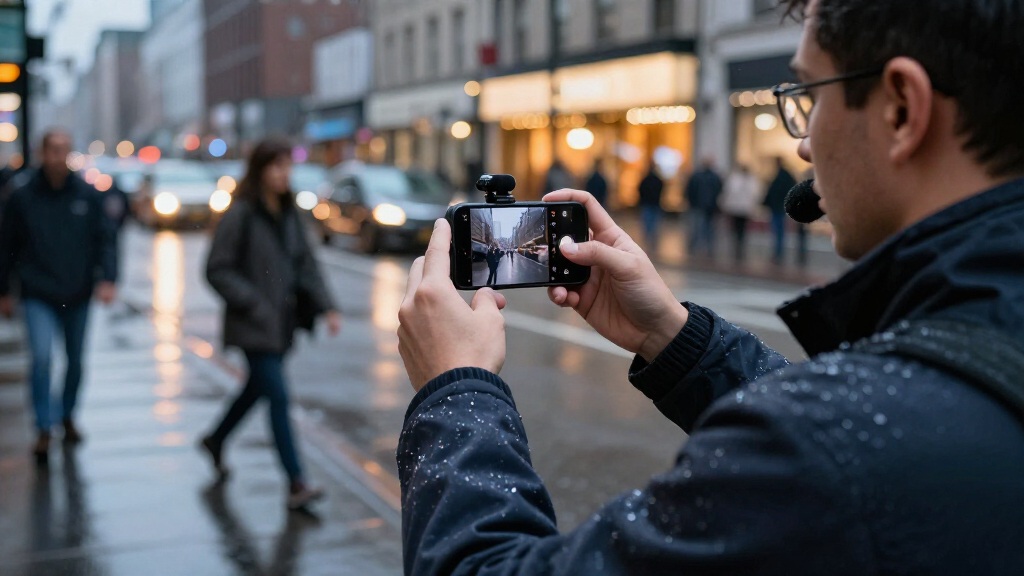
I ranked these phones by how well their features support the core tasks of mobile reporting: capturing usable photos and video, recording or relaying information, staying connected, and working through long or rough assignments. I gave extra weight to practical field considerations such as physical durability, battery flexibility, storage, and whether a specialist feature solves a real reporting problem. I also considered the friction a buyer may face, including carrier restrictions and the added uncertainty of renewed devices.
The Galaxy XCover6 Pro leads for balance, while the Sony Xperia 5 IV ranks higher for camera-led work than for rugged field use. The Motorola is a more everyday, value-minded option; Sonim and UNIWA lean toward rugged communications; and Ulefone and LAGENIO serve narrower thermal-imaging and action-camera needs. Since these models differ in purpose, I ranked them by reporting fit rather than treating the most specialized hardware as automatically better.
| smartphones for mobile reporting | Operating system | Processor | Durability |
|---|---|---|---|
| UNIWA F400 Rugged 4G LTE Push- | Android 15 | MediaTek Helio G81 octa-core | IP65 water resistance |
| Ulefone Armor Mini 20T Pro 5G | Android 16 | MediaTek Dimensity 6300, octa-core, up to 2.4 GHz | MIL-STD-810H, IP68, and IP69K |
| LAGENIO Eagle Pro Mini 5G Rugg | Android 16 | MediaTek D7300 | IP68, IP69K, MIL-STD-810H; underwater shooting up to 1.5 meters |
| Motorola Moto G Power 5G | Android 14 | MediaTek Dimensity 7020, octa-core, up to 2.2 GHz | — |
| Samsung Galaxy XCover6 Pro 5G | Android 12, upgradable to Android 13 | — | MIL-STD-810H compliant; IP68 dust and water resistance |
| Sonim XP Pro X800 Unlocked Rug | Android 14 | — | MIL-STD-810H, IP68/IPX9K |
| Sony Xperia 5 IV 128GB Unlocke | Android 12 | — | — |
Factors to Consider When Choosing Smartphones For Mobile Reporting
Before choosing a phone, map the device to the assignment rather than the other way around. Mobile reporting can mean quick interviews and notes, live updates from a crew, or producing polished video in the field. These needs place different demands on cameras, connectivity, battery strategy, and protection.
Match the camera to the reporting format
A phone suited to still photos and short clips may not be the best tool for long interviews or action footage. Think about whether your work depends on stable video, dependable focus, clear audio capture, or a specialized view such as thermal imaging. A built-in feature can save setup time, but it does not replace checking how the phone handles the conditions you actually cover. Plan for an external microphone or light if audio and lighting matter more than camera novelty. Avoid choosing on resolution alone; a high-resolution mode can create large files and still leave weak audio or difficult exposure. For repeat assignments, consistency and a simple capture workflow can matter more than having the most camera modes.
Treat connectivity as part of the reporting kit
A phone that cannot connect reliably on your carrier or in your region is a poor field tool, even if its hardware suits the assignment. Before buying, verify supported network bands, SIM or eSIM options, carrier restrictions, and whether the model can be activated on your intended plan. A carrier-branded phone may be a sensible choice for an existing customer but a frustrating one for someone switching networks. Coverage also varies by location, so consider whether your work routinely takes you beyond strong cellular service. If you file large video, test your upload workflow and keep a backup route such as Wi-Fi or a separate hotspot. Do not assume that a label such as 5G guarantees useful service everywhere you report.
Plan for power across a full assignment
Continuous video, navigation, uploads, and bright outdoor screens can drain a battery faster than ordinary messaging. Estimate the longest time you may work without access to a wall outlet, then plan around a spare battery, power bank, or vehicle charging. A removable battery can reduce downtime, but only if compatible spares are easy to obtain and swapping batteries fits your workflow. A sealed phone paired with a power bank may be simpler for a lighter assignment kit. Check how charging works with your case and mounting gear before building a setup around it. The common mistake is to judge battery life from casual daily use rather than the combined demands of recording, connectivity, and screen time.
Choose protection for the hazards you actually face
Rugged construction can be useful around rain, dust, drops, and equipment, but it often brings extra size and weight. A slim phone may be easier to handle for interviews or long handheld recording, while a heavier protected model can be more reassuring on a construction site or outdoor assignment. Check the stated protection ratings and the conditions behind them instead of assuming every rugged phone can handle every impact or exposure. Ports, buttons, and accessories still need care, and damage can affect water resistance. A protective case on a standard phone may be enough for occasional field work; frequent exposure to harsh conditions can justify a purpose-built rugged model. Match protection to risk rather than paying for rugged features you are unlikely to use.
Allow for storage, backups, and handoff
Video files can fill storage quickly, especially when several assignments overlap or footage must remain on the phone until filing. Check internal capacity and whether the device supports expandable storage, then estimate your typical recording time and file sizes. Leave room for apps, updates, and temporary exports rather than treating all advertised storage as available for footage. Set a routine for transferring files to secure storage and confirming the copy before deleting originals. If a phone is shared across a team, agree on naming, backup, and account practices before a deadline makes them urgent. Buyers often focus on capture capacity but overlook the time and connection needed to move material off the device.
Factor refurbished condition and ownership into the decision
Renewed phones can make capable hardware more attainable, but condition varies and a used battery may have less capacity than a new one. Review the seller’s return window, warranty coverage, included accessories, and stated inspection process before relying on a device for paid assignments. For reporting, a weak battery or unreliable charging port can disrupt a day even when the phone otherwise works well. Confirm that the device is unlocked if you need to change carriers, and check that any carrier-specific version fits your plan. Also consider software support and whether the apps you need run on the phone’s current system. Paying more for a device with clearer support or a stronger return policy can make sense when downtime has a real work cost.
Frequently Asked Questions
Is a rugged phone better than a camera-focused phone for field reporting?
It depends on what puts an assignment at risk. A rugged phone is a better match when drops, dust, rain, or long periods outdoors are routine, while a camera-focused model may suit work where image capture and manual control matter more. Neither choice solves every need: a rugged body does not guarantee strong interview audio, and a camera-oriented phone may need a protective case in rough settings. Consider how often you face hazards and what failure would cost during a deadline. If you report across both settings, prioritize the limitation that would disrupt your work most often.
Should I choose a phone with thermal imaging for reporting?
Thermal imaging is useful when the assignment specifically involves heat patterns, equipment checks, building issues, or similar visual evidence. It is not a substitute for a conventional camera, and it may add little value to general interviews, event coverage, or routine breaking news. Before paying for a specialized sensor, confirm that your publication or client can use the resulting imagery and that it fits the reporting task. You may also need to explain what thermal images can and cannot show so readers do not mistake them for ordinary photographs. For most general reporters, camera, audio, battery, and connectivity deserve attention first.
How should I check whether a renewed phone is ready for field assignments?
Start by confirming the return policy, warranty, carrier-unlocked status, and compatibility with your network. Once it arrives, test charging, buttons, cameras, microphones, speakers, cellular data, and any features you depend on before taking it on assignment. Check battery performance over a realistic recording and upload session rather than relying on a brief setup test. Inspect the ports and body for damage, and confirm that the operating system supports your required apps. Keep a backup phone available until the renewed device has passed those checks in your normal workflow.
Is push-to-talk useful if my reporting team already uses messaging apps?
Push-to-talk can help a coordinated crew share brief updates without typing, particularly when members are moving or working with their hands occupied. Messaging apps remain better for details, links, images, and written records, so the two approaches serve different purposes. Check whether the phone’s push-to-talk function works with the service your team uses; a dedicated button alone does not create a compatible team network. Also consider whether constant voice traffic would be practical in interviews or quiet environments. If your work is mostly solo or text-based, a push-to-talk feature may not justify giving up camera or battery advantages elsewhere.
Do mobile reporters need 5G, or is a reliable 4G phone enough?
A reliable 4G connection can handle many reporting tasks, including messaging, notes, and moderate uploads, especially where 5G coverage is limited. Faster service can help when sending large video files under deadline, but only if the carrier provides strong coverage where you work. Check network compatibility and local coverage before treating 5G as a deciding feature. For assignments in weak-signal areas, offline capture, storage, battery life, and a backup upload plan may matter more than the network label. Choose based on the places and file sizes your work actually involves.
Conclusion
I’d choose the Samsung Galaxy XCover6 Pro as the best overall for reporters who need a rugged, adaptable field phone, and the Motorola Moto G Power 5G (2024) as the best value-minded everyday pick for less demanding assignments. The Sony Xperia 5 IV is my best premium choice for camera-led work, while the Motorola is also the simplest starting point for beginners who want a general-purpose phone rather than specialist tools. For specific needs, pick the UNIWA F400 for push-to-talk workflows, the Ulefone Armor Mini 20T Pro for thermal imaging, or the LAGENIO Eagle Pro Mini for its 4K action-camera approach; consider the Sonim XP Pro X800 when rugged field use and its unlocked configuration suit your setup. Before settling on any renewed or carrier-linked model, check network fit, device condition, and return terms. The right choice is the phone that supports your reporting routine without adding avoidable friction.