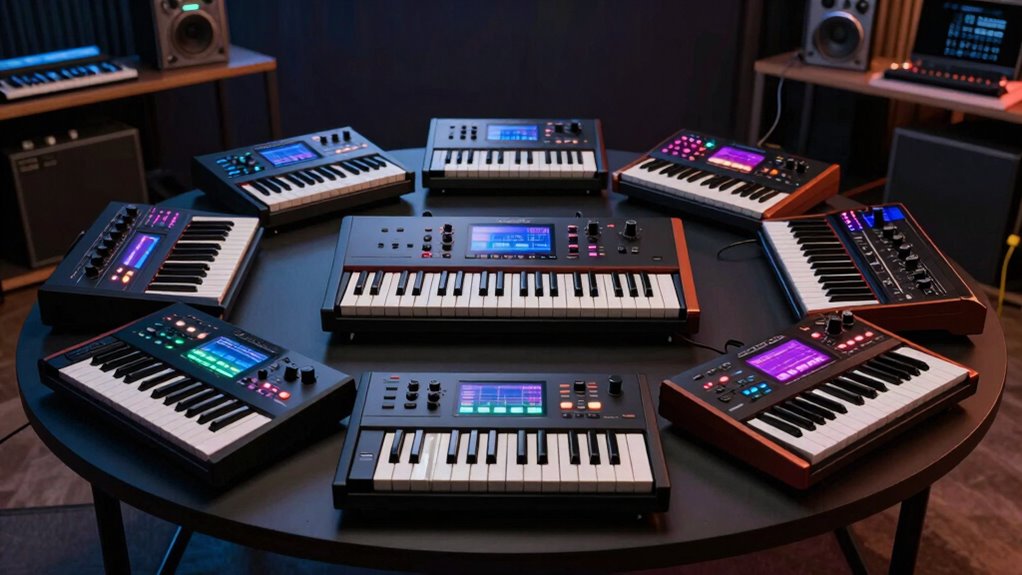
Choosing the right synthesizer keyboard depends on your goals—whether you’re a beginner, a live performer, or a studio producer. The Yamaha DGX-670B stands out for its authentic piano feel and learning features, making it ideal for players seeking a versatile digital piano with advanced sound options. For those focused on analog sound creation, the MOOG Messenger offers classic MOOG tones in a portable format, perfect for studio and live use, albeit with a steeper learning curve. Meanwhile, the JIKADA 61-Key Portable Keyboard provides a comprehensive bundle with built-in teaching modes, perfect for learners and intermediate players. Lastly, the Roland JUNO-D6 delivers a vast library of sounds and performance features suited for live gigs and studio work, though its 61-key limit might restrict more advanced players.

Get everyday essentials delivered free with Prime
- Fast, free delivery on millions of items
- Prime Video, Amazon Music and more included
- Member-only deals all year
Each of these options presents unique tradeoffs—ranging from price and complexity to portability and sound versatility—that help narrow down which model best fits your needs.
Key Takeaways
- The Yamaha DGX-670B offers authentic piano feel and learning features, best for versatile players and beginners wanting a digital piano experience.
- The MOOG Messenger excels in analog sound creation with expressive controls but has a steep learning curve and limited polyphony.
- The JIKADA 61-Key is ideal for learners, providing a complete package with teaching modes and accessories, but less suited for advanced performance.
- The Roland JUNO-D6 boasts an extensive sound library and performance tools, perfect for live performers, yet its 61-key size may limit complex arrangements.
- Tradeoffs across these models involve balancing sound richness, ease of use, portability, and budget considerations.
| Yamaha DGX-670B 88-Key Weighted Digital Piano, Black |  | Best Overall Digital Piano with Learning Features | Number of Keys: 88 | Weighted Keys: Yes | Sound Sampling: CFX Stereo Sampling | VIEW ON AMAZON | See Our Full Breakdown |
| MOOG Messenger Monophonic Analog Synthesizer |  | Best for Classic Analog Sound and Performance | Oscillators: Two wavefolding VCOs with sync and FM | Filter: Next-gen ladder filter with resonance | Keys: 32 semi-weighted with velocity and aftertouch | VIEW ON AMAZON | See Our Full Breakdown |
| JIKADA 61-Key Portable Electronic Keyboard Piano with 3 Teaching Modes |  | Best for Beginners and Learners | Number of Keys: 61 | Size: 36.4in x 13.4in x 3.5in | Color: Black | VIEW ON AMAZON | See Our Full Breakdown |
| Roland JUNO-D6 Synthesizer, 61-Note Keyboard |  | Best for Live Performance and Studio Use | Number of Keys: 61 | Sound Engine: ZEN-Core | Number of Sounds: 3800+ | VIEW ON AMAZON | See Our Full Breakdown |
| synthesizer keyboard | Number of Keys | Connectivity |
|---|---|---|
| Yamaha DGX-670B 88-Key Weighte | 88 | — |
| MOOG Messenger Monophonic Anal | — | 6 CV patch points, MIDI, USB-C |
| JIKADA 61-Key Portable Electro | 61 | 3.5mm Jack, auxiliary |
| Roland JUNO-D6 Synthesizer | 61 | USB-C, gear connections |
More Details on Our Top Picks
Yamaha DGX-670B 88-Key Weighted Digital Piano, Black
The Yamaha DGX-670B is designed for players who want a full-sized digital piano with authentic touch and rich sound. Its 88 weighted keys replicate the feel of acoustic pianos, and the CFX stereo sampling offers lush, expressive tones. Compared with other digital pianos, it stands out for its extensive instrument voices—over 630—and a wide array of accompaniment styles, making it versatile for practice and performance. However, its complexity can be overwhelming for beginners, and the stand and bench are sold separately, adding to the initial cost. This model makes the most sense for serious learners or performers who value a realistic piano experience combined with a broad sound palette.
Pros:- Authentic piano touch with weighted keys
- Rich CFX stereo sampling sound
- Wide variety of instrument voices and styles
- Built-in learning and vocal effects
Cons:- Stand and bench sold separately
- Some features require optional accessories
- Complex interface may challenge beginners
Best for: Intermediate to advanced players seeking a versatile digital piano with learning and vocal features.
Not ideal for: Complete beginners or those primarily interested in synthesis and sound design without piano focus.
- Number of Keys:88
- Weighted Keys:Yes
- Sound Sampling:CFX Stereo Sampling
- Instrument Voices:630
- Automatic Accompaniment Styles:263
- Built-in Learning Features:Yes
Our verdict“A top choice for serious players wanting a realistic piano feel combined with diverse sound options.”
MOOG Messenger Monophonic Analog Synthesizer
The MOOG Messenger offers the quintessential MOOG sound in a portable format, making it ideal for studio musicians and live performers who crave authentic analog synthesis. Its dual wavefolding oscillators, versatile ladder filter, and expressive controls enable a wide range of classic synth tones. The built-in sequencer and modulation options further expand creative possibilities, especially for those interested in sound design. Compared to digital options, this synth’s analog warmth and hands-on control stand out, though its monophonic limitation restricts complex polyphonic arrangements. Its price and steep learning curve might deter beginners, but seasoned synth enthusiasts will appreciate its depth and authenticity.
Pros:- Rich, authentic analog sound
- Versatile modulation and wavefolding
- Integrated sequencer for performance creativity
- Portable, full-size keys
Cons:- Steep learning curve
- Limited to monophonic play
- Price not specified in the description
Best for: Studio musicians and performers focused on analog sound and hands-on control.
Not ideal for: Beginners or those seeking polyphonic versatility or simple interfaces.
- Oscillators:Two wavefolding VCOs with sync and FM
- Filter:Next-gen ladder filter with resonance
- Keys:32 semi-weighted with velocity and aftertouch
- Sequencer:64-step with generative features
- Connectivity:6 CV patch points, MIDI, USB-C
Our verdict“A must-have for analog sound purists who want a portable, expressive synth for studio and live use.”
JIKADA 61-Key Portable Electronic Keyboard Piano with 3 Teaching Modes
The JIKADA 61-Key offers a comprehensive package tailored for learners and intermediate players. Its full-size keys and built-in LCD display facilitate easy navigation, while the three teaching modes and light-up keys make practicing more engaging. The bundle includes a stand, stool, headphones, microphone, and power adapter—an excellent value for beginners. Although its 61 keys might feel limiting for more advanced or complex playing styles, this keyboard’s versatility and educational features make it a strong choice for those just starting or wanting a portable practice setup. The need for power and limited polyphony are minor tradeoffs in exchange for its educational focus.
Pros:- Complete bundle with stand, stool, and accessories
- Three teaching modes and light-up keys
- Multiple tones and rhythms for versatile practice
- Easy to use for beginners
Cons:- Limited to 61 keys, less suitable for advanced repertoire
- Requires external power supply
- Not ideal for professional stage performances
Best for: Beginner and intermediate players focused on learning and practice.
Not ideal for: Advanced performers or players seeking extensive polyphony and sound design capabilities.
- Number of Keys:61
- Size:36.4in x 13.4in x 3.5in
- Color:Black
- Connectivity:3.5mm Jack, auxiliary
- Power Source:Corded Electric
Our verdict“An excellent starter kit for learners who want a versatile, all-in-one practice keyboard.”
Roland JUNO-D6 Synthesizer, 61-Note Keyboard
The Roland JUNO-D6 combines a flagship ZEN-Core sound engine with over 3,800 sounds, making it ideal for both stage and studio settings. Its lightweight and portable design ensures easy transport, while the intuitive workflow supports quick sound editing and performance setup. The built-in sequencer and expandable sound library via Roland Cloud offer extensive creative flexibility. However, the 61-key limit could restrict more complex arrangements, and it lacks built-in effects or advanced editing controls in some areas. This synth is best suited for performers and producers who need a broad sound palette and portability, but more advanced editing might require external gear.
Pros:- Over 3,800 professional sounds
- Portable and lightweight design
- Expandable via Roland Cloud
- Built-in sequencer for performance and production
Cons:- Limited to 61 keys
- No extensive onboard effects
- Requires external power or USB-C battery support
Best for: Performers and studio musicians needing a wide variety of sounds and portable setup.
Not ideal for: Keyboardists requiring extensive polyphony or deep editing capabilities onboard.
- Number of Keys:61
- Sound Engine:ZEN-Core
- Number of Sounds:3800+
- Connectivity:USB-C, gear connections
- Built-In Sequencer:Yes
Our verdict“A versatile, sound-rich synthesizer perfect for live gigs and studio sessions, with some limitations in key range.”

How We Picked
Our selection process centered on assessing each synthesizer keyboard’s core role—whether as a beginner instrument, a studio tool, or a performance device. We prioritized models with a strong feature set aligned to their intended purpose, considering sound quality, playability, connectivity options, and bundled accessories. We also looked at user reviews, brand reputation, and versatility, ensuring each pick offers distinct advantages for different types of musicians. Tradeoffs were carefully considered to provide a balanced view of each model’s strengths and limitations, helping readers identify the best fit for their specific needs.
Factors to Consider When Choosing Synthesizer Keyboard
Choosing the right synthesizer keyboard involves understanding your primary use—whether for learning, performance, or studio production—and balancing features like sound quality, key size, and connectivity. The key factors include the type of keys (weighted or semi-weighted), polyphony, sound library, and whether extra accessories or learning features are included. It’s also important to consider portability if you plan to move your instrument frequently, as well as your budget and experience level. Below, I break down these considerations to help you identify the best model for your needs.
Purpose and Use
First, define what you need your synthesizer for. If you’re a beginner or looking for a versatile digital piano, models like the Yamaha DGX-670B offer authentic piano feel and educational features. For sound design and studio work, the MOOG Messenger provides classic analog tones, although it demands a steeper learning curve. Performance-focused players will benefit from instruments like the Roland JUNO-D6, which offers a vast sound library and portability. Choosing the right instrument depends heavily on how you plan to use it most often.
Key Action and Size
Consider whether weighted keys are essential for your playing style. The Yamaha DGX-670B features full 88 weighted keys that mimic acoustic pianos, making it ideal for pianists or those seeking a realistic feel. Conversely, many synthesizers, such as the Roland JUNO-D6 and JIKADA 61-key, offer 61 keys—sufficient for many styles but limiting for complex polyphony or extensive keyboard work. Smaller or lighter keyboards are more portable but may sacrifice the expressive control found in full-sized weighted keys.
Sound Library and Features
The depth and variety of sounds distinguish high-end synthesizers from entry-level models. The Roland JUNO-D6 boasts over 3,800 sounds, perfect for live performance and studio versatility, but it may lack some on-board effects or advanced editing features. The Yamaha DGX-670B offers a broad range of instrument voices and accompaniment styles, making it suitable for both practice and performance. Consider whether you need features like built-in learning modes, sequencers, or extensive connectivity—these can greatly enhance your creative or educational experience.
Connectivity and Accessories
Connectivity options like MIDI, USB, and audio inputs/outputs are important if you plan to integrate your synthesizer into a larger setup. The MOOG Messenger and Roland JUNO-D6 both offer multiple connectivity options, supporting external gear and recording. Additionally, bundled accessories such as stands, stools, and microphones add value, especially for beginners. Be aware that some models, like the Yamaha DGX-670B, require separate purchases for stands and benches, which can increase overall cost.
Budget and Learning Curve
Finally, balance your budget with the complexity of the instrument. Beginners should lean toward models like the JIKADA 61-Key, which offers a complete bundle and easy-to-use features. More advanced players or performers might prefer the Roland JUNO-D6 or MOOG Messenger for their expansive sound libraries and performance controls, though these come with higher costs and learning curves. Understanding your comfort level with technology and sound design will help determine the right investment.
Frequently Asked Questions
What is the main difference between digital pianos and synthesizers?
Digital pianos, like the Yamaha DGX-670B, focus on replicating the feel and sound of acoustic pianos, often featuring weighted keys and a broad range of piano-specific sounds. Synthesizers, such as the Roland JUNO-D6 or MOOG Messenger, emphasize sound creation, modulation, and versatility, offering a wide array of tones beyond traditional piano sounds. The choice depends on whether your primary goal is realistic piano playing or exploring diverse sonic textures.
Are weighted keys necessary for all synthesizer keyboards?
Not necessarily. Weighted keys are most important if you want an authentic piano feel, especially for classical or acoustic piano practice. Many synthesizers, especially those designed for performance and sound design—like the Roland JUNO-D6—feature semi-weighted or unweighted keys to keep the instrument lighter and more portable. Your decision should reflect your playing style and portability needs.
Can I use these keyboards for live performances?
Yes, all four options are suitable for live use, but the best choice depends on your needs. The Roland JUNO-D6 is explicitly designed for gigging, with a large sound library and portability. The MOOG Messenger also works well live but focuses on analog tones, which may be more niche. The Yamaha DGX-670B can serve both practice and performance, though it’s more of a digital piano. The JIKADA 61-Key is more learner-oriented but can handle small performances or rehearsals.
Do these keyboards support external connections like MIDI or USB?
Most modern synthesizers support external connections. The Roland JUNO-D6 and MOOG Messenger clearly offer USB-C and MIDI compatibility for integration with computers and external gear. The Yamaha DGX-670B also supports MIDI and audio outputs, making it suitable for recording or live setups. The JIKADA 61-Key offers basic auxiliary connectivity, enough for typical practice setups. Check each model’s specs for specific port options if integration is important for your setup.
Which synthesizer is best for a beginner?
The JIKADA 61-Key stands out as the most beginner-friendly choice, thanks to its bundle of accessories, teaching modes, and light-up keys that simplify learning. It’s designed specifically for newcomers and intermediate players to develop skills without overwhelming complexity. While the other models offer more advanced features and sound options, they may require a steeper learning curve or higher investment, making JIKADA the most approachable starting point.
Conclusion
If you’re just starting out or seeking an all-in-one practice and learning tool, the JIKADA 61-Key provides excellent value with its bundled accessories and educational features. For intermediate players and performers prioritizing sound quality and portability, the Roland JUNO-D6 offers a wide sound palette and performance features. Serious piano players or those looking for authentic weighted keys should consider the Yamaha DGX-670B, especially if they also want learning support. Meanwhile, sound designers and studio musicians who crave classic analog tones will find the MOOG Messenger a compelling option, despite its learning curve and monophonic limitation. Your choice ultimately hinges on your primary use—performance, learning, sound design, or studio work—and how much complexity and investment you’re willing to handle.
Halloween Picks
halloween
As an affiliate, we earn on qualifying purchases.